

This review may contain spoilers
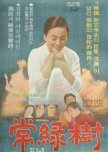
Absolute god tier must watch
Now if you're the type to complain about sound quality and technical standpoints of movies then gtfo because this is a black and white movie shot in the mountains with a dollar, a camera, and a dream, period. But apart from that, themes of women empowerment, rural emancipation, education, activism and community-building are explored, and Choi Eun Hee (a.k.a. my goddess) hard carries the movie with her pure charisma, uniqueness, nerve and talent. This is also my favourite love story (it might even beat "Mother And The Guest", also a Choi Eun Hee movie, well who guessed it), and I can understand if people think that the messaging is too "preachy" and direct, sometimes even seeming like propaganda. I feel like that is totally ok knowing that this movie was supposed to touch even the poorest of people to motivate them to get themselves educated and build community, and it's easier to tell someone to go fishing than telling them a story of a fisher and waiting for them to "get it".This movie touches your heart, period. You sit there on your chair or bed watching one woman toil herself away for her children, for her village, for her dream, and in the end, you know it was due to efforts by peopple like hers that Korea is the country it is now. You watch the beautiful nature of the Korean countryside and the dreams and hopes of the youth and children, and you'll be so engrossed in it that you forget you're not there.
Was this review helpful to you?
clichéd story
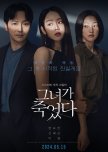
As a movie, it's passable, but as a story, it feels clichéd—its core is clearly modeled after The Invisible Guest, yet its suspense falls far short of the original, with only some technical improvements to show for it. It’s flashy, sure, but not impressive. Plus, some parts are overly artistic to the point of disregarding reality.Was this review helpful to you?
 1
1So Many Icons, So Little Story Progress
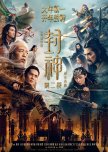
If someone asks, “Do we need to watch the first part before watching Creation of the Gods II: Demon Force?”The answer is: YES. 100%.
Personally, I have mixed feelings about the second part. Compared to the first one, the vibe is noticeably different. In part one, it felt super exciting to see all these iconic characters we’re familiar with gathered in one film with a solid storyline. Part two, on the other hand, is supposed to continue and develop the story and characters until the big climax but honestly I didn’t feel like there was much progress in the main plot. Maybe they’re saving it for part 3?
In the first movie, I really liked Ji Fa, Yin Jiao, Ne Zha, Jiang Ziya, Yang Jian and even Su Daji. But in the second movie, the one who absolutely stole the spotlight was Deng Chanyu! She’s such a girl crush. A total badass female general. She’s strong, confident, fearless... like, she actually feels like a general who’s been through war. Not like those so-called "female generals" in idol dramas who look more like pampered noble ladies (full-on peach makeup, innocent vibes) and we’re supposed to believe they’ve been through war as general just because they ride a horse in a general outfit. Deng Chanyu is what a real female general should look like. Most idol dramas should take a note!
Sadly, I feel like her potential wasn’t used to the fullest. The second half of the movie was kinda weak. The romance involving her felt forced. There was also a political subplot that could’ve been much better, but I won’t go into it because spoilers. Either way, I’ll let it slide because Nashi absolutely killed it as Deng Chanyu. Her charisma was unreal.
Now let’s talk about Yin Jiao. he’s BACK, guys! (as expected) And he’s seriously OP. The master (played by Chen Kun) even turned fully white-haired just to bring him back. But it feels like they toned him down on purpose. Like, he’s obviously super powerful and should’ve been a key player in the final battle because he is a new hidden card, but he’s held back, probably because he’s not the main character. Same thing with Ne Zha. His powers didn’t hit as hard this time. Surprisingly, Yang Jian, the Kunlun Immortal, ended up being more memorable than both Yin Jiao and Ne Zha during the final battle. Oh, and I gotta say the CGI for Yin Jiao is kinda cartoony. Sometimes it legit feels like he doesn’t even belong in the same movie lol.
And Ji Fa… well, he’s the main lead, so of course they made him the center of everything. But it kinda feels like the rest of the characters had to be nerfed just so he could shine. Like he got all the credit just because he’s the lead. Maybe that’s a writing or directing issue from the start. It should’ve felt like he was important effortlessly like his presence and actions naturally made him stand out, not just because we’re told, “Hey, he’s the main character.” If we have to remind ourselves that he’s the lead, then something’s off with how the story built him up. A good protagonist just commands attention without forcing it.
Overall, it’s still a fun and entertaining film especially if you’re into cool characters and big battle scenes. And I honestly can’t wait for Part 3.
Was this review helpful to you?
I Came for Eye Candy
To be honest, I didn’t understand anything even though I watched the movie from the very first second to the last lol. I’ve never been into history—not even my own country’s, let alone someone else’s. Not something to be proud of, I know, but hey, just being real here. Still, I stayed through the whole movie with an open mind because I was willing to learn. At least, I tried.I only watched it because the cast is stacked with big names. I mean, I’m sure some of you are the same, right? If you are, and you plan to watch it, honestly… don’t bother watching the whole thing. Just go straight to social media and look up still cuts or photos of your favorite actors. Trust me. Unless you’re actually watching to learn something, not just for the cast.
Even though I recognized like 95% of the cast list, I barely noticed some of them in the actual film. Either their screentime was super short, the styling made them unrecognizable, or the filter totally changed their faces. Or maybe they did show up… right when I was too busy reading subtitles and mentally trying to connect the dots of a plot I didn’t even fully get.
Anyway, that’s my review—thanks for reading!
Was this review helpful to you?
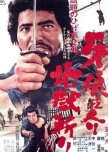
Kiba comes across prisoners being transported likely to their executions. One prisoner reminds Kiba of his father so when the entourage is attacked Kiba makes it his mission to see to it that Magobei arrives safely at his destination. Magobei had been double-crossed by the bandits who hired him to kill a mine guard. He and the prisoner “Oren the Thistle” escape and head to the mountains for vengeance against Higasa and his criminal family. Kiba ends up being taken prisoner, falls in love with Higasa’s daughter, and has to fight an enraged dojo master all before hunting Magobei down.
SW2 focused more on Magobei and Oren’s story than Kiba. Kiba wasn’t as likeable as he was complicit in innocent people being murdered by Magobei and his romance with Oteru was ill defined at best. The acting and writing weren’t nearly as good as the original SW. All in all, I was quite disappointed in this messy film.
20 May 2025
Was this review helpful to you?
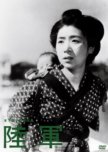
"It's not important if your son lived or died"
Army was a 1944 propaganda film by Kinoshita Keisuke. As a foreigner it was a bitter pill to swallow watching 3 generations of boys being taught that their main duty and goal in life was to die for their country and emperor. Ask no questions, entertain no doubts, have not so much as a frisson of fear for dying would be honor and glory to the country and family.At the beginning of the Meiji Era, the Takagi family is hastily packing up their belongings to flee the oncoming army. A wounded samurai bequeaths Lord Mitsukuni’s History of Japan to the family before he runs back to the battle that is already lost so that he can die for his lord. Thirty years later the grown son Tomonojo tells his son Tomohiko that “Whether you live or die, winning a war is a joy for the nation.” Furious at hearing that Russia is pressuring Japan to return the Liaodong Peninsula to China after the Sino-Japanese war, Tomonojo races to Tokyo to confront an old friend about it. *Okay, a brief interjection, this line of reasoning reminded me of The Princess Bride. Paraphrasing, “they are trying to take what we have rightfully stolen!”* While in Tokyo he suffers a heart attack. Tomohiko goes to Tokyo and is berated by his father for coming to the hospital and not honoring the emperor first. Tomonojo’s only desire is for his son to become a great soldier. Tomohiko’s health prevents him from fighting during the next war which distresses him to no end. He makes it his goal for his son to be a soldier in the next war, whenever and wherever it might be. Much to his father’s disappointment, Shintaro turns out to be a gentle, sensitive boy.
This movie was tough to get through. There was nothing subtle about it. The characters repeatedly mentioned the Emperor’s Five Principles. Sons were raised by their mothers but returned to the emperor so that they could die for him. Parents were not to be concerned about their children once deployed. “It’s not important if your son lived or died.”
Japan’s inevitable victories could have no nuance for Tomohiko. When someone suggested that Japan would have been a Mongol colony if the Divine Wind aka a tsunami hadn’t saved them, that was sacrilege! “If you were a true Japanese man, you’d be too ashamed to say Japan would have lost.” His over-the-top patriotism came across as self-indulgent, especially when those around him often had a more open-minded view of history. His ramblings sounded unbalanced which made me think Tomohiko being portrayed as a sore loser, terrible businessman, too sickly to fight, and a hothead was what caused Kinoshita to be banned from making movies until after the war. That was until the final minutes of the film. Unlike other propaganda films I’ve seen, the ending was what caused a real life general to call Kinoshita a traitor. The gripping scenes were beautifully shot and heartbreaking to watch. Tanaka Kinuyo gave one of her better performances without saying a word. Finally, genuine parental emotions were allowed to break through the stringent propaganda.
Army was heavy-handed in its message that young men’s lives were only meaningful in their deaths for the country and emperor. Two scenes with authentic parental concerns made the film and message more bearable, even if Kinoshita paid for the honesty. Will most likely only appeal to fans of the director or history buffs.
11 June 2025
Was this review helpful to you?
This review may contain spoilers
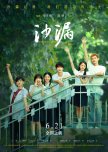
Once tight, now just a memory
In this film, Mo Xingxing, Mi Sha, and Lu Li are supposed to be a trio of best friends. But honestly, the only real and wholesome friendship is between Mo Xingxing and Mi Sha. Their bond is super sweet, worth to watch!Things start falling apart when Mi Sha secretly catches feelings for Lu Li and gets jealous seeing how much he cares about Mo Xingxing when she’s sick. Meanwhile, Mo Xingxing is this girl who’s really poor—like, eating actual garbage-level food. On top of that, she struggles with bulimia and anorexia, and doesn’t get any love from her family. So when someone like Lu Li shows her so much kindness, of course she starts to fall for him.
But here’s the thing... Lu Li’s only being nice to her out of guilt, since Mo Xingxing’s mom dead from saving his life. Deep down, he’s actually into Mi Sha. At first, I thought Lu Li was this selfless, caring guy, but then the ending totally threw me off. He ends up snapping at Mo Xingxing, saying he’s sick of pretending and can’t even be honest about his own feelings because he’s been “serving” her all this time. Like… seriously??? That’s your problem. Mo Xingxing never asked you to do all that. That scene made me so mad.
And don’t even get me started on Mi Sha. I disliked how she acted when she got jealous—like, she literally skipped visiting Mo Xingxing when she was sick, even though she had arrived, just because she saw Mo Xingxing got "affection" from Lu Li. Instead, she went off alone, brought a ton of food, and just started tearing open the packaging and taking tiny bites out of everything. It felt so wasteful. She’s rich, yeah, but that whole scene came off as, “Look, I can afford all this food and eat whatever I want—unlike Mo Xingxing who’s so poor she can barely eat proper food.” It was such a low-key flex in the worst way. She did it on her own, so it wasn’t really a problem—but it definitely says a lot about her character.
And then… the last straw was when Mo Xingxing got mad at Mi Sha for transferring schools without telling her, and Mi Sha got mad because Mo Xingxing never opened up about her illness. Then all the problems were never solved. All of them were bad at communicating. After that, Mi Sha just dipped—left everyone behind—and the story jumps back to the present, where she’s all grown up and reminiscing.
Honestly, I feel like the storyline was kinda messy and could’ve been handled better. But their friendship before all the miscommunication and emotional mess? Super cute and heartwarming. Also, the cinematography was pretty decent—lots of scenes that are totally screenshot-worthy.
Was this review helpful to you?

Scornful Woman
Just this morning, I listened to Oliver Anthony's new song, "Scornful Woman," about his difficult divorce, and now I've seen this movie, which perfectly suits the theme of human wickedness in relationships. At first, it seemed like it would be a feminist movie about men mistreating their women and causing them to become evil, but it was so much deeper than that. It explores theology, acts of evil, and human morality in a brutal and often shocking way, while still managing to—at least in my opinion—convey a Christian message. It reminds me a lot of Kim Ki-duk's movies.One characteristic of the devil’s moral theology is the exaggeration of all distinctions between good and evil. No longer is there any sense that we might be more or less at fault, or take upon our own shoulders the wrongs of others by forgiveness, acceptance, patience, and love—and thus help one another to find the truth. On the contrary, in the devil’s theology, because we all fail sometimes, we consider everyone evil, and then there is no salvation for anyone. The movie showed this, but still offered a resolution in which a person can carry the burden of others and find redemption. The Korean title of the movie says: 천사여 악녀가 되라! That could mean: Angel, become a wicked woman!—as an invitation. But still, you have the freedom to choose good!
This movie was made in 1990, but the director postponed its release. It was submitted to the censors between 1990 and 1995 but shelved. It had its public premiere at the Busan Festival in 1998, and was only truly released in 2021 in a restored version. What a history!
This is not a movie for everyone, but it certainly inspired me to reflect on all of us wicked humans.
Was this review helpful to you?
An Surprisingly Intriguing Watch
I didn't expect this movie to be as enjoyable as it was, so I was pleasantly surprised. Shin Hye-sun never disappoints with her acting, and it was impeccable here. The female cop was also a really good actress and I enjoyed most of the scenes she was in. What took the show down for me was the male lead. His acting felt off sometimes for me and wasn't really engaging, though that may just have been the weird way in which his character was written. It felt like it was trying and failing to be Joe from You (more awkward and less creepy). That was my main issue. Aside from that, I enjoyed how the story was written and executed as well as the messaging that came through at the end.Was this review helpful to you?
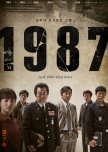
Why Koreans intensely guard their democracy
This film is based on a true story, a fight between the most unlikely heroes against a monster that is dictatorship and its vast network of power-hungry politicians and military.Known as the second People Power in modern history the Koreans toppled yet another dictator—a year after the Filipinos toppled its own dictator through People Power. Only this time, it took students to wake up an entire nation (of adults) to march against dictatorship and corruption, by blood and death.
A history that should never be forgotten.
Was this review helpful to you?
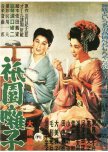
"A geisha's lie is not a real lie"
Mizoguchi Kenji once again explored the plight of women, especially those who served men in A Geisha. Ideally, well trained geishas entertained their male customers with their musical skills and genteel company, however, a barely concealed underbelly of prostitution bore out a more unsavory livelihood for many of the “Intangible Cultural Assets.”Eiko winds her way through the streets of the Gion to find her deceased mother’s best friend, Miyoharu. Unwanted by her father and wanted too much by her uncle, Eiko has no place else to turn. She begs Miyoharu to help her become a geisha. Miyoharu gives in and pays for Eiko’s extensive training. When it’s time for Eiko’s debut Miyoharu is forced to borrow a substantial amount of money from the teahouse madame not knowing who is financing Eiko behind the scenes. The two women who have thus far refused to accept patrons may not have a choice when their circumstances turn dire.
This topic was used in a variety of films featuring geishas and bar hostesses. Women who accepted patrons or who turned tricks on the side seemed to get ahead in the night world of Japan. Women were interchangeable depending on whether a man wanted a newer or older model. One young geisha had a 62-year-old patron her mother had arranged. These men were not used to being told no and often took what they wanted. Eiko mentioned a new law that protected geishas, but everyone knew it was in principle only. The “living works of art” were simply told to “close your eyes.”
Kogure Michiyo gave a moving performance as the veteran geisha. One scene as Miyoharu slowly removed her kimono in order to do what she dreaded was silently heartrending. Wakao Ayako’s Eiko went from a naïve and exuberant maiko to a young woman who saw the shining beauty of the geisha world pulled back to reveal the money and depravity underneath. Regardless of what the clients did, the women were expected to be compliant.
Mizoguchi created an aesthetically graceful film of floating geishas that also showed the crass and contractual side of humanity. While the central subject of a woman’s plight and criminal lack of options had been covered before, often by Mizoguchi himself, A Geisha stood out with the bond between Miyoharu and Eiko. The loyal and protective relationship the women forged together as they faced horrendous obstacles was well worth watching this film.
10 June 2025
Trigger warning: Attempted sexual assault
Was this review helpful to you?
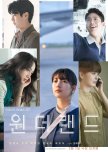
Wonderland could have been a hit movie if...
For whom haven't watched yet, this ain't a flop.Actors gave their bet to portray their character but the story telling was something lacking. There were two stories with a few subsidiary stories. A movie needs to focus on as few character as possible as they have limited time. Either this should have been a drama, or this should have just focused on two stories. Time management was lacking.
The story needed to be easygoing, to the point and less-plot holes. If there'll be a sequel/ 2nd part coming, I'll surely watch cause there are several questions yet unanswered.
Overall, it is worth watching the acting of characters, specially, Park Bo Gum and Bay Suzy.
.^. _ .^.
Was this review helpful to you?
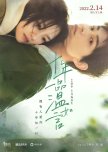
This review may contain spoilers
A Good movie if you wanna shed tears.
I was scrolling through Ding Yuxi's works and found this, and I'm genuinely happy that I found this. This movie tells the love story of Wen Heng (WH) and Yan Xi (YX). And it also focuses on one to value the people around oneself.The Plot revolves around WH and YX, how they became acquainted, she had some issues with her family therefore her brother arranged for her to live in his friend's house and she met YX, both spent time together and fell in love with eachother but fate was playing tricks on them.
Yan xi had to go back to States because of his family issues, and he got depression and stayed there to not affect her and didn't let her find out at all.
And she kinda got depressed because he left her, and then finally moving on to the time skip, after whole 7 years he's suddenly standing in front of her, asking her for a second chance!
Before when they fell in love with each other fate played tricks on them and seperated them, but atleast they met each other, but this time when they finally got together fate played an even crueler trick on them, seperating them by Death.
I have read all the reviews and I agree that it could have been a great movie if it wasn't too rushed. They rushed the plot too much, it could've been great as a bit longer like 2 or 2.5 hr. And the thing I hated the most was editing, Like they paid the editing team right! But they didn't do the job properly! They ruined a good movie, Ding Yuxi and Ren Min did an amazing job, they acted so well, I have 0 complaints against their acting, but the editing was making it hard for me to watch.
There wasn't a single scene (where they were crying) where I wasn't crying, it was so sad. Her adoptive parents who seemed like better tha Biological parents, when her father told her to go back home and study *shedding tears* it was so emotional. There was a tacit understanding.
My favourite scene was-
When Yan Xi was with his friends and he was giving his friends his last instructions, I couldn't hold back my tears and I was sobbing. It was such a beautiful scene.
If you did read it till the end, I will suggest you watch it, I was sobbing while watching it. It's an amazing movie (except the editing and fast pace or what people call it rushed ).
Was this review helpful to you?
This review may contain spoilers
HEARTBROKEN
i am absolutely torn into shreds.. him going through time travel just put the cherry on top. this was probably one of the most beautiful movies i have ever watched. the story, acting, transitions, chefs kiss!! i am currently uncontrollably crying while writing this review :) i am thanking the people who made this bc they didn't make him die like the series!! these cuties deserve the absolute world and honestly i don't think i'll be recovering from this movie for a while.. the end credits also made my heart skip a beat but it was lowkey predictable (not like i wasn't not predicting it to be him but like still) that filled the void in my heart that was left from the series.. i don't think i have ever cried as much as i did in a movie or show.. thank you to whoever reads this bc i wanted to let no one or everyone know my opinion!! <3Was this review helpful to you?
Holy shit.
A story about Thongkam and Mo, two desperate and selfish individuals struggling with loss and want. The sudden death of Thongkam's husband brings the end for some and the beginning for others. Grief and intimacy are nicely explored, as well as the differences between the working-class and those in extreme poverty. Impressed with all of the main cast's acting and transformations through the movie. Also, the OST really does make you nervous many times. Solid suspense.Was this review helpful to you?


