


 1
1"Are you shoveling sand to live, or living to shovel sand?"
Woman in the Dunes is a classic Japanese film that I’ve put off watching for a few years. Not for any particular reason, I just was easily distracted by other films. And the two-and-a-half hours running time tended to drop it down the list as this Butterfly can have the attention span of a gnat. But today I dusted off my courage and hit play.Note: We are not told the Entomologist’s name until the last frames so I will just call him E, because any term ending in ologist I usually screw up and trip over. The FL was never given a name so I’ll refer to her as The Woman, much like a character in Sherlock Holmes.
E is searching remote sand dunes hoping to discover a new variety of beetle that would be named after him. He misses the last bus out of town and a helpful villager tells him he can spend the night with a local. The Woman’s hut lies at the bottom of a sand dune pit and requires climbing down a rope ladder. She is very hospitable and strangely spends the night shoveling sand which the villagers haul up in buckets. The next morning when he attempts to leave, the ladder is missing and the unnatural sand cliffs are impossible to climb. He ascertains that he has fallen into a sand trap and is expected to shovel sand for his food and water with no possibility of parole.
The most beautiful and compelling character in this film was the sand. Director Teshigahara Hiroshi filmed grains of sand at the microscopic level and far above showing the mesmerizing rivulets across wide dunes. It was also unrelentingly invasive as it sought to take over the house and bury it minute by minute. Only for a minutes after a weekly bath were the characters bodies not covered in the tiresome fragments. They often appeared as if cursed by Medusa and turned to stone. The unearthly and unnerving music highlighted the strange shifting world the characters inhabited.
“Are you shoveling sand to live or living to shovel sand?”
Failure to shovel sand meant no food or water. The Woman was as much of a slave as E. How long had she been there? Was it a generational enslaved caste? She seemed to think of it as necessary for the village, but she never climbed the ladder and joined the villagers. It would never occur to her to leave. E struggled to escape several times before seeming to succumb to his plight. Was shoveling sand a parable/allegory about work? Especially salaryman work? Meaningless, repetitious, and almost impossible to quit. Other than enriching the union, it didn’t benefit society as a whole because anything made out of the cement it went into would be substandard and possibly deadly. There were other slaves we heard about but didn’t meet.
The characters lived on the bottom of the survival pyramid. Through a continuous grind of backbreaking tedious work, they received strictly rationed and controlled food and water. The sand continuously threatened to consume their shelter and their lives. They participated in raw, carnal sex. But eww, sandy sex brings on a whole host of indelicate problems. The pit provided no entertainment, no variety, and no real choices. The only true autonomy they had was to live (obey) or die (disobey). The woman desired a radio. Why? The outside news would only mock their isolation and enslavement. E’s curiosity ebbed until he accidentally made a discovery that excited him. Given his mental enslavement the revelation served to trap him more tightly.
The film reminded me of the original Star Trek’s pilot called The Cage. Warning! 60 year-old spoiler! Beings with telepathic powers needed humans to provide physical labor for them. They set a trap and used a beautiful woman as bait and reward. They also perversely enjoyed watching and punishing the humans. The villagers in The Woman in the Dunes were both perverse (they liked to watch) and cruel. Perhaps I’ve belabored the point attempting to understand this film and the story was simply karmic payback for the Entomologist trapping bugs in glass tubes and then pinning them to boards. In that case, he probably deserved what he got. Ƹ̵̡Ӝ̵̨̄Ʒ
9 June 2025
Trigger warnings: There were a couple of nude scenes, but sexual encounters were done “tastefully” and implied more than showing body parts. There were bugs but not the ooey, gooey, or eight-legged kinds.
Was this review helpful to you?
This review may contain spoilers
Story: About a guy pretending to be straight by snatching himself a beard, but someone comes along and threatens to reveal his disguise. Acting/Cast: Mediocre as expected of non-professionals, but putting in quite the effort.
Music: Forgetful.
Rewatch Value: Maybe if you care for it, but most likely not.
Overall Impression: One boy is definitely playing up his straightness, whether out of fear or to incite jealousy, is the question, or maybe a little bit of both. While the other determines to disrupt this lie. I am all for pain-pine-pitiful bouts of unrequited or requited love, but the violence between the two boys, only exasperated their misunderstanding towards each other.
The end scene, while poignant, serves an indication that some people will just run away from their feelings rather than confront them. The message of the film became muddy and convoluted when the execution wasn't up to par.
Was this review helpful to you?

This review may contain spoilers
Story: Mainly about a group of boys who are about to graduate and find themselves anxious about serving in the military as required by all able-bodied males of a certain age range. Acting/Cast: With such a short time to digest, I couldn't distinguish who's who.
Music: Nothing worth noting.
Rewatch Value: Re-watch only if you are seeking more answers to your unanswered questions.
Overall impression: The main focus of the show is the jarring procedure of venesection, practiced by one of the protagonist. It's brutal and bloody, and showcases the extremes that some people take in order to avoid going into the military.
This ordeal is not lost on the men as the threat of being "exposed" looms over their head.
While the short film started out as Heartbreaking, the final scenes became horrendous and unnecessary.
Was this review helpful to you?
Acting: Nothing to write home about. I can attest that they can ride a motorcycle around the city as they search for answers.
Music: The chanting maybe louder.
Rewatch Value: Not significant to warrant a second look.
Overall Impression: The message is clear, but the execution probably not. With perhaps better resources to support a longer length, this film could have been decent. As it stands, it's mediocre.
Was this review helpful to you?

Acting: Just some sitting, but mostly standing around, looking unmotivated. If this is the intent, certainly they did the job. I could do that too and pass as acting.
Music: Nothing memorable.
Rewatch Value: Once is more than enough.
Overall Impression: This is like bad porn with clothes on. The black-noir effect is not fooling anyone.
A sad attempt at being profound but ended up being inconsequential.
Was this review helpful to you?

Acting: It was straightforward and natural.
Music: Nostalgic and poignant, apt for the story.
Rewatch Value: If warranted a second viewing, it's short enough to do so.
Overall Impression: Go in watching this without expectations and you will be mildly surprised.
It's a story about love that transcends genders and ages. A decent effort by the team.
Was this review helpful to you?

Was this review helpful to you?
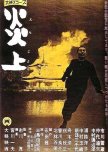
"Not everybody in Buddha's temple is as merciful as Buddha"
Despite a disclaimer at the beginning of the film that said it was not historical and that any similarity to real persons or places was coincidental, Conflagration was based on the book The Temple of the Gold Pavilion (Mishima Yukio, 1956), which was in turn inspired by the 1950 burning of the Golden Pavilion in Kyoto by a mentally disturbed monk. I have thoroughly enjoyed two of Director Ichikawa Kon’s other films adapted from real events, but this one missed the mark for me. Perhaps if I had read the book, it would have filled in the details so obviously glossed over in the film.High school student Mizoguchi Goichi arrives at the Shukaku Pavilion after his father’s death. His father had been a monk and thought Shukaku was the most beautiful place in the world. The chief priest accepts Goichi as an apprentice much to his deputy’s chagrin. Many of the young apprentices have been drafted or killed in the war and there is real concern over who the successor to the temple will be. Goichi is awkward socially and stutters which makes him a target among the young monks. Goichi wants nothing to do with his mother and has strong feelings about who is pure enough to enter the temple. Along the way he becomes friends with a pessimistic young man with a club foot who uses his infirmity to make women feel sorry for him. Friendship between the two misfits is volatile at best. For the most part, Goichi finds no joy in anything or anyone except for the perfect and eternal pavilion.
I found the character of Goichi to be inscrutable and unlikeable and not in any compelling manner. Ichikawa Raizo VIII’s take on Goichi was so deadpan that I struggled to understand any of his motivations. The film never answered the question why the chief priest would want Goichi to be his successor, the boy was clearly emotionally imbalanced and had serious issues with people. A young Nakadai Tatsuya played the manipulative Togari with his usual energetic flair. Nakamura Ganjiro II as the head monk Dosen gave a strong performance as a monk who dove into the worldly concerns of greed and sex.
Conflagration was beautifully shot, no easy feat in black and white. Story elements felt like rocks skipping over a pond, never quite connecting or showing any depth. There was no suspense to the film as it began almost at the end, after Goichi has burned the temple. The movie failed to explain his obsession with the temple and his complicated feelings regarding beauty and purity. Events occurred that were never fleshed out nor had any emotional consequences. The one likeable character disappeared midway through the story like a puff of smoke. By the last third of the film, I was ready for Goichi to find his book of matches and free me from this conflagration.
9 June 2025
Was this review helpful to you?

This review may contain spoilers
~A movie that shows you different perspectives of life~
This movie was not what I expected.Not in a bad way, it just didn't turn out how I imagined it to.
The story was really interesting and unique.
It was a story I've never watched.
It was full of fantasy and maybe also reality somehow.
A thing I didn't like that much was that the time jumps weren't clear enough for me sometimes.
I really like time jumps and I believe that they make things interesting, but I was a bit confused sometimes.
For example when they say: 7 years ago and then after they had showed something from 7 years ago they say 3 year later.
Sometimes I had to think if it was 4 years ago then or 3 years after the present so in the future?
But ig I understood everything:)
Maybe they could have said which year it was so there would be no confusion :)
But I don't mean to hate, it wasn't a very big thing and maybe it was just a tiny problem for me ?
The actors did a really good job!
The music suited the scenes and was nice too.
All in all I guess I would watch this movie again somewhere in the future.
I'm glad I watched this movie because I think it taught us some things.
Maybe some people we've just met are people we met in the past and there are more things to learn from this movie.
I guess it was a bit of an open ending but the ending was OK for me:)
I can only say that I'm happy I didn't drop this movie but watched it till the very last minutes.
A story which touched my heart.
Was this review helpful to you?

This review may contain spoilers
Akari Carries the Story!
This movie features two female leads and two male leads, which gives the story a mix of different feelings and relationships. Akari is one of the main girls, and she has great chemistry with both boys. The other female lead, Yuna, is shy and quiet. While she’s sweet, it’s kind of hard to root for her sometimes because she seems stuck in her own fantasy world, not really seeing things as they are.Akari and Rio’s connection is the most interesting part of the movie. Even though they’re step-siblings, you can tell there’s something more between them. Akari tries her best to fight her feelings out of respect, but Rio keeps holding on and wanting something more. Their scenes are full of emotion and really make you feel for them.
That’s why Rio suddenly falling for Yuna doesn’t feel very real. It happens quickly, and it feels more like he’s using Yuna to move on from Akari. It comes off as a rebound, not true love. Yuna is kind, but because she’s always lost in her own world, her relationship with Rio feels less believable.
On the other hand, Akari’s slow and quiet bond with Inui feels more natural. You can see her trying to move forward and make a fresh start, which makes her story easier to connect with.
The pacing of the movie felt a bit too fast, especially in the second half. Important moments moved by quickly, which made it hard to really feel the characters' emotions. A few more scenes could have helped the story grow better.
The music was soft and matched the mood well. The acting was also really good—Akari and Rio especially did a great job showing deep feelings without needing many words.
Overall, the movie is touching and well-acted, with beautiful music and a mix of relationships.
Was this review helpful to you?

Great Cast Boring Story
I tuned in because I recognized so many of the faces. I've seen them in other work and I know their individual caliber as actors. I think this film was based on a true story, however, the story is boring. I'm not making light of the real struggles of South Korean firefighters once upon a time. The screenwriter could have done more, whether it was to spark an adrenaline response or pluck out a sympathetic one. I was bored. There was no focus in the cast. Even though it was an ensemble, there was no focus to center the story around, so there were all of these dangling strings. I won't rewatch this film, but I'll stop short of recommending or not recommending others to watch the film. I was bored and found the film forgettable.Was this review helpful to you?

Chinese Hallmark?
Kind of like a Chinese version of a Hallmark movie. Cute, simplen sweet.Was this review helpful to you?

This review may contain spoilers
Just go with it!
This was very telanovelaish. Not a bad thing if that's what you are into. I think the movie would have been much better without the overacting and histrionics from the ML/Villain. However, Vilma Santos was great as Eve the grieving mother out for revenge for the brutal rape and murder of her daughter and her fiancé.I LOL at the end where Eva was killing the ML. It was just too comical for words but I was here for it. I am always down for bad guys getting theirs in the end and this one delivered the goods!
6/8/25
Was this review helpful to you?

If life gives obstacles, there must be a reason
Yet another powerful performance from Peng Peng and the whole cast, he is the most hilarious actor when it comes to series, at this point I think screenwriters write keeping him in mind.However, his true undeniable strength lies in movies, each of which is a treasure. Viva la vida (I prefer - Let's wake up the sun), while being incredibly tough, as it depicts mundane life of terminally ill people, brings strong and believable acting, symbolism and hope.
Such dramas are important I think, they give some necessary stimulus for self reflection and reassessment of our own realities. Luu Tu and Ling Min have more reasons to stay alive, than some healthy adults without any purpose and interests in life. Don't wait till it too late! Still, there are more movies with Peng Peng, I just need to recover from this one.
Was this review helpful to you?

Almost blew me away!
This was a tense and fast-paced ride where train conductor Takaichi, the passengers and railway staff must work together to prevent the catastrophe.The tension truly kicks in once the passengers find out what is happening. The way panic spreads felt way too believable. It also says a lot about how quickly things can turn ugly in a crisis. People start pointing fingers, paranoia sets in and suddenly it's a full-on witch hunt.
The way politics is shown during the crisis is... painfully realistic. Instead of stepping up, it feels like some people in power are more focused on saving face or pushing their own agendas. You really get that sense of decisions being delayed, emotions being brushed off and the situation being treated more like a PR problem than an actual emergency. It's a frustrating reminder of how, in real life too, how politics can sometimes end up milking a situation instead of solving it.
Visually, the production is top-notch considering Netflix backed it. The cinematography with those wide-angle shots of the train and its surroundings is simply stunning. Everything from the train interiors to the city backdrops was shot beautifully. You can tell a lot of effort went into making it visually engaging.
Acting was easily one of the strongest parts. Everyone brought their A-game and I genuinely couldn’t spot a weak link. If anything, the performances made up for where the story felt a bit thin. Especially when the motive behind the bombing felt a bit weak and under-explained. It didn’t ruin the film for me, but it did soften the impact a bit.
Overall, if you are in the mood for a high-stakes thriller with solid tension and top-tier acting, this one is definitely worth checking out!
Was this review helpful to you?


