

This review may contain spoilers
Worth the watch…
Magical and beautiful and wonderful and all of that. But… the ending just didn’t give enough. For such a forced distance for the MLs throughout, I just wanted more than what was given at the end. I’m left hungry for more (not in a naughty way, that’s not my point). I couldn’t feel the happiness the ending could have brought because I don’t know those actors/character representations.I will have to preface this by saying I don’t think I’m smart enough for this film, which is a rarity because I can usually follow along well enough to figure out timelines and storylines, but this had my brain flipping around un-endlessly and always questioning what version of exactly what it is that I was watching. My BL Olympics brain did not fare well, but I still got the whole gist of it.
Basically, I’m happy by the ending, but not happy because of it. If you can make sense of that.
It is a good enough watch though and I do recommend watching.
Was this review helpful to you?

Chaos in Song Joong-ki land
Bogotá: City of the Lost is gritty, tense, and soaked in ambition. From the very first scene, there’s this cold, calculated atmosphere that instantly reminded me of Vincenzo. Not in a copy-paste way, but in that morally gray, strategic, slow-burn intensity that keeps you watching every move carefully. It has that same “power is a chessboard” feeling.The biggest highlight for me was Song Joong-ki. He carries the film with a controlled, restrained performance that feels mature and layered. His character is not loud or flashy, but you can see the ambition building beneath the surface. There’s a quiet sharpness in his eyes that screams strategy. It honestly felt like watching a darker, more grounded evolution of the charisma he showed in Vincenzo.
The supporting cast adds weight and realism to the story. The dynamics feel tense and unpredictable, and every interaction feels loaded with underlying motives. No one feels unnecessary. The ensemble makes the world of the film feel lived-in and dangerous, which elevates the overall experience.
Visually, the film leans into its setting beautifully. The atmosphere is heavy, almost suffocating at times, which works perfectly for the story.
Overall, Bogotá: City of the Lost gave me serious Vincenzo vibes, but in a more grounded and cinematic way. It’s darker, slower, and more realistic, yet still driven by power plays and ambition. If you loved the strategic intensity of Vincenzo, this film will absolutely pull you in.
Was this review helpful to you?

The plot was done well! As someone with little to no knowledge or understanding of the Korean War, I still enjoyed the film (although I do think viewers would better understand it more if they knew the history). At times, I did think the pacing and flow of the plot was a little unsteady, especially at the portions with the US Army officers stationed at the camp and the captured North Korean soldiers. The political scenes of the film felt slow, taking away from some of the upbeat and/or tense moments from the dancing scenes.
The choreography obviously stood out to me the most. I wasn’t expecting to be so good! The music and the cinematography really amplified every percussive strike the tap shoes make on the floor.
I felt that the film’s purpose was to entertain, yet also bring to attention the overlooked side of war, which is the people caught in the middle, trying to live and love life in the new conditions that war brings. This made the film much more thought-provoking and more nuanced than an atypical war movie.
The film gradually built up to the climax. There’s tension between the Americans and the North Koreans, as depicted in their respective scenes, as well as the internal struggle Roh faces with his identity as a pro-communist and a lover of American tap dancing. The culmination of the plotting and dancing happens the day of the Christmas performance, and how everything went down did not disappoint!
Watching this film made me read up on the Korean War for my context; maybe I’ll rewatch the film afterwards!
Was this review helpful to you?
This review may contain spoilers
They had me until the last 40 minutes
I rather liked how the 1st half of this movie tackled the plot largely surrounding these two girls. From the struggles of identity, parental bullying (looking at you, Jane's mom), to the very difficult realities of friendships with large socioeconomic differences. I thought they did that so well. The acting was also good, and that underlying tension that was always present in the girls' friendship... Loved that.However, once we get to those last 40ish minutes, they lost the plot, and me.
1. Tong - When he is 1st introduced, specifically when the badminton birdie gets stuck at his window, we get a sense that perhaps Ann likes him. That scene made me get this pit in my stomach. I really REALLY did not want the story to go that way. And for a while, they make you believe that they won't. Tong acts decently. He hangs out with the girls and Ann's siblings as an older brother figure would.
And then Jane sees them that fateful morning, misunderstands, tells her mother, and Ann & Tong say nothing....??? Why? Why did they decide that the plot of a teenage girl still in high school and the 35-yr-old man needed to be a part of this plot? Ann's mom tries to basically sell off her daughter to this man, and no one in the apartment says anything?
Are underage marriages an issue in Thailand? Because that's the only reason I could see for them to add this plot twist. It felt so random, out of place, and kinda just there for shock value. Like 'hey, Ann doesn't have quite enough to deal with, let's add this on there'. WTH??? To me, Tong never gave that predator vibe either, so... I'm disappointed that the story went that route.
2. Ann's conclusion (or lack thereof) - Like the scarf she was about to hang to dry, Ann left and was never heard from again. I understand why she ran. With a life like hers and especially a mother like hers, I don't blame her. However, my brain cannot stop wondering, "Where does a teenager go?" "Where does a young, beautiful, teenage girl, with no money, no relatives to turn to (that we know of at least) go in the Bangkok streets?"
At 1st I thought she jumped, but upon realising that Jane and the rest of the passengers would have at least heard the splash or seen her do it, I scrapped that thought. But where did she go? What became of her life? Did she even manage to survive out there on her own? The story just abruptly cuts off her story after that cruise ship scene, never allowing us to see her again. I don't understand the 'why' behind that decision.
3. Jane's dad's infidelity - Man, I'd even forgotten that Jane's mother was married. That's how little her parents' marriage was highlighted in the show. But I guess they felt the need to pick up that one detail they sprinkled back in the 1st half when they were having that neighbourhood party. I didn't see the point of that whole mini side plot. To show us that Jane could go through problems, too? You know, aside from her mother always insulting her and calling her fat? That her family (her mother, really) could be poor too? I cannot wrap my head around this
Other thoughts:
a. I hope Ann's mother rots in some very lonely type of hell. I hope her remaining children grew up, supported each other, and left her. Left her alone and never looked back. Seeing Earng become the new Ann and learning that her mother never tried to find a job but went back to gambling broke my heart.
b. I'm not sure I quite like what the story insinuated about Tong. Despite that random side quest with the relationship, perhaps not the relationship with Ann, I did quite like him. But that statement right before the end. The statement about being the lookout while the person off camera took the bet... I really don't want to think that he became a corrupt cop. Or perhaps started gambling like Ann's mom
Conclusion: I think had they just stuck to Ann and Jane and the navigation of their feelings, identities, communication styles, and socioeconomic differences, I'd have rated it higher
Was this review helpful to you?

🤖 The Plot: Who is Baka?
The narrative revolves around Baka, a "low-caste" maintenance android in a hyper-industrialized futuristic metropolis. After a system error caused by an overload of discarded memory data, Baka begins to manifest something forbidden in his programming: individuality.
The film follows Baka's desperate escape through the city's lower levels as he tries to understand if the memory flashes he sees are his own or just "digital junk" from dead humans.
🎨 Aesthetics and Art Direction
Baka's Identity's greatest asset is its unique visual identity.
Neon-Gothic: The color palette makes extensive use of contrasts between the deep black of industrial areas and the vibrant neon of shopping malls.
Character Design: Baka isn't the elegant robot from films like I, Robot. He's clumsy, asymmetrical, and visibly worn, which generates immediate empathy in the viewer.
Fluidity: The animation mixes traditional 2D techniques with 3D (CGI) layers, creating a depth of field that makes the city seem infinite.
🧠 Central Themes
The short film addresses classic philosophical questions through a new lens:
Planned Obsolescence: Baka struggles with the fact that he was built to be discarded. It's a powerful metaphor for the modern working condition.
Memory vs. Identity: The film questions whether what defines us is what we live or what we remember (even if the memory is implanted).
Failure as Evolution: Baka's "failure" is, in fact, his consciousness. The film celebrates error as the starting point of life.
⚖️ Verdict
Baka's Identity is a "sensory experience." Although the script doesn't reinvent the wheel of the cyberpunk genre, the technical execution and the protagonist's quiet charisma elevate it to a must-see visual work of art for fans of adult animation. It's short, impactful, and leaves a bittersweet "I want more" feeling at the end.
Fun fact: The short film gained notoriety for its synthesized soundtrack, which uses real sounds of industrial machinery recorded in disused factories.
Was this review helpful to you?

🎥 Tzu-Hsuan Hung's Direction
Hung utilizes the confined space of the train with impressive technical mastery. His direction focuses on:
Close-Space Fight Choreography: The action scenes in the aisles and between the seats are choreographed to appear claustrophobic and brutal.
Real-Time Tension: The film uses time almost literally, increasing the viewer's anxiety as the clock ticks.
Visual Aesthetics: There is a clever use of emergency lights and shadows, giving the train a feeling of a moving "metal prison".
🎭 Plot and Characters
The film stars Lin Po-hung and Wang Po-chieh.
The dynamic between the protagonists is what anchors the film. One of them plays a police officer (or security guard) who must deal not only with the terrorists, but also with the growing panic of the civilian passengers.
Unlike a pure action film, Hung dedicates time to showing the moral dilemmas of those on board: Who should be saved first? How to maintain humanity under extreme pressure?
⚖️ Verdict
"The 96 Minute" is often compared to Train to Busan (for its train setting) and Speed. It's a technically flawless film that showcases the maturation of Taiwanese genre cinema. If you enjoy thrillers where the environment is as dangerous a character as the villain, this film is a must-see.
Note: The film was a landmark for using the largest studio-built train set in Taiwanese film history, guaranteeing a realism that CGI often fails to deliver.
Was this review helpful to you?

The story revolves around Mara (played by Karen Lopez), a sales agent who leads a seemingly stable life until she discovers that her fiancé, Marco, is cheating on her with a coworker, Regine (Allison Ross).
The unique aspect of Sulutan (which in Tagalog refers to the act of "stealing" someone's partner or interfering in a relationship) is how Mara reacts. Instead of just suffering, she finds solace and a dangerous connection with a new colleague, Lena (Astrid Lee). What begins as a friendship to overcome the pain transforms into an intense and forbidden romance that puts their careers and safety at risk, especially when a blackmailer enters the scene.
Strengths
Cast Dynamics: The chemistry between Karen Lopez and Astrid Lee is the highlight of the film, delivering a vulnerability that goes beyond the provocative scenes.
Pacing: The film works like an office thriller. The tension comes not only from the romance, but from the fear of being discovered by malicious colleagues. Aesthetics: Following Vivamax's visual style, the film features saturated, urban photography that matches the atmosphere of secrets.
What to Consider
Genre: As is common in Vivamax productions, the film contains scenes of nudity and explicit sex. If you're looking for a purely conventional or family drama, this isn't it.
Script: The blackmail plot (involving Mark Dionisio's character) is somewhat predictable for those who have already watched other "Vivamax Original" productions.
Is it worth watching?
If you enjoy revenge dramas with a touch of erotic suspense, Sulutan delivers on its promise. It's a story about how betrayal can push a person down unexpected and sometimes self-destructive paths.
Was this review helpful to you?

🌹 The Premise
The title, which roughly translates to "New Temptation," already sets the tone. The film follows a group of characters whose lives intertwine through secrets and infidelity.
The plot revolves around the idea that repressed fantasies, when given the right opportunity, can destroy stable relationships. It's a study of the boundary between loyalty and carnal curiosity, set in a well-crafted visual aesthetic, typical of recent Vivamax productions.
👥 The Cast (The "New Temptations")
The film is primarily sold on the charisma and beauty of its leading ladies, who are the channel's new bets:
Margaret Diaz
Apple Celso
Allison Ross
Heart Fox
⚡ What to expect from the film?
1. Aesthetics and Atmosphere
Unlike older, more raw erotic productions, Bagong Tukso relies on stylized lighting and art direction that attempts to elevate the material beyond a simple "adult film." There's a strong focus on psychological tension before reaching the explicit scenes.
2. The "Vivamax" Style
If you're already familiar with the platform's catalog (like Selina's Gold or Silip sa Apoy), you know what to expect: a mix of melodramatic drama, melancholic music, and choreographed sensual scenes. The film doesn't try to be an "Oscar," but rather delivers exactly what its loyal audience seeks: adult entertainment with a touch of Filipino drama.
3. Short Duration
At about 1 hour and 10 minutes, the film is straight to the point. It doesn't waste much time on complex subplots, focusing entirely on the dynamic of "temptation" between the protagonists.
⚖️ Verdict
Bagong Tukso is a niche film.
For those who like it: It's a treat for fans of Asian erotic dramas who appreciate the aesthetics and new actresses of Vivamax.
For those who don't like it: It may seem empty or excessively focused on visual appeal at the expense of a deeper script.
Note: As it is a Vivamax production, the content is strictly for viewers over 18 years of age, containing nudity and explicit sex scenes within the cinematic context.
Was this review helpful to you?
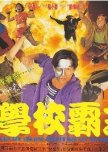
Directed by Wong Jing, the film is an unofficial (read: copyright-free) adaptation of Street Fighter, mixed with a plot that feels like a collective meltdown between Terminator and Doraemon.
🥊 The Plot (Or the lack thereof)
In the year 2043, a crime lord named Bison is about to be judged. His henchmen travel back in time to 1993 with the goal of eliminating the judge before he delivers the sentence. To stop them, a group of police officers from the future—the "Future Cops"—also travel back in time.
The problem? They end up in a high school, pretending to be students and staff to protect the young man who will become the judge.
🌟 The All-Star Cast
What makes this film a cult classic isn't the script, but the incredible cast. Seeing the "crème de la crème" of Hong Kong dressed up as video game characters is a unique experience:
Actor Character Based on...
Andy Lau Vega (Ti-Lung)
Jacky Cheung Guile (Broom Man)
Aaron Kwok Ryu
Dicky Cheung The protagonist (half Nobita, half hero)
Chingmy Yau Chun-Li
Simon Yam Dhalsim
🔥 Why watch it?
1. The "Mo Lei Tau" Humor
The film is steeped in Mo Lei Tau-style comedy (total nonsense). The jokes are fast-paced, physical, and often break the fourth wall. Expect bizarre transformations, low-budget special effects that have their charm, and completely absurd situations.
2. Pop Culture References
Besides Street Fighter, the film throws in references to Super Mario Bros. (there's even a sequence inspired by the game), Dragon Ball, and other anime from that era. It's a time capsule of early 90s Asian pop culture.
3. Fight Choreography
Despite the silliness, the fights are coordinated by Ching Siu-tung. Even with the ridiculous costumes and excessive wire-fu, the action is fun and creative, capturing the "arcade" spirit well.
⚡ The Verdict
Future Cops isn't a "good movie" by traditional filmmaking standards, but it's a must-see. It's vibrant, funny, visually crazy, and possesses a contagious energy that modern blockbusters often lose in their pursuit of technical perfection.
Reality Note: If you're expecting a faithful and serious adaptation of Street Fighter, stay away. But if you want to see Andy Lau with metal claws fighting a generic villain while someone dressed as Mario runs around in the background, this is your movie.
Was this review helpful to you?

This review may contain spoilers
⚠️ Content WarningBefore anything else: this film contains graphic scenes involving death, suicide, and blood. The depictions are explicit and repeated throughout the movie. If you are sensitive to gore or themes of self-harm, this may be deeply triggering. Please approach with caution.
Plot**
The film opens on what should be an ordinary end-of-term school day. A student brings a DVD to class and plays it for everyone. What begins as a strange montage of chaotic images and distorted sound quickly takes a horrifying turn. At the end of the video, the same student suddenly jumps out of the classroom window to their death.
The class is left traumatized but the nightmare is only beginning. Their teacher informs them that they have been hypnotized. The DVD contained **100 hidden signals**, each capable of triggering them to commit suicide. In order to survive, they must identify and neutralize all 100 signals before they activate. From this moment onward, the film transforms into a psychological survival game.
The movie strongly echoes the survival chaos of **Battle Royale** and the high-stakes absurdity of **As the Gods Will**. Adapted from a manga, it carries that signature intensity exaggerated stakes, rapid escalation, and stylized brutality.
Japan has a long history of producing compelling survival thrillers, and this film continues that tradition. It blends psychological horror with graphic physical violence, creating an atmosphere that feels both frantic and triggering! However, this is not subtle horror. It is loud, shocking, and intentionally disturbing.
The “100 signals” concept allows the film to explore multiple forms of death, and it does so in graphic detail. The gore is not implied, it is shown. Blood is frequent, and the suicide scenes are explicit.
For viewers who enjoy extreme survival narratives, this may heighten the intensity and realism. For others, it may feel overwhelming or excessive. This is not casual viewing!!!!
Despite the heavy material, the cast delivers strong performances. The emotional panic, confusion, and desperation feel believable, grounding the more extreme aspects of the plot.
A standout performance comes from **Kanna Hashimoto**. With every role I see her in, she becomes more impressive.
One of the most surprising elements of the film is its ending. As the credits rolled, I found myself unable to turn it off — completely absorbed by the theme song. **Carry On** by **YukaDD** is powerful, catchy, and thematically fitting. It contrasts beautifully with the intensity of the film, leaving a lingering emotional impression. I added it to my playlist immediately and it has stayed there ever since.
This film is gripping, intense, and unapologetically graphic. It will strongly appeal to fans of survival manga adaptations and high-stakes psychological thrillers. At the same time, it is not for everyone. The gore and repeated suicide depictions may make it a difficult watch for some. If you can handle extreme survival horror, you may find this film compelling and memorable. If not, consider this your warning.
The only reason I am not scoring this 10/10 it is because of the pace and how everything went by so fast! I wish this was a drama it would have give more time to explore the feelings, grief and the horror.
Was this review helpful to you?

This is Chiaki's movie.
Nodame Cantabile: The Movie I is the part of the live action I haven't watched the corresponding part of the anime. It's more focused on the drama and less of the slackstick, albeit present in sprinklings, that the jdorama/anima is known for. If you're in it expecting the same level of slapstick comedy, manage your expectations. It has bits and pieces of it but not to the extent seen in the TV series. I'm not sure if the corresponding anime version is more serious too.This film focuses more on how Chiaki prevents a century old orchestra from disbanding. Unfortunately, there's barely any of Megumi and Stresemann.
The purpose of this film is to make Megumi feel that Chiaki is unreachable, which sets the conflict of Film no 2. Megumi has to grow fast or lose Chiaki.
Other than that, the Paris scenes are nice.
Was this review helpful to you?
High-class soap opera
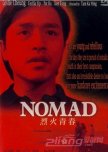
Bizarrely fluctuating between an exuberant reflection on young adult life in Hong Kong and a gory thriller, Nomad possesses an enchanting quality about it to the point it can be absorbingly disorientating. It manages to capture a brutal honesty of youth, from hairstyles to philosophies, but beneath its exterior lies a moody, elliptical meditation on alienation, desire, and a generation untethered from stable identity as the film's quartet of characters drift aimlessly together, going on dates, having sex, and vaguely contemplating the future. Unfortunately, its story is unfocused, playing more like an episodic series of skits filled with absurdist comedy, and, despite being relatively short, its pacing is exceptionally slow. Granted, the film is at least a looker; the photography and art direction are absolutely stunning, although Patrick Tam's actual direction is relatively messy, the super unsexy sex scenes filmed in choppy slow motion really hammer that home. His tone is one of impish confidence, never allowing his characters to fully succumb to the anxieties that pervade them. The sudden shift from languid romance to random acts of brutality in the final act feels almost like a wake-up call for the viewer, almost like the writers were trying to inject a bit of excitement to cap it all off. It really does just come out of nowhere, especially after wallowing in plenty of self-indulgent pretences for most of the thankfully short runtime. The performances from its cast are mostly solid, but the musical score tips over into pervasive, heavy-handed, if you would, rendering certain scenes ridiculous when they perhaps would have benefited from simple silence. As a cornerstone of the Hong Kong New Wave, it remains provocative, melancholic and stylistically bold, but all comes together as an ultimately disorderly and chaotic experience. Nomad certainly drifts through the motions, losing sight of what it really wants to be. It feels kind of cruel to have watched this after My Heart is that Eternal Rose, but I was expecting more than a high-class soap opera.Was this review helpful to you?

..
This movie had been on my watchlist for a long time, and once I finally sat down to watch it, it didn’t disappoint. Dark, unsettling, and heavy with atmosphere.Kim Go-Eun and Lee Do-Hyun delivered powerful performances, as expected. Two of my favorite actors, drawing you deeper into the darkness of the story.
.. ... ... .... .... .... .... .. .. ... ... .... .... .... .... .. .. ... ..
🌸✨🌈 Hiii~ Welcome to my kawaii corner~ ♡(≧▽≦)ノ✨🌸
You can find more of my reviews on Instagram~ 🌟💖
Check my homepage for my account~ (。♥‿♥。) 🌷
Some reviews are under 500 words, so I can’t post them here~ (≧ω≦)ノ💫
Thank you sooo much~ ☆:.。.o(≧▽≦)o.。.:☆ 💕🌸
Was this review helpful to you?
Was this review helpful to you?
This review may contain spoilers
Loved it!
The ending was very confusing and convoluted but I'm sure I can figure it out by watching videos of people explaining it. The acting is actually the main reason I am giving it this rating, along with the story. Jeon Jong-seo did very well at being a creepy/psychotic character and it just shows how versatile she is as she has played about every type of character there is, not to mention that this was only like her second acting role. Park Shin-hye did amazing as well but that isn't really a surprise as Korean movies and shows always have amazing lead actors. I really liked the story and how you don't necessarily suspect anything is wrong with Young-sook at first and just think that she may be getting abused by her stepmother. Unfortunately though, I do feel like the trailer kind of spoiled the fact that she was a killer and I feel like it would've had more of an impact if they didn't reveal that in the trailer because in the movie, it is actually revealed after maybe a little more than 1/3 of the way through so I feel like they did have lots of material before the reveal that they could have put in the trailer to not spoil so much.Was this review helpful to you?


