

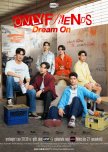
romeraffy
i fricking loved romeraffy heck yeah romeraffy i lowkey dont like jack he pmo but earthmix 4 life so yeah and yes jackdean made me cry anyway love romeraffy 4 life aouboom yes i really with we would just get more romeraffy because i love them so much but its okay cause they had a happy ending oh and hell yeah we got more sandray but guys the new lets try is buns #khaotungsverionisbetter no offense to my kings who sang itWas this review helpful to you?
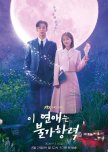
The Best.
The Story, the pacing, the acting, the direction, the music, the chemistry, the setting. A+++I confess when I first watched this drama, i was frustrated at some aspects of it, the coworkers hypocrisy and at times, cruelty and some of the plot choices. But re watching it and loving it more and more has been a joy. It’s funny, heartbreaking, heartwarming, satisfying and a really good thought out overall story, and wow Rowan is just stunning!! The production value is top notch and stylish. The acting and chemistry is engaging, believable and heartfelt.
I’ve watched a lot of both K and C drama’s, and this is one, if not THE one, of the best.
Was this review helpful to you?
This review may contain spoilers
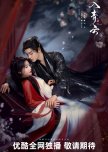
That Marriage Stone Needs to Ban Them
Wow. They casted everyone so incredibly well and thr chemistry was absolutely fire for all of the couples.Actors breakdown: The ML Hao Ming Hao did a great job but I felt he needed more emotional range. or maybe it was just the character. The FL Lu Yu Xiao was AMAZING. i will definitely be looking up her other dramas as this is the first of hers I have watched.
It would be nice to see Yu Cheng En in a character that doesn't give off "Peter pettigrew" vibes. He Nan (the Queen of abyss) did a good job with the complex role she had. I did wonder why she always looked like she was going to cry but maybe she was wearing uncomfortable contacts or something. Her love interest did a great job. I genuinely had no clue whose side he was on until further into the series.
I generally am NOT a fan of chinese OST (nothing personal just not my preference) and I LOVED this one. Im currently searching Spotify for the actual score.
Plotline: I felt like it kinda dragged between episodes 30 to 34. Like there are only so many times you can go in circles. That being said the show gave me a Ashes of Love/Eternal Love of a Dream. I would definitely suggest watching this one!
Was this review helpful to you?
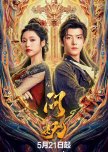
Delightfully Crazy, Surprisingly Addictive.
The Demon's Pursuit is, quite simply, a story of chaos, a fusion of everything. Modern divorce drama collides with ancient xianxia lore; supernatural detective work intertwines with second-chance romance; low-budget constraints meet ambitious storytelling. Silly and funny, yet serious, deadly, spooky and creepy. This drama is proof that you don't need A-list stars or blockbuster budgets to craft an engaging drama. What it lacks in polish, it makes up for in heart, creativity, and sheer watchability. It's the kind of show you start out of curiosity and finish with genuine affection.When a divorcing couple is thrust into a fantasy novel mid-argument, they awaken in the demon-ridden Great Qian Realm: he's a condemned prisoner, she's a fallen empress. To survive, they must solve mystical crimes, navigate court intrigue, and confront the very real demons of their broken marriage. It shouldn't work this well—but it does.
I haven't watched Gao Hongkai or Wu Chunyi before, therefore I'm not familiar with their acting. As the story pulls me in, I realized how good these two unknown actors are. Wu Chunyi as Su Ningxue is a revelation. She balances imperial poise with modern vulnerability, conveying quiet strength without overplaying. Gao Hongkai as Lin Mo brings a grounded, weary pragmatism that makes his gradual emotional thaw feel earned. Their chemistry doesn’t rely on instant fireworks—after all, they’re already ex-spouses. What truly works is how they slowly rebuild their bond, unfolding with a quiet, natural warmth that feels deeply human rather than scripted. For a production relying on relatively unknown actors, the lead performances are not just competent—they're compelling.
At 24 episodes of roughly 15 minutes each, The Demon's Pursuit is engineered for modern viewing habits. There's no padding, no filler subplots stretching thin. Each episode advances either the mystery, the relationship, or both. It's easy to follow, easy to squeeze into a busy day, and easy to watch "just one more."
That said, the editing occasionally betrays the tight schedule. Transitions can feel abrupt, and a few emotional moments land slightly off-rhythm due to pacing choices. These aren't dealbreakers, but they're noticeable—especially if you're used to the polished flow of big-budget productions.
This drama doesn't pretend to be high art. It leans into its genre-blending chaos: one minute you're deciphering a cursed artifact, the next you're watching a quiet moment of reconciliation over a cup of tea. The "crazy logic" isn't a bug—it's a feature. It asks you to suspend disbelief, invest in the characters, and enjoy the ride.
And the ride is fun. The supernatural cases are inventive enough to hold interest. The romantic tension avoids melodrama by rooting itself in shared growth. The low-budget aesthetic, while visible (not too bad), doesn't distract from the core strengths: character and story.
For a low-budget production with relatively unknown actors, this is a surprisingly enjoyable gem. The acting—particularly from the two leads—exceeds expectations. The story, for all its chaotic fusion, holds your attention. And in an era of endless content, that's no small feat.
Watch if: You enjoy character-driven fantasy, don't mind bending logic for fun, and appreciate a rekindled romance that is both funny and sweet.
Was this review helpful to you?
Turn Up the Heat
Ok, this is a guilty pleasure series for me. The plot is slightly lacking, but who cares? This is the hottest I have ever seen Off look in ANY series and then you throw the incredibly sexy tower of a man Dew in there as well? I don't care what the plot is, I'm in! The character that drove me the most crazy in this one was Gun's character Jira who just played with the emotions of Ko and Pheem through the majority of the series. The ending was fine, and though I don't love when ships diverge, I wouldn't have minded this ending going either way.Was this review helpful to you?
Dream On
I took a long time between the first season of Only Friends and Only Friends: Dream On. The first season had my head spinning, so I need a little time to recoup. The story for Dream On was super predictable in a lot of areas, but then towards the end had me biting my nails and almost mad thinking it was going to end a certain way. I adore EarthMix and will watch basically anything with them in it. This performance of was definitely the spiciest they've had up to this point . AouBoom are also quickly becoming another favorite pair of mine and this series had an entirely different dynamic between the two of them than what we have seen so far. JossGawin are a cute couple and given how comfortable Gawin seems with whoever he is partnered with, I expect nothing less that brilliance from him. All three of our main couples delivered. Fluke's character was poorly written in my opinion. I didn't buy for a moment that anyone would have just continued to let him get away with his bs. It was nice to see Neo, Pod, and Mark make their appearances along with FirstKhaotung. Our plot got a bit messy in some areas, but overall this was a good series.Was this review helpful to you?
The story
WOW!!!For someone that usually goes for only romantic dramas I needed this.The FL is exactly my kind of charade. She is so brave the ways they depicted the story is just marvellous.A brave FL who stood up for herself and her family at such a young age,I resonate with her alot.It shows family struggles,the prejudice against women and young girls,and the way society in general treats women especially.Jingyi really outdid herself with this is.All I can say is watch it the first 4 episodes might be too slow and make you want to drop it but I promise it gets better.They could’ve added 2 extra episodes though
Was this review helpful to you?
Falls short....
I was actually excited for this one because of the premise of the story.Unfortunately, I agree with one of the reviewers who gave it a 1.0. Her observations are very much the same as mine.
The FL supposedly travelled forward in time, and yet, the story failed to focus on her difficulties to adjust to a new time zone. Just 3 episodes in and she was almost completely settled in life in the future.
This alone was off putting for me. But if the producers chose not to focus much on this, then well, I will have to continue and see if the story will have any depth in the coming episodes.
The only good thing for me, is that the ML, is now being given the exposure after being a supporting cast for years.
Was this review helpful to you?

This review may contain spoilers
Enjoyable, low-stress rom-com
The one-liner: Falling into Your Smile is an enjoyable rom-com that is mostly low-stress and emotionally pleasant.Pros: Both leads are enjoyable to watch. Xu Kai is a little predictable, playing the ML, Lu Si Cheng, as the same sort of 'cold, stoic, super-competent CEO' role that he has played in multiple dramas. Even though he's technically NOT a 'CEO' of a company in this drama, the type of character he plays is basically the same. Nothing new there and while that might seem a criticism, Xu Kai does play it well. Chang Xiao, as the FL, is a different sort. Her character is very reserved towards other characters, guarding her emotions carefully, though inwardly very sensitive. She only shows her emotions strongly to her best friend and, as their relationship grows, to Lu Si Cheng. Otherwise, she holds a straight face towards almost everyone else. This sets up the irony of her in-game call-name because while in real life, Tong Yao rarely smiles, in the game she is always Smiling. Among support characters, the FL's parents and the ML's mother are all wonderfully played in short appearances by veteran actors - especially both moms who each eat up the scenery when on screen. Alas, neither is on screen enough. The plot of the show is fairly straightforward, similar to any sports-competition type drama: The characters work together over a long season of ups & downs towards a goal of winning a championship, overcoming many different types of obstacles along the way. The competition portrayals are fun and exciting. The shift into 3d-animated portrayals of the game events is fun and exciting to watch.
Cons: The behavior of a lot of the supporting cast is cartoonish. The various e-sports gamers, despite mostly being young men in their mid-to-late 20s, are portrayed as having the maturity level of 5th graders. This is supposedly humorous but mostly looks insulting to real-world e-sports competitors who are mostly rational adults. The plot is, as I said, mostly fine, but does lean into the 'noble idiocy' drama trope in a few of the episodes and that's annoying. Also, the show writers commit two glaring ethical sins that really bothered me. Early in the drama, for drama effect, they have a character commit what is objectively a very serious criminal felony - striking someone from behind with a whisky bottle on the back of the head. The sin is that later, this is completely whitewashed and forgiven as if he had done nothing more than give someone a mild shove. Instead of the character being in prison, he is welcomed back to the team with open arms. This is absolutely ridiculous and could have easily been avoided by the writers. If they had simply had the character do nothing different _except_ simply push the guy hard, then everything else written in the show would still have worked without feeling like a whitewash. Then, later in the show, there is a scene where one of the competitors from one of the other teams, isolates Tong Yao in a hallway alone, physically restricts her and threatens her. She has no way to escape the situation other than to bite the guy on the wrist to break free. Later, instead of acknowledging her situation AND HER RIGHT TO DEFEND HERSELF, the writers have Lu Si Cheng scold her for freeing herself and insisting that the only right thing she should have done is to call for Cheng. He even locks her outside of the base for hours and hours as punishment. But this is ludicrous. Cheng simply was nowhere to be called to for help. Lu Si Cheng was completely in the wrong for demanding this behavior of her and for punishing her for 'doing something wrong'. Because she did not do anything wrong. This is victim-blaming and does not reflect well of the ethics and morality of the writers.
Was this review helpful to you?
This review may contain spoilers
I might need therapy and some tissues.
I was actually able to sit through this entire drama and enjoy it. I do agree with some people that there was definitely more chemistry between Ji Ling and Lu Wu Yi than between Wu Shiguang and Wu Wangyan. I love both couples, though. Ji Ling and Lu Wuyi were more like newlywed couples, and Wu Shiguang and Wu Wangyan were more mature, which technically did happen in the drama. Besides the romance, I really like that each character has their own story. I do find the first story about Xiaowei a bit confusing, but I kept watching and went back to figure out what went on. Ji Ling's backstory made me cry the most, poor little fox ;-;... he suffered and was lonely, only relying on the little fox doll. Tian Jia Rui did a good job portraying like six different characters, which made me love him so much as an actor and all his characters. I have watched Guo's other works: My Journey to You and Fangs of Fortune, but those two dramas didn't really make actor TJR stand out as much as VOF *for me*. I was never a fan of Ju Jingyi because she looked the same in every drama, and I was just not interested; however, this drama has made me see her differently. I see that her acting is all in her actions and physical movement. I wished that she could work on her crying scenes because I noticed that the sound of her sobbing sometimes does not match her facial expressions (she still made me cry, though). Joseph Zeng, I have nothing bad to say about him. Chen Du Ling, my favorite versatile actress, I also have nothing bad to say about her. I love her character Wangyan so much; she hates to kill because of her soft heart. She feels guilty and horrible after every slaughter mission she receives. Plot twists were great too.The only reason I gave this drama less than 10 is how messy the plot was. I was sometimes confused, like "how did we get here??" for some scenes. Thank goodness there weren't predictable scenes. The star stone scenes were a bit messy, but I managed. Some fight scenes were kinda dragged out. I didn't really like that. The ending was more of an open ending and felt rushed. The only reason people call it a "happy" ending is because the couple sees each other again after a catastrophe. What about their memories? Besides Shiguang, will the others be able to remember their past? I have many questions for You Chi, he's dead and came back to life, but does he remember the battle against Jiu Ying? He didn't mention anything about the battle against Jiu Ying but he does show that he still remembers the past because he came up to Mu Long. Li Jie, poor him not knowing where Ji Ling is now. After Ji Ling entered the time loop, where do the OG Ji Ling and LWY end up? Are they the same people at the end where one is selling flowers and the other with the raspberry basket? So many questions need answers because the drama was supposed to be 40 episodes, but was cut down to 29 due to censorship.
Was this review helpful to you?

This review may contain spoilers
OTT fight scenes are actually really good!
I didn't think I would like this as much as I did. Infact I think I found this more entertaining to watch than WHC2 which came out relatively the same time. The cast for this show is great!! I do wish the teacher's son had more of a lead role in this season but I have a suspicion he will have more screen time in season 2 when he goes after for revenge. There is a teaser at the end hinting that there will be another season so fingers crossed!!Was this review helpful to you?
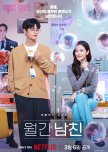
It's really a hidden gem!
I don't think I have laughed as much as I have in this kdrama!! This is definitely on my list of top 5 kdramas!! I wasn't going to watch this coz I thought it seemed very cringy and cheesy. While there are definitely some cheesy aspects to this, the story line is actually very good! It's also packed full of high list korean actors!!! I've been on somewhat of a binge watching shows that star Seo In Guk for some reason and I gotta say, i'm a huge fan of his characters. While a lot of them seem the same, his facial expressions are very well suited for the roles. I highly recommend this show!! I also have a new found love for Seo Kang Joon. He is soooo dreamy!!!! I really like the sound effects and of course the dramatic slow motion scenes!!!!Was this review helpful to you?

Genuinely THE best show ever
Yes…I’m not at all exaggerating with the headline. This is a cinematic masterpiece filled with a rollercoaster of emotions. I would HIGHLY recommend this to everyone looking for a comedic romance with a bit of heavier topics near the end. Teetee and Por did an incredible job with their portrayal of Duang and Qin…phenomenal acting! I also highly recommend the OSTs..so good, I’ve been streaming since the show came out all the way until now. it took me a couple weeks to finally write this review since I finished it when the show ended because of how attached I am to this show.Was this review helpful to you?
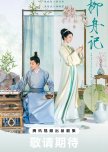
Not a masterpiece but good!
This my first drama with ZWY and WCR. And ZWY almost stole the show, he had me laughing out loud way too many times to count in this one. He’s got great comedic timing regardless of who else is in the scene.This is definitely a romantic comedy with a dash of action. I enjoyed all of the three major couples in this one, too. Except Chang Hua Sen (Zuyi) and Yuan Yu Xuan (Xue Ji) pair really stole the show for me. It was beautiful display of how one’s second true love, after one’s youth, can grow and sneak up on you before you realize the truth. Usually, emperors are the worst in the shows so this was a nice change and I appreciated his gentleness with her before he gave up on his first love. And I’m looking forward to seeing Chang Hua Sen as a leading man because his angsty eyes were A++.
And shout out to the costume designers for this show. The robes for the male leads were absolutely stunning. Honestly, out of all the historical CDramas I’ve watched this one definitely has my favorite Emperor styling - the white with red underneath hit every time he was on screen in it.
I doubt I’ll rewatch but I’m glad I watched this.
Was this review helpful to you?
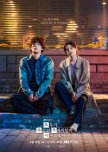
Life in all circumstances
The drama is life itself. Being in circles of friends, colleagues, families, siblings and the world, whereby you want to prove yourself but it's not working out. I laughed, cried, and learned alot from it. The script is in a different level of the usual because it is the reality of life. To everyone who contributed in the making of this drama 고마워. To everyone trying to work things out for yourself, do not give up!!! The sky is enough for many birds to fly. It's not a boring series at all.Was this review helpful to you?


