
 News



A twisted yet compelling thriller
As a fan of thriller series, finding a show that truly grips you and isn't too predictable can be quite a challenge. While "Tathata: I Am What I Am" may not be the perfect one, it manages to bring the suspense, dark, gritty, and manipulative undertones of the entertainment industry in its twisted and compelling plot.The series follows a group of individuals involved in a theater production, and as the story unfolds, secrets are revealed, lies are uncovered, and tensions escalate dramatically. While the idea of murder in a theater setting is nothing new, this series distinguishes itself through its clever 'story within a story' technique, delivered in a poetic and metaphorical way. And the exploration of dark themes and psychological drama adds an extra layer of depth to the traditional murder mystery narrative. One of the key highlights of this series is its unpredictable plot twists, which challenge everything the viewers thought they knew. The series keeps you guessing, keeping you hooked with its "whodunnit" storyline and suspenseful moments. And I love the poetic justice ending as it gave the dark melodrama a profound, haunting, and cautionary final message.
While many Thai mystery dramas tend to focus on male characters and their journey, this series takes a different approach by placing a lineup of talented actresses at the forefront. Rather than conforming to typical female-centric drama stereotypes, it explores themes of passion and obsession with subtlety and depth. Mint Chalida and Prang Kannarun deliver standout performances, demonstrating a maturity and intensity that truly brings their characters to life, making this their best work to date, in my opinion. Production-wise, this series manages to give the gritty realism and slightly unpolished look, matching the dark and stressful atmosphere of the story.
Despite a good concept, impressive cinematography and performance, this series suffers from rushed character arcs. Jak's storyline (played by Bank Artit) seems a bit off and distracts from what should be a tightly woven murder mystery. Instead of being a key player in the investigation, the writing bogs him down in relationship conflict, making him a less competent detective. Honestly, his romantic subplot belongs in an entirely different show than this intense, fast-paced psychological thriller. Another flaw is that instead of a steady, suspenseful build-up to the climax, the series relies on throwing intense, rapid-fire tragedies at the characters, especially toward the end. While the murder case is resolved, it lacks a massive "wow" factor.
Overall, "Tathata: I Am What I Am" is a twisted yet compelling thriller series that pushes beyond conventional boundaries of Thai thriller dramas. Despite its flaws, this series offers audiences a refreshing and thought-provoking experience with its exceptional acting, well-crafted story, and interesting plot twists.
Was this review helpful to you?
Good with some minor flaws
I enjoyed this series, i liked the story a lot. It had some minor flaws, but they didn't really bother me. The overall visuals were great, but they used to much make-up on the cheeks, that just looked too unnatural.The music was good.
The overall acting was good.
The mains had great chemistry, the kisses were just lip pressing, but they looked good enough.
I re-watched it for this review and i enjoyed it as much as the first time.
Was this review helpful to you?

A must watch
Have been booking forward to this drama for while,i chance upon WILLIAM and EST when they just released their pilot for Thamepo something about them kept me hooked Everything about them felt right their chemistry and detailed portrayal of their character is nothing short of perfection 👌. They bring the same energy to YOU MANIAC ,the first episode the characters Dean and Moth i can't wait for them play out their character to performance trust me your Saturdays would nit be complete if yiu miss out on You Manic.Was this review helpful to you?

This review may contain spoilers
Crowns, Family Secrets and a Whole Lot of Drama
I finally got around to watching Beauty Queens, a 2020 six-part iWant Original series that had been sitting on my ever-growing watchlist for far too long. I happened to get home early from work, was waiting for my rice to cook, and casually stumbled across the first episode on YouTube. I recognised it immediately and decided this was finally my sign to watch it, especially since I’m a fan of Ross Pesigan and Shido Roxas.Directed by Joel Lamangan, written by Eric Ramos and produced by ATD Entertainment Productions, Beauty Queens uses the glamorous world of Filipino pageantry to tell a much heavier story about family, motherhood, expectations, identity, sexuality, ambition, resentment and acceptance. The story revolves around Dahlia Rodriguez-De Veyra, a former Miss Universe winner who is determined to preserve her family’s multi-generational beauty-queen legacy, a tradition passed down from her mother Tarsila, Manila’s last Carnival Queen in 1939.
The problem is that Dahlia wants her children to continue a legacy they never necessarily asked for. Her eldest daughter Daisy wants to become a nun, Tingting becomes an activist and gets pregnant, while her youngest child and only son Rico becomes Miss Gay Universe. The conflict comes from the gap between what Dahlia believes is best for her children and what her children actually want for themselves.
I really enjoyed the way the series handles its non-linear-ish storytelling. The flashbacks aren't simply there for exposition; they gradually fill in the missing pieces and give the present-day conflicts more context. The different visual treatments for each era also work nicely. The 1939-to-1950s scenes have a sepia treatment, while young Dahlia’s 1969-to-1980s storyline has a faded, scratchy look with bright red details standing out against the muted palette. The recreation of Gloria Diaz’s actual 1969 Miss Universe styling was a particularly nice touch.
The 1939 storyline was probably my favourite. I genuinely wish Filipino television and film explored the Manila Carnival Queens era more often. Maris Racal plays Tarsila as a miserable trophy wife trapped in an abusive marriage to an ambitious politician played by Rafa Siguion-Reyna. It is definitely familiar Filipino melodrama territory, but the historical setting makes it fascinating.
Gloria Diaz is excellent as Dahlia, although Dahlia herself drove me absolutely mad. She is condescending, matapobre, arrogant, judgmental, mean, sharp-tongued, hurtful and hypocritical. Whenever she says something completely out of line, she tends to retreat behind “I was only joking” when someone calls her out. Her comments about the Miss International pageant were particularly hilariously tactless. But that reaction is also a credit to Diaz. She makes Dahlia so convincing that I genuinely wanted someone to tell this woman off.
Maxine Medina and Winwyn Marquez are also very convincing, and their real-life beauty-pageant backgrounds add another layer of authenticity. Medina plays Daisy, while Marquez plays Tingting. But Ross Pesigan was my clear standout. He completely captured Rico’s flamboyant and indignant personality while making him sympathetic enough that I found myself firmly taking his side throughout the series.
The supporting cast is strong as well. Lotlot De Leon, Ruby Ruiz, Shido Roxas and Maris Racal all make an impression, and there really isn't anyone who feels like they were wasted in their role.
The melodrama can get wonderfully excessive. The dinner-party scenes are packed with outrageous behaviour, uncomfortable confrontations and dramatic fireworks, including inappropriate necking at the dinner table and even someone being forced to change into a ballgown in front of everyone. Some of it is certainly exaggerated, but the heightened drama is clearly intended to shock and make the viewer uncomfortable—and it works.
What surprised me most was how depressing the story could become. I went in expecting something centred on beauty queens and pageantry, but the series digs much deeper into family dysfunction and generational expectations. There were also a few twists I genuinely didn't see coming.
I also loved that the series shows the glamorous and gaudy side of beauty pageants while simultaneously exposing the mess underneath the crowns and gowns. It’s a small series, but there’s quite a lot packed into those six episodes.
Beauty Queens is not difficult to watch because it is bad. It’s difficult because it feels like a strong, potent drink: intense, sometimes bitter, occasionally overwhelming, but ultimately satisfying. Short, dramatic, melodramatic and surprisingly heavy, it’s definitely worth checking out if you enjoy Filipino family dramas with a bit of pageant glamour and plenty of emotional chaos.
Was this review helpful to you?

 1
This review may contain spoilers
From Dust to Power, From Power to Peace
The Road to Splendor is, for the most part, a very solidly written historical drama that balances both its female and male leads. It is a story of betrayal, coming of age, hardship, ambition, redemption, heartache, sacrifice, and ultimately triumph. But more than anything, it is about the journey itself: the people you meet, the choices you make, what you lose along the way, and what truly matters when you finally reach the destination.Set in a Ming Dynasty-inspired setting, the story follows Fu Tingyun, a noble young woman whose life is destroyed by a false accusation, and Zhao Ling, a salt smuggler from a humble background. Neither of them is secretly royal, a lost noble heir, or someone with a powerful identity waiting to save them. They genuinely have to work for everything they achieve.
That is what I loved most about this drama. Their road to splendor is not covered in roses. It is full of poverty, danger, betrayal, political struggles, family conflicts, difficult choices, and pain. When Zhao Ling and Tingyun begin their journey, they have almost nothing: no wealth, powerful position, influential connections, or safety net. They have to start from scratch, relying on their intelligence, determination, courage, and eventually each other. Because of this, every achievement feels earned.
Fu Tingyun's journey was one of my favorite parts. She begins as a noble young woman who understands the world through the privilege and security she was born into, only to suddenly lose everything. She experiences poverty, hunger, danger, betrayal, and the complete loss of the life she once knew. Watching her learn to fetch water, wash clothes, dry grain, and survive as an ordinary person was incredibly satisfying because her strength is built through experience rather than simply given to her by the plot.
One of the most painful moments was seeing her poisoned by her own grandmother, showing how little value she had to her family when her existence became inconvenient. Tingyun eventually learns that family name and blood relations do not necessarily mean protection. She grows into a woman who can stand on her own, rebuild her life without relying on her family, and support Zhao Ling without losing herself. I especially loved that she knew when to listen and when to stand her ground. Her five-year wait for Zhao Ling also showed incredible perseverance and devotion. She became a woman of her own making.
Zhao Ling's journey was equally compelling. He starts as a salt smuggler, rough around the edges, suspicious, clever, practical, and shaped by a difficult life. He isn't the typical powerful prince or noble young master. He starts from the bottom, and his rise is therefore both satisfying and painful.
At first, he believes gaining power will allow him to protect his people and create a better life. But the higher he rises, the more he becomes trapped by the system he once wanted to change. As an official, his responsibilities and political compromises slowly weigh him down. You can see the change in him through his constant headaches, unshaven beard, and increasing distance from his family, friends, and Tingyun.
I understood why he kept things from Tingyun to protect her, but I didn't always agree with him. Tingyun was never a woman who needed to be protected by being kept in the dark. She needed to stand beside him and fight with him. Still, I found his struggle realistic. He spent his whole life believing that becoming powerful would give him freedom, only to discover that power itself could become another burden.
That is one of the strongest themes of the drama. You can gain enough power to change things and still become trapped by that power. The Crown Prince initially gives Zhao Ling an opportunity to rise, but once he becomes Emperor, the relationship changes. Zhao Ling is no longer simply an ally; he becomes a blade in the ruler's hand. This is why I understood his decision to eventually leave the capital.
I loved seeing Jiao Wei Jiu return, even briefly, because it felt like a reminder of Zhao Ling's old salt-smuggler side before all the titles and political responsibilities. His decision to return to Ganlin and become a regional commander was honestly the best decision. Zhao Ling and Tingyun never truly wanted endless power. He wanted to give her a good life, and she wanted them to live peacefully together. Ganlin may not be as prestigious as the capital, but they finally have peace, family, freedom, and each other. After everything they went through, that feels much more like splendor to me.
Their romance is another major reason this drama worked so well for me. It isn't built around constant grand gestures or cliché romance. It is built through shared hardship. They begin almost like enemies and need each other before they love each other. Trust comes before love, understanding comes before romance, and their feelings grow from everything they survive together.
They have been through so much that sometimes a simple meal or small hug between them feels more intimate than a grand romantic scene. Their relationship isn't healthy because they never have problems; it is healthy because they eventually learn how to face those problems together. They don't always agree, and they sometimes frustrate each other, but they continue choosing each other. Their love feels less like fantasy and more like a genuine partnership.
The Ganlin arc remains my favorite because although they were poor and struggling, they actually got to live. They had ordinary moments together, while the capital turns their lives into constant strategy, politics, enemies, and potential disasters. I loved that contrast because it showed that higher social status doesn't necessarily mean a better life. Sometimes you can have everything society considers prestigious and still lose the things that make you happy.
I also appreciated how the drama portrays its women. They are not simply passive figures waiting for men to decide their futures. They scheme, calculate, negotiate, make decisions, and sacrifice. Almost every madam seems to be quietly doing something behind the scenes. The men may stand in the spotlight, but the women are often moving the pieces behind them.
As the story unfolds, the historical elements also become more interesting. The incorporation of things such as Ming Dynasty salt reforms and cultural practices like chastity arches gave the drama a stronger historical foundation. The salt trade isn't simply a backdrop; it becomes deeply connected to the characters, corruption, politics, and their rise to power.
The pacing also deserves credit. For a 36-episode drama, it never felt particularly stagnant to me. Plenty of tragic and uncomfortable things happen, but the drama usually doesn't drag them out for too long. Most conflicts are resolved within a reasonable amount of time before the story moves forward. There are some convenient plot developments, but overall the story remains coherent without relying too heavily on the kind of nonsensical plot devices that can sometimes ruin C-dramas.
There are also many interesting, frustrating, morally grey, and complicated characters along the way. I originally wanted to analyze every one of them, but I think this is a drama where you should draw your own conclusions. Some characters will make you angry, some will surprise you, and some will leave you questioning whether they are good, bad, selfish, or simply trying to survive.
Visually, the drama is also a pleasure to watch. I loved the contrast between the harsh northwestern landscapes, deserts, battlefields, and refugee camps and the beautiful, prosperous capital. The costumes, locations, makeup, and overall atmosphere give the drama a polished feel, while the performances carry many of the more emotional and character-driven moments.
And I genuinely loved the ending. After everything these characters went through, seeing them choose a quieter life away from the center of political power felt incredibly satisfying. They have a daughter, family, peace, and each other. After watching them spend so much of the story fighting simply to survive, seeing them finally get to live was exactly what I wanted. I also appreciated that many of the other characters received proper closure.
The Road to Splendor is much more than a romance or political historical drama. At its heart, it is about choices, ambition, temptation, conscience, sacrifice, power, and the consequences of getting what you once thought you wanted.
Fu Tingyun and Zhao Ling begin with almost nothing. One loses her noble status, while the other starts as a salt smuggler. They struggle together, rise together, lose things together, and eventually discover that perhaps the greatest form of splendor isn't standing at the top, but having someone beside you when you decide to walk away from it.
The road to splendor is ultimately an empty dream if you lose yourself and the people you love along the way. What truly matters are the people you meet on that road, the family and friends you build, the person you become, and whether you can remain true to yourself.
This drama made me smile, swoon, feel frustrated, become angsty, and occasionally want to scream at the characters. But most importantly, it made me care about the journey. It isn't perfect, but it is a journey worth visiting at least once, and I'm genuinely glad I didn't skip it.
Was this review helpful to you?

ml deserved better
This drama is not bad. When I watched it in 2020, I really liked it, but now when I re-watched it, I don't think it's that good.
The efforts are completely one-sided. Kim Bok-joo had a crush on Jung Jae-yi, she was a little obsessed with him. But when the main lead Joon-hyung came and started liking her, she started putting in all the efforts which she never did for him before. So why is that? The efforts she did for her crush, she should have done for the main lead too. It felt unbalanced.
And honestly, she was a bit annoying and loud at times, which was annoying to watch. Maybe I don't know, it's just me or if anyone else feels the same, but her shouting and overreacting got too much in some episodes.
But yes, I have to say - I love the way he loved her. Jung Joon-hyung's love was so pure, patient, and comforting. He knew her since childhood, he supported her dream, he loved her even in her most insecure moments. Maybe he deserved a little better.
What I still love about this drama is its real charm though. It's not about heavy plot twists. It's about youth, friendship, dreams, and first love. The weightlifting team, the swimming team, the friendship between Bok-joo, Nan-hee and Seon-ok is so wholesome. The story pace is clean and light, so it's a very comfortable watch.
No high hopes, but good for a light, healing, one-time watch.
Was this review helpful to you?

Can't skip, worth every second.
What a drama! Indeed it is the best of best. How beautifully they pulled off this genre, can't stress enough. A comedy that was not cringe, no overpowering lousy plots. This was a pure breath of freshness. Every character had that same main character presence on the screen. None of the second felt boring. Even the hints for the second part is mesmerizing. Would watch it again one day for sure😍No plot hints guys, this is too good to watch.
Was this review helpful to you?
This review may contain spoilers
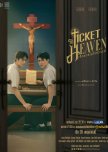
Ticket to Heaven: Unconditional Grace
For decades the United States Conference of Catholic Bishops lobbied for regressive legislation, endorsed far-right politicians, promoted bigotry in public life, and generally strove to make the United States less open, less tolerant, less kind. That is the background with which I approached the news that the Catholic Bishops' Conference of Thailand (CBCT) objected to the original Ticket to Heaven trailer.The trailer was released on November 26, 2024. Based on the series’ original screenplay, the trailer took an adversarial position, evoking a dark, melancholic atmosphere and depicting the Church as standing in the way of happiness. Three days later, the CBCT formally expressed written concerns about the upcoming series to Mr. Chaipol Suk-iam, Director-General of the Department of Religious Affairs at the Ministry of Culture. [1]
The CBCT struck a diplomatic tone, stating that they respected individual dignity and artistic expression. They therefore claimed they were limiting their comments to mostly theological accuracy and the protection of a minority community's sacred spaces (Catholics comprise roughly 0.5% of the Thai population).
And then they asked the Department of Religious Affairs to mediate.
Section 206 of the Thai Penal Code explicitly criminalizes actions that defame or insult objects or places of religious worship. Any review by the Department of Religious Affairs therefore not only carries weight, it is an implicit threat.
On May 30, 2026, 550 days after the trailer was released, Ticket to Heaven premiered. The year and a half from trailer to telecast gave Director Aof Noppharnach space for genuine creative reflection that produced an inspired artistic shift. Gone was the dark, brooding, accusatory tone, replaced with internal struggle, compassion, and self-discovery. By jettisoning a simple adversarial indictment of the Church, Aof created a work that was more subtle, nuanced, and subversive.
St. Magdalene College is an elite, prestigious institution for the wealthy. Catholic schools are the ultimate symbol of upper-class education in Thailand. Even the Thai Royal Family attends them.
Tanrak and Barth, however, were "scholarship students" whose expenses were covered by the Church because they came from impoverished backgrounds. Perhaps because they both were from outside the school's typical upper-class constituency, Father Arnon assigned Tanrak the task of mentoring Barth in order to ease him into the life of Magdalene College.
Soon after Barth's arrival, a student bullies him, sneering that he is “a scholarship student who doesn’t belong here," meaning he isn’t of their social class. That evening he locks Barth and Tanrak (Barth intentionally, Tanrak accidentally) in an abandoned natatorium. Traditionally a place of pure, pristine waters, vitality, and shared joy, the concrete structure stands in ruin and neglect. It further becomes a space of judgment and doom when, the next morning, Father Arnon and a group of students discover Barth and Tanrak, looking down on them from ten feet above with undisguised suspicion.
From the beginning of their friendship, therefore, Barth and Tanrak are united by the judgment of others. While we don't witness active bullying of Tanrak, he too was a scholarship student separated by the class divide. Thus, in their world, they are alone in the eyes of God, alone in the eyes of the Church, and alone in the eyes of their fellow students. With neither Tanrak nor Barth having family support, Magdalene was not merely their school but their entire world—there was nowhere else to run.
One night, Barth asks Tanrak to break the rules and go with him off-campus to buy roti. Tanrak declines, and Barth asks "have you never skipped school?"—leaving unspoken "Have you never disobeyed, have you never experienced life beyond these walls?"
Although staying behind, Tanrak agrees to help boost Barth over the wall. In what was almost certainly Tanrak's first body-on-body contact with another man, he grasps Barth's thighs, presses his body into him, shoves upward, and recognizes an undeniable sexual pull. On his return, Barth hands Tanrak a roti—tubular, floppy, cream dripping from the end. Tanrak hesitates, then takes it, puts it in his mouth, and recognition becomes acceptance.
One meaning of “Communion" (community) within the Church is something shared in common, and by accepting the roti (derived from the Sanskrit word for "bread"), Tanrak accepts something shared in common with Barth, in a sacrament of mutual understanding and desire.
Communion is then followed by confession. Magdalene students are usually in a strict uniform and under the watchful eyes of the priest and teachers. The communal washroom is the only place where they can strip away their outer layer of conformity and be free from authority figures.
In this space, both essentially naked, through the wire mesh, almost as if speaking through a barrier to a prisoner (echoed in their visit to Barth’s mother), Barth confesses to Tanrak that he’s Gay and attracted to him: Barth as penitent, Tanrak as priest, hearing Barth’s confession of raw sexuality without shame. Barth knows who he is but Tanrak, both priest and prisoner on the other side of the mesh, is entrapped by more than a decade of church teaching leading to confused self-loathing.
Leaving his prison behind, Tanrak opens his door and crosses to Barth’s side, where, looking directly up at Barth, he confesses mutual feelings. Most importantly, for the first time, Tanrak clearly states out loud that he is Gay. The roles have reversed; now Barth is the priest, and Tanrak the penitent, no longer imprisoned by his fears, seeking absolution and acceptance in Barth’s eyes.
The dualism of each being equally penitent and priest shatters the Catholic top-down hierarchical order. Instead, Tanrak and Barth give each other unconditional grace. Authority, hierarchy, and judgment are not the only path to salvation; equality, empathy, and honesty are as well.
Barth leads Tanrak to communion, he leads him to confession, and he leads him to baptism. Like everything in Ticket to Heaven, the waterfall scene serves more than one purpose. By taking Tanrak to a favorite place of his mother’s, Barth initiates Tanrak into his family and its struggles.
The waterfall is also an area where, for the first time, they are completely free of the oppressive surveillance of the Church. Baptism washes away guilt while at the same time initiating a person into the Church. Guiltless, they make love, initiating Barth into the world of sexual identity and personal freedom.
There’s so much more in the series, including other scenes that could be interpreted as reflecting church sacraments, but these three scenes in particular demonstrate different stages in Tanrak’s growth: understanding who he is, acknowledging who he is, freeing himself from shame over who he is. Despite Barth’s own journey, the series is largely Tanrak’s story.
Barth, played by Gemini, knows who he is and has long accepted it. Whatever troubles he carries—and there are plenty, given his father's abuse, his father's death, and his mother's imprisonment—his sexuality is not among them. There, at least, he is certain, and that certainty suits Gemini’s acting style.
The character of Tanrak, however, experiences a full emotional arc, from a denial of self-awareness to admitting it to embracing it, from repression to acceptance to joy. That requires an actor with not only great range but great depth, which is another way of saying “Fourth.”
To say Fourth is one of GMMTV’s finest actors understates his talent. He is one of our finest actors, period. In Moonlight Chicken (his acting debut, another Aof project, and where Aof discovered him and made him a star) he portrayed a young man on society’s margins trying to find himself while showing empathy and understanding toward a friend who needed help. In My School President he ostensibly played the traditional “bouncy Golden Retriever” BL trope while imbuing it with subtlety and depth. When meeting his boyfriend’s parents, for example, Fourth’s character Tinn was shy, polite, deferential, uncertain, but straightforward and glad to be there, all at once. And in Ticket to Heaven, Tanrak begins as shy, quiet, but slightly disinterested in the new boy, moves toward vague confusion and suspicion regarding Barth’s interest in him, struggles to accept feelings he had previously kept in check, and, through various stages of growth, ends by finding happiness in who he really is.
Several viewers on Reddit and elsewhere have called Ticket to Heaven Aof’s greatest masterpiece. While it is certainly a masterpiece, it is neither his most subtle nor complex series. The roti scene, for example, is outrageously phallic, and in contrast to Ticket to Heaven’s two-person story arc, Moonlight Chicken braids multiple interlocking stories across an ensemble.
Moonlight Chicken also explored fundamental truths, whereas core elements of Ticket to Heaven are more wishful thinking than fact. 1996 was a terrible time for the Gay community in Thailand, with the government actively promoting Gay tourism while its own Gay citizens faced vicious discrimination. The Church was still reeling from the Magdalene Laundry scandals, and investigative journalist Jason Berry published his groundbreaking book about pedophile priests and the bishops who protected them in 1992. Meanwhile, at the Vatican, Cardinal Ratzinger was strictly enforcing orthodoxy as the head of the Church's doctrinal office, where he was leading the Church’s crackdown on LGBTQ-affirming priests and their ministries to the Gay community. A mentoring priest would likely have been disciplined and reassigned.
But Aof created something greater than fact. He created a fairytale, because Gay people deserve fairytales too. As much as anyone, we deserve stories that show how hope can exist after hardship. We deserve stories that show what society could become if it evolved into a more fair and just world.
Reimagining past traumas with a vision of a better world does not erase history, it makes history healing. Trauma therapy relies on this very principle to help people reimagine their worst memories. By taking the dark realities of the 1990s and reframing them with decency and warmth, Aof offers the gift of collective healing—and that’s what fairytales are for.
And in giving us that fairytale, Aof offers the Church a vision of what it could become were it to prioritize people over prejudice. By showing that equality, empathy, and honesty can not only lead to a form of grace, but are, in fact, necessary for grace, Aof has shown the Church a way forward. May we all hope that someday, it chooses to take it.
[1] Chainarong Monthienvichienchai, "Thai Bishops Raise Concerns Over Upcoming TV Series," LiCAS News, November 29, 2024; see also "Thai Bishops Raise Concerns Over Upcoming TV Series," Herald Malaysia, November 29, 2024. Chainarong is the past world president of SIGNIS (The World Catholic Association for Communication) and former Chancellor of St. John's University in Bangkok.
Was this review helpful to you?

Super short, chill drama with an interesting plot
I recommend watching this specially after watching a traumatic, sad drama.This is one of my favourite dramas this year! It was so chill, fun but has a interesting plot and good, interesting characters and concepts.
You will soon start to love all the main characters. Even though it's very short, it felt like a whole proper story. Even though sometimes it takes only 5 minutes for a very serious whole story to happen. sometimes they have that whole story happen in 5 minutes where a normal drama would take about 7, 8 episodes (about 8hrs) for the same story.
I wish someone make the longer version of this with the same vibe.
I really enjoyed it. Specially after watching those hit dramas that give us heartbreaks, traumas and keep us feeling sad and empty at the end, this was like a resting relaxing place. Love it sooo much.
Was this review helpful to you?

Its like reading a Manga
Watching this in US. Still waiting on finale episode 12 to drop. Already rewatched it twice. It is that good. A bit slow, but i think it is because the cinematography is meant to be like reading a manga. There will be scenes with really up close shots and long pauses, and the only thing the characters would utter softly is “hmm” or “huh”. Love the outdoor scenes, made me wanted to do a pilgrimage of this series. You grow with the characters from beginning to end of series. It is one of those rare series that you hope they wound do a sequel few years later because you want to know what happen to them. Hint: “autumn of you”? Main lead Wataru’s acting is superb. You bust out laughing with him in some scenes while you drop tears on others. May do a third rewatch once the finale has aired.Was this review helpful to you?

Some classics never lose their charm
You can definitely tell this is an older drama, but somehow that only made me appreciate it more. It has all the charm of early 2010s kdramas: a little over-the-top at times, a little dramatic, but full of heart. The blend of romance, politics, action, and family drama kept me invested throughout, and I found myself becoming more attached to the characters than I expected. The relationship between the leads was easily my favorite part. They came from completely different worlds, challenged each other constantly, and slowly learned to understand one another. Watching them grow individually and as a couple made every emotional moment hit that much harder. The supporting cast also played an important role, adding both warmth and heartbreak to the story.Of course, there were moments that felt dated, and a few plotlines could have been handled differently by today's standards. But I never felt like those things took away from the experience. If anything, they reminded me how much K-dramas have evolved over the years.
Was this review helpful to you?

it never found its direction
I really wanted to enjoy this more, but it never fully clicked for me. The premise was interesting enough to keep me watching, yet the story struggled to maintain its momentum. I found it difficult to connect with the characters, and the emotional moments didn't have the impact they were aiming for. There were a few scenes I genuinely liked, but they weren't enough to make up for the uneven pacing and the feeling that the drama never quite knew what it wanted to be.Was this review helpful to you?

EW
EW EW EW EW EW EW EW EW EW EW EW EW EW EW EW EW EW EW EW EW EW EW EW EW EW EW EW EW EW EW EW EW EW EW EW EW EW EW EW EW EW EW EW EW EW EW EW EW EW EW EW EW EW EW EW EW EW EW EW EW EW EW EW EW EW EW EW EW EW EW EW EW EW EW EW EW EW EW EW EW EW EW EW EW EW EW EW EW EW EW EW EW EW EW EW EW EW EW EW EW EW EW EW EW EW EW EW EW EW EW EW EW EW EW EW EW EW EW EW EW EW EW EW EW EW EW EW EW EW EW EW EW EW EW EW EW EW EW EW EW EW EW EW EW EW EW EW EW EW EW EW EW EW EW EW EW EW EW EW EW EW EW EW EW EW EW EW EW EW EW EW EW EW EW EW EW EW EW EW EW EW EW EW EW EW EW EW EW EW EW EW EW EW EW EW EW EW EW EW EW EW EW EW EW EW EW EW EW EW EW EW EW EW EW EW EW EW EW EW EW EW EW EW EW EW EW EW EW EW EW EW EW EW EW EW EW EW EW EW EW EW EW EW EW EW EW EW EW EW EW EW EW EW EW EW EW EW EW EW EW EW EW EW EW EW EW EW EW EW EW EW EW EW EW EW EW EW EW EW EW EW EW EW EW EW EW EW EW EW EW EW EW EW EW EW EW EW EW EW EW EW EW EW EW EW EW EW EW EW EW EW EW EW EW EW EW EW EW EW EW EW EW EW EW EW EW EW EW EW EW EW EW EW EW EW EW EW EW EW EW EW EW EW EW EW EW EW EW EW EW EW EW EW EW EW EW EW EW EW EW EW EW EW EW EW EW EW EW EW EW EW EW EW EW EW EW EW EW EW EW EW EW EW EW EW EW EW EW EW EW EW EW EW EW EW EW EW EW EW EW EW EW EW EW EW EW EW EW EW EW EW EW EW EW EW EW EW EW EW EW EW EW EW EW EW EW EW EW EW EW EW EW EW EW EW EW EW EW EW EW EW EW EW EW EW EW EW EW EW EW EW EW EW EW EW EW EW EW EW EW EW EW EW EW EW EW EW EW EW EW EW EW EW EW EW EW EW EW EW EW EW EW EW EW EW EW EW EW EW EW EW EW EW EW EW EW EW EW EW EW EW EW EW EW EW EW EW EW EW EW EW EW EW EW EW EW EW EW EW EW EW EW EW EW EW EW EW EW EW EW EW EW EW EW EW EW EW EW EW EW EW EW EW EW EW EW EW EW EW EW EW EW EW EW EW EW EW EW EW EW EW EW EW EW EW EW EW EW EW EW EW EW EW EW EW EW EW EW EW EW EW EW EW EW EW EW EW EW EW EW EW EW EW EW EW EW EW EW EW EWWas this review helpful to you?

This review may contain spoilers
I Spent a Whole Year Side-Eyeing This Drama, Only to Put It on My Top List ?
⚠️ SPOILERS AHEAD, BECAUSE I HAVE THOUGHTS 😮💨I’ve been skeptical about this drama for a whole year now, which is kind of funny because, ironically, it’s actually very much my kind of drama. 😂 It has so many things I enjoy — smart and capable leads, mystery, political intrigue, good teamwork, revenge, and a romance where both characters remain strong in their own right.
My very first impression from the trailer and poster was that the leads looked more suited to playing siblings. At that time, I didn’t even know their real-life ages, so it wasn’t because of their actual age gap. It was purely based on their looks and how they looked together on screen. FL looked more mature, while ML gave me more of a little-brother vibe.
Looking back, I kind of regret not watching it earlier... 😂 There were a few things I normally avoid or had doubts about — amnesia, enemies-to-lovers, whether the leads would actually look good together on screen, and even the FL’s voice. And honestly, I rarely watch dramas when I already have this many reservations about them. I’d just skip them altogether. So the fact that I ended up watching this one — and actually enjoying it — is pretty ironic. 😂
Now that I’ve watched it, I really love how both leads are so smart and eloquent, especially when they’re trying to piece together all the mysteries and political intrigue. Their teamwork is honestly so good! I also really enjoyed their sarcastic banter in the earlier episodes. It gradually made me less skeptical. I started seeing their bond more as a close friendship and partnership, and I think that’s what eventually made their relationship work for me.
Then, as they slowly started catching feelings for each other, I somehow began accepting them as a romantic couple too. They became even more captivating once they finally opened up to each other and began seeing the experiences that shaped who they are.
What I especially appreciate is that they’re allowed to be in love without changing who they are. They’re both capable and confident in their own right, and neither of them has to become weaker for the romance to work. ML respects her judgment and never treats her like someone who constantly needs to be saved, which I really appreciate. It makes their relationship feel like a genuine partnership even as they become a couple.
There’s something compelling about how they challenge each other and slowly broaden each other’s perspectives. FL becomes more willing to question what she once believed and stand up for what she thinks is right, even when it puts her in difficult situations. And ML, who is so driven by revenge and duty, gradually learns to see beyond his own anger. They don’t simply “save” each other — they make each other see things differently, and their relationship genuinely changes both of them.
I know some people mentioned that either the FL or ML wasn’t really to their liking, but personally, I didn’t have much of an issue with either of them in this drama. I haven’t watched all of their dramas, so I can’t really comment on their overall acting range. But I actually found FL’s character to feel quite real and genuine. Especially considering that she’s an amnesiac, I think her emotions being somewhat inconsistent actually make sense.
Tbh, I have a lot to say about the supporting characters and villains too, especially from episode 24 onwards. Even though the plot was getting increasingly suspenseful, I felt like the villains’ betrayals and motivations started becoming rather petty. ML basically became the target of everything the Emperor did, and somehow that ended up driving all the villains’ motives.
To me, the Emperor, Princess Xiyang, Xia Jing Shi, and Xia Jing Yan were all broken souls in their own ways, though Xia Jing Shi was both broken and twisted, having allowed his grudges, desires, and resentment to consume him. The other villains were more like twisted souls who let their own grudges and desires get the better of them. The two empresses were also deeply obsessive and ruthless, to the point that they didn’t seem to consider even their own children’s feelings or perspectives, whether biological or not. I wasn’t a fan of the whole Princess Xiyang part either. Everything she went through was largely a consequence of her own choices, so it was hard for me to feel sorry for her. In a way, she really got what she had coming to her.
But I figured it was probably unnecessary to go too deeply into the supporting characters and villains since I’m mainly focusing on the leads and the overall plot here. I’m sure other reviewers have already written plenty about them anyway. They will always have their pros and cons in every story/drama — that’s just part of the balance.
Still, if ML wasn’t the target of the villains’ motives, I would’ve easily given this a 10/10. But the plot honestly left me frustrated… It’s basically the whole “a parent’s sins, but the child has to pay the price” kind of situation.
As for the ending, though, I’m actually really happy with how it ended. Since I don’t read novels, I went into the drama without any expectations about how their story was supposed to end. So honestly, whether they had an actual wedding or not doesn’t really matter to me. As long as they’re still together and choose to stay by each other’s side, that’s enough for me. ❤️
All in all... really glad I finally mustered up the guts to watch this. 😂 Definitely going into my top drama list, alongside Joy of Life, Strange Tales of Tang Dynasty, Nirvana in Fire, and Sword Snow Stride. 🥰
Never thought the drama I’d been side-eyeing for a whole year would end up making it onto that list. 😂
Was this review helpful to you?

A true masterpiece
Where to even being other than saying that this is a true masterpiece. This show was truly incredible and had me hooked from beginning to end. We got two shows in one, and I thought it was so cool how they did it. I've never seen anything like that before. I loved the blurred line of reality of their lives and what they were filming. I love how we got to watch their lives, them on set, and the show itself. So cool!The acting was incredible! I can't believe it was Ollie and Shu Yuan's first step in the acting world. They were outstanding and were so captivating. Their chemistry was fantastic! The kissing and spice were so good, especially for a Chinese BL. Ollie is so beautiful. He had me acting up the whole series, especially when he'd have his ponytail. Shu Yan is so gorgeous too. I loved seeing the sweet moments between them as well as the spicier moments. Seeing them try to navigate their feelings for each other and how it was going to work out with their lives was so interesting to see, especially since they both had girlfriends to begin with.
The post credit scene to reveal one finale plot twist...I was so shook. You have to make sure not to miss it.
Everything about this show just blew me away. The plot, the characters, the acting, the camera work and lighting, the editing, ALL OF IT! I loved everything about this and didn't have a single complaint the entire time watching it. I really want to watch it again. This show was so intense and so emotional yet so beautiful at the same time. Everything was just so well done. It's been almost a month since I finished it, and I still can't get over how incredible this show was. I think about it every day. This show seriously changed the game for Chinese BLs.
The fact Ollie and Shu Yuan as well as the director are all so young makes this even more impressive.
I need the Deep In they were filming to be released as its own thing right now, it looked so good.
Seriously cannot praise this show enough.
Was this review helpful to you?


