

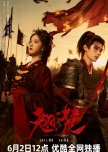
The political intrigue. The revenge plot…
━━━━━━━━━━━━━━━━━━Between the Lines
igiam’s reflections on drama, character and hidden meaning
━━━━━━━━━━━━━━━━━━
I know many viewers loved this drama, and I genuinely understand why. The political intrigue, the revenge plot, and the overall premise had everything I usually enjoy.
Ironically, that's exactly why I kept watching.
Not because I was captivated, but because I kept waiting for the moment when the story would finally make me feel what so many others seemed to experience.
It never happened.
For me, the biggest obstacle wasn't the writing—it was the emotional connection.
Chen Du Ling has beautiful expressions and undeniable screen presence, but in this role I never forgot I was watching an actress portraying a character. I personally missed the natural emotional weight that this kind of story demanded.
I also kept hoping Zhou Yi Ran's character would eventually shift the emotional balance of the drama. I've enjoyed him in previous roles, and I know how expressive he can be. Here, however, his character felt more like emotional support for the female lead than an equal partner in the story, and I never felt he had the opportunity to truly shine.
Many viewers praised the chemistry between the leads. I respect that completely, but I simply didn't experience it the same way. In fact, I barely remember their romantic moments because they never left a lasting impression on me.
I didn't drop this drama.
I finished it because I always want to understand why a story works—or doesn't work—for me. Sometimes the answer only becomes clear at the very end.
For me, *Ashes to Crown* had all the ingredients to become unforgettable.
Unfortunately, despite respecting its ambition and its story, I never formed the emotional connection that would have elevated it beyond a good idea.
And that's the fascinating thing about dramas.
Two people can watch exactly the same story…
…and walk away with completely different hearts.
— igiam
Observing Stories Between the Lines
Was this review helpful to you?
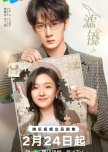
A Fun Fantasy Rom-Com With a Unique Concept ✨
Filter was honestly such a fun and unexpected drama for me. 😂 I started it expecting a light fantasy romance, but I ended up enjoying the characters, comedy and emotional moments much more than I expected. The concept of a bracelet that can change Chengcheng's appearance sounds completely crazy on paper, but somehow the drama turns that ridiculous idea into something entertaining, emotional and surprisingly meaningful.What I loved most about Filter is that the bracelet isn't just a gimmick. Every transformation reveals a different side of Chengcheng and allows the drama to explore identity, insecurity, beauty standards and self-worth. At the same time, it creates some absolutely ridiculous situations. There were moments when I genuinely thought, "What am I even watching?" 😂 but I couldn't stop watching because the comedy was so entertaining.
🌸 Su Chengcheng — The Heart of the Story
Su Chengcheng is actually a much more layered character than she initially appears to be. At first, she seems like an ordinary girl who lacks confidence and constantly compares herself with other people. She is especially affected by how others perceive her, and that insecurity becomes one of the most important parts of her character.
But what I liked about Chengcheng is that she isn't weak just because she is insecure. She is hardworking, clever, compassionate and willing to help people even when she doesn't gain anything from it. She can be timid in some situations, but when someone genuinely needs her help, she can surprise you with how brave she becomes.
Her transformations make her character even more interesting because every identity brings out something different from her. Sometimes she becomes confident, sometimes elegant, sometimes intelligent and sometimes completely chaotic. 😂 But underneath all those appearances, her basic personality remains there.
Personally, though, I had mixed feelings about her as the female lead. I liked Chengcheng as a person and understood her character development, but sometimes I felt that she didn't have enough of that strong, powerful main-female-lead presence that I personally enjoy. I wanted her to feel more commanding and impactful in certain parts of the story.
Still, Li Landi deserves credit because she had to portray Chengcheng through so many different situations and personalities, and the emotional continuity between those versions was surprisingly convincing.
🧠 Tang Qi — Annoying, Intelligent and Surprisingly Soft
Tang Qi was probably the character I found the most interesting to analyze.
At the beginning, he can come across as cold, blunt and even slightly irritating. 😂 He is extremely logical and observant, but his biggest problem is that he doesn't always know how to communicate his emotions.
He notices tiny details that other people miss, and his sensitivity to visual differences makes him particularly suited to his work in the beauty industry. But ironically, the man who is so obsessed with observing appearances slowly becomes someone who learns that appearance isn't actually what makes a person attractive.
And this is where his relationship with Chengcheng becomes meaningful.
What I really liked was that Tang Qi isn't simply attracted to a beautiful face. He repeatedly becomes interested in different identities because of their personality, kindness, intelligence or the way they interact with him. He doesn't realize that many of those qualities are coming from the same person.
His reactions to Chengcheng's various transformations are also comedy gold. 😂 The man is supposed to be extremely intelligent, yet sometimes the situations around him completely destroy his ability to behave normally.
Tan Jianci's comedic timing was one of the strongest parts of the drama for me. His facial expressions, awkward reactions and completely serious attitude during ridiculous situations made some scenes even funnier. At the same time, when Tang Qi becomes emotionally vulnerable, the character has a completely different feeling.
😂 Chengcheng's Different Identities — The Best Part!
Honestly, the different identities were one of the biggest reasons I enjoyed Filter.
Su Miao brings out the glamorous and confident side of Chengcheng. Watching Tang Qi become interested in her while we know the truth creates so many funny and awkward situations.
Fang Jin was another identity I really enjoyed because this version allows the drama to explore intelligence, confidence and emotional strength in a different way. The contrast between Chengcheng herself and this identity makes the transformation feel more meaningful than simply changing someone's face.
Then we get Quan Sheng Tang, which was completely different again. 😂 Watching Chengcheng take on a male identity creates some of the funniest situations in the drama, especially because Tang Qi's reactions become even more hilarious.
And then there are the animal/object transformations. Some of them are completely absurd, but that's exactly why they work. 😂 The alpaca moments especially gave the drama that chaotic personality where you genuinely don't know what ridiculous thing is going to happen next.
The impressive thing is that these identities don't completely erase Chengcheng's personality. They feel like different pieces of the same person being exaggerated.
👭 Lin Yuan — The Friend Everyone Needs
Lin Yuan was one of my favorite supporting characters.
She isn't there just to be "the best friend." She genuinely understands Chengcheng and supports her without constantly judging her. Even when Chengcheng's situation becomes completely unbelievable, Lin Yuan doesn't simply run away.
Their friendship was honestly one of the healthiest relationships in the drama.
I also loved the comedy between them because they have the kind of friendship where they can be completely ridiculous together. 😂 Their scenes feel natural rather than forced.
And Lin Yuan's relationship with Gu Yu adds another enjoyable layer to the supporting cast.
🤝 Gu Yu — The Reliable Best Friend
Gu Yu is the type of supporting character who makes the story better simply by being there.
He provides a nice contrast to Tang Qi. Tang Qi can be overly serious and analytical, while Gu Yu is more relaxed and socially comfortable.
Their friendship is another strong point of the drama. They don't just exist because the male lead needs a best friend; they actually feel like people who have built trust over time.
I especially enjoyed how Gu Yu could understand Tang Qi even when Tang Qi himself couldn't understand what he was feeling. 😂
👩⚖️ Su Qing Li — The Sister Who Looks Cold but Cares Deeply
Su Qing Li initially gave me the impression of being the typical intimidating older sister. She is confident, successful and much more polished than Chengcheng, which naturally makes Chengcheng feel insecure around her.
But the more we understand Qing Li, the more we see that her seemingly cold attitude isn't simply because she doesn't care.
She has her own way of showing affection. She can be strict and sometimes frustrating, but when Chengcheng genuinely needs support, her protective side becomes much clearer.
I actually liked that their sisterhood wasn't portrayed as perfect. They have misunderstandings, differences and moments where they don't understand each other, which makes their relationship feel more realistic.
❤️ Tang Qi & Chengcheng
The romance isn't the most intense part of the drama, but I liked the underlying idea behind their relationship.
The real question isn't simply "Will Tang Qi fall for Chengcheng?"
It's more like:
"Will he eventually realize what he actually loves about all these different people?"
That makes their romance more interesting.
I also liked that the drama slowly moves the relationship away from physical appearance and toward personality. The filter keeps changing Chengcheng's face, but the person underneath remains the same.
That's basically the entire emotional point of their relationship.
😂 The Comedy — 10/10 for Chaos
The comedy was probably the biggest surprise for me.
Some scenes were so absurd that I couldn't take them seriously—and I don't think the drama wanted me to. 😂
Tang Qi's reactions, Chengcheng trying to maintain her secret, the different transformations, the awkward misunderstandings and especially the animal transformations created so many memorable moments.
This drama knows when to be serious, but it also knows when to completely embrace its ridiculousness.
And honestly, sometimes I wasn't even watching for the romance anymore. I was watching because I wanted to know what crazy thing Chengcheng was going to turn into next. 😂
🌷 The Message Behind the Filter
Behind all the comedy, Filter actually has a pretty meaningful message.
The drama constantly asks us how much appearance affects the way people treat us—and how much our own insecurities affect the way we see ourselves.
Chengcheng initially believes that changing her appearance will solve her problems. But gradually, the story shows that confidence doesn't come from having the "perfect" face.
The filter can change how you look.
It can't change who you are.
And I think that's what makes the concept work so well.
🎭 Final Thoughts
Overall, Filter was a really enjoyable drama for me. It isn't perfect, and I personally wanted more from the female lead in terms of that strong main-character presence and wanted the romance to have a little more depth.
But the creative concept, hilarious transformations, strong supporting characters, Tang Qi's personality, Chengcheng's different identities and the underlying message about self-worth made it a memorable watch.
It's one of those dramas where you can laugh at something completely ridiculous in one scene and then unexpectedly get an emotional moment in the next.
For me, Filter is best described as:
Funny + chaotic + creative + wholesome + surprisingly meaningful. 😂❤️
It may not be everyone's type of drama, but if you want something different from the usual C-drama romance formula, I definitely think Filter is worth watching.
Story: ⭐ 8/10
Acting/Cast: ⭐ 9/10
Music: ⭐ 8/10
Rewatch Value: ⭐ 8.5/10
Overall: ⭐ 8.5/10
Was this review helpful to you?
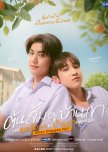
The Oranges Grew & Fell Flat!
Simply put, this is a series that is hard to dislike. It is sweet, genteel, a wonderfully relatable coming-of-age as well as coming-out saga. And frankly one of the few series that I literally ‘binged-watched’. Once one begins to watch this story, it is simply hard to let go of it, as it is so hypnotically entertaining and enticing. And its biggest asset is the protagonists who were all mostly around the age of the characters, which gave the personas a certain gravitas of vulnerability, depth, and realism that they otherwise would not have. Where this series fell, and frankly miserably, was the ending. It was awful, awkward, and artificial. Plus, completely unrealistic and incomplete. This series was certainly cute, enjoyable, fabulously entertaining, but not realistic and thus came across as feckless. It might have made us ‘feel good’ but is that really all these characters were supposed to do? It seemed to me that each had an indubitable story to tell and it was way deeper than to simply making me feel good.Was this review helpful to you?
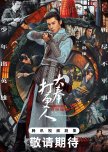
A Fun Journey Full of Mystery and Adventure
Guardians of the Dafeng (2024) — ReviewGuardians of the Dafeng was a fun and entertaining historical fantasy drama with a good combination of mystery, comedy, investigation, action, friendship and romance. The drama has an interesting world and several memorable characters, and I especially enjoyed the investigation and mystery elements.
Male Lead — Xu Qi'an
Xu Qi'an was definitely one of the strongest parts of the drama for me. I really enjoyed watching his character because he is clever, humorous, confident and quick-thinking. He doesn't always follow the rules, but he knows how to use his intelligence when situations become serious.
Dylan Wang brought a lot of energy to the character. His comedy timing worked very well, but he could also handle the more serious and emotional scenes. Xu Qi'an also had a strong presence throughout the story, so it was easy to feel that he was truly the main character.
Female Lead — Princess Lin'an
I actually like the actress, so my problem isn't with her acting or with the actress herself. My main problem is the way her character was written.
I didn't really get the feeling that she had the presence of a proper main female lead. I wanted her character to have more depth, more important scenes, more independence and a stronger role in the main storyline.
Sometimes it felt like her character was mainly there for the cute/comedic and romantic moments rather than being an equally important part of the story. Because of that, I couldn't connect with her character as much as I wanted to.
I really wish the writers had given her a stronger and more meaningful character arc because the actress has the potential to make the role much more impressive.
Huaiqing
Huaiqing was one of the female characters I found more interesting. She is intelligent, calm, strategic and politically aware, and she has a stronger sense of presence in many scenes.
I liked the fact that she could stand on her own and wasn't completely dependent on the male characters. Her personality made her scenes interesting, and I honestly wanted to see more of her character.
Supporting Characters
The supporting cast was another enjoyable part of the drama. The different personalities within the group created a good balance between comedy and serious moments.
The friendships and team interactions were especially fun to watch. Some characters were there to provide comic relief, while others helped move the mystery and investigation forward. This made the group dynamic feel lively instead of making the drama focus only on romance.
Romance
The romance was okay for me, but it wasn't the strongest part of the drama. I think the romance could have been more satisfying if the female lead had been written with a stronger character arc and more involvement in the main plot.
I personally enjoyed the mystery, investigation, comedy and character interactions more than the romantic storyline.
Overall
Overall, Guardians of the Dafeng was an enjoyable watch. It has good comedy, an entertaining male lead, interesting mysteries, action and a fun supporting cast.
My biggest disappointment was the female lead's character writing. I like the actress, but I simply didn't feel enough "main female lead" presence from her character. I wanted her to have more depth, stronger development and a more important role alongside the male lead.
Still, I enjoyed the drama and would recommend it to people who like historical fantasy dramas with mystery, comedy, investigation and adventure.
Overall Rating: 9/10 ⭐
Was this review helpful to you?

My Forever Favorite: An Unforgettable Masterpiece
I honestly have no words for how much I adore this show—it is officially my ALL-TIME FAVORITE K-drama forever and ever! It balances romance, laugh-out-loud comedy, edge-of-your-seat suspense, and pure emotion so beautifully. The chemistry between Hyun Bin and Son Ye-jin is nothing short of magical (and so undeniable!), the soundtrack will give you chills, and while the setup might seem a little wild on paper, the storytelling is so warm and captivating that you just get completely swept away.It will truly make you laugh, cry, and swoon in the best way possible. Beyond the main couple, you fall head over heels for every single side character—they bring so much heart to the story! If you're looking for an epic romance that stays with you long after the credits roll, this is absolute perfection.
Was this review helpful to you?
Perfect Comfort Watch for a Lazy Afternoon
If you're looking for something breezy and super sweet to turn your brain off for a bit, this one is such a cozy comfort watch! It definitely plays right into all the usual "fake relationship" tropes and doesn't reinvent the wheel, but honestly? I didn't mind at all. The chemistry between the leads is totally charming and adorable, even if you can spot every plot twist from a mile away.It sticks pretty closely to the classic rom-com formula—complete with the usual misunderstandings and cheesy moments—so don't go in expecting a groundbreaking masterpiece. But honestly, I really enjoyed it! I ended up completely hooked and binged the whole thing in a single afternoon.
Was this review helpful to you?
Hooked from the start, but left me a bit confused
I was absolutely obsessed with the first part of this show! The intense energy, the fast pace, and those cleverly cruel games had me totally glued to my screen from episode one. Empty Tokyo looks breathtakingly eerie, and Kento Yamazaki’s performance brings so much raw heart and desperation to the struggle to survive.That being said, as the story went on, it started losing a bit of its magic and direction for me—or maybe I just didn't fully grasp where the plot was trying to go by the end. It's still a thrilling, pulse-pounding ride that dives deep into human nature under pressure, and if you love psychological survival stories, it's definitely worth the watch, even if the later direction gets a little lost in the noise!
Was this review helpful to you?

Visually Stunning, Storytelling Missed the Spark
Honestly, a drama about a swoon-worthy demon losing his powers and getting stuck in a contract marriage with a icy heiress sounded like everything I ever wanted! But it just didn't quite hit the mark for me. Song Kang and Kim Yoo-jung are absolutely stunning together, but even their visual chemistry couldn't save a weak storyline that starts dragging and loses its way near the end.It’s completely gorgeous to look at, but the characters feel a bit surface-level as the story goes on. What started as such a fun, magical rom-com ended up feeling a little flat, and I was left feeling like this amazing cast was completely wasted on a super predictable plot.
Was this review helpful to you?
This review may contain spoilers
It starts promising, it ends disappointing
When the first three episodes were released I was hooked, the concept was intriguing and the chemistry between leads was great however it quickly turns frustrating and stagnant.Bei Luqing, I hate you.
He continuously leaves Xiaofan in the dark, not communicating or just straight up lying to his face in order to ‘protect him’, what a load of bullshit. He also kicks Xiaofan out abruptly and then ignores Xiaofan for 2 year leaving him to believe he’s totally worthless then shows up on his birthday pretending nothing happened. Bei Luqing was clearly the main problem of this relationship.
And the most frustrating thing was he never changes, there’s no character development, no arc. He is like this the entire time.
In the final episode, Xiaofan had his revenge, good for him. Luqing shows up and suddenly asks him to marry him then they live happily ever after.
On one hand, I’m glad it had a happy ending but on the other, it doesn’t feel satisfying when it’s not earned. luqing never changes and the problems in their relationship are never discussed or resolved.
Was this review helpful to you?
Masterpiece
When l started l didn't have much expectations of this drama but it got me hooked fast in the first episodes. This drama is good and shows how the leads fought their way from the bottom to the top and the scenes and emotions feel real and are beautifully done. This is a must watch and is one of the best dramas this year.Was this review helpful to you?
When “Sibling” Affection Becomes Impossible to Hide
OVERALL IMPRESSION🌟A sweet, funny, and uncomplicated romance driven by the leads’ wonderful chemistry rather than abuse, kidnappings, or face-slapping.
STORY & ROMANCE💞
The leads were raised as siblings, although they are not related by blood, and the ML had practically raised and protected the FL before his biological family found him. Their closeness made everyone uncomfortable, yet neither could tolerate the thought of the other choosing someone else. The ML claimed he had no interest in marriage, which was true—because the FL was the only woman he would ever consider marrying! Whenever they entered a family gathering, the atmosphere became icy enough to skate on, while poor Grandfather’s hilarious reactions showed that everyone understood their feelings before they did.
WHAT I LIKED✅:
I loved how completely they understood one another and how each was the other’s bottom line. Poor Grandfather’s reactions were hilarious because their awkward closeness constantly raised his blood pressure, yet even he was not immune to the FL’s charms.
WHAT I DIDN’T LIKE⚠️
The FL sometimes behaved far too childishly, which could become rather irritating and the ending felt much too rushed, almost as though parts of both the beginning and ending were missing.
CHARACTERS & PERFORMANCES🎭
I started watching because I found Cavan Wen extremely attractive, but thankfully, his acting was equally impressive. He made the ML calm, commanding, restrained, and protective without being cruel. The FL may be spoiled and wilful, but she is not weak; she teases him, argues with him, and pushes back when he becomes controlling. I take my hat off to the ML for resisting her coaxing for as long as he did!
HUMOUR😂
Poor Grandfather’s reactions were priceless because their suspiciously close relationship constantly sent his blood pressure soaring!
FINAL THOUGHTS💭
This was a beautiful romance about two people who had always been each other’s bottom line finally accepting their true feelings. Sweet, funny, entertaining, and definitely a must-watch that I happily recommend!
Was this review helpful to you?
Partners in solving crimes, partners in life, JBL comedy is back!
I started this show mainly for Mister Shu which i had loved since Kamen rider more than 15y ago...and what can i say, up until now this show has been a blast.It is cute, very funny, easy to watch, you do not feel bored at all and the 20 mins pass so quick. The chemistry is great not only when it comes to their acting but I aslo feel like they have great physical chemistry and a charm about their interactions that can only make you root for them to be partners in solving crime and...in life! The whole police office staff is great, adding the perfect amount of comedic relief and slice of life aspect and there is something very domestic about it all that I just love so much. I'm also very appreciative with some of the deepest moments and I can already feel that they're about to grow together as people but also as members of the police staff.
Very good, japanese BL is truly back with this one, I recommend this feel good comedy drama when you feel blue!
Was this review helpful to you?
This review may contain spoilers
She is a prickly pear
Currently, our screens are filled with FL being gifted with a do-over and/or a sickly/disabled ML plotting his revenge. This one ticked all the boxes. Once more unto the breach!Alas, it didn't quite pay off. Not a total loss, but it was a frustrating watch for me. Please allow me to explain.
On paper, this series has a nice throughline. While the dynastic inheritance plot is OG, there is always room for one more. ;)
When the series started up, the FL came on with a bang. She is no nonsense and takes no prisoners. On the other hand, the ML appears sickly, yet he can still fight the good fight. He saved the FL multiple times, both as himself and in disguise. So far, so good.
Issues start to pile up for me as the show progresses. This is largely due to how the FL is written/portrait and the associated plots.
To wit, the FL seems to sit inside a Teflon coated bubble. She is ruthless, but everyone in her circle is ruthless. She is smart and cunning. She knows what she wants. That's a plus, right? Alas, this is Ancient China. Women's rights won't be invented for a while . . a looong while.
Sure, I have watched plenty of strong FL in other shows. They back it up with a sharp sword or they are great merchants or uber skilled craftswomen. She is none of those.
Our FL goes big. Court politics is no joke. She knew that and told us from the start she needs someone with power to back her up and that's where the Crown Prince comes in. Yet she ends up pushing him away until EP.20. Even then she insists she does not love him. Nice, it makes the ML look pathetic.
She also seems to be untouchable. The king dotes on her. She is allowed so much autonomy. It made no sense when compared to other female protagonists.
She also has amazing plot armour. Every attempt to harm or discredit her fails. We are seldom shown how she discovers such plots. It is like magic.
To be fair, this also happened to FL in other shows, but they are loveable and likeable. Our FL is a prickly pear. She has 1 friend and 100 enemies. Her treatment of the ML doesn't exactly endear her to me either. Sometimes I wonder whether I should cheer on the antagonist! :p
Speaking of antagonists, they are a motley crew. Most male in her orbit are obsessed with her and most females hate her. Friends? Frenemy? Enemy? Take your pick. ;)
At the start of the show, the sweet original Princess dies, and the soul of the FL takes over her body. Instead of going back in time, 3 years has lapsed. The FL shows little interest in the past. At least not personally. The nice princess is subsumed. The FL remembers both lifetimes, but it is like flipping through a photo album. She taps the memories for useful intel. She is an enigma. I am still not sure if she is/was good, chaotic or evil?
Her motivations can be a mystery. She talks about the greater good. Yet I don't sense her being a particularly righteous person before her demise. This permeates the first half of the series. She exists in this moral grey zone. She can be ruthless in one scene and saves a beggar in the next. What is she striving for? Good of the empire? People Power? Personal gains? Revenge?
This goes double for the romantic storyline. We have crushes, unrequited love, obsessions and more. What we don't get is True Love™. The FL pretty much tells the ML she doesn't love him at every opportunity. He comes off lightly, BTW. The rest are still picking up their shattered psyches. :p
This is frustrating because the show loves to tease us with a love ballad whenever the ML tries to woo her. Better luck next, next, next time. (Groan)
This is amplified 10 times on their wedding day. The ML moves heaven and earth to bring her father and brother back from the frontier just so that their little family unit can have a quiet celebration. She was so happy and then she reminded him, while in bed, of their no-touchy "business" agreement. How romantic! I was hoping this will be the turning point I was hoping for. Instead, the plot turns even more inwards. 🤷
Production wise, it is good. Hengdian has turned costume drama production into an industrial process.
In the end, I am exhausted. In isolation, none of the issues I listed are deal breakers. However, when taken en masse, they made me question my life choices.
I don't hate this show. It has its moments. Unfortunately, after 21 eps, I still can't ship the OTP. I feel nothing. I am sure there will be a happy ending (although I have heard mumbling about that as well).
Au revoir, I'm done. Other dramas are calling me. Peace.
Was this review helpful to you?

Exhilarating watch
youth is right nowwatching it made my heart race so fast because I can feel their youth through the screen which is why I love it. I never knew youth drama can be like this; exhilarating.
youth is right now
watching it made my heart race so fast because I can feel their youth through the screen which is why I love it. I never knew youth drama can be like this; exhilarating.
youth is right now
watching it made my heart race so fast because I can feel their youth through the screen which is why I love it. I never knew youth drama can be like this; exhilarating.
youth is right now
watching it made my heart race so fast because I can feel their youth through the screen which is why I love it. I never knew youth drama can be like this; exhilarating.
Was this review helpful to you?
This review may contain spoilers
A Mind-Ransacking Masterpiece
For me, this drama will truly ransack your mind. As you get to know the characters, you'll constantly uncover hidden secrets, layers, and clever clues. That intricate plotting and mystery-solving aspect is easily one of the biggest reasons why I rate this high.When it comes to the music, I totally love it. They used songs and BGM at just the right emotional moments. Though, to be fair, there were a few times where I felt like the BGM was a bit too loud, or used during scenes that honestly didn't even need any music playing.
As for the entire cast—both actors and actresses—they all did a phenomenal job bringing their roles to life.
Let me talk about some of my favorite characters, or the ones who really stood out to me throughout the drama.
Starting with Shen Xi He, I honestly couldn't like her character at first; she came across as way too timid and cold. But as the story progressed and you get to know her deeper, I found myself growing to really like her. She is strong, resilient, and fiercely knows what she wants. My only minor critique—not really a dislike, just a missed opportunity—is the lack of showing us what the original Shen Xi was actually like. Even though it was mentioned early on in the episodes that the original was gentle and contrasted with the new Shen Xi, I wish they had given us at least a brief flashback to see it firsthand.
Then we have XHY, the Crown Prince. Is it weird that I never disliked his character? There are always different sides to people, and XHY showed that to us so well. On top of that, he never stopped or interfered with Shen Xi He’s plans—instead, he was always quietly right there supporting her.
As for characters where I'm torn between feeling pity or pride, we have Prince Li and Shen Yin Rou. We watched the pure side of Prince Li unfold, though I was often conflicted about whether he was truly a good person or not, especially as we witnessed his maturity and difficult choices.
Meanwhile, Shen Yin Rou chose the path that she genuinely wanted for herself. Honestly, for a while, I really thought they would end up together—there was definitely some chemistry there! Yet, they each chose their own separate paths, and in a way, that's what made their arcs so hauntingly beautiful.
Let's also talk about the absolute dedication of the Xi, Mo, Yu, Tian, etc., and the loyal helpers of both the male and female leads. The unwavering loyalty and devotion they showed to their majesties added so much heart to the story.
Now, for the character, story, and couple that I like the most: Bu Shu Lin and Cui Jin.
I love how BSL/BSY portrayed the harsh reality of why having a son was considered so important in that era, and how heavy family responsibilities always came above everything else
But at the same time, BSL showed us such incredible passion and fierce determination. As for Cui Jin, he felt like the most grounded and normal person in the entire drama. I love their story—it was catchy, fun, and provided a much-needed, lighthearted getaway from the intense push-and-pull dynamics of the main couple.
Let's appreciate the intricate palace politics, the sharp character writing, and the fact that the female lead isn't just a passive pawn. However, some sheer density of the plot requires full attention, meaning if you miss a single episode or dialogue heavy with hidden meaning, you might find yourself scrambling to catch up.
There is just so much to say really, but Blossoms of Power leaves a lasting impression long after the credits roll!
Was this review helpful to you?


