
 News



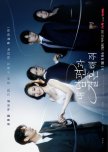
Namgung Ho (Seo Kang-Joon) and Lee Mi-Do (Ahn Eun-Jin) have known each other since childhood. Moving from simple childhood buddies to close friends, they ended up becoming lovers for the past decade and are now preparing to get married. He works for an agrifood conglomerate, while she, as a director, is going through a severe professional crisis. Both share a common background rooted in childhood trauma. Ho, whose gay father left the household early on, had to endure living with a toxic, mythomaniac mother for years before Mi-do’s family took him in as one of their own. Her family revolves around a matriarch and siblings who have also seen dark days. Mi-Do is the black sheep: emotionally and professionally unstable, she is a headstrong woman whom only Ho manages to tame. Though loyal and in love, passion seems to have drained out of Mi-Do for several months now, leaving them at a crossroads: marriage or a permanent breakup. To test their love, Mi-Do proposes a dangerous game to Ho: each of them will pair up with a close person in their circle who harbors feelings for them, and after one month, observe the results to decide their future.
We were initially sold an innovative work designed to shatter conventions, explore the gray areas of passion, and showcase genuine behavioral boldness through infidelity, heightened sexual tension, and leads who fully own their conflicting desires. Unfortunately, the final product turns out to be the exact opposite of those expectations, sinking into a surprisingly conventional and timid aesthetic. To be clear, we are nowhere near The Trunk or pure lust here. The promised transgression is ultimately relegated to mere talk, never actually materializing. This toxic relationship ends up bogged down in excuses and an atmosphere of masochism. Indeed, Ho and Mi-Do illustrate a long-term couple that never manages to win the audience over due to an endless game of emotional ping-pong fueled by constant guilt. Incapable of making clear-cut decisions or standing by their choices, they trap themselves in a shady, game-playing dynamic where the script continuously confuses suffering with proof of devotion, and sacrifice with true love. This chronic inability to cut ties or build independent lives could have made for a fascinating psychological study on emotional codependency, but the narrative dodges the hurdle entirely, settling for narrative stagnation.
One of the most irritating aspects is the treatment of the alternative partners: Su-Ah (Jo A-Ram) and Tae-Seung (Lee Joo-Ahn) are reduced to simple romantic props or revelatory mirrors used solely so the main couple can search for reasons to keep existing. Rather than being developed as real alternatives with their own stakes, they are used in a spineless way—serving as crutches to test an attachment without ever risking the core relationship. It feels as though Ho and Mi-Do couldn't care less about the fallout of this bizarre seduction game. This utter indifference toward the emotional impact on others deserved to be called out by the writing, which instead chooses to ignore it, robbing the second leads of the depth they deserved. A sense of selfishness prevails: they indulge themselves by playing with other people's feelings. Similarly, there was plenty of room to dig deeper into the family's role in their growth, but the show skims over that development, flooding us with bland flashbacks instead. Key elements are revealed far too late when they could have enriched a thoughtful exploration of guilt, separation, and the struggle to rebuild oneself. The comedic beats, often badly timed, repeatedly diffuse situations that cried out for real gravity.
Following a disastrous first half, the drama completely stalls out in its final episodes, giving the impression of running in circles. The tedious pacing and repetitive scenes make you want to put an end to the misery. After 14 episodes, you are left feeling thoroughly cheated. To quote Dalida: "Paroles, Paroles" (all talk, no action). It feels like the script never knew how to tell this story, which frequently comes off as tone-deaf, unhealthy, and fizzles out to nothing. Emotionally speaking, Ho and Mi-Do annoyed me more than anything else: she is irritating beyond belief, while his stoic calm and passive nature in critical situations defy common sense. On the flip side, Su-Ah feels like Ho’s true other half, having been in love with him forever, whereas Tae-Seung seems to be mostly pursuing a physical relationship. The tired direction and sloppy editing fail to mask the show's overall flaws. On the positive side, the four lead actors deliver decent performances, but they can't salvage a drama that was sinking from the start—I'm still trying to figure out what the initial message was supposed to be. Even the resolution stays true to the rest of the show.
In summary, the promise of a steamy, subversive drama goes completely unfulfilled; it completely misses the mark. The workplace setting merely serves to disguise the thin writing. In 2026, holding an audience's interest over 14 episodes requires substance. It's a shame, because with a premise like this, there was potential to craft something unique and modern. Instead, KBS preferred to stay firmly in the breakdown lane. The risk-taking is practically nonexistent, choosing instead to lull us to sleep with a couple I wouldn't want to meet in real life, for fear of being infected by their toxicity and wretched relational pathology. In A Love Other Than Yours, don't expect romantic passion or sexual tension: it feels like a quartet actively avoiding physical contact and reveling in platonic stagnation. At times, especially early on, it feels like a messy rom-com that makes no sense. As for the ending, it mirrored the rest of the drama: non-committal, refusing to take a stand, as if saying: "Figure it out yourselves and think whatever you want, we're washing our hands of it." I'm giving it a passing score strictly for the cast and the OST, because the story itself left me completely cold.
Was this review helpful to you?

This review may contain spoilers
Cute but kinda clumsy?
An 8.2 rating on mdl is quite high for a jdrama so maybe I went in with high expectations. I really wanted to like this more, i love the roommate trope and the first episode with main leads bantering seemed quite promising. But this drama is kind of all over the place.There isn't really a main storyline, it's just bits and pieces of the characters' lives and work but it's not cohesive. The friend group does not get enough scenes together to feel like a tight knit group and the friendships are very underdeveloped so when there are scenes that are meant to be emotional, they just fall flat. The romance progressed WAY too fast, both the main and the second leads. I mean a kiss in episode 2 for the mains?? I was shocked. Their relationship should be cute on paper but it just feels like it doesn't have any substance because they went so fast from being strangers to dating, and because I don't even know when she stopped liking her boss. This also made the final dilemma for the ML a little annoying? It didn't feel like their relationship was deep enough for him to consider giving up on such a big opportunity for her. The second leads were just so meh, the SML liked the FL first and then switched to the SFL like 1 episode later. They were also super underdeveloped and felt forced honestly, they aren't very compelling as characters especially the SML which makes it hard to care. I really think the main leads could have benefited from the screen time given to the second leads.
The drama looks very pretty and the music really helps with the atmosphere. There aren't unnecessary misunderstandings and it's quite an easy watch. I LOVED the end little bits where we saw Shun's POV and their pre-relationship scenes (which is not a lot) are fun. I can see why a lot of people like it but it unfortunately suffers from underdeveloped relationships and pointless side characters which I personally value a lot.
Was this review helpful to you?

Very good but not legendary
My Rating: 9/10Just watched all 8 episodes of Dead-End Job straight without stopping on my first day of break, and omg, I genuinely loved it. The quality was SO good, the plot was really interesting, and the actors were all amazing. I was hooked from the beginning.
But honestly, it's a 9/10 and not a 10 for me because the ending left me with so many questions. Maybe I missed a few things, but even after finishing the final episode, there were still so many details I didn't fully understand. I was expecting a much bigger explanation, especially about why those specific shifts were chosen and what everything was ultimately leading towards.
I wanted that big click moment like in Light Shop, where things might seem confusing at first, but by the end, everything connects and you finally understand the meaning behind all the little details. With this one, I was waiting for that moment, but it never really came. It just ended, and I was left thinking "Wait... so what was all of that supposed to mean?" 😭
Another thing is that I think they could have pushed the horror and tension even further.
I also wish the shifts themselves had been more challenging and dangerous. They had so much potential to create genuinely terrifying situations, almost like Alice in Borderland, where every task feels intense and you never know what's coming next. The shifts werent bad but for example I still don't fully understand why the construction site shift was considered so deadly??
So yeah, I think the biggest issue for me was the lack of a satisfying, full-circle explanation. I don't need every single detail spelled out, but I do want the mysteries and symbolism to lead somewhere, especially when the story builds up so much intrigue.
Still, a 9/10! The cinematography, production quality, acting and overall plot were genuinely impressive, and you can tell a lot of effort went into making this drama. Despite my questions and criticisms, I had such a good time watching it, and finishing all 8 episodes in one sitting says enough.
Definitely worth watching, just don't go in expecting every mystery to be explained! ❤️
Was this review helpful to you?
This review may contain spoilers
This truly could've been better
I was really excited for Marry My Husband to come out since I read the webtoon and I really liked it! I should've known better. You know, people always say that live actions never do the book or original source material justice, I thought at times that these people were overexaggerating, they weren't. The live action honestly just felt very rushed and as if they had to fit almost everything from the webtoon in a short frame. I truly think more episodes might've done this show some justice as I felt like that was a big issue. Overall, they didn't really stray away that much from the webtoon, minus a few things, such as Minho's death, and much more. In the webtoon, Minho died by disabling the brakes of the car he drives since he wanted to kill Sumin since he knew that she was going to drive the car soon, but instead he got drunk, forgot he'd disabled the brakes, and killed himself. In the live action though, Minho died because of Sumin (I think) throwing him at a glass table. They also changed how Jiwon found out that Jihyuk traveled back in time, in the webtoon Jihyuk actually wrote a note addressed to Jiwon about how he traveled back in time (there's more but I can't really remember), but in the live action they found out through BTS songs. In the webtoon, Jihyuk also knew that Jiwon traveled back in time, but in the live action he did not know. I honestly feel that if there were more episodes or if the episodes had a longer run this kdrama would've been better since it wasn't that bad, it's just that it feels as if there was no time to process what was being shown.Was this review helpful to you?
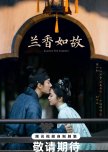
Different lives. Different wounds. Different dreams.
━━━━━━━━━━━━━━━━━━Between the Lines
igiam’s reflections on drama, character and hidden meaning
━━━━━━━━━━━━━━━━━━
Some wished to study.
Some dreamed of travelling far away.
Some wanted to build something of their own.
Some simply wanted their families to be safe.
Others longed for freedom, equality, a second chance… or the right to live as themselves.
Different lives. Different wounds. Different dreams.
And perhaps that is one of the quietest truths Against the Current leaves behind:
A meaningful life does not look the same for everyone.
Sometimes we spend so much time surviving, fulfilling expectations, or doing what life requires of us that we forget to ask ourselves what we would actually choose.
So I won’t ask you what your biggest dream is.
I’ll ask you something else:
If fear had no say, no one expected anything from you, and you didn’t have to prove anything to anyone…
what would you choose for your own life?
igiam | Observing Stories Between the Lines
Was this review helpful to you?
Good premise let down by poor execution
Skipped through the final episode. Easily one of the most overrated shows I've watched. Distinct lack of danger and poor dialogue/characterisation made it very hard to emotionally latch on to any character. Overall, it lacks maturity, pacing is poor, and the pay-off falls flat. Gimmicky rubbish that could have done so much more with its interesting premise.Was this review helpful to you?
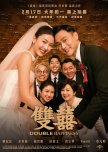
What really got to me was the emotional burden placed on the son. He's constantly caught in the middle of his parents' unresolved issues, forced to navigate their hurt feelings, stubbornness, and wounded pride while trying desperately to keep the family together. He bends over backwards to make them happy, carefully accommodating both sides, yet neither parent seems willing to make the same effort for him. It's exhausting to watch him carry the responsibility for everyone's happiness when he's the one who should be receiving their love and support. At some point, you just want to tell both parents to put their egos aside and actually show up for their son.
Thankfully, the last arc provided a much-needed emotional payoff and left me genuinely happy with the way things wrapped up. A simple but heartfelt family story, and a reminder that children shouldn't have to carry the emotional baggage of their parents.
Was this review helpful to you?
What a disappointment
This is a series I absolutely loved in the beginning. I couldn't wait for the next episode. There was so much chemistry between the two protagonists. Normally it takes times to build, but from minute one, it's so apparent how close these two characters were, it almost feels like like we had a hidden cameras watching them interact with their lives. That's what makes it so great, such an unbelievable connection.The acting is the best I've ever seen. Kang Jun and Eun Jin absolutely give it their all. They are incredible showing us how two people have been deeply in love with each other for thirty years. Not only in love with each other, but in love with their families like they were one of their own.
The antagonists in this, Joo Ahn and Jo A Ram are so easy to hate early on ... but that changes in a big way later in the series. I don't know if I ever watched a drama where I started rooting for the antagonists over the protagonists ... but it happened here.
So, all that greatness through the first 8 or so episodes ...
OMG ... what happened??????
This turned into one of the most depressing, aggravating, annoying, nonsense series I ever devoted my time to.
This was a dream cast put together, the acting was not only perfection, even the supporting cast, especially Min Jae and Nam Hee were brilliant. Absolutely brilliant!!!
What the writers did to this series in the final couple of episodes made me nauseous. I kept telling myself in the final two episodes that this will get better, it will correct itself. NO, it didn't. It got worse.
How this ended was one of the most disappointing finishes I ever saw. The brilliant acting, and I mean brilliant, best I ever saw, was completely wasted.
I'm exhausted and depressed talking about it.
Shame on them!!!
Was this review helpful to you?
This review may contain spoilers
Great cast, great premise, and somehow nothing worth remembering
I went into this expecting a grown-up look at a ten-year relationship that's lost its spark. That's what the trailers sold, that's what the cast promised, and honestly the first two episodes delivered. Then it slowly turned into the most exhausting thing I've watched in years.Let me say upfront that I'm a "one great love" kind of viewer. But that's not why I disliked this. I could have forgiven Mi-do a drunk kiss at the lowest point of her life. People mess up. What I couldn't get past was everything after: lying about it with a fake "proof" video, telling Tae-seung to his face that she'd pick him for sex and Namgung to save his life, and then the whole "let's date other people for a month" thing. Who thought that was a good idea? It wasn't brave or realistic. It just made all four characters worse and dragged two people into an experiment where they were basically props.
Namgung deserved so much better than this script. He spends fourteen episodes being the guy who waits, forgives and cleans up everyone's mess, and the show's big compliment for him is "happy pushover." Hearing that from the woman who cheated on him was a lot. The man needed one scene where he stands up for himself, and the closest he got was leaving.
The bigger problem is how the story is told. Key stuff keeps getting dropped way too late. Mi-do's dad dying to save Namgung shows up in episode 10. In the finale we suddenly learn they both had other people before they got together, played as a cute forehead-flick game. It doesn't add depth, it just rewrites what we thought we were watching. And for some reason half the screen time goes to sweet potatoes.
The ending is where it lost me for good. Mi-do ends up with Tae-seung, the guy this whole mess started with. Namgung ends up with Su-a after the "trial month." Then the last thing we see is Mi-do crying over Namgung's drawing. So which is it? If she chose Tae-seung because she loves him, why is her final emotion grief for someone else? It feels like the show wanted credit for being bold without ever deciding what it was trying to say. There's no moral here, or if there is, it's "cheat, hurt everyone around you, and you'll find yourself in the end."
The beach scene with the kid was actually beautiful, I'll give it that. Turning that childhood tragedy from a curse into a miracle was the one moment where the writing matched the acting.
And the acting really is the only reason I'd give this anything. Seo Kang-joon is heartbreaking, Ahn Eun-jin does what she can with a character who's hard to root for, and Lee Joo-ahn and Jo A-ram both deserve better roles. They were carrying a script that kept tripping over itself.
I kept watching mostly out of morbid curiosity, waiting to see how much worse it could get. That's not a recommendation. If you want a story about long-term love falling apart, there are better ones out there. Skip this one.
Was this review helpful to you?
The Most Illogical Drama of 2026
going into this drama, the characters started off strong, and it was clear the story was going to be about a couple in a relationship with very real flaws.what ended up happening is the director mashing up aestheticly pleasing ‘emotionally charged’ scenes all together in hopes that a story may begin to weave itself- which spoiler alert: it didn’t.
I’m all for a pathetic man, and this ML really did deliver but combined with an incoherent narrative the show is a painful watch as it really is just 14 episodes of tomfoolery.
absolute waste of my time
Was this review helpful to you?

Entertaining like elevator music
Trying to make a review abut the the recently finished Thai BL show You Maniac, with William and Est in the two main roles.Now, the point is something I realized yesterday, when I was watching the tenth and final episode. I was actually fast-forwarding, and I was asking myself: Am I getting old and forgetful? Do I have some sort of BL Alzheimer's, especially with certain shows? Because I couldn't remember anything that had happened before!
Now, I followed the series as it was released, all ten episodes, week by week, and I can't, for the love of God, make any sense of what actually happened. If someone asked me, looking back, "What is this BL story about?", I would have the greatest difficulty explaining what the actual point of the series was.
There is an admittedly wonderful song and music video they made, called Red Flag, which is probably the most interesting outcome of the series. I'm sorry to say. I have to add that I'm not very familiar with William and Est as actors. The first time I saw them was not so long ago in the series Me and Thee, as supporting characters, where Est played the butler and personal bodyguard of Mr. Kuntee, and William played the brother, who had only brief appearances.
I realized back then, for the first time, that they had a huge fan following, which was absolutely surprising and unexplainable to me. But maybe they have made some really breathtaking series in the past that I don't know about. That's something I genuinely have to consider, without any irony.
Now, the interesting thing is that the story itself left me wondering: What is this actually about?
I mean, basically, it's about one playboy who always drinks, goes to discos, has one guy after another, and has no interest in leading a steady, serious life. And then there's the other character, not exactly an introvert, but rather reclusive, whose dedication is to painting, although there is never any real clarity about whether his painting career is going anywhere.
And the funny thing is that we only get told, in text at the end of episode ten, what happened to them. So there isn't even a proper conclusion showing us, "Oh, they got together, he became a successful painter, and they lived happily ever after," blah blah blah. We get all of this in text at the end!
And even in episode ten, they had to put in some drama, because I feel they realized there wasn't much going on. And it was the same old drama of non-communication, which dragged and dragged and dragged. I was watching this practically solely to understand the huge fandom that William and Est have. For any other reason, I would have stopped watching out of boredom.
Now, I know some people watch episode one and instantly say, "Ah, this is nothing for me." I'm usually more patient. I have even watched series to the end that I really didn't like, just to see whether maybe there would be a turn, some big revelation that suddenly made everything interesting. Or sometimes simply to get a complete impression of something.
But this wasn't really a bad show. It's not as if I could get angry and aggravated and say, "Oh God, what a horrible show this was!" But it wasn't a good show either.
You know this show felt a bit like elevator music! It doesn't aggravate you, but it makes the journey a little less boring.
I'm sorry if this sounds a little harsh, but frankly, in comparison, I felt that the acting abilities, at least in these roles, of Est were considerably better than those of William, who is so often praised as the big star.
And I don't want to aggravate fans of the series, or of either actor, least of all. But it remains entirely mysterious to me what people find so extraordinary about them. I think Est was probably the most convincing when it came to conveying emotions. Maybe it's simply the role of Dean that William had to play, because Dean isn't really an interesting or particularly sympathetic character.
But then there's Est playing — I actually forgot the name of his character — this reclusive painter who isn't sure whether to go forward or backward, whether to ask his friend something or not. And then some of his friends tell him, "Oh, Dean has to ask you! Do you want to be his boyfriend?"
And I thought: Why don't YOU ask him if you want to know? I mean, are you the princess in a castle, waiting for the prince to come and ask? You can do exactly the same thing yourself!
And I'll finish here.
You know that I sincerely use the full scale, where five really is the middle ground. And I mean that seriously. And as such, I can only give it a
6/10 points.
Gods knows what the idea behind it all was. I didn't get it.
Was this review helpful to you?

This review may contain spoilers
TOXIC ROMANCE? Unfortunately, I'm Sat
She kept running, He kept chasing and we kept crying....that is The Lament of Autumn in one sentence. The drama broke me, healed me, and then broke me again in the last episode.Long story short, this drama worked for me. It is messy, painful, morally uncomfortable and sometimes frustrating but it is also one of the most emotionally gripping Republican era romances I have watched in a long time. I went in expecting a pretty costume drama with a toxic marshal and a stubborn heroine. I came out emotionally destroyed by a man who spent most of the drama being a freakin' walking red flag and somehow became one of the most devoted male leads I have seen.
SPOILERS AHEAD
The drama follows Yu Changxuan, played by Cheng Lei and Ye Pingjun, played by Xu Ruohan. Changxuan is the fifth young master of a powerful military family. He is charming on the surface, calculating underneath, and completely used to getting whatever he wants. Pingjun is a student trying to earn money for her sick mother. She gets wrongly accused after an assassination attempt on Changxuan and makes a deal with him to find the real culprit within ten days. From there, their lives become tangled in politics, family power games, war, secrets, and a romance that never feels safe.
CHANG XUAN - My Problematic man
Before we get to the version of Changxuan I loved, we need to talk about the version I could not defend. He is not a good man in the beginning. He is controlling, arrogant, manipulative and he uses Pingjun as a pawn in his political games. Their entire early dynamic is built on forced proximity and power imbalance. He forcibly kisses her more than once, ignores her rejection and treats her resistance like something he can overcome. There is also a scene where he goes even further and tries to assault her, only stopping when he sees her crying and trembling. That moment is not romantic. It is frightening . The drama may want us to see these moments as part of his obsessive love, but CONSENT IS CONSENT. No amount of later devotion can erase what he did in those early episodes. If you cannot separate a character from his worst actions, I completely understand why this drama would be a hard watch. The writers should have handled that arc with more care instead of dressing up coercion as passion.
But here is why I still ended up loving Changxuan as a character, not as a role model. He changes. Not in a cheap, one episode redemption way. His change is slow, painful, and earned through loss. He starts as a man who believes power can solve everything and that Pingjun will eventually belong to him because he wants her to. But by the end he becomes a man who learns to wait, to respect her choices, to protect her without owning her, and to put her safety above his pride.
What makes his arc work is that he is forced to sit with the consequences of who he was. Pingjun does not forgive him easily. She does not run back to him just because he looks sad or says the right things. She makes him earn every bit of trust he gets back. That is why his later devotion feels different. He also stops treating Pingjun like a prize he won. In the beginning, he wants her because she challenged him and because he is not used to being told no. Later, he wants her happiness even when it does not include him. That shift is what made me emotionally attached to him. Not because he became perfect, but because he became accountable in the way the story allowed him to be.
Changxuan is not a character I would want in real life. He is not a man whose early behavior should be romanticized. But as a fictional character, he is compelling because the drama does not let him escape what he was. It shows a privileged, violent man slowly learning that love is not possession, power is not safety, and a woman’s fear is not something to ignore.
That is why I ended up loving him. Not as a role model. Not as relationship goals. But as a character whose redemption felt painful, imperfect and hard earned.
Cheng Lei really understood the assignment. He plays Changxuan with just enough danger to make you wary of him, but also gives him these quiet moments of vulnerability that make you understand why Pingjun cannot fully hate him. His cold stare, his desperation when Pingjun leaves him, and the way he softens whenever he see her all felt believable. This is a big step forward for him as an actor.
PINGJUN - The Certified runner
She is poor, vulnerable, and constantly surrounded by people who have more power than her but she never lets that turn her into a doormat. She talks back. She runs. She survives. When Changxuan becomes too much, she leaves. When she remembers the truth, she returns the ring and walks away. She does not stay just because the male lead is handsome or because the plot needs them together.
That is why I call her a certified runner. Some viewers may find it frustrating that she keeps leaving Changxuan, but I respected it. She had every reason to run. He hurt her, lied to her, used her, and took away her ability to trust him. Her leaving was not weakness. It was self respect. The only moment I was genuinely annoyed with her was when she believed Changxuan was responsible for her mother’s death. I understood where she was coming from after her memories returned because the truth must have felt like a betrayal. But after everything she had seen from him, especially after his behavior and personality had clearly changed, I expected her to question things a little more. She had spent enough time with him to know that he was capable of many terrible things but hurting her mother was not one of them. Instead of trying to reason with him or look at the situation properly, she accepted the accusation almost immediately. It felt like the writers needed a reason to push them apart again and Pingjun’s usual sharpness disappeared exactly when the story needed her to be less sensible.
Xu Ruohan portrayed Pingjun so well . Her best scenes are the ones where she says very little but her eyes show fear, anger, love, and exhaustion all at once. She makes Pingjun feel like a real woman trying to protect her mother, her dignity and later her child in a world that gives her very few safe options . But i had a hard time with her "screaming scenes". Some of them sounded strange to me, and they took me out of the scene for a second. But I cannot even hold it against her because her overall acting was strong enough to pull me right back into the story. Her quiet scenes did more for me than most dramas manage with full emotional breakdowns .
My only issue is that the writing sometimes pushes her bravery into unbelievable territory. She takes risks that could easily get her killed, and the drama does not always show the real consequences of those risks. I wanted the story to acknowledge more clearly how dangerous it was for a poor young woman to defy powerful men in that era. Her courage is admirable but courage without consequences can start to feel a little too convenient.
THE ROMANCE
The chemistry between Cheng Lei and Xu Ruohan is the heart of this drama. Their scenes have tension even when they are arguing, and especially when they are trying not to care about each other. The push and pull between them is addictive because it comes from two people who are fundamentally unequal in power but equal in stubbornness.
Their relationship is not a soft, healthy romance in the early half. It is jagged. It is full of suspicion, manipulation, pride, and misunderstandings. Some people will hate that. I get it. But I think the drama is honest about the fact that their love begins in an ugly place. It does not ask you to forget what Changxuan did. It asks you to watch whether he can become someone worthy of Pingjun.
And by the later episodes, when he finally becomes gentle, patient, and hopelessly in love, the payoff hits hard. The contrast makes the tender moments feel precious. When he meets his son for the first time, when he looks at Pingjun from a distance just to make sure she is safe, when he holds onto her hairpin on the battlefield, those moments land because we remember exactly how far he has come.
THAT ENDING???
I am still not okay....
Changxuan dies in the war while Pingjun waits for him with their child. She hangs the pouch and prays for his safe return. On the battlefield, Changxuan takes his last breath with her hairpin in his hand. That final image destroyed me.
It is cruel because the drama finally gives them peace. He finally becomes the husband she deserved. He finally learns how to love without controlling. And then the war takes him before he can come home. Pingjun and their son are left waiting for a man who is never coming back. The child believing his father will return when the maples turn red is the kind of detail that stays with you.
Some people may say the ending was unnecessary tragedy. I understand that too. But I think it fits the story. This was never a drama about a perfect love story. It was about two people trying to love each other in a time when war, class, family duty, and political violence made love feel like a luxury. A neat happy ending would have felt too easy for a story this heavy.
Still, I wish the final episode had given us a little more space to sit with Pingjun’s grief. After forty episodes of pain, the ending moved quickly. I wanted more of her life after his death. I wanted to see her grief, her strength, and the way she raised their son. The final image is beautiful, but it also feels a little abrupt.
The first half leans heavily on familiar Republican drama tropes. Powerful obsessive male lead. Poor but proud female lead. Forced proximity. Misunderstandings. Jealous rivals. Political conspiracies. If you have watched many dramas in this genre, you will recognize the pattern. The drama eventually frames his love as redemptive, but I wish it had been more direct in showing that Changxuan early actions were wrong. Redemption is possible in fiction, but it should not require the audience to romanticize coercion.
FINAL THOUGHTS
Overall, The Lament of Autumn is an emotional, beautiful, and deeply flawed drama that I still loved. It has a strong central couple, excellent chemistry, gorgeous visuals, and an ending that genuinely hurts. Cheng Lei and Xu Ruohan carry the show, and their performances make an already intense story feel personal.
Is it a healthy romance? No. Is Changxuan forgivable? That depends on you. Is Pingjun a strong but annoying heroine? Absolutely. Is the ending sad? Painfully so. Did I cry? Yes. Would I watch it again? Probably, but only when I am emotionally prepared to see that hairpin scene again.
This drama is for viewers who enjoy dark historical romance, morally grey characters, and love stories that do not pretend to be clean. If you want a light, fluffy watch, this is not it. But if you want a drama that will make you angry, make you swoon, make you question the male lead, and then make you cry over him anyway, The Lament of Autumn delivers.
I give it a 9 out of 10. It loses one point for the fact that the writers sometimes confused intensity with consent. But the leads, the chemistry, and that devastating ending earn their place in my heart.
Anyway, do not let anyone tell you how to feel about this drama. Watch it, form your own opinion, and keep tissues nearby!
Thank you for reading :))
Was this review helpful to you?
This review may contain spoilers
Terrible writer! The actress deserved better!
This is such crap! The writer does everything in her power to villainise Mido, there was no need for her to include the 10 year relationship between the leads, its misrepresentation at the very least. Time and again the only way for her to build up Namgung and Sua is by tearing down Mido, don’t even get me started with the unnecessary plot-lines and unaddressed issues; for example why not address Mido’s mental health struggles, her guilt of her fathers death, her family treating her like a second class citizen, her directing career- like when her friend told her she will get to her last 2k in the race but then they dropped that storyline as well. She had the opportunity to use the brother’s gf death as a way to address Mido’s mental health but noooooo that’s work she didn’t want to put in. Sua stalking the ML that is never addressed, the only thing they got right was when Sua’s friend called her out, also why is she using her ‘possible relationship with Namgung’ as a fix for what her father did to her?!Her insistence on putting Namgung on a pedestal was screaming to the very last bit, cause why not show that Mido is a good person just like her father as seen in the last episode when she jumps to the ocean to rescue a stranger, but instead the writer dwells on the sweet potato story which is so useless, such a waste of our freaking time!
This just but a scratch in the surface of the rot that is in this show!
Eun-Jin carries the show on her back; she should actually get compensated twice!
Was this review helpful to you?
The Lament of Autumn
Since I'm not a film critic, I'm not going to make my review some long drawn out critical essay concerning this terrific series.In my opinion, the acting was outstanding by not only the two leads but also the supporting actors. The costumes were beautiful. The story was good. In my opinion, I would say that this is an absolute masterpiece period romance drama. Truly a masterpiece, and I learned a lot about China's Republican era history from it as well. This will be a rewatch many times over for me. I just can't say enough about how much I loved this drama!
Was this review helpful to you?
This review may contain spoilers
Cheng Lei's best role. Chang Xuan, you will always be remembered. Fly high, among the autumn leaves
I want to start by saying that I hate sad endings with all my heart. But this drama delivered an ending worthy of the story. Even though I still can't stop crying, there's something so subtle about the way this story gets under your skin that, by the time you realize it, it's already too late. By episode 40, you're completely emotionally invested in every single one of these characters.Some will make us furious, some will break our hearts, some we'll grow to love, and with others, we've been accomplices all along.
Thank you to Cheng Lei and Xu Ruohan for saying yes to a project that has become a masterpiece in my heart. Yes, the storytelling has its flaws, but its strengths shine as brightly as the midday sun.
This drama goes far beyond dark romance. It's a story about belonging to a nation, about feeling part of a people who refuse to kneel before oppression or invasion.
Was this review helpful to you?


