K-Drama


This review may contain spoilers
Women finding the space and freedom to decide how they want to live their own lives.
One of the things I love most about Against the Current is how deeply it portrays its female characters. Every woman here has her own story, choices, wounds, and ways of surviving. They’re strong and independent in their own ways, but they’re never written as perfect characters who always have to be strong just to prove that they’re strong women.It’s really satisfying to see Lan Xiang’s character development. She goes from being a highly educated noble girl to becoming a third-class servant, and then slowly rises until she becomes the lady of the Lin household. At first, her only goal is to survive and support her adoptive parents. But as her social status changes, so do her ambitions. She doesn’t just want to live a good life anymore, she also wants to help the people around her have a better life.
What I love is that the strength of the women in this drama isn’t only shown through their courage to stand up against others. At the end of the day, they’re women trying to survive and protect their families in a patriarchal society where women are often expected to put their husbands and families before themselves. That’s why their struggles feel so human.
Lan Xiang isn’t fighting the system just for herself. She uses her intelligence and abilities to find a way forward, while also showing that women can help each other and become a “light” for one another. There’s one line of hers that really stayed with me: “One light can only illuminate a few meters. But if I light one lamp and you light another, even the gathered glow of fireflies can illuminate a long road… Let the women walking through the dark night see their way clearly.”
That’s what makes this story feel like more than just a story about one woman trying to change her fate. It’s a story about women fighting injustice, surviving, building families, and supporting each other in a system that was never on their side to begin with.
Even the characters who stand on the opposite side aren’t written as simply good or evil. Some of them weren’t bad people from the beginning. They’re people who got trapped by their circumstances, lost something, or became so consumed by their ambitions that they ended up making the wrong choices. Some of them still have a chance to change and make amends, while others only go further down the wrong path because they choose to get what they want at the expense of others. Like Lan Xiang reminds us, it’s understandable for someone to want a better life, but not at the expense of someone else.
Lan Xiang’s relationship with her adoptive parents is also one of the most touching parts for me. At first, they saved her out of gratitude and to keep the memory of their late daughter alive. But over time, their relationship slowly turns into a family that genuinely loves and cares for each other. They take care of Lan Xiang without expecting anything in return, while Lan Xiang helps them escape poverty and servitude and find a sense of purpose again. Their bond feels warm because it’s built through actions, not just words.
That’s also why I really love the Lin family. In so many dramas, families are often portrayed as places full of rivalry, jealousy, backstabbing, or blaming each other, but the Lin family feels different. Whenever one of them has a problem, the others step in to help and support each other. They don’t waste their time looking for someone to blame or treating each other like competition. There’s such a strong sense of togetherness between them, and honestly, that’s what makes the Lin family so warm and enjoyable to watch.
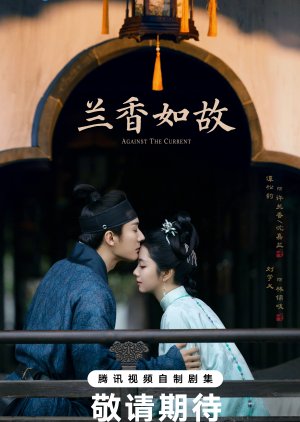
I also really love the slow-burn chemistry between Lin Jinqi and Xu Lanxiang. Their trust doesn’t appear out of nowhere, but is built little by little until it becomes something really strong. And what I love most about Jin Qi is how genuinely he respects and admires Lan Xiang. His admiration isn’t just about her beauty. He sees her intelligence, kindness, grace, courage, and abilities. He appreciates Lan Xiang for who she is, and that’s exactly what makes their relationship feel more meaningful.
That said, Jinqi isn’t always right when it comes to understanding her feelings or the situations around them. Sometimes, he’s a little too naive when it comes to expressing his affection. His perspective and actions are also sometimes influenced by what he personally thinks is right, so what he sees as care or protection isn’t always what Lan Xiang actually needs. Lan Xiang isn’t perfect in their relationship either. She can be stubborn at times, is used to carrying everything on her own, and tends to make decisions based on her own judgment without always explaining what she’s actually feeling to Jinqi. They both have their flaws and different ways of thinking, so their relationship feels more like a process of learning to understand each other, rather than one where one person always knows what’s best for the other. And honestly, I think that’s what makes their relationship feel more human.
Tan Song Yun and Liu Xue Yi also do a great job bringing the everyday moments between these two characters to life through their subtle expressions and natural chemistry. Their interactions aren’t always overly dramatic, and that’s exactly what makes them feel warm and believable.
What makes this drama even more special to me is its focus on the lives of ordinary people during that time. The story doesn’t only revolve around nobles and wealthy people, but also shows how ordinary people lived, worked, survived, and dealt with the social hierarchy. Almost every episode brings something new, so the story never feels boring.
Aside from the story, I also really love how beautiful and carefully planned the settings and cinematography are. The Lin family courtyard is one of my favorite visual elements in the drama. Every view through the windows feels like a piece of art framed on purpose, with such beautiful composition and balance. What I love is that these views aren’t just there to look pretty. They often seem to carry their own meaning and help reflect the mood and the characters’ journeys. Details like these make the world of the drama feel more alive and make it even more enjoyable to watch.
That’s why I don’t think it’s quite right to see this drama as just a romance. This isn’t a story about a female lead who is made strong from the very beginning, only to slowly become dependent on her husband or the male lead to build the romance. Lan Xiang continues to rely on her own skills, knowledge, and abilities without having to put others down or diminish herself.
The drama also doesn’t try to say that women have to be “strong” in one specific way. Instead, it shows different forms of women’s struggles and how social circumstances, family, marriage, and hierarchy shape the choices they make.
There’s one line from Xing Tang that I find especially powerful:
“When will there be a world where women can be like men, go to school to learn, take the imperial examinations, do business and make money, not be bound by their husbands, not be bound by their sons, and simply be themselves?”
That line feels relevant not only to women living in that time, but also to many things we still see today.
In the end, to me, Against the Current is a story about survival, family, hierarchy, sisterhood, and above all, women trying to find the freedom to decide how they want to live their own lives. So I hope people don’t watch this drama only looking for romance and then get disappointed when they realize that the love story isn’t the main focus. The drama already made its direction clear from the very first episode.
That’s exactly why I hope more people will watch it with an open mind. Not just looking for a main couple to ship, but actually paying attention to the characters’ journeys and maybe taking away a lesson or two from the story.
For me, that’s what makes Against the Current so memorable.
Was this review helpful to you?

one of the masterpiece drama this year! ✨
Drama ini ditulis dengan begitu rapi,kokoh dan begitu indah. Tiap dialog dan juga tiap karakter yang ada di drama ini seakan hidup dan kita sebagai penonton merasa seperti terbawa bersama tiap kisah yang disuguhkan oleh tiap karakter yang ada di drama ini.Alurnya begitu mengalir sehingga, kita bisa meresapi tiap momen yang diberikan drama ini dengan berbagai macam perasaan yang begitu penuh. Drama ini juga dengan sempurnanya membawakan tiap konflik sosial yang berhubungan dengan wanita dari berbagai sisi stigma,norma, dan hukum yang ada.
Penulis menggambarkan tiap konflik itu dengan tulisan yang membuat kita sebagai penonton dan juga sebagai wanita itu sendiri merasa terikat dan memahami kisah tiap wanita yang ada di drama ini dengan cara menggambarkannya dengan tiap kata,sikap dan gestur yang apik.
Persoalan diluar women empowerment pun juga ditulis dengan seimbang dan tidak begitu berlebihan. Semuannya begitu pas dan mengena dihati.
Againts The Current is really one of the masterpiece drama in 2026 ✨
Was this review helpful to you?

A Maid's Quiet Rebellion Against Every Tide
Against the Current is a drama where a noble lady survives by pretending to be a maid, and somehow the maid ends up running everything. It holds 8.9 on kisskh, and the acting, costumes and soundtrack earn every bit of that.Shen Jialan loses her whole family to a treason charge and hides as the servant Xu Lanxiang inside the home of Lin Jin Qi, the man whose family once broke their engagement. Awkward does not begin to cover it. Through the slave years, the maid years and the life in the capital, she stays calm, sharp and three steps ahead, and the story proves that worth comes from character and wisdom, not lineage or status.
The world around her is the real antagonist. This is a society built by men, for men, where women have no say in the decisions yet pay the full price for them. A father's treason wipes out a whole clan, a marriage is a transaction, and an imperial decree can hand a woman to a husband she did not choose. The drama shows how rigid rules of rank, bloodline and propriety box people in, and how women get by within them through patience, information and quiet strategy. It is also honest that women are not saints. Some use each other's weakness as a weapon, and the rules turn even kind people into gatekeepers.
The acting is the drama's crown. Every character is played with such skill that the emotions land perfectly, from Tan Song Yun's silent suffering, where you can watch Lan Xiang calculate what to reveal and what to hide, to Liu Xue Yi's soft eyed devotion as Jin Qi. The supporting cast shines just as brightly, especially Liu Mei Han as Ji'er, whose raw, expressive performance in the brothel scene will make you cry on cue.
The women are the heart of the show. Ji'er is competitive and flawed, falls hard, and climbs back with her self respect intact. Zhao Xing Tang is the brilliant, trapped first wife, a bird in a golden cage passed along by the family like a gift. Xiu Wan is spoiled and free spirited, Xiu Ru is shy but secretly sharp, and both grow without losing who they are. The elder women of the household, the mothers-in-law and matriarchs, are the guardians of the rules, and you feel the weight of their stares in every hall. Even Grandpa Lin, who looks cold, turns out to be protecting the family from the dangers of politics.
The children and the next generation matter too. They remind us that the rules do not end with one woman, and that every lesson Lan Xiang teaches is meant to reach those who come after her. When she raises children and steers the clan as matriarch, it feels like her way of changing the household from the inside, one generation at a time.
Then there are the costumes, which do more than make everyone pretty. They tell you who is rising and who is falling, and Lan Xiang's clothes change as her place in the world changes. Add the courtyards, the seasons and a soundtrack that wraps the sad scenes in a soft ache, and the whole thing looks like a moving painting.
The main couple is the quiet engine. Lan Xiang and Jin Qi know each other deeply, and they support each other even when they are apart, each trusting the other's mind when words run short. Her distance at the start is fair, since his family walked away from hers and he later married her by imperial decree. That wound needed time. But Jin Qi owns his faults, treats her well and honors her family, and he grows from a proud, upright heir into a man so devoted he gives up his post as Left Army Commander for her. I wanted her to answer his love in kind once she truly knew him. Marriage is a two way street, and for long stretches he drives alone. The time jumps skip the very moments where her heart should have opened, and even their closeness arrives like a surprise.
The ending is the drama's one real miss. Too many characters die, and grief starts to lose its sting. Jin Qi's death comes after decades together, yet it feels thin on reason and weight. Lan Xiang's own end leaves us outside her heart, with no regrets, no memories and no look back at the life she lived. Her family's name is cleared only 113 years later, long after she is gone.
Watch it for the schemes, the plots, where every strategy was a silent weapon, the beauty, the flawless acting and the strong women. Bring tissues for the ending and patience for her slow heart. I give it 9 out of 10.
ps: My one pet peeve with Chinese dramas is that the heroine’s brilliance and the hero’s shrewdness are shown on separate tracks. In Against the Current, Lan Xiang’s brilliance runs mostly on her own track while Jin Qi stands beside her more than he schemes with her. The best love stories in any era are partnerships. Two sharp minds with one heart are far more satisfying than two geniuses taking turns. There is something deeply true in that. That is what makes it so frustrating when a drama builds two clever leads and then keeps them apart. Unity is the more intelligent strategy. One mind sees the board, the other sees the people, and the heart between them keeps the cleverness humane instead of cruel. Add the faithful maids, aides and friends as a circle of trust, and the villains do not stand a chance, because they scheme alone while the heroes win together. Dont get me wrong, I loved the drama it was fantastic but it could have been more. I want leads to outwit the evil with wit, ingenuity and compassion in one accord, keeping each other and their people close to their hearts. The evildoers always scheme in unity, husbands and wives plotting hand in hand, so how much more should the good guys stand together?
Was this review helpful to you?
Emotional
The best thing about this drama, apart from the amazing cast, beautiful OST, and absolutely stunning costumes, has to be the way emotions were brought to life in every single scene. The actors did an incredible job of making you feel every emotion as though you were right there with them. The joy, pain, heartbreak, anger, love, fear, and longing were all portrayed so naturally that it was almost impossible not to get emotionally invested.And the children deserve a special mention because WOW! Their performances genuinely surprised me. The emotions they were able to evoke, even at such young ages, were so raw and convincing. There were scenes where their expressions alone said everything, and honestly, they did me in. Some moments broke my heart without even needing much dialogue. You could feel the weight of what they were going through, and that is a testament to how talented they are.
As for Seven Tan, she absolutely slayed as always! She is truly one of those actresses who knows how to completely immerse herself in a character. She doesn't just act the emotions; she makes you feel them with her. Every look, every tear, every smile, every little gesture felt intentional and believable. She remains one of my favourite actresses, and she continues to prove why she is at the top of her game.
The chemistry between the cast, the storytelling, the music, the costumes, and the emotional depth all came together beautifully. This drama took me on an emotional rollercoaster, and I genuinely enjoyed every bit of it.
Now that it has come to an end, I already know I’m going to miss it. It’s one of those dramas that stays with you even after the final episode. Definitely one for the books, and one I’m glad I watched. ❤️
Was this review helpful to you?
Was this review helpful to you?

Thought-provoking, existential, and female-centric
Against the Current is a female-centric show about the arc of a woman’s life. It is not an idol romance. “Live” was her mother’s final wish for her, and this is the story of how our protagonist struggles to survive, thrive, and find meaning and happiness in this precious second chance at life.The society portrayed in this show sets a perfect stage to accentuate her struggles. It is one of the most classist and sexist I’ve seen in a drama. The servants are basically in a slave class and treated like property, which automatically sets us up for some pretty brutal stuff. Women also seem to have few rights and little choice. It’s such fodder for righteous indignation that at first I thought it’s fake; but, disclaimer on the title page aside, it’s apparently based on the Ming Dynasty and quite accurate.
Lanxiang, the main character, is one of those excessively smart FLs who always seems to have the upper hand. At first she is timid and just trying to stay out of trouble, but gradually we see her do more and more to help herself and those around her. She is a bit Mary Sue sometimes, with plot armor to boot. Somewhere in the middle I did get a little tired of her constantly figuring things out and saving the day. The repetitiveness was exacerbated by having too many similar incidents glued together in quick succession by unceremonious time skips.
But most of the time, I was immersed and on her side. She’s still relatable through some real setbacks and emotions, and especially with the hand she’s dealt at the beginning, you can’t help but feel for her.
For the ML, Jinqi, at the beginning I saw some people calling him red flag or even black flag, but I didn’t really see it. To me, he’s just realistic- carries some unresolved anger, thoughtless sometimes but not malicious, accustomed to privilege, etc. Does some good things, does some bad things. Definitely a few times I was really frustrated at him (and some of his issues are so realistic, it might be triggering!), but I still found him more interesting than those cookie-cutter MLs.
But mostly, I just feel like the show isn’t really about him. Jinqi is a big part of Lanxiang’s life and certainly important to the show, but SHE is the hero we admire and root for.
In fact, this show is female-centric in an uncommonly complete way. It has the feel of being by women, for women, much like Lanxiang’s own plays in the show. (I’m sure men would enjoy this show too, although it probably depends on the man). The FL is excessively capable, able to save herself and others; there’s a large focus on positive female friendships and girls supporting girls; the struggles of women are featured regularly, and we see different ways that female characters contend with their powerlessness in a society that offers them few paths. Even the female villains are much more fleshed out than their male counterparts, with more than one tragic psychopath you can’t help but admire. ...I am ok with sympathetic villains as long as other audience share my sympathies, which it seems they mostly did.
But most important, to me, is the show's focus on the entirety of Lanxiang’s life. Her life has breadth and depth- lots of different issues she cares about, different relationships, different endeavors, moving through both bitter and sweet. She’s a full person, not reduced or simplified.
A key component of this is how the romance is handled. In this show, there is no fairy tale romance or perfect man to make all her problems better and/or grant her happiness. It took me half the show to realize that, it’s not that the romance is very slow; rather, its underlying ethos is different from the typical show.
Even compared to non-romance shows, I think this one might be more disappointing for some viewers because, first, it has the look and feel of an idol romance. With a dashing ML (money, power, looks, ready to save FL... check check check) and beautiful cinematography, you expect one thing and get another. And second, it’s not exactly non-romance either. Rather, it gives an unusual balance- her relationship is important and has plenty of drama, but it’s not the end-all be-all of her life either. The same goes for her friends. It’s uncomfortably realistic. Perfect partner or not, time moves on, and meaning, fulfillment, and happiness need to come from many different sources.
By the way, the controversial development in their relationship that finally brings them together, more than halfway through the show, made some people really mad! But personally, I thought it’s interesting and good storywriting.
This show has some really great side characters, many of whom have multidimensional personalities and/or actual development. There are also plenty of truly heartwarming and sweet relationships between children and parents, siblings, and friends. Although, with so many characters, I sometimes had a hard time remembering who is who. Knowing some Mandarin is helpful here because you can listen for kinship terms which automatically tell you the relationships; I never figured out a lot of their names.
As for plot... in the first half of the show, a lot of the conflicts seem to arise simply from the terrible social structure. It’s sometimes difficult to watch, but luckily Lanxiang has both intelligence and plot armor on her side. Then political conflicts start to creep in. Chinese shows love to go on about “for the common people”, but this show is ABOUT the “common people”, who can only do their best to accept, adjust, and survive.
Through it all the characters develop and mature. Perhaps more slowly than some like, but I still thought it was well-done and a meaningful, thought-provoking watch. The writing is quite good, often accurately hitting issues on the head which alleviates audience frustration.
But then time starts to jump. The full show covers something like 32 years of Lanxiang’s adult life, which is accomplished by liberal use of time jumps. It’s a little annoying in the first 38 episodes and then really egregious in the last 9. The worst offender is episode 39, where several important developments are simply skipped over. It’s more than just a bad episode- we’re robbed of the culmination and resolution of some of the central conflicts thus far, which is just disappointing. These, along with proper storytelling, are sacrificed for some abstract artistry which I had to read reddit to understand. I didn’t think it’s worth it.
The episodes after that are so riddled with time skips, it feels like we’re just flying in to see snapshots of Lanxiang’s life as she gets older, like a series of vignettes. In some ways, I do like that the show covers many years. Rather than just ending with a “happily ever after” while the characters are young and beautiful, we see that life at any age can be important and interesting with worthwhile stories. It might be particularly nice for older audience to finally feel seen- I certainly felt oddly satisfied watching Lanxiang fly by my own age! It also allows the show to space developments out over the years, which feels much more natural than cramming things into an unrealistically short time span.
And finally, it’s realistic. Unlike TV, real life is actually just mundane existence punctuated by notable events. This is why the show feels like it actually captures the female experience, or maybe the human experience. Life is ups and downs with monotony in between; most of the time we’re just existing.
At the same time, the time skips are really jarring. Each time, we the audience have to scramble to get acquainted with the new state of affairs, and then finally as we start to settle in and get reattached, time hops on again. It’s disorienting and uncomfortable. Also, many of the vignettes feature side characters I’d come to know and love, but then for some reason they aren’t shown again so we never actually learn how things go for them.
Probably because of all these time skips, the last 9 episodes felt a little flat to me, even though they do still have some regular pathos throughout.
The acting in this show is very good. Especially with all the emotion-laden scenes, the cast across the board delivered. The leads of course were fantastic- Liu Xueyi is a very good actor, I think of him like an artist, and Tang Songyun also does an impressive job. I also like that Lanxiang is not super pretty... she’s not bad looking, she’s just not the prettiest girl in the room. Respectfully to Tang Songyun, her level of realistic-pretty made the show feel more real to me.
This is definitely a top-tier production. The cinematography is very good, artistic and beautiful. The sets are gorgeous, like that fancy mansion/gardens they had made. Styling is quite nice, and I like that the makeup isn’t too heavy- eg for the maids, which it shouldn’t be. The show covers so many years and the makeup and styling follow, which is well done. The overall attention to detail is astounding.
The music is also beautiful, in a way that often brings tears. The OST has a lot of songs; I didn’t love every one, but I really liked a lot of them. Many pieces are haunting with lovely minor keys, and their instrumental covers are also very nice and used well for effect.
So overall, this is a thought-provoking, woman-centric show about a strong female protagonist surviving and thriving despite setbacks. It is full of symbolism, meaning, and existentialism. Despite jarring time jumps and other more minor flaws, it has the feel of a real masterpiece. I enjoyed watching it, as well as reading some of the thoughtful discussion it generated.
But... sometimes, I also like junk food! I feel like I still didn’t like this show, which is sometimes too disappointingly realistic, as much as some other captivating tales with more imaginative, unrealistic styles. It’s not the show’s fault- it’s more like, a healthy meal vs junk food.
ENDING – READ AHEAD ONLY IF YOU WANT TO KNOW, CONTAINS SPOILERS
The ending is happy, although “happily ever after” doesn’t quite apply- this is about the whole of Lanxiang’s life, so we SEE the “ever after”. Over enough time, the people around her start to die, natural or otherwise. So deaths are happening throughout the last few episodes.
To wrap things up, we see Jinqi’s passing in his early 50s, while Lanxiang lives to a ripe old age. I love the montage of the women of the show, who pass on one by one. The ending scenes come back to the Shen family tragedy- I like that this great secret of hers was not milked for drama with some grand reveal, but rather was a silent thread she quietly carried throughout her life.
Although I wanted to know more about the side characters’ fates, I still found this ending to be fairly satisfying. With so many time jumps near the end, I felt like we got a good idea of how Lanxiang’s life went, which is much more than most shows offer. It’s also well-executed enough that I still felt reflective and sad to see the show over.
Was this review helpful to you?
masterpiece
This is such a beautifully written story. There are no dull stretches or episodes that feel like they were added just to fill time; every part feels like it belongs and helps the story move forward. I loved the way it shows empowerment through characters who have to make difficult choices, stand up for themselves, and grow through what they experience. The different storylines are compelling, and the characters all have such satisfying arcs that I found myself caring about what happened to them. Honestly, I have nothing negative to say about the show. It feels like they took some of the very best things about Yanxi Palace and The Story of Minglan, the clever plotting, strong characters, and satisfying personal journeys, and used them as inspiration to create something fresh and wonderful of its own. I was completely drawn into the world, and by the end, I just wanted to stay there longer.Was this review helpful to you?
A Real Masterpiece and a Pleasure to Watch
This show had everything, a compelling story, beautifully written and acted. The cinematography was excellent and the soundtrack was beautiful, heartbreaking and comforting when it needed to be. There were unexpected moments but the story stayed true to its message from beginning to end. A message of never letting circumstances define you or hold you back from what you can accomplish. I thought the acting chemistry was excellent but at the end of the day the couples story came second next to the female leads story which was the true essence of the show. I also appreciated that this was not a typical revenge drama. Even though the cause was there, it was never the true point of the story. Really, really well done! I'm so glad I got to watch it. It definitely raises the bar for Cdramas!Was this review helpful to you?

This review may contain spoilers
On how to live well
This drama feels like a manifesto on how to live well despite all the constraints imposed on women in the dynastic era.What makes this drama stand out from the rest is how consistently this message is conveyed from beginning to end.
And perhaps, what keeps it from reaching masterpiece status is also how consistently this message is conveyed from beginning to end.
If you have to constantly remind yourself to live well under all circumstances, to act rationally in every situation, even within your own marriage, have you truly lived well?
If you can survive every catastrophe, liberate countless miserable souls, and somehow make it to the very end, have you truly lived well?
I suppose many would say yes, while others might ask what we even mean by "living well" in the first place.
This is that kind of drama, the kind that makes you pause and reconsider, only to find yourself questioning all over again what it really means to "live well."
I'm not sure if this was the writer's intention, but that is what I took away from it. And that is why, after more than three years, I found myself logging back into this account just to write this review. :)
Was this review helpful to you?
Almost a Masterpiece
This is the first C-Drama in a long time that kept me captivated every second of the way - yes, even during the fifteenth feminisim speech. It was still THAT good. Characters you truly cared for. Well-rounded and beautiful storytelling. Deaths were not used as a shock value plot device, but carefully thought out, immersive, and reflective. Love was everywhere, as was hate. Villains were well structured and you could literally feel what they felt during their breakdowns and actions. There are a few sore spots that unfortunately rob this important and legendary drama from a score of ten, for me personally. First of all. us cdra,a fans are used to sprinkles of buddhism, taoism and daoism in our dramas. That is to be expected. Other religions were present in ancient China but CCP regulations oppress those religions so you will not see any representation of them. That said, Against the Current is overtly Buddhist. I mean, Buddha was an unpaid cast member and you have to suspend your belief that much mroe when Buddha is supposedly making all these moves in th ebackground. The Buddhism is heavy handed, and a constant worldview. If you have any discomfort with Buddhism or take any issue with Buddha, it does impact your ability to enjoy the drama. The scriptwriter is clearly a devout Buddhist and wants the audience to follow suit. Second, the romance is unbalanced to the point of feeling painful. The lead actress is amazing, and the main character has lots of internal growth but her POV is rarely divulged; we are left to infer what she thinks and feels. She is an acts of service gal but thirty plus episodes of the male lead preaching his devotion and love to her and we cannot get even ONE SINGLE whipser of a kind word in return, that is very frustrating. This could have been an epic romance (besides 'not being a romace', it was marketed as one) if she even matched half his energy. She would cry, she would hug, she would run, but the dialogue was nonexistent from her. This was really HER story, but we grew with the ML instead. We were indifferent, then laughed at him, then hated him, then loved him. There is speculation that the feminist undertones prevented her from ever expressing love for him, but other couples had it, so why can't she? That was the biggest letdown and prevented me, in clear conscience, from awarding a 10. However, the cast was stellar, the performances were memorable, and I laughed, cried, and reflected on life. This is a very special drama.Was this review helpful to you?

A Rare Masterclass in Pacing and Progression
I have a lot of drama experience, and this one has created a new ceiling for C-dramas for me. The story build-up is so perfect that I can't remember when I last saw that level of story progression in a drama. This could've gone for 50+ episodes, but I like that they skipped a few because modern viewers aren't built for that. Let's talk in detail.The Hook (Beginning): It starts with a tragedy and the pursuit of clearing one's reputation. A creative and realistic approach towards the plot armor of the main character.
The Goal: This is where the writer truly shines. No direct approach towards the goal. Making sure to keep things close to reality and ensuring that the progress isn't exponential, but incremental.
The Romance: It's not the typical romance story. The drama justified the 47 episodes by including a love triangle. It showed how powerless humans are and how powerful they become with the right person.
The Middle: Many viewers get lost in the middle stretch of modern shows. This is the point where most dramas fumble—either rushing the pace or stalling out with no sense of progress. Against The Current dealt with it very well. It didn't rush the main characters straight toward the finish line; instead, it focused on character growth, relationships, and depth.
The Calm: We all need that sweet sunshine upon us once in a while, and we all want a cozy weekend. We got that calm period in this drama. It showed that after a harsh decade, the fruit of joy eventually ripens.
The Antagonists: All the antagonists were well written. No one felt out of place in the narrative. There are so many solid characters that you can't predict who might betray the protagonists. Morally grey characters are always the best choice to keep viewers hooked.
The Ending: This is usually where I decide what rating I give to a drama. Did they do it well? Of course. It's not the average ending you get. It didn't end on a cliffhanger or an open note—it truly concluded the story of Xu Lanxiang. The very last scene was enough for me to decide where to put this drama on my list.
Against The Current truly delivers and gives me hope for the future of C-dramas. I could keep writing until morning, but we all need sleep—even though it's always "just one more episode" and one more reel of the show you just finished. This is my first-ever review on MDL after years of using the platform. I hope you all have a nice day. Thank you.
Was this review helpful to you?

This review may contain spoilers
One story, two narratives
I liked this series a lot and I was fully engaged. Yet it left me wanting more.The story is kind of tropey but engaging. The production value is high and acting is solid. I can’t help but feel the show has squandered some of its potential.
Let’s take a step back. The first EP is intense. We are usually given time to get familiar with the multitude of characters. Instead, we are given a SparkNotes summary by a younger version FL and her mother on their carriage ride home. Then the proverbial hits the fan and we are watching an extinction level event before the end credit rolls. To say our FL lives in a harsh and unjust world is an understatement.
Our FL went from a noble lady to a slave/maid overnight. She can only count on her wits to survive. Much of the show is based on her struggles spanning years. We watch her thrive and forms a band of sisters who become her core supporters.
On the opposite corner is a cadre of female nemeses. Most are driven by typical motivations like jealousy, greed and/or social status. They are mostly one dimensional except the ML's ex-wife and Zheng Manyi. They are strong characters and embodied a lot of the resentments against the established hierarchy. They are willing to take their destiny into their own hands, come what may.
Oh, I mustn't forget the palace intrigues and foreign invasions. For once, these storylines are not the main game. We are spared the drawn-out machinations and I am thankful. Their sudden impact is no less devastating though.
In their place, the show parades a series of parables and dress them up as challenges for our FL. To be fair, she is intelligent and quick witted. She has a strong moral compass. We watch her growth with anticipation.
Let's face it, the whole feudal, patriarchal, Confucian system was never about equality. The whole Three Obedience and Four Virtues mantra is designed to shackle a female to a male and curtail her rights.
In this case, our FL did good, but that required her to work within the system rather than against it.
My problem is that I kept thinking she is destined for bigger things, yet the glass ceiling is real. Our dear writer has a lot to say about gender inequality and other horrible things like slavery and the arbitrariness of the "justice" system, but everything is handled with a light touch.
I find that frustrating until I realised this show actually has two narratives.
One is obviously the story centred on our FL, and by extension, our OTP. That mostly runs true. It is a super slow burn through until EP.37 (of 47) when the FL finally overcomes all her misgivings. Even after that turning point, the romance is still low key with minimal PDA.
The second narrative is our dear writer's desire to expose social issues in ancient China. It is a noble sentiment. There are multiple expositions where characters spell out a particular issue. They will commiserate with each other while calling out the injustice. Yet, the drama offers no solutions, just gentle reminders not to repeat these mistakes.
This frustrates me. The show builds up the FL as a wise and forthright person so let her lead the charge. Enough with the parables. Build the barricades! Viva la revolución!
Inner peace . . . Inner peace . . .
In terms of acting, it is solid. There are so many support characters. Most earn their keep. The senior actors are all outstanding. I do find the ML a bit too low key. He is kind and gentle to the FL and stays true to her unto the bitter end. There are not many scenes where he can truly shine.
Needless to say, 7-10 is in her element. She is the queen of girl-to-woman roles. She is one of few actors who can convincingly play a teenager and then morph into a mature woman over time. Tan is the soul of this series. I enjoyed her performance; I find her too serene at times though.
This leaves me with a conundrum. Act 1 is very good. Act 2 does drag a bit when she is roleplays a wife. The show found its mojo in Act 3. However, some of the later subplot are a bit lose as they rush to tie up all the loose ends. The bittersweet ending certainly left its mark.
OBTW, there are lots of time skips in this drama. The director uses several clever tricks and motifs to signify the passage of time. I also like the cinematography. Some scenes are very artistically pleasing.
I enjoyed this series overall. I fell in love with it during Act 1. Then the slow burn/low yield romance tested my patience. The constant reminder of the woman's lot left me either hugging or hitting my therapy teddy.
In the end, it is a good Chinese Cinderella story with bonus parables. I like it a lot, I just stop short of loving it. Peace.
Was this review helpful to you?