

Dr. Romantic: APPENDIX, The Beginning of Everything
34 people found this review helpful
Clearly, this IS the 21st episode of Romantic Teacher, Doctor Kim. This is not MDL's fault, however. The production team decided to end Romantic Doctor, Teacher Kim at 20 episodes, and label this one an Extra Episode instead. With that being said, you cannot watch this as a standalone drama special. You will need to watch Romantic Doctor, Teacher Kim first before proceeding to this one.
I wish they didn't label this an extra though. This episode is what makes the entire series actually complete. It does not start introducing any of the characters again as a new production. It doesn't jump ahead or back in time. It continues smoothly from episode 20 and answers a lot of questions left hanging from the main series. It has a lot going on as well. It's not just a dragging 'filler' kind of episode. So many 'romantic' things are going on here :)
This is definitely a must-watch. Consider your progress 20/21 if you haven't seen this yet.
Was this review helpful to you?
Don't Look Back: The Legend of Orpheus
40 people found this review helpful
This review may contain spoilers
A shark may not be able to generate suction, but "Shark" can very well do so !
The title "is an allegory and a leitmotif - be it the original title "Shark" oder the sometimes internationally also used title "Don´t Look Back: The Legend of Orpheus".The latter not only alludes to the ancient legend of Orpheus, but also to Marc Chagall's painting of the same name, which can be found in the KDrama as a leitmotif, too. It basically describes what this is about. As far as the mythology is concerned: Ultimately, Orpheus never gets his great love Eurydice back - even as tries to return with her from the realm of the dead, he unfortunately doesn't manage to do without "looking back" (the condition for the rescue to be successful). In relation to the story of the KDrama, this could mean: the protagonist would have to give up his revenge - his being stuck in the past. And that brings us to the core of the story: revenge.
The original title "Shark" refers to a second leitmotif: Since childhood the protagonist feels a great affinity and sympathy for this particular predatory fish. Ocean sharks must always be on the move. Their mouth remains open so that fresh, oxygen-rich water can reach their gills and they are able to ´breathe´. Not moving means no fresh oxygen supply and thus their certain death. This implies an inevitable activity at all times - consequently they are always dangerous. Ocean sharks are loners, too. At most they join together in groups for hunting. In this respect, the story is set in the world of powerful, highly influential Jaebeol, whose machinations tremendously drive the Wheel of Fortune. They never stop shaping the world at their will, regardless of the cost. The protagonist courageously competes against one of the really big ones (actually against two). There is plenty of manipulation on all sides - as if you were pulling the strings of puppets. Sometimes one might think of vodoo dolls... Police and lawyers are breathlessly chasing behind the events. (It came at a time when bribery and corruption in South Korean business and politics was still more common and taken for granted than nowaydays. It was only a couple of years later that even the head of state was accused of being part of a shocking network controlled by Jaebeol bribery. To that extent the KDrama was just on spot at its time.)
"Shark" offers a fine study about injustice trying to be compensated by vigilantism. However, making amends is not possible. The protagonist's father is and remains dead. Revenge isn't that easy either, because in the course of his chess moves the protagonist stumbles over truths he didn't expect and a love that could get in the way of revenge plans. (Somehow Orpheus is whispering into the protagonist´s ear: "Do not ´look back´!", e.g. let go of revenge and vigilantism...)
The shark (as an animal) may himself not be able to create suction (for breathing), but the KDrama "Shark" can do so very well. The soundtrack sets the rhythm, the melody burns in, the events take their course and you always want to look around the next bend to see what might happen next. Although the good guy is the bad guy, you're feverishly at his side. And on the side of the bad guys, there are the good guys too. What to do with morals...
"Shark" gives practical insight into the early hours of the Jaebeol and their machinations over time. The roles of their long-term companions, who knew them from the earliest hour before their rise as Jaebeol, are also highlighted (e.g. their companions, today assistants, secretaries, drivers, lawyers, etc.). With those they have come a long way and so the know each other, like no other).
"Shark" is more on a tranquil side and maybe less colourful than other KDramas. Both background and heart of this KDrama with its characteristic tinting are set by the tender childhood love - between the Jaebeol´s grand daughter and the driver´s son... The differentiated side plots also keep viewers on their toes. ... It remains thrilling until the end, when open questions are answered.
Mercilessly the wheel of fortune turns, over 20 episodes. The premonitions of the first scenes are set ´today´. Then, in retrospect, the emotional relationship between the protagonists, what happened back then and where they are coming from is portrayed via their youth experiences, before the today´s storyline is picked up again.
Some call this KDrama a masterpiece. I am one of them.
Yet the whole is as often more than its parts. If you are primarily in it for the romance you might be disappointed in the end. Rather against the setting of this love story the KDrama is giving insights into the careers and backdrop of the shiny Jaebeols´ shady practices. In return on this solid drama-soil the emotionally challenging processes of those two ´associated in love´ unfold...
Was this review helpful to you?
This review may contain spoilers
It is heavy opera. Nothing light-weight about it. And a rather outrageous (national) affront, too
"The Last Princess" is about Princess Deokhye, the youngest daughter of the 26th and last King Gojong of the Joseon Dynasty. The (sad) story is told in haunting images.
----------------------- SIDE NOTE: --- Historical context of Princess Deokhye ---
Under pressure from Japan, in 1907 the King had to abdicate in favor of prince Sunjong. Princess Deokhye herself wasn´t born at that time, but five years later, in 1912. The former king was then already 60-year-old. Being the daughter of his concubine, Deokhye initially received no official status as a princess. Yet she was very much loved by her father. However, the still young princess had to leave her parents and country at the age of 13 and grew up as a hostage in Japanese exile...
---------------------------------------
In taking on the princess´ story, the KMovie is simultaneously portraing a truly gloomy chapter in Korean history. Thus the movie itself makes you feel not only sad but even angry at times. One could say, the plot is about ´makjang´, written by history itself.
Although the historical facts are mixed up with a bit of poetic freedom, this (in my opinion) doesn't detract from the authentic circumstances of the Korean people being oppressed by the Japanese at that time. The producers of the KMovie have been accused of portraying the princess (despite her mental instability) in an overly sympathetic attitude towards the Resistance. Additionally her supposed engagement obviously was fictionally romanticized and falsified for the smoothness of the plot - on the other hand historiography doesn't know everything and why not fill the gaps with life by your own imagination und thus get a lively look&feel of almost forgotten times...
In any case, via the horrified eyes of the princess you will experience what colonialization might have felt like. There is plenty of heart and soul, as Son Ye-jin splendidly brings the tragedy of the princess back to life - with all her traumatization by the numerous personal blows of fate and forced by the historical circumstances of her time. Eventually, the movie brings this traumatic past vividly back to memory for those who experienced it themselves, and closer into the consciousness of today's society as well.
In short: It is heavy opera. Nothing light-weight about it. Nowhere. It is confronting the audience with a rather outrageous national affront. The movie want´s you to make a stand. And it actually succeeds in emotionally catching your compassion.
Was this review helpful to you?
Also The story is really creative. Forget love triangles, how about love octagons lol. But it's the characters that make the show. Tenchou, the main character, is a barista who hardly ever speaks out loud. Much of the show is us hearing his thoughts and laughing at his facial expressions. The other characters are also great. Too many good ones to name. But trust me, "I say this from my experience, my life and my soul," Manhattan Love Story was Great!
Was this review helpful to you?
 1
1This review may contain spoilers
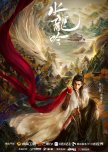
A very Chinese-flavour drama with eastern phylosophical ideas
WARNING: MAJOR SPOILERS -This post is part of a trilogy where I analyse only the cultural and historical artistic aspects, as well as two Eastern philosophical perspectives with strong presence in the drama, without tackling other elements such as wuxia themes, Confucianism, sci-fi inspiration, and so on. The links to the complete three-acts review with images are in the comments.
By accident when adding this part, I erased the previous review :
NOTE: Although the story is remarkable, the execution and direction has flaws that impact the overall result, so the final score is a balance between the outstanding aspects of the drama rarely seen in any kind of drama or serie (that gives the extra points to reach the 8) with its flaws. Luo Yun Xi and Jeremy Tsu - outstanding.acting
-------------
As we enter this THIRD and last ACT about Buddhism, the framework that gives structure to the whole story, it felt fitting to bring the classical theatre resource where a character steps in at the beginning to set the scene and offer context. Honouring that tradition, I’ll quote the answer that Mo’at gives to Jake Sully in the movie Avatar when he asks the Na’vi people to teach him their worldview and wisdom: “It is hard to fill a cup that is already full.”
This phrase didn’t just pop into my mind by chance. Buddhism is a philosophy and religion completely different from Western conceptions and beliefs, and since it sits at the heart of Shui Long Yin’s narrative, I tried my best to do justice to its principles. Although I kept things as concise as I could, this time you’ll need to be extra forgiving with me.
As actor Luo Yun Xi said himself (see ACT 2), Tang Li Ci seeks enlightenment. Let’s embark together on that search and see whether he attained what he was looking for, or if , at the very least, the journey was worthy.
Buddhism, the general framework
“All things are impermanent; they arise and they pass away.”
While Daoism is about finding harmony with the Dao, Buddhism is a path of understanding meant to transcend this world and the suffering inherent in it. It originated in India around the 5th century BC with Siddhartha Gautama who, after attaining enlightenment, became known as Buddha, or “the awakened one.”
The foundation rests on the Four Noble Truths:
1) Life contains suffering
2) Suffering has a cause (craving and attachment)
3) There is an end to suffering (nirvana and enlightment)
4) There is a path to end suffering
(NOTE 1 - Masters Puzhu and Fang Zhou // Although there is one “internal” path to end suffering, there are two “external” ways to walk that path. Puzhu represents the Buddhist archetype of the hermit who isolates himself from humanity and external distractions to walk the path. Fang Zhou represents the Buddhist archetype of the master who actively involves himself in worldly affairs with compassion.)
The ultimate goal is to wake up from the "dream" of cyclic existence, the Samsara, realising the true nature of reality. This is achieved by understanding and internalising several key principles:
Impermanence: All conditioned things are in a constant state of change.
Karma: The law of cause and effect, where intentional actions shape future experiences.
No-Self : The perception of a fixed, independent "I" is an illusion.
Nirvana: The unconditioned state, the cessation of suffering and the end of the cycle of rebirth, achieved by disolving all harmtful states of minds
So, let´s walk this path through Shui Long Yin together.
Impermanence: life as a dream or the stage of a play // “All phenomena are like dreams” - Heart Sutra
Some of the comments regarding the ending of Shui Long Yin revolve around the idea that everything Tang Li Ci did seems meaningless because no one remembers he existed. Even worse, not only are all the bad omens now living good lives, but TLC has never even existed. Was the whole drama, and all the time and emotions invested by viewers, pointless?
In the drama, Tang Li Ci voices a similar distressed question during his dream coma, and Fang Zhou’s answer guides not only him, but us, along the Buddhist path...and might add, the drama.
(NOTE 2 - Zhoudi Tower // In the dream, Tang Li Ci is disheartened and defeated because Yique YingYang is already back after ten years, and he feels that all the deaths and efforts back then were meaningless. Fang Zhou, a Buddhist teacher answers: “Even if YQYY is alive, are all the people who were able to live and enjoy life during those ten years not worthy of that?” … “In this world, not a second of effort is wasted.”)
By this point, we already know there are three stories: the original timeline, where Ye Mo kills Tang Li Ci only to realise that without emotions the Holy Son isn’t perfect and can’t achieve immortality; the second timeline, the one the drama actually follows; and the third one, the new life we glimpse at the end, where Tang Li Ci is no longer explicitly present nor ever existed.
So? Which one is real? The first one we never saw? The second one we grew attached to? The final one we only catch a glimpse of? Buddhism states that just as our dream experiences are mere appearances of the mind, so too are beings, their environments, their pleasures, and all other phenomena. The strong theatre-stage effect of the drama (ACT 1) seems to work like a visual metaphor of this.
(NOTE 3 - Tang Li Ci’s dream in Zhoudi Tower // From a Buddhist perspective, this dream and Tang Li Ci’s confusion about what was real bring up the topic of phenomena as mere appearances of the mind.
This doesn’t mean those phenomena don’t exist; it means they don’t exist on their own, only in relation to the mind. We believe the only “real” timeline in the drama is the one we just experienced because we formed a connection with it. The others feel unreal because we didn’t immerse ourselves in them, even though, at the back of our mind, we understand they existed too - but only from the moment we are introduced to them, not before.
We can see this idea represented in different moments and ways throughout the drama, through both cinematic and narrative resources: the contrast between chaos and fighting versus the calm, quiet tea scene in the Buddhist temple at the beginning; the reality in which Liu Yan lived all those years, where Tang Li Ci is a murderer and the most despicable being, versus Chi Yun believing the marks of Yique YingYang are beautiful and enhance Tang Li Ci’s attractiveness.
(NOTE 4 - All phenomena are like dreams // The quiet calm of a tea ritual and a baby sleeping at a lakeshore versus the chaos and action-packed fighting in the temple’s front yard.)
(NOTE 5 - Matrix (1999) – iconic sci-fi movie directed by the Wachowski sisters // The best way to explain it is this movie
2. Karma, suffering, and samsara: Even things aren´t “real”, we still suffer...Why? How? // “If you know your own mind and develop it, you will become a Buddha; do not seek Buddhahood outside yourself”
Every sentient being wants to be happy and avoid suffering. We tend to think that the causes of happiness or pain are external, but Buddhism states they actually lie within our own mind.
The mind isn’t a material object or a by-product of physical processes; it’s an immaterial and continuous entity, different from the body. Every action we take leaves an imprint or potential on our very subtle mind, and in time, its corresponding effect will arise. Virtuous actions bring happiness; harmful actions bring suffering. This is the law of karma, and it affects all lives, constantly.
At the beginning of Whispers of Fate, Tang Li Ci already has a partial understanding of these ideas taught by his master, Fang Zhou, and he reflects with the monk on intention and karma. When he decides to enter the jianghu, he is, without realising it, following Fang Zhou’s path to end suffering through the worldly-affairs way. At that point, his obsession and his merely intellectual grasp of these concepts and teachings prevent him from truly embracing them, as he still doesn’t fully understand what that way means or how it works.
(NOTE 6 - Tang Li Ci speaking with the Buddhist monk about intention, karma, and suffering. By entering the jianghu, he will come to learn and understand human emotions (hate, fear, love, obsession) and the deeper meaning of things, just as Fang Zhou told him many times.)
So, the world itself is the result of karma — the actions of the sentient beings who live in it. A pure world is the result of pure actions, and an impure world is the result of impure actions. Since all actions are created by the mind, all things, including the world, are created by the mind as well.
(NOTE 7 - Impermanence, karma, samsara // Every relationship and every character is shaped by karma and samsara. Hatred turns someone into an inherently bad person; attachment turns an object into something inherently pleasant and capable of making them truly happy. All mental afflictions work like this: they color reality with their own bias, and we end up responding not to what things truly are, but to the distorted version of them.)
While the body disappears at death, the mind - now called the very subtle mind, and without the memories of that life - continues to exist. Depending on the karma that grows, we reincarnate into a fortunate form (human or god) or an unfortunate one. We can’t choose; karma rules. This uninterrupted cycle of death and rebirth, without any freedom to choose, is called samsara.
3. The Path to Liberation from Suffering, and Enlightenment // “Samsara is like a wheel that turns through the force of contaminated actions performed by mental afflictions”
Mental afflictions such as attachment, hate, malice, jealousy, greed, and delusion are to the mind like clouds to the sky: bad habits that can be eradicated because they are not the sky itself. They are distorted perceptions that cling to things as if they had inherent or independent existence.
In the drama, this idea of clarity as the true nature of the mind is highlighted by Fang Zhou’s teaching: “Every person is born good” — which is also shared by Confucianism, by the way.
The strongest ignorance is the intuitive feeling that we possess a real and objective self that exists independently of other phenomena or things: the ignorance of self-grasping. Because we esteem ourselves so intensely, we feel attracted to objects and people that seem appealing, we desire to separate from those we dislike, and we feel indifference toward the rest. Therefore, attachment, hatred, and indifference arise. I’m sure you’ve already pictured countless examples from the drama while reading this.
Attention should focus on creating mental states that bring real happiness (love, patience, generosity) and also on letting go of mental afflictions completely by addressing their root: the mind’s tendency to cling to a fixed self. By tackling the causes of suffering within, external ones like illness or death lose their power to disturb us. This lasting freedom from mental afflictions and suffering is what Buddhism calls liberation, or nirvana. In other words, this is the path to truly freeing oneself from suffering.
There’s a sequence in Episode 2 that sums up everything above, so I’ll simply replay the dialogue, presented as a voice-over during the scene when Tang Li Ci is leaving the temple:
Tang Li Ci: “Masters and servants can turn on each other for money; brothers can betray and kill each other. In the end, the heart is the hardest to see through. Demons are everywhere.”
Monk: “Amitabha. Right and wrong, good and evil, they are just a thought apart. What you can’t let go is obsession. You’re very wise. You go through the sea of suffering by yourself. I believe you’ll eventually reach the other shore.”
** Some translation don't address the specific term "sea of suffering" but instead go for "salvation lies in your own hands". Although the essential meaning is the same, the second avoid the específico and direct reference to Buddhism - a bad take in my opinion as it's about Buddhist beliefs.
(NOTE 8) The path to liberation from suffering – The journey and the destination // From attachment to life, to the past, and to Fang Zhou, to loving new people and appreciating the human world and its beings, and ultimately managing to let go.
It’s worth noticing that, despite the different levels of wisdom each character had reached before the time reversal, almost all the villains’ endings carry a note of compassion. You might have thought “finally!”, but there certainly wasn’t a sense of “hate” or “I’ll wish you eons of suffering” left floating in the air.
Liberating only oneself from suffering isn’t the highest aim on the Buddhist path. Beyond wisdom, it’s kindness and love for others that form the true foundation for helping all beings reach the same state. Those who seek enlightenment do so guided by the mind of Bodhichitta: a mind that, moved by deep compassion, naturally wants to awaken in order to help all sentient beings directly.
The Buddhas are those beings that, having completely removed all traces of ignorance from their minds, have freed themselves from the dream of samsara and attained omniscient wisdom, along with the limitless ability to help others.
And with this understanding in mind, I hope you can find more meanings to the ones you´ve already found in Whispers of Fate. As for my part, the analysis of this trilogy has now come to an end.
** Epilogue (closing and ending notes) ** - I´ve link the three parts completed with images in the comments to a better review
Whispers of Fate is a drama about loss, grief, and attachments; but at its core, it’s a story that reflects on and questions what it means to be human from a very Chinese perspective, rooted in China’s history while staying in tune with its present. We see that search in every character, although I want to highlight three.
Nothing in this world is perfect, and neither is this drama. It’s a complex and ambitious project with a distinctive Chinese flavour that can look ordinary and simple on the surface, yet be slow and fast-paced, common and uncommon, all at once. And when we bring in our Western viewpoint, shaped by a Judeo-Christian background or even a modern secular mindset, we really do need to empty our cups first.
For me, the beauty of Whispers of Fate lies in its distinctive Chinese aesthetics, but also in the way it blends Eastern philosophies into its storytelling. In a way, the original title “Shui Long Yin” and its literal translation “Water Dragon Chant” is the most fitting, as the whole approach of the drama reminds me of those apparently simple tales and legends through which ancient cultures and societies explained the world, what it means to be human and why we are here.
Was this review helpful to you?
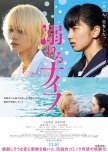
Although the story can be confusing at first since it is very fast paced, it slows down as the story progresses, and makes more sense after understanding the characters. The story is heavier, and has a lot more dept than regular Shoujo live-actions, which I personally enjoyed. There are some touching scenes throughout the movie, especially at the ending.
Acting/Cast:
I was not a huge fan of Komatsu Nana's acting in her past works, but she improved so much in this movie! There are a few parts that are still a bit awkward, but her acting is overall pretty good in this movie. Suda Masaki's acting is always great, and once again, he did not disappoint me. He really embodied the character, and truly won me over by the end. I read somewhere that he lost a lot of weight for this role, and weighed around 50kg, which is crazy for his height! Overall, I really liked the chemistry between them since they have a similar aura.
Music:
I LOVED the music, and I thought that it went well with the movie. I downloaded a whole bunch of the songs after.
Overall:
I honestly love this movie so much. It is fast paced in the beginning, but everything fits together by the end. This is definitely different (in a good way) from regular Shoujo manga live-actions, but the scenes were filmed so beautifully. Overall, I loved the main characters and the chemistry between them.
Was this review helpful to you?
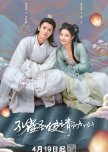
Novel transmigration with cute romance and reverse gender roles
Don’t let the negative comments about the ending stop you from watching this! I really loved everything about this drama except the censored ending. But thankfully we have the secret clip from douyin that wraps up the story (link below).This drama is about the female lead who is transported from the modern world to a historical novel. In the novel, the Peacock City is run by women and women have the same rights as men. The female lead drops from the sky and is appointed as the Peacock Holy Envoy. The male lead is the Minister of Rites who seemingly befriends her but has secret schemes.
POSITIVE:
- Bad boy with a good heart male lead.
- Cute romance and kiss scenes.
- Great chemistry between the leads.
- Frenemies to lovers trope (push and pull dynamic).
- Mix of political intrigue, investigations and revenge.
- Reverse gender roles.
- Smart and quirky female lead who uses her science knowledge to bypass the plot.
- Mostly light-hearted with great comedy moments + a bit of angst towards the end.
- Similar vibes (not plot) to The Romance of Tiger and Rose.
- Prophetic dreams (I loved that bit).
NEGATIVE:
- Censored ending. However there is a secret clip on douyin that wraps up the story. So the drama is still worth watching. Scroll below for spoilers and link.
- Some small parts lack logic but it’s part of the charm and comedy for me.
- Female lead is a bit of a baby sometimes (not a lot).
OVERALL:
If you want a light-hearted transmigration story with reverse gender roles and cute romance, watch this drama.
.
.
.
.
.
.
.
.
.
.
.
.
.
It’s a shame that this got zero promotion. I’m going to guess and say it’s because the male lead had issues with the government and had to leave the industry. So they not only censored the drama by giving us an odd ending but also cut it to appear as a short drama (perhaps short dramas pass easier?). I’m pretty sure this was originally done as a typical full length drama (each episode is 20 minutes, that’s around 20 full episodes if it’s 40 minutes each).
SECRET CLIP:
1. Douyin (provided by @Suzette Ser):
https://www.douyin.com/user/MS4wLjABAAAA8Gft2z08CjrLcEI3BGbNk6CLkePD5pUTxQbD0haYQBF7uU0hiAy4KW651lRC_yAL?modal_id=7360304476701396239
2. Twitter:
https://x.com/Fatum____Tempus/status/1782076978369061012
BONUS: BTS of the modern world scenes
https://x.com/Fatum____Tempus/status/1786669698790367614
ENDING SPOILER:
In the finale episode, the female lead dies and is transported back to the modern world. She reads the novel, the story is now changed and doesn’t include her (which we see that play out on screen). There are ambiguous details to suggest the male lead is aware of the book change. END of drama. NOW, thanks to the secret clip uploaded on douyin, we can see the male lead (sports jacket) is reading the same novel in the modern world. The female lead calls his name and he turns around to face her. So they end up meeting each other in the modern world too.
Was this review helpful to you?
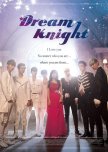
GOT7 is a musical group, so obviously their acting skills are not superb, but I think they did a great job despite the fact that they're singers. JB obviously has experience, but still.
The music was pretty much just all of GOT7's hits and a few others, so I already knew most of them. It was nice to have their songs playing in the background though, made it more enjoyable.
I don't really rewatch dramas/movies/etc, but since this was such a short and sweet series I'll probably watch it again if I have free time.
Although it seemed like I had nothing to say, I enjoyed the this mini-series. The only reason I gave it a 7.5 is because if I gave it a 8+ it would be like comparing it to big shot dramas out there like MLFTS, Healer, Kill Me Heal Me, Pinocchio, etc etc. Don't hate me. If you're bored and there's nothing to watch, this cute mini series will be perfect for you. :)
Was this review helpful to you?
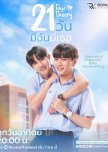
An unexpected gem.
I expected to like this because I had love at first sight for Tee Khunakorn and sat through Cupid Coach for him. But I didn't think I'd like this because it's really good, which it is.This isn't a particularly original story - high school students with their blue shirts and all the rest - but there are some unusual aspects and some interesting variations on the usual bag of tricks. It's very G-rated, and cute from beginning to end without ever being cloying.
One refreshing aspect is that both boys are unambiguously gay, and identify as such. Another is that homophobia is not magically absent. It's magically a lot weaker than in real life, but it's presented with more complexity than usual - Q's mother is afraid her son is gay, and at first is resistant, which made the audience hate her, but her motivations are realistic - she's afraid his life will be harder and that people won't accept him, like she saw happen with her heavily-muscled gay brother who I want to climb. Likewise, Q's two best friends are shocked when they find out, which is also normal and realistic, but everyone in the end accepts him without reservation for who he is.
There are no horrible people in this - both female characters are unrelentingly positive and supportive, with one not even having a problem with her prom date bailing to go help their friends. Everyone is capable of distinguishing between what's important and what's not.
All the dialog is excellent and well-thought out, and the humor is actually quite funny.
But most important, the central theme is about communication, and how when there is a misunderstanding, you have to talk it through, not jump to conclusions. The writing skillfully brings all the misunderstandings together in an intrrelated way that reinforce each other without being repetitive, tiresome or (overly) preachy (it's a little preachy).
The twist on the "food on your face" trope is so well-executed and cute that I nearly squealed, and tropes usually make me roll my eyes so hard that I can see behind me.
And best of all, no seme & uke. Both of them are just guys who like each other. They can be individuals instead of being boxed in by articial roles. I think that's part of the success of the couple.
The cast is absolutely stellar. All the actors are charming and have wonderful chemistry with each other, down to Q's friends with his mother and uncle. Tee was good in Cupid Coach, but he's much improved here, with a greater range and more sincere delivery. Bever as X is charming and adorable, and he and Tee have a lot of potential as a couple - I really hope we see them together again. If you've seen Cupid Coach, you know Tee has no problem showing skin or engaging in intimacy.
The actors are all so charming that I even invested in the straight storylines - Toy and Mook are so cute, and the resolution of the awkward Frank & Mild storyline is well-handled and reinforces the don't-jump-to-conclusions theme with a contrasting situation. (It's also subtly suggested that Mild is a lesbian, which is kind of nice but not stepped on or exploited, and makes you think the misunderstanding is one thing when it's another).
It's clear that a lot of love went into this project - I think you'll feel it too and you'll love it right back. But go into it understanding it's 4 episodes. A lot of people had a problem with the length, but sometimes less is more. The pacing is efficient and unrushed, and although there is the get-together-in-the-last-10-seconds thing, the boys have essentially been boyfriends and interacted as such for some time, so it doesn't feel like the letdown that such an ending usually is. I highly recommend this.
Was this review helpful to you?

 1
1This review may contain spoilers
Who is Your Destiny?
Originally I thought I would give this series an 8.5 but what changed my mind to score higher was the fact that even though it had many flaws of characters and script, it was a delight to watch and made me enjoy it more then the other two series I was/am watching. This made me laugh so much and later it made me cry. I left this series to watch last or save the best for last each day. I'll be finishing the other two today and Tuesday and starting three new ones but this show has gone into my permanent watchlist for rewatching. Let's get into this, shall we? Who is your destiny?Pros: Favorite character other than Ping'an was the ML or JSC. It was my first time watching William Chan in anything so I had been looking forward to it. I knew he would be dubbed over because of his heavy accent from the get go but it didn't take away from his acting in the slightest and those dimples; each time he smiled, it made you smile. Who knew William was the biggest goofball on set? The BTS were night and day from his character. But I still really enjoyed the evolution of his character. He had to go from an ice cube, to a man in love who didn't understand it, to going through an existential crisis, being there for his girlfriend's, losing another friend and coworker, and being in a coma for x amount of months (wish they gave us the length of each time jump), after which he proposed in an awesome way and got married. Seemed the timeline was about a year within the show but so much happened to just him it was really fascinating to watch. It took the existential crisis and the coma to make him realize he wasn't superhuman but an ordinary person that had to still be able to lead and allow himself to be led and protected by others. William did a great job with all of the evolutions and challenges. I look forward to watching more things from him.
Other favorite characters were FL or XL; granted her gorilla glue attitude for the first 6 episodes made me cringe a lot, what impressed me about her was that she never gave up until her own existential crisis which JSC helped her through. She wasn't your typical FL that's a damsel in distress. She spoke her mind and knew what she wanted from day 1 in everything. She always stood up for others and never allowed herself to be bullied. It was quite refreshing to see. I'm tired of the "woe is me" FLs in c-dramas. XL in her little body was determined to do what was right and if she was at fault, she understood it and apologized. Though she loved JSC since he rescued her 10 years ago, technically they knew each other since they were kids. People can say that she was obsessed with him and that's partially true but he also inspired her to be an international dog trainer for rescue operations as well as a journalist. He gave her a lot of strength even before they met each other again.
Others were the second leads who were just too cute in general. But ZQ when it came to others always preached the truth. Her timely and honest responses to literally everyone was also so empowering. I thought it was awesome that though LFQ was always chasing after her like a kid after candy, when it came to his own crisis--and kudos to the writers and production team for accurately portraying what PTSD looks like as well as how there are different methods to treat it--she was there for him and Ren Hao who played him (redeemed himself in my eyes for a hot mess character from two years ago lol) did a phenomenal job at portraying someone with PTSD. I have PTSD so I know what it looks like; to address something properly like that in this rom-com of sorts was pretty amazing. It also was a reason for the raised score. When health issues I have or know well are accurately portrayed in a cdrama (which isn't often), that'll get an automatic pros mention.
The rest of the fire brigade were awesome and absolutely hysterical because they were like gossipy women. Them teasing each other or other antics in episodes had me roaring with laughter and quickly rewinding to watch again. The death of LX which was foreshadowed very obviously for a while, even though the CGI wasn't great, it had a very "Backdraft final scene" vibe (a classic movie w/Kurt Russell and William Baldwin from 1991), his final video message which was supposed to be for the team when he retired had me in tears as well as JSC waking up from the multi-month coma after that incident and everyone's reactions.
Other favorites were grandpa of JSC, mom and dad of XL (mom was nuts at first but thankfully evolved), chief of the fire brigade as well as of the tv station, and Shishi. I know her voice was irritating but when she appeared and started doing to the TML what he spent 29 episodes doing to FL, I loved her! She was childish but at the same time she knew her own worth and it proved to help a lot with TML. Their open ended ending as the 3rd couple was actually appropriate. The videographer intern was a mini antagonist until he returned to his original self and I liked that about him. OSTs (except in the proposal dance scene where the first song should have stayed) costumes, sets, locations were all on point.
Cons: TML! Dear lord, why just why? For 29 out of 36 episodes, this plum fool and his obsession with FL had everyone in the comments just ready to bury him alive. I've seen the actor before in a much better role but I felt sorry for him here. This shouldn't have gone on for as long as it did. He nearly got FL killed at least once. The script had a lot of problems; this was one of the biggest. Another was the propaganda inserted in the most random of places; you just don't stick that crap into a rom-com. Yes, this series was about firefighters as the main occupation and journalists but the speeches that came out of random characters in the most ridiculous of moments or those that didn't make sense would just knock the scene out of whack.
Making FL seem like essentially gorilla glue in the beginning was just weird. The crazy woman at the tv station was very much an unneeded antagonist. You already had so much going on, she was literally extra. But since she was added, she should have been arrested way before episode 31. It was a bad call on the part of writers and producers; 36 episodes for so much, they need to understand when less really is more.
The unnecessary plot of the FL's existential crisis to get her and ML to the place he rescued her just to be able to stick another natural disaster in. There are other ways to do that. And then having TML go to the disaster area in a suit? How is that even remotely plausible? Because of yet another rejection by FL and Shishi getting hurt, he out of nowhere snapped out of his obsession. It happened too fast. Given what we had seen, there was so much incohesion in all of this. It was a very messy part of the story.
The ridiculous pre-teen kisses amongst the leads were eye roll worthy each time. Only 3 were normal; it made no sense. Even if they were inexperienced, given their ages, it shouldn't have looked so unnatural because they had great chemistry. Though there is a 9 year age difference between the actors, that shouldn't be the reason for such flat kissing in a drama where they act closer in age.
Would I recommend? Despite a varying number of voices, I absolutely would. It was a great escape into silliness and cuteness for me everyday. The pros definitely outweigh the cons. Just enjoy all of it; cringing is ok too. But I promise laughter and some tears. All well worth it.
Was this review helpful to you?
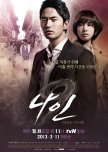
This drama has everything a time travel drama should have: good plot, good script, good casting and good meanings.
The plot is full of twist, emotions, changes and it takes you to another world, the world the main character is experiencing.
Because it is a drama that rounds around the main character: even if the others are important, the feeling you have is that Sun Woo is fighting alone with his own story, because he wants to change something he cannot change anymore.
I found this drama awesome because he makes you think about life.
"Changing something bad in the past maybe cannot bring you happyness."
If something bad happens you have to work alone on your own happyness, not trying to change your past or your fate.
This is the meaning of this drama in my opinion, and it is a good meaning.
I think this drama is amazing. Even if it doesn't allow you to understand everything (but this is part of the script), it makes you think of everyday life while the plot is a time travel so a 'fantastic' one.
I absolutely loved this drama and I am planning to rewatch it.
I reccomend this.
Was this review helpful to you?
This review may contain spoilers
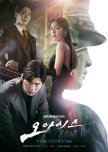
ambivalence
"Oasis". Hm. I've thought whether I should continue watching or drop the series... I've also considered more than once whether I want to write something about it... My feelings about this KDrama are ambivalent. However, the ´why is this?´ , is why I actually consider it worth mentioning.Sure, there were bumpy details, like the boys' artificial skin tanning when they were young, but I don't want to dwell on those.
>> The decisive factor for me, not rooting so much for this show, was and is that I really do NOT care so much for ANYBODY in this story. I understand, yes. There is empathy, yes. But sympathy? I couldn't care less. I've never had that before. I actually didn’t care. Neither the love story, nor the incorrigible rival, nor the girl wanting to bring back her father's cinema – this all and more only had limited impact on me. That's why I was tempted to turn my back on the story. Yet, I don't want to deny the actors' ability. I would do them injustice. They did their job fairly well. There are a number of strong moments. But still, maybe they were not the perfect cast? In any case, I would argue that in “OASIS” the character portraits were simply NOT drawn that well. ...In my view, that's obviously NOT the strength of the script...
Then there is the historical context of the series – the rollercoaster ride of the 80's and 90's. In South Korea, they are the neuralgic interface between dictatorship and democracy. But I don't want to dwell on this either.
>> What was decisive for me was that the STORY of the KDrama really mattered to me – whatever triggered the dynamics, the twists and turns. Intertwined with it were indeed countless moments that touched me deeply. Starting with the seed that underlies the whole drama: the fatal loyalty of the former slave not only to his deceased master, who had fought for independence, but also to his son, whom he now still serves as a free man. And then also the fruits that came out of this seed. Plus a lot more. The circumstances, the constraints, the social context that shines through in how it shapes (or had shaped) people, all of this really had me .
The way these forces of time and history run along in the background as a matter of course and keep stirring up the lives of the protagonists at crucial points, I think the script did THAT quite well. (However, I don't know whether it would have worked that way if I hadn't already known something about the political and social context back then.)
Maybe I could summarize: The portrait of how the historical dynamics are intertwined with personal destinies is well done in "Oasis". The character portrait of the comparatively stale protagonists, on the other hand, is less so. This discrepancy, resulting in my rather indifferent experience of the main characters on the one hand, and the emotional force with which the story keeps lashing out on the other hand, is a phenomenon that I have never experienced in a KDrama before. (But I don't necessarily assume that this has to be the same for others as it is for me.)
Eventually, despite the ambivalence, I watched to the end and was always curious to see what would be next. I can't say I regret watching either. But then I wasn´t all that happy in the end - even though I was partially impressed by the showdown, (yet, again, only partially.)
----------------------- Tiny side note: -------------------------------------
Re: 80's and 90's:
In connection with e.g. the KDramas "Sandglass" and "Giant" I have already given some of the political coulors of the 1980s and 1990s. Much of this applies to the historical context of "Oasis" as well. (you might want to check there.) Here, though, the dubious role of the secret service comes more into focus.
Re. Movie theatre:
The dictatorship was characterized by censorship. In addition, there was no freedom to travel. Accordingly, the cinema was like a window to the rest of the world, and generally offered a canvas to dream away from one's own misery, at least for a while. That may be more or less true wherever you look on this planet. But in South Korea at that time certainly more than i.e. in Europe. The role of the ´cinema´ in "Oasis" not only coincidentally represents liberation (struggle - especially of the female protagonist).
---------------------------------------------------------------------------------
Ps.:
Because of this KDrama I stumbled over another one - same title, 20 years older: "Oasis (2003) " or "Desert Spring".
I am grateful for this discovery thanks to the name-connection. Actually I liked that older one (despite the specific doing of that time) even more...
Nevertheless I consider "Oasis" (2023) having its moments, too...
Was this review helpful to you?
Love Is Better the Second Time Around
40 people found this review helpful
is love better the second time around?
Overall: there was amazing tension but I needed more character growth and less love rivals. 6 episodes at 25 minutes each. Aired on GagaOOLala. ; re-released on Viki https://www.viki.com/tv/40574c-love-is-better-the-second-time-aroundContent Warnings: manipulation
What I Like
- tension/chemistry
- clear between what were flashbacks and the present
- end of episode 2 they explain what happened in the past and the time gap/why they each reacted how they did makes sense to me (unlike the majority of these types of plots)
- production value
Room For Improvement
- kind of an exposition dump in the first episode, but they didn't have much screen time so I understood why they did that
- too many love rivals (3) in just 6 episodes
- not enough character growth, I needed to see 1 character be real, everything had this fake veneer
- cliche plot point at the end of episode 5
- lack of consequences for some characters "gave me freedom" is NOT how I would describe what happened in high school
Thoughts on Grey Characters/Their Romantic Relationships
Sometimes these characters and their dynamic work for me and other times they don't. Here are the factors that I'm thinking about.
1. was there a realistic reason why the character/s acted the way they did in the past (yes)
2. were both characters grey or was one squeaky clean (they both had character flaws)
3. was there some kind of apology/amend making (kind of)
4. was there character growth (not really)
5. do I believe that the characters will stay together in a happy romantic relationship (maybe)
Was this review helpful to you?
This review may contain spoilers
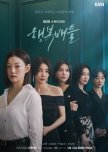
Despite all the catfights there is a deeper grounding to the story. Intelligent. Emotional. Opaque.
"Battle for Happiness" is based on a novel, the author herself having written the script for its KDrama version on PayTV, too. The story offers refreshing substance - with insight into honest emotional worlds underneath a shimmering dishonest surface. Powerful, intense women, who also have their sore, hidden wounds, shaping a surprisingly powerful story. Hats off!The story is set in the elite world of elite Gangnam mothers in the elite (fictional) Gangnam housing block Herinity. But even though the ladies may have made it into the upper league of society by marrying a lawyer or doctor or having wealth in some other way, they are still far from happy - even if they do almost everything to make it look as if...
Perhaps one could say that the KDrama is (again) a reckoning with the dubious concept that gives preference to the radiant, shimmering external appearance over truthful, sincere substance. But that's quite abstract. Actually, “Battle for Happiness” is rather precise. The battles are taking place in the mud of the protagonists' hidden secrets and weaknesses. That is dirty. That is mean. That is malicious. That is cruel. But that's what the life of those Gangnam mothers is all about. The societal backdrop is characterized by the overall social pressure to perform and compete for pole position in the race for the top spots in the social pyramid. But this is actually just the backdrop. It's actually less about the children. They are ornaments of their mothers. The mothers, on the other hand, are in the spotlight - wealthy, frighteningly powerful, influential women. Vulnerable people, nonetheless.
Admittedly, at the beginning I was tempted drop – those bitches! So false, so dishonest, so calculating, it was almost unbearable... The social media in their function, to spice up one´s own life a little more gloriously on the outside, are elaborately integrated into the overall dramaturgical structure. However, I stuck with “Battle for Happiness” because despite all the catfights there is a deeper grounding to the story, whose charisma can eventually fully unfold.
In fact, I'm glad I stuck with it, because the story offers an exciting rollercoaster ride of assumptions and suspicions. "Battle of Happiness" suddenly turns out to be a captivating crime thriller in which an inconspicuous private person takes the investigation into her own (unexperienced and sometimes naïve, impulsive) hands. Yet, even more appealing to me is the naturalness in which this KDrama gives a hand for compassion - even with the worst of the she-devils: the lady, who as the incarnated princess of hell in designer clothes initially got people´s minds running wild...
It´s the ladies, who rock the show. They are mothers, wives or single. In any case, you can't get past them. And they, for their part, cannot avoid facing their own sore wounds, which are catching up with them one by one. We consistently dig deeper into the hidden emotional worlds of those women (plus also a couple of men and some children). They must face their personal emotional battles, even if they don´t want to. In the best case scenario, they become their actual battles for happiness, as they lead to their very personal questions and truths - what is REALLY crucial in my life?
There is a dubious mathematical equation circulating among those ladies that goes something like this: 'The amount of misfortune I cause someone else becomes a factor for my personal happiness.' Well, even if I'm myself not great at math: If you multiply whatsoever by zero, as far as I know, zero still remains, isn´t it... So eventually, those ladies are forced to work on THIS point in the equation (the zero!)...
...and some of them actually take advantage of this opportunity as an outsider penetrates the aloof world of the Gangnam ladies. One, who doesn't think much of all the elitist concepts of happiness and competition, but instead innocently keeps looking for the perpetrator.
I wouldn't have thought so at first, but in my opinion "Battle of Happiness" is clearly one of the better, more substantial productions that 2023 has to offer so far. Comparisons with existing KDrama productions that are set in a similar milieu and/or wade in the mud of the glittering elite may perhaps come to mind. But "Battle of Happiness" tells its own story! And in my opinion it is definitely worth watching. (...if you are not looking for Romance or Oppas or Comedy…)
Most of us may never get near such exclusive worlds. However, wanting to fool others (and ourselves), feeling better when others are feeling worse, sometimes doing something to others that we wouldn't want to be done to yourself... hardly anyone might be immune to these human impulses. If we take away the exclusive luxury world, from which many may easily distance themselves, then we're still left with the beastly temptation that may linger in all of us. Maybe/hopefully we just don't let the beast in us out of the bag so uninhibitedly...
So I could summarize: I appreciate the intelligent, yet still highly emotional approach and the opaque processing of those different relationship dynamics between the protagonists.
Was this review helpful to you?
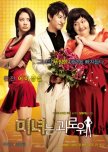
The story is good , the cast was nice and the music was beautiful. I thought it would've been much better if they replaced plastic surgery with a normal weight loss but either ways I enjoyed it till the very last end.
It was short, cute and most of all entertaining without any blank moments.
Was this review helpful to you?


