

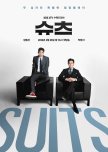
Story: (9.5/10)
Suits starts off with Go Yeon Woo running away from the police after almost getting caught making a drug deal, and he accidentally slips into an interview for one of the city's top law firms and meets Choi Kang Suk, the best closer in the city. He takes a gamble and hires Yeon Woo after recognizing YW's photographic memory and his passion for justice and the law. The rest of the series showcases their relationship as the dynamic duo, solving many cases and serving justice together with the help of the managing partner, Kang Ha Yeon, the beautiful and intelligent paralegal, Kim Jina, KS's amazing and talented assistant/secretary, Hong Da Ham, and YW's and KS's arch nemesis, Chae Geun Shik.
Each episode features a different theme and motto, and the different and interesting cases within the episode will relate back to the motto (for example one episode's motto is "everyone gets what they deserve", and the case in that episode relates to that). The drama so far basically features the same ideas and cases as the US version, and there aren't huge differences in the story development and the content per episode. The setting is also VERY similar; the financial district and the amazing office views, and even the tiniest details such as the hotdog stand that Harvey goes to and the little toast/fish pastry parallel in the Korean version, the fact that both YW and Mike travels around in a bike, etc, etc. There are endless similarities that I could draw from the 2 versions, and the Korean remake was very refreshingly different, but also very similar at the same time (if that makes sense).
The only thing I'm unsure about in the drama is how everyone will react/find out about YW being a fraud, and how this will play out in the show, since in the US version, he gets caught and he eventually goes to jail for while and then getting out soon after. I'm not sure how the drama will show/solve this issue, so I can't comment on that topic yet.
**EDIT**: i felt like the show kind of ended abruptly in the last 2 episodes, and the ending was a little rushed. However, considering there was only 16 episodes total, I do understand how it all played out. I'm satisfied, as there were no loose ends, however I do wish that they showcased more of GWY and Jina's ending. Other than that, it ended off fairly well, and also very similar to the US version.
Cast/Characters: (9.5/10)
Choi Kang Suk vs Harvey Specter: ahhh, harvey is my ultimate bias, as I just think he is sooo extremely attractive, not just appearance wise, but also his personality. Jang Dong Gun did an amazing job at portraying Harvey's cockiness, his quirks, confidence, and his raw talent. He's Kang and Ham's (the law firm) ace, their best lawyer, and he definitely lives up to his reputation in every episode, as he somehow figures out a brilliant solution (along with GYW) to every problem that they encounter. His bromance with Yeon Woo doe..... you can really tell that he cares about YW even though he's known to be heartless and very cold.
Go Yeon Woo vs Mike Ross: i have to say that I am extremely impressed with Park Hyung Shik's acting. I've only watched a few episodes of Strong Girl Do Bong Soon, so I can't really comment on his acting there, but in Suits, he did a fantastic job portraying GYW! Especially at the fact that he was able to memorize all those difficult legal terms/definitions and pretty much recite the law. Although GYW and Mike Ross are the same character, Hyung Shik made this character into his own. There are so many similarities between the 2, but I do like Hyung Shik's portray better. The only thing I didn't like in relation to the character GWY was that in the Korean version, there are a few times he just makes (kinda dumb) decisions on his own that Mike didn't, and it was just a little unnecessary to me and it was a lot different than the US version, since Mike Ross pretty much never messes up/makes a mistake (apart from lying about his law degree LOL). But all in all, greatttt character.
The rest of the cast was also a joy to watch, particularly Chae Geun Shik, their arch nemesis. This character is sooo funny and hilarious, he's a workaholic partner at the firm, and he constantly tries to get the managing partner's approval/respect, but he somehow always falls short compared to Kang Suk. He tries extremely hard to make Yeon Woo's life as difficult as possible, always waiting for YW to make a mistake, and their relationship is just so funny to watch. Also the fact that the Korean version also talks to a dictaphone, has an admiration for Kang Suk's secretary, and can sometimes be downright cruel. Kim Jina and Yeon Woo's budding romance is so cute and bubbly too, and their interactions with each other are always a joy to watch, kind of like watching a first love blooming. The managing partner, Kang Ha Yeon, is a total badass bishhh, just like Jessica Pearson. They always put the firm's interests on top and always want what's best for the firm. KS's secretary, Hong Da Ham, is also very much like the infamous Donna, extremely witty and pretty much knows everything going on in the firm and also knows everyone.
Music: (8/9)
The OST is quite good, especially the 2 main instrumental songs that play in the backgrounds during certain scenes. Some other songs play in the more emotional and romantic scenes, but they weren't that memorable in my opinion.
Re-watch value: (8/10)
It's a very entertaining show to watch, however since I already watched the US version, the Korean one has many similarities in terms of content and the cases they solve, so to me personally, I probably won't watch it anytime soon, just because I'm already quite familiar with the plot and storyline.
Overall: (9/10)
If you haven't watched Suits, whether the US version or the Korean one, I highly recommend that you go watch it, especially those who like law shows. The story is quite unique and different, and the cast/characters are amazing and their interactions and their relationships with each other are so dynamic and interesting. Don't miss out on this amazing drama!
Was this review helpful to you?
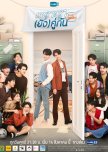
Still 2Gether: A Damage Control or How 2 Save Your Series
This season was clearly done to save this series after lackluster finale/final third of season 1. It very obviously addresses most of the complaints and comments we as viewers had while watching the original series and brings back everything we loved at the beginning.And you know what? I liked it! I had a good time watching this!
Thanks to this bonus season, the first season of 2Gether wont leave such a bad taste in my mouth anymore, because i know this exists!
This is the first time in my life that i have seen such an attempt to save a piece of media that went downhill. And i honestly respect it, no matter if the driving force behind this season were money or actual genuine effort to save this series that stems from love for the source material. We could discuss their intentions ad infinitum but simple existence of this bonus season means they care about it.
The story was simple but entertaining. Besides damage control, the script focused on all the things we as viewers enjoyed - be it silly comedy or cute moments (or doubled-down on things the writer very obviously stood behind such as distinct TineWat love language). There were quite some plot holes or cheap plot set-ups like the two club rooms being directly next to each other or Tine missing Wat super hard after like… a week of separation. There are still some glaring issues from season 1, if you want to nitpick.
But lets just be generous for now and overlook these for a sake of general entertainment.
Acting was good and i think the overall cast chemistry was improved in this series. My only complaint is that some of the characters became caricatures of themselves at some point but at the same time it was, again, probably necessary evil so the series could be so entertaining.
I hope Still2Gether will become a case-study for any upcoming series. Not in a way that i want to see a shitty s1 followed by a damage control special season ever again but because im sure there are many ways a filmographer can learn from success, fall and eventual redemption that was 2gether the series as a whole.
My rating is probably a bit too high but i unexpectedly enjoyed this bonus series and i appreciate the amount of thought that went into “saving” 2Gether as a series.
Was this review helpful to you?
This review may contain spoilers
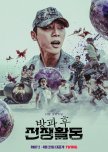
The ending isn't the only problem with this drama
The whole drama is one big problem. This drama is so bad that I decided to write a review for the first time to warn others. Don't waste your time. There are much better dramas worth watching.Why do I think drama is so hopeless?
It's mostly about the plot. Or rather, the lack of it. What's the point of this story anyway? There isn't any. Really. Normally, every story has a beginning, a middle part and an ending. It reaches some conclusion.The story started out interesting . DAS wasn't as good as other zombie/monster dramas, but it was still interesting. Aliens invasion was quite original idea. And that's it. The further you go, the more nonsense the story becomes.
Part 2 begins by showing the students eliminating the aliens. It's promising. We know it's been a while since the incident when Sergeant Lee was killed. It seems that the children have matured and learned to take care of their own safety. You could not be more wrong. From this moment the story starts to get idiotic and full of plot holes.
First of all, why are the children alone? What happened to Kim Won Bin? Did he leave the children alone? Did he evacuate without them? Why do children talk about everyone who died and not him? He seems to have survived, so why did the writers suddenly forget about him?
As I wrote above, at the beginning of part 2 we see that the children have grown up. And suddenly... They start acting irrationally and getting hysterical again. All character development suddenly disappears. The other scenes don't make sense either. Why was the prison scene included in the series? The kids needed parts for a radio, so shouldn't they look for an electronics store in a deserted city? And how is it possible that the prisoners survived? We know that it's been at least a month since Sergeant Lee's accident by the time part 2 starts, and the town has already been abandoned. Did these prisoners live for more than a month without food, water and other necessities? And they were in such great condition? Seriously? Where is the logic?!
Another thing are the spheres. Where did the spheres come from? What did they want? What was their purpose? In the first part, it seemed that people were learning more and more about aliens, e.g. that they were sensitive to cold and noise, and that they could communicate. And in the second part? Aliens are mindless. They run to the prison because the children screamed a few times, but they didn't show up at the amusement park, where children make noise, So I am asking again where is the logic? At the end, we also learn that a weapon was invented, thanks to which the aliens were eliminated, but the spheres were still in the air. Why?
As for the ending, In my opinion it was stupid. But the stupidest thing was that nothing foreshadowed it. The writers didn't show us that Guk Yeong Soo is slowly going crazy, he just suddenly went crazy because his exam was canceled. Seriously?! PTSD would be much more convincing.
All in all, I do not recommend wasting your time watching this drama. The writers made this story as if they didn't respect the viewers. The series was very hyped, so they wrote anything, after all, the viewers would not notice.
Was this review helpful to you?
Was this review helpful to you?

The plot is quite ridiculous honestly. It makes little or no sense. However, the cast is lovely and the main actress played her role quite well. I have seen her works previously and trust me, she has improved immensely here. This was a drama for me in which I stopped caring about the romance after midway. The murder mystery and villain was what it was all about! The villain is damn good and it helps that he was so, so attractive to look at. :D
This drama had some high-riding moments where you'd wonder who did what and why. A lot of things were wonderfully executed. For me this drama was a solid 9-9.5 till the last four episodes where things happened out of the blue.
This drama is no different from any other Kdrama because like every drama out there, it starts out with a bang and ends leading upto nowhere.
The OST was nice to listen to. It wasn't my favourite but it wasn't bad either.
I recommend this drama to people who don't mind mindless fun. Watch the first couple of episodes to judge if you like it or not.
Was this review helpful to you?
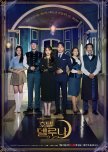
If ghost stories lie within your watching preferences, perhaps you would have a better time with Hotel Del Luna. As for myself, I was not a fan of the overall plot. It came off as a tad too shallow. For one, there’s a severe imbalance between plot filler (which is how I classify every individual ghost’s story, each of which occupies 80% of each episode) and the truly interesting main plot, which falls off to the wayside. Unless you enjoy brief appearances of random guest ghosts, you’ll probably end up like me: sitting through over an hour’s worth of time per episode, helplessly asking when the Hong Sisters will address Man Wol’s story—which is rarely, until you cross the halfway point of the entire show. What the writers do with Man Wol’s history when it is addressed feels lackluster, if only due to all the unnecessary time buildup prior to it.
The real problem is that we are hardly given reasons to care about each visiting ghost in any major emotional capacity. Although they have interesting stories, it’s a bit like walking down a city sidewalk: you see someone with a pretty wardrobe, “ooh” at it for a second, and then forget your appreciative impressions of it an hour later. Maybe it seems as if I’m being coldhearted, but as much as the Hong Sisters try to emphasize that these ghosts were human with human sufferings, the way the show frequently relies on shock value and horror elements over the ghosts’ pain and healing resulted in me not being able to build true sympathy for these souls. Imagine repeating this apathy for every episode: it’s exhausting trying to force an emotional connection.
The only saving grace of Hotel Del Luna is Man Wol. The way IU presents her character’s conflicting ego and heart is as poignant as it is mysterious, and she executes the identity of a CEO with a low economic IQ with hilarity. Had it not been for this quirkiness of Man Wol’s character, I would not have stuck around until the end. And that’s despite my love for Yeo Jin Goo: though his acting is excellent as always, Chan Sung is a perfect example of a supporting character who hides behind the guise of being a “main character.” There’s only one protagonist in this story, her name being Man Wol. There’s nothing wrong with this, but it is a bit of a letdown that everyone else has the potential to be equally interesting, yet doesn’t get nearly enough development. Chan Sung, for example, is a nobody—beyond pushing Man Wol to address her emotional wounds, he doesn’t possess the individualism that a lead character should have. This means that while the interactions between him and Man Wol may be compelling to watch, the moment that you isolate Chan Sung away from her, he devolves into a character who’s mediocre at best and painfully boring at worst. Seeing as I view Chan Sung like this, that should give you a pretty good idea of what I think of the other supporting characters: meh.
That all being said, I can see the reasons behind the hype. I just wouldn’t say that they’re justified: gorgeous cinematography, a cast list riddled with famous names, and an amazing soundtrack are all great assets to have within a drama. If future shows could continue Hotel Del Luna’s ability to create an effective atmosphere, I would have zero complaints. But what use is all of that if the show at its core doesn’t match up to the level of its decorations? Hotel Del Luna is almost sadly entertaining in that it may be fun in the moment, but doesn’t leave a deep enough impression to be phenomenal.
Was this review helpful to you?
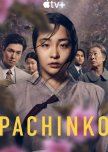
"She'll thrive, and through her a family will endure."
In her 2007 novel “The Sweet Far Thing”, Libba Bray has says, “There is an ancient tribal proverb I once heard in India. It says that before we can see properly we must first shed our tears to clear the way.” Indeed, our past is what holds us back from things that we wish to accomplish, but what matters is how we learn, acknowledge and grow as better human beings from it. We are healed of a suffering only by experiencing it to the entire. There is no beauty in sadness, no honour in suffering, no growth in fear and no relief in hate; it’s just a waste of perfectly good happiness. “Pachinko” depicts all that through the saga of a family over generations."Pachinko (パチンコ)" is a Japanese gambling device resembling a pinball machine but with automatic payoff as in a gambling slot machine (merriam-webster). Pachinko parlors are widespread in Japan, and, mostly owned by Korean immigrants, and usually also feature a number of slot machines so these premises resemble and operate similarly to western casinos. Modern pachinko machines have both mechanical & digital components. As stated by the writer, Pachinko, in the show, is depicted as a metaphor to life, when it's very unfair to go ahead, but you still continue to play, because you can't turn back or give up either. Pachinko is a game of chance and survival, both figuratively and literally.
Created by Soo Hugh and co-directed by Justin Chon & Kogonada, "Pachinko (2022) is an American show from Apple TV+, adapted from the original book of the same title authored by prominent Korean-American writer Lee Min Jin, released in 2017. Co-produced by 3 companies: Media Res, A Han.Bok Dream and Blue Marble Pictures, it's a 4 year long project, that started with Apple Inc. acquiring the bid for the series in 2018. The production took 7 months for casting and all of the cast were in fact auditioned and chosen, as informe by the team. The filimng started in October 2020, and was done in different phases, at different locations, and in fact different countries (South Korea, Japan, USA and Canada), that ended in April 2021. Reportedly, the showrunner Hugh has the objective of creating 4 seasons in total, which gives us the idea that the show we just finished is apparently one-fourth of the original novel.
"Pachinko (2022)" follows the mettlesome multigenerational chronicle of a single family, in parallel, who are immigrants of Japanese invasion & colonization in Korea. Their pursuit for survival and happiness, with hopes & dreams have led them to prosper and thrive over decades though their foregone days of sufferings and scars from the past remain fresh in their hearts. The show presents stories from different timelines from 1910 to 1989.
Kim Sun Ja (later Baek Sun Ja/Bando Nobuko) is played by 3 actors: Jeon Yu-na (childhood), Kim Min Ha (teeange), Youn Yuh Jung (Old), whom the author keeps at the centre of everything that takes place throughout. Steven Noh plays Pastor Baek Yi Sak (Sun Ja's husband) while Soji Arai (Korean name: Park So Hee) is in the role of Baek Mo Se/Bando Mozasu (Sun Ja's son) and Jung In Ji takes part as Yang Jin (Sunja’s mother). Ko Han Su (Lee Min Ho) is a cold-hearted fishmonger with a dark past and plays an important fuelling factor that impacts Sunja’s life. Baek Yo Seb (Han Joon Woo) and Choi/Baek Kyung Hee (Jung Eun Chae) are brother & sister-in law of Sunja, respectively. Baek Solomon (adult: Jin Ha and young: Yoon Kyung Ho) is Sunja’s grandson from Mozasu, who is an efficient employee in a top corporate bank in New York. Etsuko (Kaho Minami) is Mozasu’s girlfriend whereas Naomi (Anna Sawai) is Solomon’s collegue.
The opening was the highlight of the TV series and definitely a favourite. While looking at the opening credits, it’s unclear whether this is a Korean, Japanese or Western drama; the main cast members gathered in a scintillating & evocatively coloured pachinko parlour as if it were a paradise, dancing to "Let's Live for Today" by The Grass Roots. This is the only time the actors from different timelines intersect, which was mainly due to Hugh’s love for opening credits.
“A child is coming. This one will thrive, I assure you. And through her, a family will endure.” : describing the birth of Sunja, the central character, this line epitomizes the pneuma of Pachinko’s premiere. In contrast to the book, which is ordered chronologically from the 1930s to the late 1980s, the filmmakers of this series made a bold change. The nonlinear construction of time in the series jumps between past and present.
“Pachinko” tells us a spellbinding story of colonialism & subcultural nationalism, war & peace, love & loss, and victory & sorrow, exclusively from a meta-historical human perspective. The historical accuracy and the detailed representation of adversities experienced by the people of Korea, due to the brutal consequences of a ruler's greed, is of immense value and definitely deserve all the noble words that exist in the world. From making aware the contemporary generation about their history to generating nostalgia & cognizance in viewers by enabling them to look back and consider the affinities between realities of different times, Pachinko does all that, if not more.
Enumeration of Sunja’s journey particularly feels nostalgic yet melancholic as it serves as a reminder of the wartime and post-war stories of 1st generation Koreans and their descendants. The nuance of these memories, however, forces us to acknowledge what they’d, in truth, gone through in the course of history and how it affects the current Zainichi Korean generation. It also shows us how resilient and strong people can be despite what life throws at them. Though the cornerstone essence of the story remains the same, adapting it into live-action demanded some changes, and these changes are brought forward from the development of the series; you can clearly experience it if you have read the book already.
In "Pachinko," the representation of Solomon goes with the complicated colonial history his grandmother navigated first-hand and the reverberations of which he continues to grapple with as an adult. This also captures his links with the Korean heritage, and both challenges and intertwines with his Japanese upbringing. Indeed, Solomon is the 2nd most focused character in the drama, for the latest time period portrays the saga of him trying his best to become a corporate slave, while his links with the foregone history of his family’s sufferings hold him back and enables him to make decisions, unsuitable for his career and his ambitions.
“Pachinko” is magnificently and aesthetically recountable, particularly while illustrating 1910s Korea. Shots filled with dusty hanboks of the Koreans and pristine uniforms of the Japanese are entirely accurate to their time period. The show is filled with panoramic landscape shots of golden grain fields, dense yet bright forests, diaphanous water bodies and inky oceans. The opaque and uncanny fish market and dark-timbered boarding house are fascinating to extents. The combination of both pitch & pale hue, with varied compelling colour palettes, provides immense pleasure to the viewers and its enormous production values which has resulted in stupefying cinematic values, can be witnessed and heartfelt, from the very beginning of the show. The camera beautifully captures the vast sea separating two countries: Korea and Japan, and their highrises, with the movements remaining easy on the eye. The meticulous set designing, development of premise and eventually bringing them to life, have paid off.
The use of sound and language is also beguiling and bewitching. The use of the comoosed sounds and themes in “Pachinko” is perhaps the most heart-felt since they possess the power that enables the viewers to connect to different time periods, accurately. Various instrumentals composed bring about the souls of the essential contexts that the author and makers have attempted to project upon the audience. Sometimes it pulls the heartstrings to levels, but for most of its parts, the background scores are caliginous, shadows, weighty and substantial.
Reportedly, Hugh also took care of the character outlooks in an effort of using beauty im order to create a timeless period piece. The extensive studies with collection of photographs and clips of the contemporary time was a great help for illustrating appropriate hairstyle and makeup; starting from looks to attires, everything was developed with sincere attention which is obviously reflected in the show.
“Pachinko” offers us a reality check on the assumption that the age of globalization may make life easier. It shows how globalization can also push us further away from our roots and ancestors. This story is truly extraordinary and unique, and one that should not be watched as a typical migration story. In “Pachinko,” identity is not defined in terms of binary codes. Each story is different, and each individual is different in spite of their shared historical experience. This has enabled Hugh to go for a standalone episode, portraying the life of Hansu, through a terrifyingly real incident. Hugh’s research also led her to the Kantō earthquake, which hit the Tokyo-Yokahama area on September 1, 1923, with the magnitude of 7.9. The impact of the disaster was massive, with a death toll of aprox. 140,000. What stimulated as a consequence, was the spread of rumours about the Korean immigrants adding to the destruction and trying to overpower Japanese, turning them to scapegoats, which led to massacres, which was unforeseen and heart-wretching. According to several unanimous reports, an estimate of 6,000 Koreans were killed as a result. Nevertheless, Lee Min Ho gives the best of his career in this and honestly it's the first time I liked his acting, he has improved, indeed.
I think I have already thrown light upon the direction and related tasks throughout, in my piece, like sound editing, cinematography, setup design as well as composing, etc. The directors Justin Chon & Kogonada have done their job with great care and their efforts are visible. The rest members of the team should also be credited their due words of appreciation. Congratulations of creating a masterpiece.
Writing the show, for Hugh, hasn’t been just about bringing the epic of the Zainichi family onto the screen, exceedingly, she has attempted to a great deal to showcase their thorough experiences & emotions in accuracy and get the facts right. Her immense research and fact-checking has also enabled her to get her script reviewed by 20 or more historians, including those specializing in Japanese history, Korean history, and colonization. Its notable that their opinions and voices were unanimous and this has surely helped to elevate the quality.
Exceptionally, in the finale, the opening credit is performed by the Korean pop Pansori (traditional) band LEENALCHI, which recreates the same song by modifying the lyrics with Hangul.
My most favourite quote from the show is:
"Even if you're scared, let's be scared together. If we do that, won't we gain some strength?"
You must look forward to the ending of the finale episode, for it shows us the interviews from several Zainichi Korean Women, currently residing in Japan and their stories of suffering, tolerance, resilience and resistance. The 5 minutes long edited clip is enough to move your heart and make you cry.
Final Remarks... Pachinko is a brilliant tribute to the resilience & forbearance of survivors from an era of oppression on small lands, that was not often discussed, previously. It is a very complex part of history which ties in with one of the best shows to have been brought to life. The grandeur of Pachinko is, in many ways and on many levels, a reminder of how time can affect our lives. It sort of redefines the standard of a story that can move millions of hearts. Pachinko is the life-altering story that should have been brought to screen much earlier. Please go ahead :)
Was this review helpful to you?
This review may contain spoilers
I felt more frustration than "love" unfortunately
*UPDATE: Finale was a big MEH for me as predicted. Sad Panda.*I will likely come back and update this once the final episode air.
SO, the acting is wonderful. I love the characters and the storyline and this is definitely one of the steamiest shows on Viki. I love everything this show could have possibly been. I still love the show but feel more frustration than "love" a lot of the times which is why I'm giving it 7 stars instead of 10 for right now.
My issues:
1. For a drama romance to work, there has to be a bit "more" to keep the main characters apart. In my personal opinion, after 10 episodes, the "why not" just isn't there and it drags the entire storyline down in a major way.
2. The Chu Kehuan's ex is a bit of a one-dimensional & psychotic/dependent/weak character on ALL levels and it makes her whole storyline aggravating to watch. Since they also keep shoving her in our face as a "reason" the main character's don't just get together already, it makes episodes painful to watch and honestly, cringe-worthy. When she keeps repeating the same shit over and over again about "10 year relationship" and "but I love you" and so on. So. Painful. Already.
3. Speaking of #2 above, we all know from little hints that she has some hidden secret of WHY she got an abortion all those years ago and broke her man's trust in their relationship, but IF & WHEN she finally reveals it... do we even CARE??? No. No we do not, so that plot point is null and void and won't make any impact on us as viewers because she's a douche and we couldn't care less at this point.
4. ZWW's ex, 321. He might be CLUELESS and a bit of a bore AND he has 0 skills when it comes to knowing what a woman thinks, and so on, BUT I feel like the writers turn him into a bit of a manipulating, violent ASSHAT in a single episode because they didn't know what else to do to vindicate ZWW's decision (as if she needed any other reasons) AND to keep the plot moving along with drama thrown in for good measure in nearly the last episode. Now, with ONLY TWO episodes left and the previews showing 321 still showing his ass in the next episode, well, I don't foresee us getting MUCH actual ROMANCE/happiness between ZWW and Chu Kehuan that we've all been anticipating with bated breath.
OK... I have more issues with the show than I realized. And, sadly, I'm only watching the last episode because I love the actors and have invested way too much time NOT to see the ending. :/
Was this review helpful to you?
What's Shining?
Such a tiring script.ML should just move on and give that other girl a chance who's been crushing on him since high school.
Putting a name tag of her name in his backpack for support was really sweet. Letting him know she's there thinking of him. It's not a big deal, but if she can do that little thing without even dating ML.... what about FL who got with him two times?
FL is impossible. Dates ML, but then later drops him because she wants to work far away.
She likes her job. Nice!
But not trying anymore with her boyfriend because their schedules doesn't match so lets break up.
Gets back with him years later because she wasn't happy with the new life she left him for was dumb.
Also irritated with ML behavior for taking the time to take care of her feelings again when she doesn't have the time for his.
& why is she still being around her ex?
He's there always telling her what to do and she just let him.
ML had a girlfriend his friend said so, but where is she?
He doesn't keep talking and drinking with her does he?
When can they write a ML forgetting his first love and moving on? He will be 70 and still waiting for FL to return.
Was this review helpful to you?
Friends, being too forgiving only makes you more attractive to the kinds of men who mistreat women and therefore need to be forgiven a lot.
Content Warning: contains a sexual assault scene while the female lead is unconscious. The assaulter is forgiven instantly and never truly held accountable.
Was this review helpful to you?
WHAT EVEN WAS THIS?
Fun first act, trainwreck second act, saved only by the pretty people.You know what’s worse than a bad drama? A drama that could have been fun but decided to trip over its own feet halfway through. The First Night with the Duke started off like a cheeky, isekai-flavored romcom with a modern girl stirring up Joseon life (cocktail bombs! bold flirting! brains and sass!). And then… it forgot all that and wandered off into fifteen other genres.
By the end, I honestly didn’t know what I was watching. Romcom? Political sageuk? Magical fantasy? Tragedy with evil kings and sad childhood backstories? Whatever it was, it definitely wasn’t cohesive.
Taecyeon did what Taecyeon does best: looked great in hanbok, swung a sword like he meant it, and oozed just enough charm to make you forget the script was falling apart. The female lead? She started strong as modern, clever, unbothered by all the prim-and-proper nonsense. But the second half turned her into a crying, rescue-me prop. Where did my bold heroine go? Did she swap souls with some other boring court lady when I wasn’t looking?
Let’s talk about that plot. The three brothers? Wasted. The second male lead? Might as well have been written out, only to reappear in the last five minutes like, “Surprise! I exist!” Eun-ae’s arc? Nonsensical, she did terrible things and got a happy ending anyway, no redemption needed, apparently. And don’t even get me started on the “OG” heroine slipping into modern life like she’s been shopping at Zara her whole existence. Computers, short skirts, and WiFi? No problem, she’s basically Gen Z now!
And then, twelve kids. TWELVE. KIDS. Look, I know it was meant to be “haha, cute, happy ending,” but all I could think was, “Girl, blink twice if you need help.”
If this show had leaned into being a silly, self-aware fusion sageuk, I would have rolled with it. If it had gone full romcom? Fun. But it wanted to do everything and ended up doing nothing. No theme, no proper character growth, no payoff for the chaos it created. It was like watching someone throw darts at three different boards and hitting none.
Watch it for the leads if you’re curious, or for Taecyeon looking devastatingly good with a sword. But don’t expect sense, consistency, or a satisfying ending. By episode 11, I was hate-watching just to see how much wilder it could get.
Was this review helpful to you?
 1
1This review may contain spoilers
fun little fantasy romance
I liked the chemistry between the two lead actors. I liked the fantasy aspect. I'm not one to deeply analyze a program. This to me has a feel good vibe and I'm liking it. Others have criticized this program for being shallow. Is it predictable where the story is going? yes but I'm fine with that and I'm enjoying it. Sometimes it is okay to turn off your mind and have a fun story to watch and this series is one of those.The thing about the port keys and dreams could have been better but I'm okay with it , I think it would be nice it they had some time clues on how long the main characters have been in the alternate universe . Not until episode 9 do you a definite time sense because in that episode they have a 1 yr anniversary party for Friend Credits.
I liked that they didn't make the first movie they made a success. it was be interesting to see where things went from there. There was a little foreshadowing in episode 5 with the gentleman that came back after 5 years to find his life destroyed. I liked how that played a part after Talay returns to the main universe. I liked it when Talay and Puen meet in the main universe again and there was a reference to a scene from episode 2. I liked how it had a happy ending and you also got to see what was happening in the other universe. I was satisfied with the ending. In episode 12 be sure to watch the "Anywhere with Lays" segment after the credits roll. Not to spoil anything but you'll want to watch it. It makes the ending a little more satisfying.
Overall I really liked the series and If you are not an analytical person I would recommend it .
Was this review helpful to you?
Was this review helpful to you?
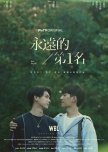
Absolutely Beautiful
I LOVED this series! I know unrequited love is very common in BL’s, but this one just hit different! And the actors!! Not only did they do a PHENOMENAL job, they are HOOTTT!!! Like, seriously. Super hot. My new BL bias is YU!!! (Sorry Mew and Saint!) Zhou Shu Yi (YU) and Gao Shi De’s (Sam Lin) chemistry is off the charts in this series! The pacing was absolutely perfect, not too slow, not too rushed. I don’t want to give any spoilers, so I won’t get into the specifics of the plot. This series is about a boy who has been secretly in love with another boy for years, and even instigates a love/hate relationship just to be close to him. Pretty bold move! The chemistry is FIRE, while also managing to be super sweet, soft, and cute. Sometimes in the same scene!! This series is REALLY well made, the storyline is awesome, the actors are phenomenal, and it has that perfect mix of sizzle and sweet! I DEFINITELY recommend watching this series! Seriously. It’s epic.Was this review helpful to you?
This review may contain spoilers
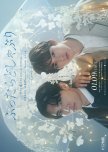
dreadful and frustrating, but brilliant!
When many people say BLs are fiction, that is not entirely correct. The premise of the show of a sexless marriage is a common problem in Japan. The latest study in 2024 found that 48.3% of married couples are sexless, which is nearly double as many as in most other countires. If one of the partners "don't won't the hassle" and the other do need it, it puts a lot of strain on the mental health. This show depicts this reality brilliantly and I felt how dreadful that must be. I also felt heavy and frustrated as Hagiwara with his girlfriend. Kaori does not like to be intimate with him any more.On the other side we have another sexless gay couple which are a couple for the wrong reasons. I'm not happy with the finale explaining Fujisawa reasons for his behaviour - it does not explain the refusal to be intimate. Guilt is always a bad motivator to be in a relationsship. Of course Sei is not innocent in this too. He let Fujisawa isolate him, he did not force the issue much much earlier and wasted years with a love which could never fulfil him.
After a wrongly sent email Hagiwara & Sei kept in contact per mail and discuss their lives even in sexual matters. As it must happen, they did not know they were co-workers. For reasons they discover that by chance and have a laugh. After another refusal of Kaori Hagiwara felt so deep in a hole, he contacts Sei and they meet and they have one of the most sensual scenes in a BL. I don't mean the touching and kissing, I mean the feelings they convey... I felt how they urge for the touch, to be close, to be one.
Of course their sexual affair did not get unnoticed from Kaori and both of them got in a chaotic situation. While Kaori did scrutinze Hagiwara's phone, Fujisawa went into a jealous rage, raping Sei which was not shown directly but he had the marks afterwards. Sei seems to think it was a deserved punishment which sounds insane for most viewers and left me speechless. While Kaori does not seem to be a bad person per se, she is not able to communicate her desires and problems with her partner. Kaori's talk with Hagiwara ended with the expected breakup because she is unable to comprehend what she has done and how Hagiwara felt. Sadly Sei also pushes Hagiwara away.
At least there is happy end and I'm not happy that we did not get another episode.
Cinematography, direction were on point, the cast acted their roles to perfection, making this drama very special. If you think, they all should have communicated better, don't forget, Japan is different from most countries. Feelings are kept hidden more, problems are often ignored especially in relationships and due to the work mentality - which is insane for every other country - they often don't have time to do so.
This is for sure a show to binge-watch and I can't tell you how highly I recommand you to do so!
Was this review helpful to you?


