

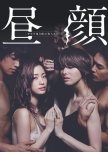
Hirugao: Love Affairs in the Afternoon
30 people found this review helpful
The acting is exceptional and the plots twists will keep you on edge. I was quite shocked at how severe Japanese culture is towards divorce. This story would not play out the same way in the US.
In the end, truthfulness is the only way to conduct one's life. And if a woman chooses to have children, her only choice should be a life of sacrifice for her children. In conclusion, this drama is worthy of watching if you are in a relationship or are contemplating marriage. It will make you give pause to showing more appreciation to loved ones. I
Was this review helpful to you?

Absolutely stunning series! Get ready to laugh and cry during each episode. Best K-drama I've ever watched. It's very emotional, poignant, and hauntingly beautiful a Korean fairy tale of sorts mixed with an amalgamation of beliefs. Every lead performance and supporting performances are amazing.
I won't give any spoilers but enjoy the show for its perfect cast and their tailor made performances for their roles, the amazing ost and art work, VFX and more. This show would be a memorable experience for me to remember in my life.
Definitely go and watch this drama it's truly a work of art and perfection ❤ Must watch and highly recommendable!
Was this review helpful to you?
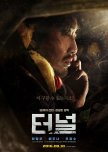
This is an intensely claustrophobic experience and I am not even a claustrophobic person. They really capture the emotion during the situation, the camera angle, the sounds from falling rocks and the dust particles are what makes it possible. I like the way they insert comedic moments in the situation, it’s hilarious but makes sense, they played it brilliantly. Aside from suspense, the drama is pretty heavy here as the dilemma falls to the people involved like the rescue leader and his wife, you will feel sympathy for them.
The CGI is brilliant, realistic, Hollywood level. The soundtrack will creep you as it brilliantly conveys that situation, lack of sound at some parts that suddenly broken by falling rocks or footsteps is brilliant, it added up to the horror element in the movie. Cinematography is insanely beautiful just made the acting better at some part.
Solid performance from the cast like Ha Jeong Woo, Oh Dal Su and Donna bae they are exceptionally brilliant but we need to commend Nam Ji Hyun for what she has done here because it’s her character that added up layer to the movie and she nailed it brilliantly.
That joke at the end is so good that it adds .5 to my score.
Check my Blog for other reviews & other JDramas stuffs. (。◕‿‿◕。)
https://thatjapanesedramaguy.blogspot.com/
Was this review helpful to you?

This was the first ever Taiwanese web series I've seen and let me just say that I thoroughly enjoyed it. The plot was a pretty basic one for the boys love genre, which was step brothers falling in love. Although the plot was quite basic, it sure as hell did entertain me. It just added so many cute elements that I had to keep watching and I'd scream every time a new episode was translated. The actors weren't bad at all for a web series. Their acting was very natural unlike some bl dramas where the acting would start off super awkward. The music was nice in my opinion and they did a great job with it fitting the mood of a certain scene. I would definitely watch this series again, especially as a pick me upper. My only complaint is that it was super short and I wish that they made these episodes a bit longer. Overall, this series made it on my favorites list and if you're a die hard fujoshi like me, I really recommend it.
P.S. I heard that the officials of the web series are going to try their best to have a second season for the series because they got so many requests from the fans. *crosses fingers*
Was this review helpful to you?

This review may contain spoilers
There was so much more I wanted to see …!!
It’s been a while since I really wanted to talk about a show like mentioning all the complaints I have and really just wanting answers to the questions it left me with ….for this drama was really gonna get a 9/10( the highest I give ) if I hadn’t completed it (cuz it has really really amazing 1st half )... I share the same opinion with people who say the drama did not do well in the second half and I have my reasons ...and trust me I genuinely wanted to rate it higher “but” …The first half was really amazing ....and the expectations I had were sky-high ...for how the things around ML were ...that was one of the most realistic portrayals I have ever seen
Even though the FL wasn’t really realistic as a psychology student throughout the show ...I could easily ignore it because I know certain things need to be a bit unrealistic for stories to progress.
As for the acting, it really was fab ..!! kudos to the cast ...for making me smile like an idiot I really enjoyed those little comedic moments ....
The major issues I have are only with the second half ...or you can say the sky-high expectations I had, hurt me. And that is the sole reason for the drop in ratings...
After they were finally together one of the major plot points according to me should have been about wu yan seeing Cheng Yin(her friend) ….They wrapped it so quick as if they were in a hurry to catch an express train ….okay even if you did not show how Nian Qin helped Wu Yan in dealing with her trauma ...makers could have at least given a proper goodbye conversation to them ….not to mention I felt like Wu Yan was done with and had stopped seeing Cheng Yin around ..long before we got to the last ep...there was no journey in her doing so ....which I really wanted to see …
(This one might just be my pure sentiments)...so when they said that ML helped FL land a job at the local radio station ...he helped them secure her dad’s chamber and other things...I really felt that the FL had no achievements of her own and she was okay with that not to mention she looked happy ...look romance and all is fine but if someday someone tells me that whatever I am doing and all the problems I felt I had dealt with on my own were actually resolved by someone else ...my world is probably gonna rip apart ...even if I am thankful that things went the way I wanted them to ….even then I still wouldn’t want this to be true ...all the experiences all the struggle ...all those little achievements I own have made me who I am ….and I will really not be able to behave the way FL does if I hear what she heard....
Unnecessarily bringing the kid Xiao Jie ...again no sense of closure ...look I really liked how they brought the issue of Autism and how they gave us a small talk about music therapy ...but again ...they did not have to bring the issue back ( kid coming to visit them) if they did not have time to deal with it ...I really felt like the kid’s character had so much potential ….they really did injustice with the plot there.
And that call from ML’s stepmom ...visiting ML’s family(last eps) ...doesn’t it seem like a waste of time for I don’t think any of those events contributed to the story. Is it just me who felt like that ??
Maybe they explain more in the novel, but they will be counted as fillers when the drama is concerned.
The second couple - they could disappear from the show and I wouldn’t even realize they did.
Clicking pictures and prying into her personal life ...don’t even get me started even if the ML did not see those pictures the fact that he knew those pictures existed is enough ...makers need to know that there is something called privacy and you need to respect it...if I say more probably this review will never end …
ML’s childish behavior ...nowhere romantic ...okay let’s be honest no one in real life would want to date a stalker …just imagine someone who’s handsome, rich, and high key obsessed with you….the last quality alone is good enough to not date him. The show tries to explain his obsession and behavior....even when I know his story and am someone who can even justify villains I still couldn’t convince myself to justify his actions. At some point I was like - what’s wrong is wrong ....there is some basic respect you show towards the other person which is a must.
Maybe I was looking for some scenes of him struggling; it would have added to the depth of character. Makers could have worked it way better.
The last ep....if you look back the last few eps feel like a thriller’s first few eps ...things happening here and there with the audience just staring at the screen like ...makers you need to calm down ….breathe, drink some water...and let us breathe too....with ML’s identity revealed...FL having stomach ache ...them rushing to the hospital and show ending with them having a kid ...happily ever after ...please don’t tell me I am the only one interested in knowing how and who revealed his identity ...and am I the only one who can’t come to terms with that happily ever after cuz there was so much to explain and explore.
The OST’s and background music - just amazing. It adds so much to the drama ….if they had replaced the entire existence of second couple with more songs ...I’d probably rate the show 10/10 ...lol
I still think that I have a lot to talk about but I’ll save it for the future...also no matter how many unanswered questions the show left me with and how many times I felt like things were going wrong…. I really want to say ….I am happy that I watched it ...and even if I knew they were going to crash I would still want to have those sky-high expectations again …
And here are some beautiful lines from the drama ….
“No matter how regretful one is there is no turning back ...there are no do-overs in life.”
“Using up all your might to bid goodbye and to forget, only to realize how helpless you are. Do you think this feeling is beautiful?”
“Everyone has their own life and happy moments. I just have to grasp my own.”
“I love you not because I need you, I need you because I love you.”
Was this review helpful to you?
Was this review helpful to you?
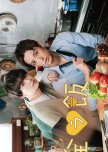
Naked Dining: Love, Life and Liberation
30 people found this review helpful
Plot set-piece driven rather than character-driven
Any story needs to be about characters, and the plot driven by the characters. What I mean by that is that a characters' nature or past trauma, etc. needs to drive how they behave and and react to things. For example, if a character was bitten by a dog as a child, he may have an irrational fear of dogs - and maybe falls in love with a vet. That's organic drama rather than artificial external crises or relying on very implausible misunderstandings, which is one of the laziest sins in writing.The way characters behave in this series make no emotional sense, because the author wants to get from point A to point B, and so that determines how the characters behave. Points A & B were almost always just tired cliches that were not integrated into the plot and did nothing to advance it but were rather just there to be there. A couple of examples:
- The Past Connection. This appears to be irresistable to BL writers (actually a lot of Asian drama genres) - a past connection between Souta and Mahiro serves no plot purpose - it's just there to be there, and as a result it leads to Souta implausibly not remembering Mahiro, because if he did remember him, that would complicate the plot. And so he doesn't.
- The Restraining Hug Fom Behind. Mahiro thinks Souta is leaving, but it turns out that instead he's staying forever. Does that make him happy? No, he gets upset and tries to leave. Why? Why would that upset him? It wouldn't. But then Souta wouldn't need to grab him from behind to prevent him from leaving.
- The Implausible Misunderstanding. Souta drives four hours from Tokyo and arrives at just the precise moment - it couldn't be one second earlier or one second later or the misunderstanding wouldn't have happened - to see Souta hug his boss, who Souta assumes is Mahiro's boyfriend, despite the fact that he knows them both, the boss has actively encouraged Souta to be with Mahiro, there is zero evidence that they're dating, and it was clear Mahiro was upset, so it is clearly a comforting hug, not a romantic one. But the writer needed to insert the next cliche, and so Souta has to misunderstand, and for no apparent reason decides to become the boyfriend of...
- The Interfering Woman. Ugh. I don't even want to dwell on this, but it chews up an enormous amount of runtime.
The end result is two unrelatable and unpleasant characters who behave inconsistently and are annoying.
The acting is OK. The Souta actor is pretty good, Yutaro is one-note and has no presence or charisma. There is almost no chemistry whatsoever. Mahiro behaves like the wife of an alcoholic in an abusive relationship - he actually recoils from Souta every time they're near each other, and he just looks afraid all the time. Souta manages to express some repressed longing, but it's still not convincing. There is no romantic chemistry between them, and certainly no romance. They barely even touch each other, at least not on purpose.
A positive is it's well-filmed and the setting in the countryside is lovely. Well, Souta gets naked sometimes, and he has a nice body, so there's that, I guess.
Another positive is the Taiwanese store owner, who is an appealing character and causes a plausible (!) misunderstanding when he reads a note that contains kanji characters that mean "former coworker" in Japanese, but mean "ex-lover" in Mandarin, which leads to the series' best comic moment.
Overall this was a total waste of time, and a disappointing squandering of an interesting premise and a strong start. But it goes nowhere, is frustrating to watch, and is way too long for the amount of "plot" in it. I would skip it.
Was this review helpful to you?

A simple and ordinary story told with the most imaginative way
Stories with many plot-twists, complicated storytelling are most of the times what we are looking for because they can easily catch our attention. However, a simple story can be good if it’s done right and in a creative way. That’s the case with “Yumi’s cells”.“Yumi’s cells” is a romcom but not a common one. It’s a light drama that everyone who loves romcoms can see and enjoy. If you have a bad day, “Yumi’s cells” will bring a smile to your face and brighten up your day. To be fair though, “Yumi’s cells” is not everyone’s cup of tea. The things which make the story enjoyable and unique can also work the other way around. Let’s see what these things are.
The story
“Yumi’s cells” tells the story of Yumi and her brain cells. Yumi is an ordinary girl, living an ordinary life. We are basically seeing Yumi’s love life and her daily struggles. There’s nothing special about Yumi’s life, nothing extreme or mind blowing is going to happen, so why is this story special? Here is where Yumi’s cells come into the picture.
There are plenty of stories where biological functions of the human body were explained as actions of small creatures living inside the human body. These small creatures can be portraying cells, organs, emotions and so on. In Yumi’s cells they are portraying her cells. Through the cells we see Yumi’s thoughts, emotions, habits, how she is making her decisions and literally everything about her character.
The whole philosophy behind cells’ actions is very creative and well written. Cells' thoughts and actions are very natural and spontaneous and it’s quite amazing how the impact of these is working on Yumi. It feels accurate and at some point, very realistic. Thus, the watchers can easily relate with Yumi and feel all kinds of her emotions and understand completely the cause of her actions. Apart from this, there is also a very funny perspective about the cause of many behaviors and also allegories of some body functions that makes the story really funny and enjoyable.
The Webtoon
The story is based on a webtoon by the same name, written by Donggeon Lee. The webtoon contains 512 episodes and the original run was from April 1st 2015 to November 13th 2020. The drama’s first season consists of chapters 1 until 206 of the webtoon. As I have read the webtoon, I have to mention some differences that make the drama good or bad at some points.
The storyline hasn’t changed much, the milestones of Yumi’s life are all there. One main difference is that they have cut many scenes from the cells and added more to the humans. That way, the screen time between cells and humans is balanced which is a good thing cause the story focused more to Yumi and not to the cells like the webtoon. They also cut some episodes from webtoon that were fillers. Thus, the story is more fast paced than the webtoon.
However, cutting many scenes is also a problem as it destroys the natural flow of the story. The story is moving way too fast and it doesn’t leave any space for the relationships’ dynamics to develop. That’s why some situations seem a little bit rushed or/and forced.
A personal negative about the cutting scenes is that many of them are my favorite parts of the story. I was excited to watch these particular scenes on the drama but they never appeared so it’s only logical that I was sad and disappointed about it.
Another difference is that they reconstructed some scenes by combining two or three different chapters of the webtoon as the please, without chronological order. They also added some extra scenes that haven’t been on the webtoon. This was expected to happen, as it happens all the time with the webtoon adaptations. Some of the episodes that have many changes are 5,6 and 7.
I don’t mind changes, if they don’t affect the story and the characters as much. There is one thing that bothered me, a lot. They made Yumi a liar and that pushed her into very awkward situations, many times and, of course, created unnecessary drama. Yumi is a very honest person and that destroyed her image a lot.
The production
Making a live action for the Yumi’s cells wasn’t an easy task. That’s because they had to mix live action with animation which is very risky. Fortunately, I think they combined these two genres perfectly.
As I said before, they cut many scenes from the cells and added more to the humans so there was a balance between the animation and the live action. That way, the watchers didn’t get tired of the animation scenes. The scene transitions between the animation and the live action were also very well executed and discreet which also helped the viewers to get used to the animation. The first two episodes will feel a little off but after them, you will enjoy watching this combination.
The animation style that has been used is 3D animation. Before watching the drama I had my doubts if the animation would turn out bad or good. After watching the drama though, I can say that the animators have done a very good and detailed job and I was very satisfied with the result. The only reason to dislike the animation I think would be because some people generally don’t like animation or are experts and see all the errors a common eye like mine can’t see.
Overall, Yumi’s Cells is not the romcom we usually get to see in dramaland (especially in kdramas). It had some flaws and I wasn’t fully satisfied with the adaptation but I’m happy that now more people know about this unique story. I hope in the future we will see more romcoms that won’t follow the usual clichés and give us something fresh and beautiful, like Yumi’s Cells did.
Was this review helpful to you?

This review may contain spoilers
Tragic, epic, visually impressive.
"The Slave Hunters" is a cinematic-style KDrama, almost like a movie for the big screen. (It would definitely be an experience on the big screen.) In any case, "The Slave Hunters" has a lot to offer during ist 24 episodes.
There is strikingly selected staging of the landscape. Korea presents itself self-confident with its countless riverscapes and deltas, its mountains and coastal regions. The viewers visually accompany the protagonists on their long journeys across the country.
The accumulation of well-trained, well-structured torsos of the male actors is also characteristic for "The Slave Hunters". There's a lot of work involved, and it's appropriately staged here in numerous shots. Why not?
In connection with its sporty mimes, "The Slave Hunters" also comes up with a variety of brilliant, sometimes spectacularly choreographed fight scenes. Above all, Jang Hyuk once again sets quite a monument with his versatile martial arts skills.
The KDrama also presents - if you like - some Joseon-style parkour. 'Chase' thus gets a nicely invigorating touch. (Side note, in case you don´t know: Parkour is a special form of athletic movement art - a mostly urban steeplechase that has become fashionable in the last few decades. Individuals choose the most effective way to get to their destination, and that's hardly ever the predetermined path. Rather, the urban or natural landscape is re-perceived with regard to potential obstacles and evaluated as to how these can be creatively overcome on the individually chosen route, for example by jumping, somersaults or the like.)
The KDrama also stresses the subject of fatal love triangle in its complex emotionality. Eventually, there are also more love stories in the side plots. Yet, to be honest, the romance aspect should not be your reason to watch... The complicated dynamics might drive you crazy at times, so does the rigid play of the ex-and-again-general.
After all, the story mixes a good pinch of humor with profound wisdom. Surrounded by all the muscle-packed, fast-paced spectacle, the question of how a just society can be achieved is examined, i. e. whether it can ever be achieved at all. As soon as people gain power, won't they always tend to turn their fellow human beings into slaves, chattel or lackeys? And: will a changed political system change the people? Or do people have to change for the system to change? As a premise it is stressed that slaves are also human beings, e. g. that it actually starts with an attitude, that one should not deny any human being to being a human being - certainly not according to their genetic origin. "Slave Hunters" historically refers to the beginning of socio-critical Yangban movements against practiced slavery.
At the same time, the KDrama shows life under simple/poor living conditions - unembellished in all coarseness, e. g. ugly, blustering, brutal, unkempt and uneducated, but still warm-hearted. On the other hand, the fine silk clothings and the well-groomed, educated demeanor of the nobles and officials cannot hide their emotional coldness and corrupted souls.
All in all: It is not surprising that the KDrama in average thrilled more than 30 percent of the South Korean population and received numerous respectable awards and even international nomination. Above all, Jang Hyuk, for whom his role seems to be tailor-made. He fights, jumps, sprints, barks, laughs, cries, digs into the deepest depths of his soul and on top of that presents profound street smart and wise philosophies.
"The Slave Hunters" has a charm of its own. It´s tragic, epic, visually impressive.
---------------- Side Note: --- historical background ----
The historic frame refers to the time of King Injo in the 17th century as well as his son and Crown Prince Sohyeon. As a result of the submission after the second Manchu invasion in 1636, the Crown Prince (together with his wife and other officials) went to Shenyang practically as a hostage of the Qing. He spent his time there working diplomatically on peaceful relations between the Joseon and Qing dynasties.
His commitment also brought him to Beijing, where he became familiar with Western culture through his acquaintance with Jesuit missionaries. However, his father did not like Sohyeon's diplomatic commitment and open-mindedness at all. He feared that after his return and accession to the throne, he would want to reform Joseon with Catholicism and Western values. Prince Sohyeon's sudden death is interpreted by historians as deliberate poisoning. There is some evidence that his own father was behind this. Sohyeon's wife was executed for treason and only the youngest of his three sons survived their exile on Jejudo.
---------------------------------------------------------------------
Was this review helpful to you?

Anit-BL
What will happened if you realize that you are living in a novel? All of us have dream about it no matter if it’s a BL, Henti, Superhero, etc. But this new show brings a new light of many people, including myself, about the consequences of been in one, especially if you didn’t have any options or power to pick the novel. I honestly was wandering how they will start with this BL, well, antibl. The introduction is very clear with many funny scenes that we are all familiar with. It’s so hilarious that it feels like this show is making fun of how expected things can be in a manga or any bl novel. And we all have thought about it of; how cool would it be if somehow, we get transported to a novel.We find ourselves following Inukai Atsuhiro (the Mob = extra character in a movie, or any show) in his everyday routine of anitbl and how he strategies in order to fight the world! Yes, it’s him against the BL world.
The most important question that I have about this BL or Anti-Bl is, how is he the only one that knows he is on a BL world?
Was this review helpful to you?
There was no development at all and then there was a 6 year time jump.
You can tell that it's an indie/amateur production needless to say the production and filming was up to K standard, beautifully filmed. The acting itself was professional and believable.
To be honest I wouldn't waste your time watching it even if it will take you 30 mins to watch all 5 eps.
Was this review helpful to you?
This review may contain spoilers
and we cheered for mystery case solving dramas
So the premise is that our leading actress li landi plays Shen Wan, who is a young prodigy that has the excellent skills of a physician and a coroner. After her father is wrongfully accused of corruption, both her father and mother are killed by assassins, and while attempting to help Shen Wan escape, their friend Qin Liang also dies at the hand of these assassins, leaving only Shen Wan alive. She takes on the identity of Qin Liang's daughter, an old patient of hers, Qin Wan, who actually already passed a year ago, but news of her death had not yet reached her family. She returns as Qin Wan, and quickly forms good connections with noble families with her physician skills. After a murder case occurs, she is eventually able to showcase her coroner skills as well, that were taught to her by her father. Hoping to make a name for herself as a coroner, her goal is to eventually travel to the capital to investigate her father's case and restore his title as an upright official. She continues using her forensic + coroner skills to solve multiple murder cases that happen in her town. I'm seeing some people say that FL is too OP at the moment and how everything's going the way she needs it to. Well, idk what to say people, sorry she's intelligent and skilled, and maybe I don't want to see her trying to prove her identity for 10+ episodes like in the Double—we're saving time for the murders and eventual romance!One of her connections include mr. ao rui peng who plays Yan Chi, nephew to the emperor, one of the youngest generals to lead Shunxi army, good at martial arts and also good at detective work, etc. you get the idea. This is my first time watching him and while I didn't find him very handsome in moonlight mystique, I think he looks great here! Someone said something about a fan perpetually facing towards him and they're not wrong - somehow faint wind is blowing on him in almost every scene, even indoors (hilarious). I quite like his acting so far, and I especially love li landi's acting. I thought she was great in our starry love but couldn't finish that because of the story + male lead. She's so pretty in this drama, I absolutely love her outfits and she looks stunning in purple + her line delivery is as natural as usual. She carries herself with a calm demeanour, but that doesn't cover up her fierceness within.
Regarding the romance (YEA IK MOST OF YOU WANT TO KNOW ABOUT THE ROMANCE) it was kind of love at first sight for Yan Chi. In the early episodes, they have many moments where you can see him falling for her deeper, it's very endearing. I've been watching mostly slowburn and enemies to lovers dramas like the princess's gambit, so this was kind of a breath of fresh air? It's not like their romance is given that much time to develop that early though cause they're too busy kicking ass and taking names. It's looking like possibly 6 episodes ish per murder case? So nothing is going too fast, you just see these small cute moments they share! Hes probably held her wrist in almost every episode so far and that little moment of contact always makes me smile. Shes proven herself as a smart and upright individual who cares a lot about bringing justice to the dead and the wronged, you can't blame the guy (and lowkey a lot of other dudes) for falling for her that quick. He respects her, protects her, and supports her—and is one of the only people around that can stomach autopsies (guys he already wiped her sweat in episode 2 during an autopsy, are they moving too fast?). He's also one of the only people that are suspicious about her identity, and he's also hoping to investigate her father's case as it involves someone who was close to him. I don't think Shen Wan will accept him that quickly since he still doesn't know her true identity until who knows when, but until then, we're just gonna see her stuck with him regardless while they solve cases alongside each other. Now, upon finishing this drama, even though they do get together a little earlier than expected, their interactions aren't cringy or too much, nor do they take away from the serious plot lines. Their support for one another helps them grow as individuals (as if getting even more good is possible for these two) and them being together just MAKES SENSE.
About the cases, they're actually pretty interesting. I don't find the murders/autopsies gory or gross or anything, but maybe that's just me. Everything's kinda fake enough for me to not care. I like the way they find clues along the way and actually manage to piece everything together. They are truly doing detective work—there are calculations, logic, they take the right steps to figure out the motives and intent of everyone involved. You're kind of aware and also kind of not on who to suspect, (first case was obvious, the next one.. not so much), so it's like you're solving cases with them. It lowkey reminded me of Scooby doo and the mystery gang (and I would've gotten away with it if it weren't for you meddling kids!!). But also this is my first time watching a case solving drama so I can't compare it to anything. Editing of the scenes is a little weird at times, they seem to like tilting shots at certain serious scenes, but I don't pay that much attention to it. Overall, I really like the costumes, settings, and plot so far. edit: YUPPP THE ROMANCE IS ROMANCING. Also, be prepared for the last mystery case as that was genuinely the biggest mystery of all! Trust me, you'll want to go into it blind.
finale edit: absolutely loved the way they tied up this drama. now THIS is how a drama should end. no loose ends, no plot holes, no unnecessary deaths, (albeit quite a few necessary ones), and yes, if it wasn't obvious enough, its a beautifully well done HAPPY ENDING!!!
Was this review helpful to you?
Love by Chance Season 2: A Chance to Love
89 people found this review helpful
EDIT: Since this series ended I have a strange feeling in my gut. For whatever reason I don't want to think about this series anymore (and I will not rewatch it). Hearing about questionable behavior of the cast towards the only gay character in the show (Earth) isn't helping either. This really was a train wreck.
Was this review helpful to you?

This review may contain spoilers
raw, emotional and with a cliffhanger....
While some episodes where not as interesting as others and had some "logic holes", the outstanding feature of this show are the characters and the actors playing them. Even the action scenes were, for a thai BL, quite good (in contrast to Jack & Joker). It's rare for any thai BLs to leave "badies on the field" after the final episode, something we have not seen yet. But the bitter pill we also have to swallow is an open end, which means they are gearing for a season 2.This show is not for everyone. While there is eye candy and sensual scenes, this show is mostly raw and brutal. That begins in the prison with all the abuse you may associate with it and ends in the finale which is one action sequences after another ending in a blood bath. Also the thai/korean co-production did not feel akward compared to other shows, even when the K-Dad was not really Korean at all, but we will forgive that.
Overall it was something fresh for a thai BL, something different and something not seen yet and for that courage alone we should praise this show. Of course, it was not perfect, the storyline could have been better, but some twist were also well thought out and not as predicable compared to many other shows.
So, if you can stomach the raw and brutal scenes or don't like the overly fluffy stuff, it's a show worth watching.
Was this review helpful to you?

This review may contain spoilers
Strong start, lackluster finish
* Editing this because I focused SO much on the negative so I would just like to add that I love Lu Shiyi. He is a very passionate and loyal person. He was dedicated to sports but that didn't stop him from improving his studies and he never lost sight of his dream of becoming a doctor. He went out of his way to comfort, love, and protect his friends and family. He wasn't afraid to apologize when he hurt someone and he never stopped giving his all. I just wish the writers didn't throw the Lu Shiyi we loved out the window in the last few episodes and replace him with an overly jealous and obsessive jerk*The show started off pretty strong. With interesting characters and funny moments that led to beautiful friendships forming it was building up to be one of the best school love/friendship stories I have watched. The only qualms I had in the beginning were that they rushed the high-school portion and sending BaoBao off was way too random + I almost thought they were going to make it the cliche "cold, rude boy bullies the girl and she falls for it" but they didn’t. Shiyi teased Xiaoju and they bickered a lot after getting off in the wrong foot BUT Shiyi quickly changed his ways and they became great friends. They both stuck their necks out for each other and grew close. Once they became friends and before Shiyi even realized his feelings he still went above and beyond for Xiaoju.
Everything seemed great and despite the looming love triangle and every day struggles the group's friendship was the one strong standing thing. However for some reason the writers decided to scrap that and ruin practically every character.
The thing I liked the most about Shiyi was that even after he found out how he felt about Xiaoju, he didn’t want to force his feelings on her or lose her and decided that he would be happy if she was happy and wished she wouldn't get hurt in her own one-sided love. He was always there for her and did whatever he could to make her happy. Even after he found out that Xiaoju liked Cheng Lang, he was upset but he didn’t take it out on her and instead helped keep her secret and do his best to comfort her and protect her heart. He tried to muster up the courage to confess quite a few times but Xiaoju was always wrapped up in her feelings for Cheng Lang so he pushed it off to comfort her instead. Unfortunately the writers through all of this out the window by introducing Chang Le or whatever the class monitor's name was. They made Shiyi turn super jealous and obsessive. Then after he confessed his feelings he kept practically harassing her, tricking her, and using tricks to make her pretend to date him (the entire fake dating thing was ridiculous, if they were gonna use that extremely overused trope they at least could have done it right). Suddenly all he cared about was chasing her around. On top of that out of nowhere he returned to his high school self and started insulting Xiaoju nealry everu time he interacted with her because of his jealousy.
As for Xiaoju, she was a good headstrong character. She worked hard in her studies and was a loyal friend. However the writers ruined her character after Shiyi's confession. Suddenly the Xiaoju we knew who was kind and got upset at Shiyi for always being mean turned downright nasty to Shiyi. She called him crazy for confessing and just kept hurting his feelings despite explicitly saying that she was turning him down so he wouldn't get hurt. I get being confused about her feelings but she would fully disregard his feelings in general. At first she said it was because she didn't like him like that but then she switched up and just insisted that it isnt right and that they should ONLY be friends. She kept switching up one moment she would be rude to Shiyi but then realize she was too mean and would apologize and give in and basically confess her feelings but then when he would say she likes him and they are together she would shove him away and run off. She did this a MILLION times until one day she decides she is confused and MIGHT like him. Literally everyone in the world could tell she actually liked him now EXCEPT HER. It takes her bag being stolen and Cheng Lang pointing out to her (for the 100th time) that she likes Shiyi and then she FINALLY admits it and confesses her love for Shiyi...TO CHENG LANG
Cheng Lang who was kind and very down to earth just grew boring and I felt almost zero chemistry between him and Lin You. He became a side character and I couldn't care less about his love story with Lin You until they had such a ridiculous ending. Personally Lin You had the personality of a piece of paper and they ruined her character even more by her breaking Cheng Lang's heart not once but THREE TIMES. Cheng Lang was clearly very interested in her and they stayed up late together and he did lots of chivalrous things for her but not once did she mention she had a boyfriend until he confessed. Then her bf dumps her and Cheng Lang helps her heal and before he can confess SHE makes the first step towards him. She then becomes the jokingly clingy gf telling him not to flirt with other girls. They date and are in love for almost 3 yrs then the writers decide to bring her bf back and have him beg to get back together. Then they reveal that oops! It was a misunderstanding and he got in an accident and lost everything and thats why he dumped her. But still she cries and says she loves Cheng Lang. But then its revealed that her mom forced him to lie and break up with her for no reason and then that leads to a whole mess of her defending her ex in front of Cheng Lang and then eventually choosing him and going to study abroad. The writers then decide its a great choice to make Cheng Lang become successful but still make him heartbroken and long for Lin You and then end it with him seeing her back in China and excited to talk to her only to see her with her boyfriend that ISN'T the man she left him for. Thus rubbing it in his face that not only did she leave you and run back into her ex's arms, she dumped that guy too and STILL didn't come back to you.
As for TaoTao and Huang Jun the writers ruined their cute relationship. They randomly through in Menglu who purposely tried to break them up. Huang Jun faltered and lied to Tao Tao even after she gave him another chance. Then when she fully breaks it off he goes on to date Menglu only to still fawn over TaoTao and complain about Menglu not understanding (which serves her right because how is she gonna break them up and then complain because he still cares about her and act like he wouldn't cheat on her). 2 years pass since their breakup and only then after seeing TaoTao happy Huang Jun decides to become possessive & pathetic and never leaves Tao Tao alone despite now being with Menglu. He even begins ignoring her calls without breaking up her. He harasses TaoTao until the end until finally he sings a last song for her and she agrees that one day they can be friends and that she doesnt want to be enemies even though she still hates what he did. He cries, and holds onto her hand and she takes it away and he wishes her happiness. I'm glad Tao Tao got a happy ending and I'm glad Huang Jun suffered and BaoBao came back but everything was too random and thrown together. Why did Tao Tao keep their relationship a secret from Xiaoju for YEARS. We were led to believe she was just chatting with a stranger and thats why she was so secretive. Then years later she announces her marriage. I started suspecting it was BaoBao but it seemed so far fetched and laughable. BaoBao appears and apparently Shiyi knew this entire time. Nothing is explained on what he has been doing or how he and TaoTao got together. A random party is thrown and they get married.
The entire last 2 episodes were ridiculously rushed and made no sense. It was clear that Shiyi's "girlfriend" was going to be Xiaoju and that he was just playing a dumb trick on her. When she finally does realized she goes to the beach to wait for him and we are led to believe he is going to do the confession he planned for his "girlfriend" but nope he gets a work emergency and Xiaoju doesn't believe him. She then ignores him at the party and they both act childish to each other all the way up until the ceremony (but not before a drunk kiss initiated by wasted Xiaoju followed by a hinted possible hookup). Then once the ceremony ends and Xiaoju catches the bouquet, Shiyi confesses (IN THE MIDDLE OF TAOTAO AND BAO BAO'S WEDDING) and Xiaoju ask about his gf and he says she is the only one 🙄 then he PROPOSES and they kiss and boom The End.
Yep thats it. We get a random time skip and zero explanation of why Shiyi never contacted her but suddenly everything is okay and they are ready to marry each other. We also get zero explanation on TaoTao and BaoBao's relationship and Cheng Lang and Lin You's relationship is resolved with Cheng Lang never stopping loving her and having to see her on the street with ANOTHER guy.
36 episodes ended randomly and rushed as if the writers just threw darts at a wheel and went with it. 36 episodes and we never get to see Shiyi and Xiaoju as an actual couple and the only kisses we get are all within the span of the last 10 mins of the show. So many things built only to be thrown away completely. I wished the show would have stayed focus on the groups friendship but by the end the bond didnt feel as strong.
I would say give it a watch if you are bored but 36 episodes is A LOT and no amount of skipping would make it more bearable. Super bummed it turned out this way.
Was this review helpful to you?


