


Perfect Movie yet many questions (with theories)
partly spoilers at the end, however I'll note again. My theories and answers to open questions are at the end.I haven't played the game tho I know about from social media and I know about the movie from social media. Didn't think I'd be excited to watch it as movies about games usually are mostly flops or just overhyped. But the hype here is relatively non-existent (perhaps because it didn't enter western markets yet or so I assume)
However I finally decided to watch it (language barrier yet I was able to understand most of it) and it was really good. For the length it's a very good movie and has great rewatch value (though exciting things probably made the movie better)
I know some things from the game as I watched the gameplay a month ago or so when I saw the trailer for the movie, therefore it was even more exciting.. So my first suggestion is to watch the gameplay to know at least some anomalies etc.. However this shouldn't turn you away as there practically isn't any anomaly from the game copied 1:1, instead just some that are similar to the game's anonalies. So I praise their efforts for investing time in making new anomalies though I think that's given. The plot itself is very good and it isn't that scary at all, however some CGI or editing things whatever they use nowadays looked very very cheap so that's something that couldve gone better (or I just have high standards) but it didn't ruin the plot at all. The camera setting and cinematography in general is perfect like they match the game's vibe a lot and were used very efficiently. The music is very basic yet creates another atmosphere every time though it was very misleading very often.
Spoiler section!!:
I mean the monster rats, I think they would've been actually scary if they looked realistic or something. Because after all the movie isn't scary at all but at least they didn't use jumpscares to artificially blow up its scariness.. But after all the game itself isn't really scary, though it's known as horror game. Perhaps the idea of being stuck in a never-ending loop is the scary thing.
There are some things that bug me here, especially the kid. It seems like it's the child of his girlfriend and therefore his child too, however not born yet. I thougth its an anomaly at first too, and kept thinking so for a while, because after all in the game there is an anomaly where the sign continues to show 0 until you turn back again, I thougth that was the case here.
I didn't like the story of the running man or the walking man because it made me thinking they'd just skip characters and that this movie has no meaningful ending, because why would you just skip the ML at the most exciting part? and the man really wasnt more than a plot filler, the anomaly of the wrong ending is in the game too, that's like the only anomaly they've copied 1:1, because even the "blood tsunami" wasn't a blood tsunami here.
What's bugging me more is that the child could hear the ML scream when he already passed (as we could see in the child's POV for short) but in the end he couldn't hear the ML approaching even though there were just like a dozen seconds apart?
What I didn't understand was the part where the anomaly was everything being yellow, did this mean it was radioactive or something because he seemingly had an asthma attack but that and his reaction might've just been because of him experiencing this as this probably was his lowest point in the movie.
We can notice a huge development of the ML which is too huge in my opinion, first of all its visible by him not needing the asthma spray anymore and second of all his behavior in general. Of course the development might be symbolic e.g. him protecting a child etc but like he seemed very insecure in the beginning and was about to lose it so the development was too quick, perhaps the length of the movie contributed to this.
The ending already seemed off, I already thougth the exit was wrong. Perhaps it's a new wrong exit anomaly, because the ending in the game is different too. It doesn't end at 8 but you have to do the 8th round again, to pass. I think the ML didn't do the 8th round and the entrance with the number 8 on the sign appeared right after he finished 7 where there was no anomaly. So level 8 itself was an anomaly and he just reentered the loop without knowing,
OR he did know or did not know but still wanted to reenter the game to find the boy, because after all why did he board the train again if his initial goal was to head home I guess, why would he board the same train?
After I rewatched the beginning to check something (I forgot what I wanted to check but it was still worth it to rewatch the beginning). In the beginning the scenes are practically the same (as they were just recycled in the ending when switched to POV lol) however what I noticed is that when he scrolled on his phone at the beginning some anomalies were there like I saw the giant rat with the human ear and the beach he dreamed from. Furthermore, I think when we are able to see him through the reflections of the door's windows we can see that he doesn't wear a bag (or its straps aren't visible because they are really similar colours to his jacket). This either was a film mistake or intentionally to show that the ending and the beginning are practically the same, as his bag isn't visible until the POV switches.
So my main theory is that the guy is aware of being stuck in a loop and perhaps boarded the same train to reenter the place to look for the boy. After all a call with his girlfriend was already an anomaly, and both times, so when he was stuck in the exit and at the end, there were baby screams coming from the phone even tho I assume the baby wasn't born yet as there were none at the beginning. But if you have other information I missed because of the language barrier feel free to correct me.
However as already said this movie was very great and blew my expectations, will we get to see a second movie (not necessary tbh) where the ML is still looking for the boy? If the boy is his child I still don't know why he wasn't an anomaly.. For a monent I thougth the ML would've died in the tsunami and the boy survived, which could make sense as the FL already is pregnant and the boy could come to existence by exiting. However my biggest fear was that the FL would've lost contact to him (as he died in the loop) right after she told him she's pregnant which would've probably led to even worse things.
Was this review helpful to you?
This review may contain spoilers
Very good watch, but conflicted on the ending.
It's been a day since I sat down to watch this movie and believe I am as clear of mind now as I was right after watching.I will start off by saying the movie is very good. The tension in the movie stays as high as the frustration levels of the circumstances throughout the entire movie. You feel for all the characters to a certain degree before the stuff hits the fan. The scenery is a place where you would think is peaceful and plentiful, but after viewing becomes a battle ground tainted by conceit and blood. The music was well placed and unsettling, maintaining uncertainty in tense moments and made you overthink at certain points of other characters intentions.
Mo did her job as an antagonist to me; fighting tooth and nail for something she felt entitled to, while doing anything in her fragile being to keep every iota of its earnings. Seung has her ups and downs and was a bit frustrating with her own desire in ownership, but I don't hate her grieving process as much as I do Mo. You feel for Thongkam with all the unfairness (and feels even more tragic since the story takes place a year and half before same-sex marriage became far more legally recognized) and I found myself rooting for him to at least find some peace.
ENTER JINGNA. Now, I will come out and say I am bias towards Keng. If not for Jeff acting as Thongkam, Keng as Jingna was one of the other reasons why I watched this movie. That being said, Jingna is the very reason why my rating of this movie falls a little. The acting is fantastic, exactly what the story embodied for someone practically uninvolved in the family drama yet acting off of what everyone else whispers should or shouldn't be about the situation. Jingna has a moment with Thongkam, and I felt mixed about it. Was he being manipulated or was it real? The movie pushes that it's real, but then lessen his screen time until, BOOM "let's get married and run away" then bLAH he dead. The death had me surprised...but not in a good way. Yes, his character is blameless, beautiful, and tragic; but in the context of the moment it felt overdone. In my opinion, I think Thongkam threatening a child implantment in Mo was more shocking of a climax to the scene than (literally) last second death of good brother/boyfriend. Somewhat of a needless shock value moment just to wrap up where the characters need to go. And then, my uncertainty about what Thongkam and Jingna had was reinforced by the leaving of the durian seed/bark at the end. Was Thongkam moving on like it never happened or leaving it like a respectful gravestone? Thongkam fought angerly to have Sek's ring back, and you're telling me after everything he leaves the only product he and Jingna notarized out of love behind? Again, was what they had real? If I don't think hard, Jingna is someone innocent caught in the toxic family crossfires and has a sudden bad ending. If I DO think, Jingna is far more disposable to Thongkam and the plot than they let on...and I find that disrespectful when looking back on the work as a whole.
So, with that rant over, I still had a very good time on the edge of my seat throughout it all, left empty by the end and hoping Thongkam and Mo choose to do something better themselves after the credits roll. I still love what the cast did to tell an insufferable reaction to family death, and other than JingNA, I would give the overall watch experience an 8/10.
Was this review helpful to you?
This review may contain spoilers
"The Exit That Never Exists"
First Impressions
The Exit 8 looks very simple at first..... just one man trying to leave a subway station. But the more you watch, the more you feel trapped with him. The repetition is not boring; it is suffocating.
What Pulled Me In
• The creepy atmosphere created only with small details like posters, stairs, and people.
• The actor’s performance... his face showed fear, confusion, and finally helplessness.
• The way the film built tension without loud horror tricks.
• It made me think about life as a routine loop.
Where It Faltered
• The pace is very slow; some viewers may get impatient.
• Many clues are so subtle that casual viewers will miss them.
• The ending gives no clear answers, which can frustrate people who want closure.
Between the Lines (little spoilers)
Many viewers believe the man finally escaped at the end. But for me, he never left the loop. He never took the stairs going up to the real world.... instead, he went down again and entered the same train. His face in the last scene showed realisation and helplessness: he understood he was forever trapped. That was the real horror for me.
Lingering Aftertaste
The film stayed in my head long after it ended. The idea that escape is an illusion is deeply disturbing. It is not a typical horror movie, but a psychological experience.
Adaptation Note
The Exit 8 is adapted from the Japanese indie video game “The Exit 8” (8番出口), created by Kotake Create (コタケクリエイト). The film keeps the game’s concept of spotting anomalies in a looping underground passage and turns it into a tense psychological journey on screen.
Final Verdict
If you want fast action or clear answers, this is not for you. But if you enjoy psychological thrillers that play with your mind and leave you unsettled, The Exit 8 is worth watching. For me, the scariest part was the endless loop and the hopeless acceptance on the man’s face.
Was this review helpful to you?
This review may contain spoilers
"La tristesse durera toujours"
Toshio Ōki (Sō Yamamura, in an absolutely well-placed part), an established middle-aged writer, husband and father, travels to Kyoto in the days leading up to New Year’s Eve; In his thoughts always returns Otoko (Kaoru Yachigusa, perfectly at ease in the role), his former lover from decades earlier, who at the time, when the girl was barely 16, had also given him a daughter, who died soon after her birth...From this experience, Ōki wrote a deeply autobiographical book ("The Sixteen-Year-Old Girl", the title quoted in the novel) that became a bestseller.
After being abandoned by Ōki (who has returned to the family fold), Otoko is now an accomplished painter and lives in the company of the young and perturbing Keiko (Mariko Kaga, stunning), her pupil and lover; Keiko, as beautiful as well as enigmatic, is obsessed with “bringing justice” to her partner, engaging in a destructive game of massacre that will not spare even Ōki's son Taichiro…
Beauty and Sadness ("Utsukushisa to Kanashimi to", 1964) is one of the most significant novels by Yasunari Kawabata, the great Japanese master who won the Nobel Prize for Literature in 1968; His compositional style, poetic lyricism and the themes expressed in his works are ineluctably interwoven with Japanese culture and tradition, but also with that profound and complex sense of universal melancholy that afflicts -inesorably- the human soul, especially in the face of the passing of time and, therefore, of life itself ...
The material available in the novel offers so many insights that it would be perfect for a film adaptation.
Due to the immediate public success of the book, the Shōchiku film company cleverly decided to produce an adaptation for the big screen, relying on the skilful flair of Masahiro Shinoda, one of the most representative names at the disposal of the company founded in Tokyo.
Shinoda (born in 1931, died in early 2025) had joined Shōchiku in 1953, at a very young age and, like so many of his colleagues, had gone through a several-year apprenticeship as assistant director for many prestigious colleagues (Ozu too, among others) and, finally, in 1960 he made his debut as a film director, immediately distinguishing himself thanks to a non-conformist style, detached from the cultural movements that engaged his more “politicised” colleagues (Oshima etc.).
Eager to change the basic language, as well as the content and themes, Shinoda had started a productive collaboration with both Shuji Terayama, great author, poet, playwright, director and a thousand other things, and also with avant-garde composer Toru Takemitsu, deconstructing cinematic materials, especially in Yakuza and Crime Movies such as “My Face Red in the Sunset” (which seems to anticipate certain Seijun Suzuki-esque mockery and experimentation) and, most of all in the beautiful "Pale Flower”.
To use the words of Chris D. in his immense essay “Outlaw Masters Of Japanese Film”, Shinoda revealed an almost pictorial style in the composition of the images, managing to miraculously merge music with imagery, lights and camera work, resulting in a rigorous style and realisation…
With these assumptions, in the skilful hands of the Gifu-born director, Kawabata's novel comes to life, converting the pages of the book into images and perfectly reproducing the sensual and aestheticising world of the work of the same name, without, however, giving in to perhaps easier sensationalism (as in Masumura's “Manji” of the same time, nudity is extremely limited here).
We are in the presence of a multifaceted and complex love story involving all the tormented characters portrayed and where all the most significant themes of the novel find expression; The past that suddenly resurfaces, suffering and regret (because “Love is a wound that never heals...”), sense of guilt, but also desire, obsession and, of course, love itself (also in its predominant homosexual aspect).
All these elements are highlighted by Shinoda with an extremely geometric style, elegant in its attention to detail and in the search for atmosphere; A style capable of alternating very close-ups with long shots, as well as crab shots and the use of refined long takes; Those in Otoko's house are beautiful, with the two women/lovers confronting each other.
Refined visual aesthetics and a great display of technique even in static shots, almost with a cinematographic cut à la Ozu; Shinoda also fills the scenes with mirrors, somewhat in the manner of Orson Welles, almost as if to reiterate, in metaphorical form, the complexity of reality, truth and the shattering of the identities represented, particularly in the multifaceted nature of Keiko.
Thanks also to the perfect use of colours and beautiful locations, the clever temporal fragmentation - excellent flashbacks alternating past and present - the contribution of the music - and introspective silences - and the use of elliptical editing, the essence of the original text, as well as much of the dialogue, is well represented, especially in the last segment, which diligently avoids risky didactic cascades, restoring all the pathos and relative emotional tension of the book's dramatic crescendo.
The choice of the cast, perfectly assembled, is a very satisfying decision; The idea of making Keiko the fulcrum of the story is interesting, thanks also to the remarkable attractiveness of Mariko Kaga (already the protagonist in ‘Pale Flower’ who, moreover, with those eyes, would make anyone vacillate!). Especially in the sequences with Otoko, Keiko is remarkable in amplifying her obsessions and her mad love for her teacher, at times disturbing in her iron will to achieve her purposes;
Almost as a counterpart, Otoko interiorises her own suffering and her painful wounds, trying to find a reason for being in the realisation of the painting (“The Child's Ascension” is the highlighted title in the novel) which, in a cathartic way, should help her overcome the events she has experienced over the years, as well as the “beauty and sadness” of her unfortunate love for Ōki.
Ōki, played by Sō Yamamura, (the same age as his character in the novel at the time) especially in the first section, is well centred and conveys the anxieties and existential condition required by the role, tormented by remorse.
Perfectly functional Yamamoto Kei, in the role of Taichiro and Watanabe Misako, in that of Fumiko, Ōki's wife, torn by grief and resentment…
As a curiosity, the film was distributed in Italy with a decidedly distorted title, ‘L'Amaro Giardino di Lesbo’, something like ‘The Bitter Garden of Lesbo’, too explicit and moreover misleading in its contents; An opera perhaps not to everyone's taste, also due to a certain coldness or contemplative “slowness”, ‘With Beauty and Sorrow’ proves perfectly capable of honouring its magnificent source (the novel is absolutely essential) in an intense and refined manner, subtly cutting as well as painfully beautiful... and sad.
8 ½
Was this review helpful to you?
This review may contain spoilers
Intense and surprisingly emotional
I came across Hijack 1971 while I was scrolling through Yeo Jin Goo's filmography because ever since I watched him in Beyond Evil, I've been meaning to watch more of his films and series. The plot caught my interest, I like action thrillers and movies based on real events so I decided to give it a try, expecting a nail biting film.What I got however was much more.
From the very first scene, the movie impressed me with its sound design and editing. The flying scenes felt too real and I almost felt dizzy at times. Throughout the whole film, the sounds of the airplane enhanced the intensity of the events. If I had closed my eyes, it might have been as if I were in this plane myself. The camera angles were steady and sharp and the usage of CGI effects was clever and practical.
The production was very good. I really liked the settings and the different costumes, they captured the essence of '70s very accurately. It was also very interesting to learn more about how airlines used to be back in 1970. I had no idea that the passengers weren't able to book their tickets beforehand, therefore it was a "first come, first serve" situation. Watching the passengers run towards the airplane in order to secure a seat was...peculiar to say the least and I laughed harder than I should. It's always great to learn something new!
I especially liked the color grading. The warm, yellow tones provided a sense of safety at first and danger after. I got some vintage vibes and the movie somehow gave me a feeling of those action films from 2010s. During some more serious scenes, the tones were more solemn and darker, establishing a grim atmosphere that accompanied the whole story.
Hijack 1971 is by far one of the most intense movies I've watched. There were so many scenes that gave me huge amounts of anxiety. I feared for the passengers lives and I was always on alert mode. When Yong-Dae threatened the people inside the plane, my heart jumped. I swear to God, every time some of them attempted to stop him, I almost wanted to scream at them. My brothers and sisters in Christ, I understand you are in a crisis but what made you think you could take down someone who threatened you with bombs and a gun? The worst part is when they succeeded at taking him down, they were still unable to stop him! I was ready to enter inside my screen in order to disarm him myself!
An aspect that was handled very well (much better than I thought, if I want to be honest with myself) was the characterisation. I didn't expect a lot since I wasn't interested in the characters themselves but the story and yet as the movie went on, I found myself worrying about them. I liked the montage of them before and after they entered the plane. The film provided us with some context in order to understand their backgrounds and relations which helped me to connect more with them. Once the plane got hijacked, their teamwork and attempts at providing comfort to each other highlighted their dynamic even more. It was interesting and yet so sad to see these strangers combine their power in order to survive, always at risk of death. Although I expected to be indifferent towards them, I quickly found myself rooting for the passengers' survival.
Of course the characters that stole the spotlight were Tae-In, the pilot portrayed by Hang Jung-Woo and Yong-Dae, the hijacker portrayed by Yeo Jin-Goo. It was my first time seeing Jung-Woo and I couldn't have chosen a better movie. He portrayed Tae-In concern and fear perfectly. You could see from his expressions and body language how frightened he was and yet how determined he was to do anything in order to ensure the passengers' safety. Calm, collected and stern, he brought a peculiar kind of comfort. Of course the story did not leave much room for these luxuries, when I watched him, I felt safe, as if I knew I shouldn't be afraid. I am aware of the fact that the events on the film are portrayed in an over dramatized way for the sake of fiction but Jung-Woo did justice to the real pilot and conveyed his sense of duty towards the people he had to protect.
As for Jin-Goo, all I want to say is that he needs to play the villain more often. He delivered a terrific performance. I wasn't able to predict what he would do next and he constantly made me feel uneasy. The tone of his voice and his body language indicated attention and expressed the hijacker's frustration and desperation. He was a bomb that no one could know when it would blow and the people on the plane had to walk on eggshells in order to not trigger it.
I expected from the movie to make me feel anxious and thrilled and it succeeded. What I didn't foresee was that I'd end up bawling my eyes out. I am not exaggerating when I'm saying that I cried throughout the whole final act. 20 minutes of crying! I know that it sounds too dramatic but I couldn't help but feel moved watching Tae-In help with the plane's landing, even though he was severely injured by the bomb. I hoped and hoped for a different outcome, even though I knew my hopes were futile but of course miracles do not happen - at least, in real life. Tae-In's sacrifice and loyalty made me sob very hard and my grief intensified once the ending montage showed photage from the real co-pilot who had sacrificed his life while protecting the passengers.
Although I greatly enjoyed the movie, I must say that the first half was less engaging than the second one. Of course the film needed to establish its setting and characters and I still found them intriguing, it's just that I wasn't as focused. Another aspect that could have been handled better was the character of Yong-Dae. I appreciate that they tried to humanize him by portraying the complex politics between North and South Korea but it all came across as kinda shallow. It was a kinda poor attempt and it felt like the writers threw it in without giving him more depth.
All in all, I had a total blast watching Hijack 1971 and I don't complain about turning into a crying mess once I was done. It deserved its success in the Korean box office. It's definitely one of the best movies out there about a hijack and if you enjoy action paced thrillers, I strongly recommend it.
Was this review helpful to you?
 1
1 1
1"If I understood him I’d lose him”
Stolen Life starring Zhao Xun showed how being brought up without real affection and acceptance can lead a young woman to settle for whatever crumbs she can glean from a man who is the very definition of a red flag. People can perform all sorts of mental gymnastics to avoid facing the truth and in this tale, Yan Ni paid a heavy price for ignoring the glaring warning signs.Wu Yan Ni lives with her grandmother and aunt in Beijing. Her mother was an “intellectual” sent to the countryside where she met Yan Ni’s father. Quiet Yan Ni rarely sees her mother and meets her father for the first time when she’s fourteen. The women think she should learn a trade and marry. Her father declares she should go to college (university) so that her future would hold more opportunities than theirs. On her first day at the university, she meets a handsome delivery driver named Mu Yu. He showers her with attention and small gifts which causes Yan Ni to lose her heart…and her common sense.
This film highlighted the problems that can arise from not communicating. Yan Ni’s mom never told her why she was living with her grandmother leaving Yan Ni to believe she’d been abandoned. For fourteen years her father never made contact. Yan Ni was so afraid of being alone that she never asked Mu Yu any personal questions for fear of the answers or upsetting him. She knew instinctively and empirically when he was lying to her yet chose to ignore the facts in order to stay with him. It was like watching a person continually swerve into oncoming traffic and expecting to not get hit. The costs to her physical and mental health continued to grow.
Stolen Life was frustrating to watch, especially with most of Yan Ni’s feelings being explained by a voiceover, not shown through her actions and reactions. Whatever the artistic reason for the scene-by-scene narration, it cost the story emotional integrity and distanced this viewer from the characters due to the near constant interruptions. It really was a shame because the film discussed a couple of issues not normally seen in Chinese films and the actors were more than capable of handling the sensitive subjects. Aside from the lessons in communication and self-worth, the film also emphasized the old saying, “It takes a mighty good man to be better than no man at all.”*
15 September 2025
*Dixie Carter
Spoilery comments below:
Can a baby’s father and grandmother determine a baby will be put up for adoption without the birth mother’s consent in China?
Female students forced to leave school for being pregnant is ridiculous. It’s not catching! Plus, the mother will need the better opportunities higher education will give her in the job market to help her raise the baby.
Mu Yu was playing a ridiculously long con on the women he scammed. His doormat detector was honed to perfection. He could spot a woman desperately alone and without any self-esteem. This is why women without supportive families desperately need good girlfriends.
Was this review helpful to you?
This review may contain spoilers
Too woke for me had potential but not my cup of tea
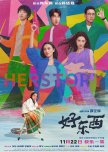
I recently watched Her Story, a Chinese comedy-drama (genres: comedy, drama) that runs about 120 minutes, and while I had high hopes for its heartfelt premise, it left me with mixed feelings. Directed by Shao Yihui, the film follows Wang Tiemei (Song Jia), a resilient single mother who suddenly loses her job and has to relocate with her young daughter, Nini (Zeng Mumei). In their new neighborhood, Wang Tiemei strikes up an unlikely friendship with her quirky neighbor, Xiaoye (Zhong Chuxi), who seems bubbly on the surface but is quietly battling depression. As these two women lean on each other, they form a makeshift family that includes Nini, navigating life's curveballs like meddlesome ex-husbands—Wang Tiemei's former spouse (Zhang Yu) keeps stirring up trouble—and budding romantic entanglements, all while rediscovering joy in the everyday chaos. What drew me in right away was the sweet core of a single mom building her own circle of support, turning strangers into something like family. Nini (Zeng Mumei) is an absolute standout—she's this wise-beyond-her-years little girl who's incredibly perceptive and grounded, clearly a testament to how well Wang Tiemei (Song Jia) has raised her despite the hardships. Their bond feels genuine and touching, and scenes of the trio hanging out brought some real warmth to the screen, highlighting themes of chosen family and quiet strength. That said, I was completely shocked by how "woke" the movie wound up being, which clashed with my expectations for an international film. I watch Chinese cinema hoping to escape those elements that dominate American shows, but Her Story dives headfirst into them. There's this awkward subplot where people assume Wang Tiemei (Song Jia) and Xiaoye (Zhong Chuxi) are gay just because of their close friendship, which felt out of place and forced—especially in a Chinese context where the culture isn't exactly open to alternative sexualities. It came across as shoehorned in for progressive points rather than organic to the characters. Then there's the heavy "I don't need a man" vibe permeating everything, with Wang Tiemei (Song Jia) portrayed as this ultra-strong, independent woman who's bossy and unapologetic. Her casual fling with a younger guy (Mark Chao) is explicit and promiscuous, emphasizing her sexual freedom in a way that screamed modern feminism, which I found jarring and unnecessary. The low point for me was that cringe-worthy dinner table scene where Wang Tiemei's ex-husband (Zhang Yu) and her new boyfriend (Mark Chao) get into this absurd challenge, arguing over who’s read more "woke" books and who believes men are inherently worse—it's like a parody of feminist talking points, but played straight, and it pulled me right out of the story. All these elements—promiscuous behavior, overt feminist agendas, and gay undertones—ruined what could have been a charming tale about a single mother and her adorable daughter forging real connections. Instead, it mirrors the very American tropes I try to avoid, proving that you can't always assume Asian films will steer clear of that stuff. Overall, Her Story had so much potential with its relatable setup and lovable characters like Nini (Zeng Mumei), but the heavy-handed social messaging overshadowed the heart. If you're into light-hearted stories about female friendships, it might still be worth a watch for the early charm, but brace for the ideological detours. If you like that sort of content, then you may really like this. But, if that is not your jam, then you might, like me not care for this one.Was this review helpful to you?

Raw, rare look behind the not so glamorous side of the Kpop curtain
I absolutely loved Time to Be Strong, a poignant South Korean drama that had a run time of 102 minutes. Even though I'm not usually a fan of sad movies, this one pulled me in with its unflinching honesty about the K-pop world, especially for those idols who chase the spotlight but end up in the shadows. It's not based on a single true story but draws heavily from real-life experiences in the industry—director Namkoong Sun interviewed former trainees and idols to craft these characters, and the film was commissioned by Korea's National Human Rights Commission to highlight the human cost of fame.That grounding in reality makes it feel like a truthful exposé, not just fiction, and it's a rare film that dives deep into the unglamorous side of South Korean pop culture.
The story follows three retired K-pop idols—Sumin (Choi Sung-eun), Sarang (Ha Seo-yoon), and Tae-hee (Hyun Woo-seok)—as they finally take that long-overdue school trip to Jeju Island, a chance to reclaim the childhoods they sacrificed for their dreams. But things unravel quickly, forcing them to confront the scars they've carried from their failed careers.
Sumin, the former leader of her girl group, is a total mess; she's developed bulimia from years of brutal weigh-ins and constant pressure to stay thin, to the point where she can't even keep food down anymore. It's heartbreaking watching her throw up repeatedly, a stark reminder of how the industry chews up young women and spits them out.
Then there's Sarang (Ha Seo-yoon), so emotionally shattered from it all that she's suicidal, popping handfuls of pills and lashing out irrationally at anyone who even glances her way—her anger feels like a shield against the world that broke her. The group is still reeling from the suicide of one of their former bandmates, which adds this heavy layer of grief and unspoken guilt to their journey. When she finally turns the corner and decides she wants to live, realizing her death would further shatter the friends she cares about she is the one that says the iconic line "time to be strong."
Tae-hee stands out as the most "normal" of the bunch, still flashing his old idol charm to strangers, but even he's drowning in debt from those exploitative trainee contracts that promised stardom but delivered chains.
I caught subtle hints of chemistry between him and Sumin—maybe a crush on his side—and part of me wished for some romance to lighten the mood, but the film's commitment to realism keeps it grounded; in this world, survival trumps sparks. It also cleverly weaves in the group's dynamics with a super fan they encounter, who starts off irritating and intrusive but turns out to be genuinely kind, flipping the script on those obsessive followers who can be so insensitive and boundary-pushing.
What really struck me is how the Jeju trip exposes just how much these idols give up: no school memories, no normal teenage milestones, all traded for grueling training that often prioritizes "looks" over talent. Tae-hee can't even sing properly, which underscores the industry's shallow obsession with visuals—Tae-hee himself drops the bombshell that agencies used to physically beat idols, a dark nod to the "slave contracts" of the past that trapped them in debt and abuse, even if things have supposedly improved.
The film doesn't shy away from the mental health toll, from anxiety and depression to eating disorders like anorexia and bulimia, or the financial black hole that keeps many in poverty long after the lights dim. It's a truth-telling story: you might not make it big, but you'll still bear all the scars—from toxic fan interactions to a lifetime of therapy-worthy trauma.
For fellow fans of South Korean cinema and K-content, this is a must-watch. It's not your typical glossy idol drama; it's a deep, empathetic look at the human side of the hustle, reminding us that behind the shiny stages are real people paying a steep price. If you've ever wondered about the "what ifs" for those who don't become the next BTS, Time to Be Strong will intrigue and linger with you long after the credits roll. Highly recommend—grab some tissues and dive in.
Was this review helpful to you?
Ditto Review - ZyKuu
"Two students advise each other through a radio" - The story in this film was very stale, had no sense of meaningful direction, and the plot twist was predictable. The concept of the radio being the means of communication across timelines was interesting but the stories plot failed to keep me interested. The main lead Kim Yong is a mechanical engineering student who had no interest in his field. He falls in love with a freshman who enrolled in the same program. The two other leads were Seo Han-sol and Kim Mu-nee. Both Han-sol and Mu-nee had key roles in this film and they sufficed with their performance. Han-sol is a bright young girl with a dream she is determined to achieve. Mu-nee is a sociology student who needs to interview somebody for her school presentation and she comes across Kim Yong via the radio. I felt as if Kim Yong and Han-sol lacked chemistry when they were together and in general there were not any strong connections in this movie. The OST was pretty much unnoticeable as I do not recall anything ear catching except in the end credits. Overall this movie was pretty underwhelming for me, but I am sure that there is an audience whom would thoroughly enjoy it!Was this review helpful to you?
"Helping others is a measure of bravery"
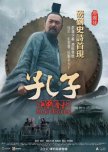
Director Hu Mei attempted to tell around two decades of the life of Confucius. My knowledge of the great sage is extremely limited so I won’t be the person to determine if this depiction is historically correct. As a work of art, it let me down. I’m no stranger to documentaries, but even documentaries often pick a specific lens to view historical times and people through. Hu Mei tried to cram as many people and events as she could into two hours which gave little time or attention to each, especially the titular character.Confucius is called upon by the ruler of Lu to become a minister. Three aristocratic families hold much of the power and Confucius is asked to unite the land and decrease their power. Eventually, he is encouraged to leave. Confucius and his disciples wander through the neighboring countries, often driven out, until he’s finally invited back home.
I once read a book that continually added characters as the main characters went on their quest. It came across as “and then, and then and then…” which is how this story felt. Deaths and setbacks evoked no emotion because I rarely remembered who they were. Confucius’ wife and daughter made very brief appearances. As if to make sure the world had at least one woman in it, Zhou Xun was thrown in for a few minutes as a Wei concubine reviled for having too much power. Darn women!
These are the hardest reviews for me to write. Confucius wasn’t bad, but it wasn’t good either. I had truly looked forward to this film and was prepared for it to be slow. Slow I can handle, boring and crammed with mostly nameless characters is another matter. There were a few very quick battle scenes with terrible CGI, making the sage for the ages more of a military mastermind. Perhaps if the story’s focus had been narrowed, Confucius’ life and contributions could have been enhanced instead of watching him continually run from pillar to post.
15 September 2025
Triggers: Cockfighting. I really hope no horses were harmed in an early sacrificial funeral scene.
Was this review helpful to you?

Cuteness and Jackie Chan!
I basically was attracted to the movie because it is Pandas (yes, I extremely love pandas!!) and the 2nd was I am quite a fan of Jackie Chan movies. As always, Jackie's movies never disappoint. This movie is filled with alot of action, comedy and after completing the movie, quite a touching movie. The storyline is quite good and the actors, all of them, actually did a remarkable job of bringing the movie to life.Was this review helpful to you?
This review may contain spoilers
Love beyond life
I've been looking at some of So Ji Sub's series and movies. As I checked it out, surprisingly he is paired with Son Ye Jin in this movie.The Story:
Rightly categorized as fantasy, as Su A mysteriously came back to life. The story somewhat stemmed from a faith of a child that he will see his mom again. The brief moment of reuniting with her was precious for both father and son. But it is heartbreaking to part with her again. It gives them some time to express their love even for a short moment.
We have questions in life, the what ifs and missing a loved one who passed away in an untimely manner. The movie somehow gave some comfort to the viewer, though I myself do not believe in this kind of comeback especially not having memory of her previous life.
I feel sad that she has to go. In a way, the brief return can be treated like a dream. Life goes on keeping the memories of our loves one in our hearts. The boy grew up, the father didn't remarry, but they are ok, somewhat having a peace in their hearts even in her absence.
The Actors:
1. Ji Sub showed a vulnerable character, someone sensitive as he may be amazed, surprised or dazed at the presence of his late wife, now alive. This is quite different from his other roles who fight for justice and protection.
2. Ye Jin's character is just as sensitive as Ji Sub's, that though she did not have her memories back, chose to stay with them.
3.Ji ho is such a cutie. He portrayed a child with such faith on what his mom told him and really anticipated her return. The kid's excitement might be the reason for the parents' sensitivity.
Was this review helpful to you?
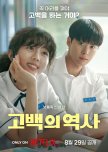
Loving yourself
Each time I watch a movie or a drama series, I try to look into some kind of value.To some it is just light and cutie, and of course, it is a teen story. It is about first love. It is about all the insecurities that goes with growing up as a teen.
The FL is cute even with her Freezy hair, and just what Yun-Seok said, he likes her the way she is. I believe that there are plenty of adults who are still insecure in the way they look - hair, height, weight, complexion and many other things. The girl who tries to catch someone else's attention by changing herself eventually fall for someone else.
I only watched this to take a break from the other series that require much energy to process. Sometimes we need this kind of a break. And it is good that it ended in a happy note.
Was this review helpful to you?

Legends are made, not born
From the moment this series begun, the lingering question has always been "How is she like that?". All questions (at least the necessary ones), were answered through this movie. The most awaited backstory of Daimon Michiko was finally revealed. Although it is not what I initially expected, it is very humane and sonewhat realistic. What a way to cap off an amazing series (or should I say a series of series lol). The story was good, how the past and the present connected perfectly. Each character got their own time to shine, some redeemed themselves, some just existed for the sake of existing lol. Overall a good watch. Just wished characters like Kondo from Season 2 reappeared again.Was this review helpful to you?
This review may contain spoilers
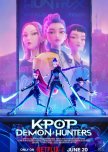
Korean Demon Hunters That Are Not Quite Korean
K-pop Demon Hunters, to me, is what people outside of Korea might perceive Korean culture and its K-pop sub-culture to be. I see this movie as more of an omage than a true reflection of what really goes on in the industry. I will go more into that later. I give them props for taking inspiration from Korean shamanism (mudang) and demonology, though. And the fact that they put real effort into hiring Koreans or people of Korean-descent for the cast, and got bonafide K-pop songwriters and producers to do the soundtrack is something that I truly appreciate even though I am not a fan of this genre of music. The animation, of course, is superb. Sony seems to have hit the jackpot with their animation team since Into the Spiderverse. The story and execution, however, didn't quite land for me.As I've said earlier, this is more of a western creation. Yes, I know, the director is ethnically Korean, but she grew up in Canada so she's not Korean-Korean, if you know what I mean. In Korea, they'd consider her a foreigner quite honestly. But I digress. From the way these girls behave to the way the industry is portrayed, it just doesn't feel Korean (or even Asian), not in the slightest. This is more in the same vein as Kim Possible and The Winx Club with just a sprinkle of gochugaru and gochujang here and there for that Korean flair. The same formula XOXO Kitty so egregiously used.
The fact that the girls are not under a giant entertainment agency that calls all the shots, but instead they get to decide what or what not to do and even hire their own manager, is far from reality. Yes yes, I know, this is a fantasy world. But even fantasies are rooted in reality and whoever decided to write it this way, is perhaps not privy to the ins and outs of the K-pop world. Or maybe they just chose to ignore that completely and made their own interpretation. The girls indulge in ramyeon, junk food, and other fattening snacks just before a show? There's no way that would happen in a real situation, as evidenced by what takes place in many idol survival reality shows in Korea. K-pop idols are forced to maintain a certain weight and appearance. Weight gain is frowned upon and they live in constant scrutiny from the media and their own fans. I just think that they missed the opportunity to show this darker side of K-pop. It would've made this story a lot more compelling imho. But I suppose they don't want to delve into that because that would mean they have to change their target audience. This is a western animated film and not an anime, after all. This is precisely why the movie didn't impress me. I am too old and definitely not the target audience for this.
The world building could've used a little more fleshing out, too. All we got is a short narration and exposition dump in the beginning introducing the hunters and the demons. No explanation on who Gwi Ma is and why he can turn humans into demons but never tried to turn any of the hunters before. No origin story of the hunters either. I mean, they have a wealth of Korean folklore to work with, why not take advantage of that?
This movie seems more like a short story than a full blown screenplay. This would've worked better as a series to be honest. While I liked the whole “I need to accept myself and not be afraid to show my true self” angle, it's not like this hasn't been done before. I've seen others do it better in fact. I guess what I'm trying to say is they could've taken a different approach, explored heavier themes, and reinvented this trope to make it a bit different from the usual fare. The only thing original about this is the inclusion of the K-pop sub-culture. The rest basically have “the power of three will set us free” vibe, nothing Charmed hadn't done three decades ago, and definitely nothing I haven't seen before.
The soundtrack is probably its strongest suit. But since I couldn't care less about this style of music, the songs didn't quite hit except for one, and that was the duet, Free. Lyrically and melodically, it has the potential to become one of those movie themes that stay with you long after you've forgotten the movie. From a technical aspect, it was also produced and performed well. I won't be surprised if the songs become chart-toppers. Judging by the rapidly growing cult following of the movie, I'm almost certain they will be.
All in all, this is not a bad movie. Sure, it's cringe and cheesy, but it also has heart. It's not groundbreakingly good, but it's good entertainment. K-pop fans will surely find this enjoyable. Normies like me might find it entertaining as well. I also salute the filmmakers' attempt at introducing Korean folklore to a more global audience. I just think it had the potential to be so much better if they had made it a little more mature. However, they chose to go the Winx Club route to cater to a younger audience. I can respect that. It is what it is. But to me, the best (and perhaps the only good) part of this movie is that adorable blue tiger demon. How I wish it got more screen time. lol
Was this review helpful to you?


