

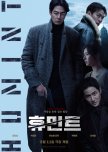
The Human Cost of the Signal
With Humint, Ryoo Seung-wan returns to the territory that suits him best, and it shows. The geopolitical thriller shot through with physicality, with the kind of moral pressure that settles into bodies before it ever reaches dialogue, this is his natural habitat, and the film announces it from the very first sequences. The result isn't flawless, but it possesses a quality that's become genuinely hard to find in contemporary spy cinema: it still believes in space. In the weight of environments. In the dramatic value of a door left ajar, a corridor, a face held a second too long. And above all, it believes that action isn't decoration but a form of storytelling which, in 2026, is far from a given.The plot, on paper, is almost classical: a South Korean agent moves through Vladivostok following the trail of a criminal network that crosses drugs, human trafficking, and state intelligence. On the other side there's a North Korean agent, then an ambiguous official, then a woman trapped in the most dangerous role of all that of the informant. Around them, Vladivostok doesn't function as an exotic backdrop, it's not the Russian city dropped in for international flavor but as a moral landscape: a border place, gray, frozen, porous, where everyone watches everyone and no one is ever truly safe. This is where Humint scores its first real point. The city isn't a postcard: it's a hostile surface, full of concrete, hard spaces, corners with no cover. And it's partly from this that the film generates its sustained, almost physical sense of danger.
On the screenplay level, Humint operates on a recognizable mechanism: four main characters, four different ethical trajectories, and at the center the figure of the informant as both narrative and moral detonator. What's interesting is that Ryoo doesn't build the film as a purely strategic chess match but as an accumulation of human debts. The debt to the person who puts themselves on the line for you. The debt to the person you love and put in danger. The debt to the State, which demands obedience and gives back cynicism. In this sense, Humint is less a film about intelligence operations per se than a film about the human cost of intelligence — about that precise moment when people stop being "assets" and go back to being human beings: unmanageable, vulnerable, irreducible to protocol.
The writing, though, doesn't always match the precision of its themes. And it's worth saying so plainly. In the middle section, the film tends to thicken its web of interests, blackmail, chains of command, double-crosses, and lateral moves with a taste for complication that at times slows things down instead of intensifying them. It's not a problem of density , you can follow the threads , but of dramaturgical hierarchy: certain pieces of information arrive with the weight of a revelation, and then produce no real emotional turn; certain subplots seem more functional to keeping the mechanism running than to actually developing the characters. In other words, the film has more energy than synthesis. You feel it. It's no coincidence that part of the critical conversation has praised the film's spectacular ambition while flagging a certain weakness in dramatic substance relative to the action apparatus and that's not an entirely unfair observation.
That said, it would be unfair to stop at the flaw, because Humint constantly recovers ground in the way it stages what it has written. Ryoo Seung-wan understands something elementary and precious: every character has to have their own physical grammar. It's not enough to fight; they have to fight "like him," "like her," according to a rhythm and a posture that tell you who they are. And indeed, this bodily differentiation is one of the film's strongest elements. Manager Zo, whom Jo In-sung plays with an almost elegant restraint, always acts as if trying to keep violence inside a clean, contained line; Park Geon, by contrast, carries a more nervous tension, more intermittent, more exposed to emotional fracture; Hwang brings to the screen an administrative coldness that is itself a threat, with no need to raise his voice; Seon-hwa introduces a vulnerability that isn't passivity but the capacity to choose within the narrowest margin of survival. These aren't just characters: they're vectors of different energy. And when the film stops explaining and simply lets them move, it finally starts to breathe.
The direction is the real center of the film. Ryoo comes from a cinema that knows the pleasure of the gesture, but here he largely avoids pure choreographic display for its own sake. The action sequences land because they're legible, articulated in space, never reduced to accelerated cutting designed to simulate intensity without actually building it. You can tell where you are, who enters from where, who sees what, who risks being cornered, who has the positional advantage. It sounds obvious, but it's almost revolutionary today. Even more interesting is the way the director alternates wider shots and compressed close-ups: on one side, the hostility of the world; on the other, the face as the only real battlefield. This dynamic between geographic openness and emotional constriction gives the film a near-classical elegance. It's no surprise that more than one observer has read Humint as a natural continuation of the path begun with The Berlin File and Escape from Mogadishu: the frame changes, but the same faith in the international thriller as a moral device — not just a spectacular one — remains.
The atmosphere work is very strong as well. The cinematography pushes toward cold, metallic, matte tones without ever making the film visually monotonous .There's an intelligent use of surfaces, empty spaces, and architecture that conveys the sense of a life lived under constant surveillance. Costumes and interiors help suspend the film in a slightly displaced temporality: contemporary, yes, but never ostentatiously dependent on technology. It's a shrewd choice, because it allows Humint to sidestep the risk of becoming a thriller of screens, pings, software interfaces, and digital exposition dumps. Here, intelligence goes back to being, literally, human: bodies, sources, glances, lies, shifting loyalties. This is also why the film, when it works, generates a tension that is more tactile than cerebral.
On the acting front, Zo In-sung carries the film with remarkable presence. He doesn't work through overexpression, and rightly so: his character lives inside guilt, discipline, a reluctance to fail again, and the actor translates all of this into a controlled physicality that occasionally lets a crack show through. Park Jeong-min provides an effective counterpoint, shifting the register toward something more ambiguous and emotional. Park Hae-joon delivers the kind of administrative hardness that always works in spy cinema: evil that doesn't need to raise its voice. Shin Sae-kyeong, finally, had the most delicate task and instead manages to preserve her own opacity, her own concrete fear, her own capacity for decision-making all the way to the end.
Humint is not its director's definitive masterpiece, and anyone looking for a perfectly engineered, airtight, zero-redundancy spy mechanism will find things to complain about. The screenplay has some redundant passages and a middle section that isn't as sharp as the opening promises. But it would be foolish to write it off on those grounds, because the film possesses a concrete, muscular, almost artisanal quality that many far more "orderly" thrillers simply don't. It stumbles occasionally in its own complexity, but when it finds its footing again it hits hard in the direction of the action sequences, in the control of space, in the construction of tension, and in that idea, as beautiful as it is bitter, that behind every piece of intelligence there is always someone who pays the full price.
If a single blunt formula is called for: Humint convinces more as cinema than as screenplay. But since cinema, fortunately, is not only screenplay that's more than enough to make it a robust, adult, imperfect, and genuinely interesting thriller.
Was this review helpful to you?
This review may contain spoilers
Good story, good plot twist at the end, but tw Rape
I became curious after watching the trailer. At first it was okay, but then came the scene where he raped the girl... He otherwise seems like a good guy to me, and yes, reality and imagination have become mixed up. But why this scene?... also with blood. It was portrayed as if she wanted it (through his Imagination or smth)... Without the scene, and perhaps without the scene that he very likely slept with a minor (nanako) I would rate the film higher.Was this review helpful to you?
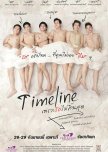
So, yes, I don't mind the wonky audio quality or how the change between scenes is often less than smooth. I can focus on how the actors do their best (and mostly succeed) and on the interesting camera angles.
What I do mind is if the script is not good. You don't need a high budget to write a good script -- you need a vision. And I think this is where the weakness of this film lies.
The three stories are very good -- on their own. The shy and confused boys experiencing their first love feels very grounded in reality, the close-ups and the wonkiness of the camera work support the viscerality of the story. The second changes genres -- from slice-of-life to horror: And this, too, has interesting lighting and camera angles, and is quite well written, with somewhat of an open end even. And the third returns to a more sensitive topic, and this screenplay makes us feel for all three men in just twenty minutes.
In the last few minutes, the script tries to tie the three storiess together -- but ultimately fails. There's a theory in the comments on kisskh, but the mental twisting it requires to make it work (and even then there are too many details that just don't fit) makes me think that these originally were three seperate stories, maybe even sperate projects.
letterboxd lists three directors for this project, and the difference in styles in the three stories indicate that each one was directed by one director. I suspect that they only noticed at the end of their work that they maybe should try to make the stories into one, which is why things don't really fit together.
In my view, they did their project a disservice by doing so. Each of the stories is not bad on its own; this could have been a simple omnibus. Each of the stories shows a different age in life already (teenagers, young adults, adults). The Thai title เพราะรัก...ไม่สิ้นสุด "Because Love ... never ends" would make a perfect starting point for a journey through the stages of life; just choose some middle-aged actors for the third story, and you already have it.
The three directors chose to do differently, but I don't think it works well enough.
Was it good?
Each of the stories were not bad for an indie production. The whole doesn't make sense, unfortunately.
Did I like it?
If I pretend that the stories are independant from each other, then yes.
Who would I recommend it to?
To those who want to peek into the history of Thai gay cinema. Not to BL fans who are used to recent productions and want everathing to have the same production quality.
Was this review helpful to you?
This review may contain spoilers
A waste
It has nothing going on for it.We don't establish or create a compelling story for any of the characters. We just have them make multiple dumb decisions. They could have written a heist way better than this.
And at the end we give it up all for a mother they barely seem to like.
Nothing much to say abt the acting too, Jeon Jong-seo has already done this type of character.
What a waste
Was this review helpful to you?

This review may contain spoilers
What We Choose Not to Take
I rewatched this on Netflix recently, and it immediately took me back to those wuxia movies I used to watch with my dad. Half asleep, half understanding the plot, but fully absorbed in the feeling. That slightly dreamy, slightly melancholic atmosphere that sticks even when the details fade, firmly rooted in a different era of filmmaking.Coming back to it now, I understand the story much better, but strangely, it still works in much the same way. It’s less about what happens, and more about what stays with you afterward.
The setup is pretty simple. Li Mu Bai, a legendary swordsman, decides he’s done with the martial world and asks Shu Lien to deliver his sword, the Green Destiny, as a kind of final goodbye. Of course, that doesn’t go as planned; the sword gets stolen, and suddenly this quiet exit turns into a chase that pulls everyone back into a world they were trying to leave behind.
That’s where Jen (Yu Jiaolong) comes in.
At first, she comes across as the familiar restless noble girl, dissatisfied with the life arranged for her. But the more you watch, the more it becomes clear that her struggle isn’t just about restriction, it’s about direction. She’s highly skilled, trained in secret, capable in ways she shouldn’t be, but that ability doesn’t stabilize her. If anything, it pushes her further off balance. It’s like giving someone wings before they’ve learned where to land.
Her dynamic with Shu Lien is one of the most interesting parts. Shu Lien sees right through her, sees both the potential and the recklessness, and tries, in her own way, to guide her. But Jen doesn’t want guidance. She wants freedom, without limits, without consequences. And the film keeps quietly asking: what does that kind of freedom even look like?
Meanwhile, there’s this entire undercurrent with Jade Fox, Jen’s mentor, who represents something darker: bitterness, resentment, someone who was shut out of the martial world and never really moved past it. You start to see how Jen could easily end up the same way, just with better sword skills.
And then there’s Li Mu Bai and Shu Lien.
Their story almost seems like it belongs to a different movie: quieter, older, heavier. They’ve known each other for years, clearly care about each other, and yet nothing ever happens. Not because it couldn’t, but because they chose not to. Honor, loyalty, timing, whatever it is, they let it pass. Watching their relationship feels like looking at a road not taken for too long.
The action reflects all of this rather than distracting from it. The rooftop chase feels like Jen testing how far she can push her freedom. The famous bamboo forest scene isn’t just visually striking—it plays out almost like a conversation neither side knows how to resolve. Shu Lien stays grounded, controlled, rooted. Jen moves like she doesn’t want to be held by anything at all. It’s less about who wins and more about what each of them represents.
And then the ending.
Jen goes to Wudang Mountain with Lo, the one person who represents a different kind of life for her: simpler, maybe more honest. He tells her that story again, about the man who jumped off the mountain and had his wish granted because he believed. And she just… jumps.
And that moment can mean a lot of things. Maybe she believes in the legend. Maybe she wants freedom in the only way she can define it. Or maybe she’s just tired of not belonging anywhere: too wild for one world, too constrained for another. It doesn’t feel like a triumphant ending, and it's not meant to be. It feels more like someone finally letting go, even if we don’t know what that leads to.
What stood out to me most on rewatch is how little the film insists on anything. It doesn’t guide you through every emotion or spell out its themes. It leaves space, but that space can also create distance. Some moments feel intentionally understated, while others feel just out of reach, especially if you’re looking for a more direct emotional connection. Like a conversation that ends without a clear conclusion, but stays in your head anyway. The movie doesn’t meet you halfway; you have to go to it, and not every viewer will respond to that approach.
Visually, it holds up effortlessly. It’s more like it doesn’t age because it never tried to look trendy in the first place. Natural light, real movement, no over-processing. it feels closer to something you remember than something you just watched.
A strong 8.5 upped up to a 9, not just for the fantasic action or the layered story, but for the way it lingers around questions of choice, consequence, and what people leave undone.
Was this review helpful to you?
This review may contain spoilers
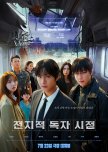
This movie should not be called an adaptation.
Absolute garbage of an adaptation. The fanfics writers can write a better adaptation script than whatever this production's writers did. I can list so many things that is wrong with this movie and English is not even my first language.First of all - the adaptation itself. Rather than calling this an adaptation, this should be labelled as inspired by ORV. The characters are OOC and the world building isn't even the same. Where's the constellations? Where's my Uriel?! What's the point of the star stream with just dokkaebis and no sponsors?? The dokkaebis doesn't even appear much, minds you. I've read that someone said that this is literally alien train to Busan and I couldn't agree more.
Second of all - the actors itself. No shade for the actors but damn the lines sounds soulless. Maybe it's the problem from the script itself so that's not really their fault. But you can definitely see that most of the budgets went to hiring the cast instead. I rather they hire unknown actors to save the budgets and focus more on improving everything else when making this.
Lastly - the CGI. Oh my god, I thought it was AI at first. It was that bad. Though, I will blame it on the budget because I know that the VFX artists didn't get enough pay to do this shit. Although, if I don't know this is an adaptation, I would watch this garbage based on the action/fantasy/apocalypse genre alone. Yeah, I am that starved but you can see how much of a slop this adaptation is.
Well, that's all I can think of when writing this. I think I have more but as I write, the rage makes me forgot the contents that I want to add here. Thanks for reading my ranting and I think if you bothered to read all of this, maybe you should read the original ORV novel or manga instead of watching this movie. Unless you don't mind horrible storyline and massive amounts of plot holes (and all that I complained above) then it's your poison. hands-up.jpg
Was this review helpful to you?
What a let down
Despite the beautiful scenery and traditional/cultural angle, this story never reaches its full potential. It is neither scary nor mysterious, nor interesting. Mostly let down by poor casting and weak acting, I didn’t feel for any of the characters and wasn’t invested in enough to sit though the muddled narration without hitting fast forward. When the story unfolded, I thought it was anti-climatic and unrealistic.Was this review helpful to you?

The souls of the deceased return to the world one last time when their families come to say goodbye.
Heartwarming and heart-wrenching.Fittingly, this film is dedicated to the memory of Ryōko Sasa (佐々 涼子), the author of the original novel, who passed way between the release of the series and the film.
If you enjoyed the series, you will love this. If you’ve never seen the series, I highly recommend watching it first, but I think the film stands on its own. Either way, make sure you have a box of tissues nearby.
The stories of the deceased are varied across multiple demographics, so it’s likely that anyone watching will be rocked by at least one of them. The subject matter is heavy and you’ll go on a roller coaster of emotions. Between the sad and uplifting moments there is some light comedy to break everything up.
You won’t notice the 139 mins runtime because the editing is done well and doesn’t linger on any one story for too long.
Yonekura Ryoko leads a great cast. Everyone including the Japanese and international actors did a great job of portraying the emotions of the characters.
Diegetic music is used well to aid in telling the stories and non-diegetic music is beautiful and understated.
I will rewatch this along with the series when I’ve forgotten enough about the stories and I’m in the mood to be punched in the gut again.
Was this review helpful to you?
waste of such a great cast
i could have slept for the half of the film and still understand whats going on. such a waste of cast making them all emotionless. also, why making a film in which the crime is based on a book and barely even mention the book.... and the kid not reacting to things happening. cmon kids are naive but they would scream for their momWas this review helpful to you?
In Greed We Trust
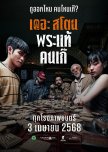
Most thrillers follow a predictable path, but The Stone pulls off a brilliant bait-and-switch. What starts off as a standard quest, slowly reveals itself to be a heist movie where the protagonists don't even realize they’re in a heist.It's constantly flirting with the "urban legend" vibe, and it relies on the truth that in this world, religion isn't just faith—it’s a business, and everyone is a con artist.
The "truth" here is cynical: belief is just another commodity to be bought, sold, and stolen.
Instead of just tracking the plot, the movie focuses on the degradation of its characters. Ake’s journey is particularly brutal.
It’s pathetic, heart-wrenching, and entirely believable because the movie has done such a good job of isolating him.
On the other side, you have Sunthorn (The Amulet King) this mysterious and almost cartoonish figure, but also a terrifying parent. The psychology of this film is about how quickly "family legacy" can turn into a cage.
The director trusts his audience, which is always a treat. Dialogue is stripped back, the ambience and music do most of the heavy lifting. The sound design is phenomenal! There's that "sick-sick" harmonica/rock hybrid track that creates an almost train-like intensity at some point. It's amazing!
The cinematography is a trip. Visually, the film transitions from the vibrant, chaotic, colorful Pantip Ngamwongwan Market to a somber, high-contrast style as the trust dissolves.
One highlight? Probably this one action scene filmed from a top-down angle, its precision felt more like a piece of art than a standard action scene. The words masterfully slick come to mind.
This movie made me wince, gasp, and eventually, laugh out loud.
It’s visceral ; breaking fingers like breadsticks is not for the faint of heart. But there is a Machiavellian humor here that kept me from going insane. Like that glare Ake’s is giving the cop. That was perfect comedic timing.
The film is brutal, yes, but it’s the kind of trauma that comes from being truly engaged by a piece of art.
As a newcomer to Thai cinema, this film felt like a crash course in the "Amulet World." It’s fascinating how a small, portable object can become the center of gravity for an entire underground economy.
The film leans into the irony that these holy objects are surrounded by the most unholy people. It’s a powerful commentary on how religion acts as a tool. Some wield it for protection, others to manipulate, and some (like Ake) just get crushed in the middle. It’s a bold look at faith as a powerful, dangerous, and very real social construct.
Other appropriate headlines might include :
- Blessed, Conned, and Brutalized
- Faith, Fraud, and Fingers
- Amulet-World : From Market to Mayhem
- Who's Got the Biggest... Amulet?
Was this review helpful to you?
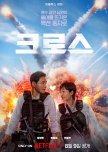
Mission Obvious
Mission Cross had a strong cast saddled with flatly drawn characters and action. It lacked what a sexy thriller that blatantly copied some Mr. and Mrs. Smith moments requires, at least a modicum of chemistry between the leads. I like both actors but it was hard to understand how they ever ended up--or stayed--married.Detective Kang Mi Seon, aka The Crocodile, is less than thrilled with her school bus driver and house husband, Park Gang Mu. They’ve been married for a few years and her kindest compliment is that she could have done worse. She leads a team tracking down drug dealers and a missing CEO, and stumbles upon a secret government cover-up. Park Gang Mu works hard to make Kang’s day easier any way he can in the new life he has chosen. He is contacted by an old spy friend whose husband has gone missing. Though Park had given up his undercover life he is willing to come out of retirement to help old friends. The spouses unknowingly begin working on the same investigation from different angles.
The first hour of the film dragged for me as Kang’s team thought that her “wifey” was having an affair. Park’s instincts had definitely rusted as he never realized he and Jang Hui Ju were being followed and photographed by the bumbling detectives. He also never questioned anything. I kept hoping he and another spy were playing a con on the Big Bad, but nope. They were the ones being played by a patently obvious fake out. Made me lose all respect for them. The writing was painfully bland with no surprises. At least Kang was a competent police officer which was a nice change of pace.
The film didn’t become more engaging until the last 30 minutes and even then, the fights were badly staged. The Big Bad overacted. The fire fights weren’t shot very well. The cinematography and direction lacked a professional, polished look to them. Basically, given the cast, I was disappointed. This paint by numbers script had no depth or originality, no spark. Hwang Jung Min and Yeom Jung Ah deserved better.
19 April 2026
Was this review helpful to you?
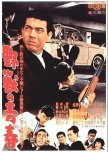
This review may contain spoilers
“More than expressing myself, I destroy—in my own way.”
Within the highly prolific period of the so-called Nikkatsu Action—particularly between 1960 and 1962—"Youth of the Beast" (1963) stands as one of the most significant turning points in the trajectory of Seijun Suzuki.Some critical readings—often shaped by a rather rigid, auteur-driven perspective—tend to interpret Suzuki’s cinema as inherently pessimistic rather than programmatic, drawing on the ideas of another “outsider,” only seemingly distant, such as Jacques Rivette, who believed that cinema should strip the viewer of clichés and project them into a destabilizing, even unsettling dimension.
A strong idea, one that aligns surprisingly well with Suzuki’s aesthetic: a cinema that does not build, but dismantles, that does not reassure, but exposes. And yet, it is interesting to observe how the so-called B-movies of the late 1950s—apparently indebted to American hard-boiled aesthetics—would, in retrospect, prove to be among the most transformative moments of his career.
From an initially and inevitably imitative model, a gradual stylistic and cultural hybridization emerges, allowing Suzuki to introduce increasingly bold formal shifts: jump cuts not far removed from the lessons of the Nouvelle Vague (particularly Jean-Luc Godard), often eccentric widescreen compositions, sudden visual allegories, and an expressive use of color—elements that break away from the linearity of contemporary productions, which were generally more aligned with international trends (unsurprisingly, these were also the years in which Japan entered the aesthetic orbit of the James Bond phenomenon).
Within this framework, "Youth of the Beast" emerges as a work in which the hard-boiled matrix is not merely referenced, but fully absorbed and reworked. From its very first scenes, Suzuki introduces a key element through the play of reflections inside the nightclub.
Mizuno acts in front of a mirror that is far more than a simple visual device: it becomes a threshold. On one side, the gesture, on the other, the gaze. On one side, the action, on the other, its observation—as if it were already cinema within cinema.
And while all this unfolds, elsewhere—just a few meters away—the cabaret continues as if nothing were happening: music, bodies, lightness. Two planes coexist without ever truly touching, as if the picture itself refused to reconcile them. It is precisely within this disjunction that the first sign of a gaze already out of alignment begins to emerge, ready to fracture what initially appears perfectly readable.
Much of the film’s impact also lies in the magnetic presence of Jō Shishido, whose performance shapes a protagonist that seems to step directly out of the world of Raymond Chandler or Dashiell Hammett—filtered, however, through a distinctly Japanese sensibility.
Mizuno is, in every sense, an outsider private eye: a former policeman expelled for unorthodox methods, who inserts himself between two rival gangs in a structure reminiscent of a “servant of two masters,” only to reveal a far more personal objective—uncovering the truth behind his mentor’s death, too hastily dismissed as suicide. It is here that the picture fully descends into the territory of the bleakest noir.
The truth, far from restoring order, ends up eroding everything: it exposes, contaminates, destroys. And when the full picture finally comes into focus, what emerges is not justice, but a form of awareness that is irreparably compromised.
Suzuki builds this trajectory through a mise-en-scène that is violent, stripped down, almost brutal, yet constantly interrupted by visual insertions that resist any single interpretation: elements that seem to drift out of context, such as the yellow dust that invades the assault scene (and then the wind, an indispensable feature in the director's cinematic language), the sudden fall of the addicted woman, or abrupt eruptions of violence and sadism that oscillate between realism and abstraction.
These are images that do not explain—they suggest, unsettle, remain open. In this sense, the work does not simply tell a story; rather, it fractures it, distorts it, placing it under constant tension between narrative surface and something more elusive beneath it.
What emerges is a deeply corrupted world, permeated by a violence that spares no one. Within this universe, the portrayal of female characters takes on extreme contours, often tied to dynamics of manipulation, exploitation, and betrayal.
Seen through a contemporary lens, this aspect may appear problematic—but it can also be repositioned within the grammar of hard-boiled noir, where female figures often function less as causes of degeneration than as reflections of a world already compromised.
In this context, the protagonist’s so-called 'misogyny' appears less as a moral stance and more as the byproduct of an environment in which every relationship is contaminated.
Mizuno himself is neither a traditional hero nor a straightforward anti-hero. He operates according to a personal code—seemingly more stable than that of the other characters, yet far from irreproachable. In a world where everything is tainted, his position inevitably begins to crack: he is not detached from the violence that surrounds him, nor from its most ruthless logic.
The ending, in this sense, is revealing. Mizuno does not simply expose the truth—he actively shapes its outcome, deliberately closing a cycle of violence that leaves no room for redemption.
It is precisely in this gesture—lucid, fully conscious—that the character’s ambiguity comes into focus: not a judge, not a savior, but someone who, while holding onto a personal moral line, ultimately shares in the same dark substance of the world he moves through.
What remains is a sense of emptiness, almost exhaustion—as if, once the mechanism has been revealed, there were nothing left to preserve.
In this regard, "Youth of the Beast" is not only a remarkably effective noir, but one of the most accomplished expressions of the internal tension that defines Suzuki’s cinema: an unstable balance between form and sabotage, between adherence to genre and its gradual dissolution.
An image that offers no foothold, seeks no redemption—and because of this, retains an extraordinary power even today.
9/10
Was this review helpful to you?
Comparing the novel to the movie the novel was a roller coaster of emotions and the movie was just tragic and sad. But both had somewhat happy endings.
Was this review helpful to you?
Bullshit
Nonsense! Don't waste your time watching this. The daughter is rude and the stepfather is ill-mannered. What kind of ending is this?! They end up living together while she has a boyfriend! What world does this writer live in? The screenwriter clearly has no values or morals.👎🏻👎🏻👎🏻👎🏻Was this review helpful to you?
This review may contain spoilers
What the hell did I just watch!?
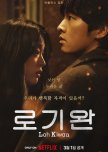
This movie reminds me a lot of a Chinese film called “Love Story in London”. Both represent productions that destroy themselves by pouring money into filming abroad, but fail where it matters most which is the story.With that said, I completely disagree with the above-8 rating of this show on kisskh. It’s completely illogical to me, maybe just reflecting mad fans’ love for the male lead. And it serves as proof for producers that even a stupid work can still be profitable if you hire a lead with a solid fanbase.
------------------------------------------------
Official Review
------------------------------------------------
There are basically 3-4 storylines in this movie:
1. The ML’s refugee life
2. The FL’s family problem
3. The FL's problem with mafia gang
4. The romance between the leads
And 3 out of 4 storylines are extremely problematic.
------------------------------------------------
🍅 The FL’s family problem
The movie tries to tell us that the FL had a deep bond with her mom since she’s extremely furious about the mom's euthanasia. But it never shows her relationship with either parent. Not before the mom’s death and not after.
The dad seems decent, reasonable and caring, but we barely see any real interaction between them. The FL gets involved with mafia gang and drugs, but her dad seems to be completely unaware. He seems to only label her as rebellious because of grief, which feels shallow.
Then at the end, when she suddenly has to flee the country because the mafia is chasing her, the dad isn’t even that surprised or concerned. He just helps her get a plane ticket and lets her go - alone. This is a wealthy, well-connected man with access to top lawyers, yet he makes no real attempt to properly resolve his daughter’s situation.
And the issue is simply that the FL is financially indebted to the mafia. So, why doesn’t her dad just pay it off and solve the problem, at least in one way?
Instead, it’s the ML who decides that she has to leave the country without turning back.
How does such a decisive solution come from a naive, inexperienced refugee applicant who barely knows the country, can’t even speak the language and has only just arrived?
Also, the FL holding onto anger for three years makes no sense. She’s not a child. Her mom made her own decision, yet the FL is enraged at her father and reacts by publicly destroying her mom's memorial ceremony like a kid throwing a tantrum even three years later. If the FL is this childish, how come the father feels at ease to let her go out of the country to an unfamiliar new place alone at the end? This only feels unconvincing.
------------------------------------------------
🍅 The FL's problem with the mafia
I have no idea why two mafia groups want the FL so badly. The only thing I can infer is that the leader of the first gang might have feelings for her, but there’s no real romantic behavior to support that. The only indication is him killing members of the other gang at the end to keep her with him. But then later, it turns out he’s just following orders from a higher-up to kidnap her to Germany.
So what is it exactly - what’s so valuable about the FL that makes her worth all this?
Honestly, this is just a mess. It’s illogical and full of contradictions. I don’t find any bit of the mafia storyline convincing at all. They’re not intimidating. They don’t act with any real urgency or seriousness, and they let the FL, who owes them money, slip away too easily.
------------------------------------------------
🍅 The romance between the leads
Their relationship doesn’t convince me at all.
There’s nothing clear about how their feelings develop. Especially for the FL, who is already drowning in her own problems and has teenage shallow hostile attitude toward life, including the ML, most of the time. There's nowhere in the movie showing that the uneducated, poor-look ML is attractive to her. So where does this “deep love” come from?
When they suddenly start having sex, it completely caught me off guard because there was no buildup at all. The ML also seems decent in bed, as if he’s experienced, which doesn’t match his background of having no education while living with his mom his whole life.
------------------------------------------------
🍅 The ML’s refugee life
I'm already tired of all the disarray in this film, so let me not go too deep into this. Just that the process and details aren’t accurate while the tone of this film is realistic.
------------------------------------------------
Things in this movie are just too illogical. They try to juggle 3-4 storylines but never really commit to developing any of them properly. It feels like the writing team brainstormed a few random ideas, then didn’t bother to shape them into something coherent or at least filter out the weaker ideas.
In the end, it just comes across as a number of half-baked plots forced together onto one plate
𓂃 ✦ 𓂃
Was this review helpful to you?


