
 News


This review may contain spoilers
Gonna review each pair
I had high expectations after ep 1 cz it was just soo good. One thing I liked is that they segregated all 4 couple stories instead of mixing them. Although I thought they'd start with TalaySun cz that's how it usually goes they start with the oldest characters to the youngest like in P10L, love like bike but that's fine- VanRakhun - I didn't have much expectations from them cz I am literally waiting for TalaySun🤭 but their story was surprising cute and interesting. Kinda reminded of ArthitDao from fourever series. I think the story was going pretty well until they revealed why the ghost was haunting Rak and not letting him date. The whole reason just felt bs and baseless to me so i dropped the rating by 1.
Let's see how the rest of the couple's story goes.
Was this review helpful to you?
I enjoyed this at its outer layer. The main cast elevated this show past its obvious flaws.
Storyline/Plot ... Was OK. I actually enjoyed the story and that was one of the main reasons I continued to watch it. The ending was a bit off for me and it was lacking some clarity. I cannot quite put my finger on why.Cast ... Star studded but I think they were let down by poor direction and low-quality production. Some of the acting ... not that great (especially the side characters and extras). If not for Luo Yun Xi, I may not have watched this.
Characters ... They were very basic. Likeable enough but not that deep. Holding affection and feeling empathy for most characters and situations was difficult.
Cinematography/sets etc. ... The costumes were exquisite but I think that is where most of the budget went. I found makeup, prosthetics, and props were lacking. Some sets looked very low quality and fake while others looked basic.
Sound/CGI etc. ... Sound was OK, but the lighting was bad. I am not sure if it was purposeful. Having blown out lighting in a room that should be lit by candlelight ... bad. The coloring was also bland. I think this show would have looked better with deep color grading and darker undertones. CGI was horrible but because this show seemed like a low-budget series, you just accepted it.
Chemistry ... There was lovely chemistry with the main cast but sometimes (a lot of the time) it was too much. It was as if the Director told every single cast member to look longingly at each other, regardless of who/what/where and they had to do it for an extended amount of time. ... It was very awkward to watch.
Was this review helpful to you?
This review may contain spoilers
Red flag? Where?
Unlike how the series was promoted Dean isn't a red flag. He is a yellow flag at worse. Ngl cz they told Dean was a player I was expecting him to use Moth, manipulate him, cheat on him or something but nah nothing🤣. The worst thing he did was get jealous over moth's ex, invite his friends on their date, take moth on a date to the same places he went with his flings🤣🤣 n i don't think it is that bad cz atp both didn't like each other they were both playing and both knew they were... more like a situationship or something. I really hate when gmmtv does this they did this for ofdo and this too where they're like we will give u a red flag but nah nothing red flag about the show.One thing I absolutely liked about the show was how well the characters have been written. The story on it's own is kinda basic but the characters are super realistic
- Moth - someone who avoids relationships at all costs (kinda reminded me of myself with his choices) but doesn’t want to be left alone and wants to keep what little he had. Didn't want to lose his friend so he pretended not to know the friend liked him n when he suspected pun would confess he brought in dean. Someone who seems lonely but has a complete life.
- Dean - someone who's life seems colorful on the outside but lonely on the inside. Although he is surrounded by 1000s of people not 1 of them cares about him. Someone who smiles and pretends he doesn't care
- Ten - someone who loves hard but has 0 guts. At 1st I absolutely hated him cz he was kinda stalking pun but later i kinda found him cute
- pun - surprisingly the most mature character in the series. I was kinda expecting him to create problems with DeanMoth and use Ten as a emotional vent or something but bro just decided to move on🤌🤌 and what made it better was the way he handeled moth and ten. How he drew boundaries between him and moth and kept things clear and open with ten. Absolutely love him.
Overall it's a good drama. Well made. I probably not a memorable one though and some people may find it boring
Was this review helpful to you?

This review may contain spoilers
Lets see if they twins or not,and how the ml discovered the truth,
Very impressive 👏 bravo for tian xiwie,very exceptional, everything is superb...very interesting, cant wait to watch next episode, all the cast is truly amazing, 10 out 10 ,when i watched the first episode, gives me goosebumps when i saw tian xi wei acting,then i feel guilty when i saw we rao,but i feel pity when i saw a chou,,,,tian xi wei is very good actress she diliver her duality role,so flawlessWas this review helpful to you?

One of the better romantic K-dramas of 2026 by Netflix
If you are feeling overwhelmed by all the recent K-drama choices on Netflix and aren't certain which rom-com is actually worth your time, Take Charge of My Heart is probably one of the better ones to pick. It’s a fast paced fantasy romance with an absurd premise and sizzling main-character chemistry that makes for a perfect weekend binge.When I say it’s easily one of the more entertaining K-dramas to drop in 2026, I mean it. I dropped most of the newest releases except Take Charge of My Heart. It’s 10 episodes long, but it’s a good uncomplicated romance watch. Thank goodness the writers chose peace and focused purely on the romance instead of dragging us through a million messy, unnecessary side plots that steal precious screen time.
Now, the premise is nothing new, but it’s funny, simple, and with heart—which is exactly how I like my K-romcoms. We have our quirky female lead, Na Bo-bae (the fabulous Chae Soo-bin). I just loved her in When the Phone Rings. Na Bo-bae got blasted by lightning as a kid and now casually conducts high-voltage electricity. She literally cannot touch a soul without frying them. Enter the male lead, Baek Ho-rang (played by Kim Young-kwang), who is your textbook, ultra-brooding heir to a luxury hotel empire. Of course he had a sad backstory. The twist? The man is running around with a low-battery artificial heart, and surprise, surprise—our electric girl is his human charging station. He is also the only person she can touch without electrocuting them. Delightfully ridiculous!
And can we talk about the rest of the supporting cast? Because they absolutely stole the show. Ji Eun-ho, the second male lead played by the criminally charming Cha Woo-min, had me in absolute shambles. Watching him get rejected over and over again was devastating—protect this man at all costs for future romantic leading roles! Then we have the legendary Kim Mi-kyung playing the brutal, high-society chairwoman, Gong Man-seol. She usually plays the sweet mother, humble maid, or cozy grandma, so seeing her completely dominate the screen as a glamorous, silver-haired matriarch was everything I didn't know I needed.
Take Charge of My Heart isn't reinventing the wheel. It clings to the classic K-drama formula for dear life, but honestly? That’s the beauty of it. Is it high-brow, Oscar-winning acting? No, babe. But it delivers solid, pure romantic entertainment from start to finish with great lead chemistry.
My only real beef is with the final couple of episodes. The writers just had to throw in a forced separation arc. You know the drill: the female lead randomly flees to a far-off village to stay with her parents, and the male lead has to chase her down, meet the family, and do manual farm labor to prove his love. Can we please ban this trope? Viewers today want to see couples actually stick together and solve their drama like adults, not play hide-and-seek in the countryside! It definitely slowed down the momentum at the end, but thanks to the short runtime, it didn't completely ruin the vibe. And separation lasted half an episode.
Bottom line: it’s fun, it’s quirky, and it’s a beautifully quick watch for anyone looking to try something solid in the classic light fantasy K-romcom genre.
On a personal note, it has been a hot minute since we've seen Kim Young-kwang leading a proper romantic drama, and I was so pleasantly surprised to have him back in this lane! For anyone who’s only just discovering him now through this drama, you seriously need to check out his acting range. Go watch him in Somebody and Trigger. You're welcome!
Was this review helpful to you?
my new favorite season
This season was just as great as the previous ones, though nothing really stood out as being better since they've all been equally enjoyable. Still, there were plenty of things about this season that made it special to me!1. Seeing Shuhei's character, Ito Ryoji, as Daimon 2.0. He really does act and think just like Daimon, and I love that!
2. Nagayama Kento as Nishiyama Naoyuki, who's basically Daimon's disciple. I love seeing how much he's grown as a doctor and how he's become one of the best, to the point where Daimon herself trusts him enough to let him perform surgery.
3. Unlike in previous seasons, the other doctors don't seem to underestimate Daimon as much this time. They're more united, more willing to listen to her explanations of her surgical techniques, and even acknowledge that she's the best surgeon. I love seeing them finally give her the recognition she deserves!
4. Seriously, I did NOT expect the last episode to make me cry this much 😭 But what a way to wrap up season 5.
Season 5 is officially my new favorite, with season 4 coming in second. Can't wait to move on to the next season ~
Was this review helpful to you?
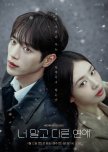
Emotional Connection of Mi-do’s sacrifices, the male lead’s decisions
My intention is not to attack this drama or diminish its artistic value. I respect the collective effort behind any television production, including the work of its writers, actors, directors, and production team. However, a story can reveal psychological and emotional dimensions through its characters’ interactions, even when those dimensions may not have been deliberately intended by its creators.The following analysis focuses on the episodes that have aired, examining the characters’ psychological motivations, the balance between their respective storylines, and the emotional consequences of their decisions. It also explores how the narrative might develop in the upcoming episodes to restore the emotional coherence that initially attracted viewers.
The Main Problem: The Execution of the Story, Not the Actors
The premise of *A Love Other Than Yours* offers considerable dramatic potential: a long relationship, changing feelings, accumulated misunderstandings, emotional dependence, regret, and the possibility of personal growth. Unfortunately, the way these elements have been developed has, in my opinion, weakened the emotional impact of the story.
The problem is not simply the pacing. It is the emotional logic of the characters and the unequal distribution of psychological depth and audience sympathy.
Why does the narrative sometimes seem to ask viewers to understand Namgung Ho’s suffering while giving insufficient attention to Mi Do’s? Why does the length of their relationship appear to guarantee him her love, patience, and sacrifices, even when he repeatedly fails to understand her?
A relationship’s history should deepen our understanding of its characters, not excuse their mistakes or make one person’s feelings more important than the other’s.
Namgung Ho: Love, Emotional Selfishness, and the Failure to Understand
Namgung Ho is not necessarily an inherently bad person. The problem is that his behaviour can come across as emotionally self-centred. He seems to focus primarily on his own suffering and on how Mi Do’s decisions affect him, while failing to investigate the pain and circumstances behind those decisions.
His repeated requests that she stop making him worry raise an important question: does he genuinely understand what she needs, or does he mainly want to preserve the emotional security she has always provided him?
Mi Do has spent years struggling with professional disappointment after her ambitions as a film director failed to materialise. Yet the emotional support she receives from him often seems superficial. His response to her difficulties does not always demonstrate the depth of understanding one would expect from someone who has shared so much of her life.
His reaction changes significantly when he learns that she has become an adult-film director. This contrast raises another question: does he truly see Mi Do as an independent person whose circumstances and choices deserve to be understood, or does he respond according to his own expectations of who she should be?
Namgung Ho often appears to assume that he knows what is best for her. Instead of listening to her full explanation, he interprets her behaviour and reaches conclusions before understanding the facts.
But love is not the right to make decisions on another person’s behalf. Nor does good intention erase the harm caused by a lack of understanding. If he genuinely loves Mi Do, he must try to understand why she behaves as she does, rather than judging her only by what he sees on the surface.
He has known her since childhood, and their familiarity should give him a better understanding of her. Instead, it sometimes seems to have created a dangerous illusion: he assumes that because he has known her for so long, he already understands her. He fails to recognise how much she has changed, how deeply she has suffered, and how much of her pain she has kept to herself.
Mi Do: A Character Whose Story Has Been Overshadowed
One of my main concerns is that Mi Do’s character and personal journey have increasingly been overshadowed by Namgung Ho’s emotional storyline.
Mi Do is not merely the woman who loves the male lead. She has ambitions, professional disappointments, personal struggles, and a life that exists independently of her relationship. Her failed attempts to establish herself as a film director should have been explored as a meaningful part of her identity, rather than functioning mainly as background to the male lead’s emotional journey.
Her professional failure is particularly painful because it affects her sense of worth. In episode 7, the circumstances surrounding her departure from the director’s position, followed by the success of a colleague she had regarded as unsuccessful, intensify her feeling that she has fallen behind.
At the same time, Mi Do has been carrying emotional and financial responsibilities connected to Namgung Ho. She sends money to his mother every month on his behalf because he has a painful relationship with her and does not want to deal with the situation himself.
This detail reveals the extent of Mi Do’s sacrifices. She has not only supported him emotionally; she has also taken on responsibilities that he has avoided.
Yet the narrative does not always give sufficient weight to what these sacrifices cost her.
Why does she continue protecting him without confronting him more directly? Why does she not establish clearer boundaries or explain how much she has been carrying? These questions could reveal important dimensions of her character, but they should not be used to blame her for the imbalance in the relationship.
Her silence may be an expression of love, fear, exhaustion, or a desire to protect someone who is already struggling. Whatever the explanation, the story needs to explore her inner world with the same seriousness it gives to him When Sacrifice Becomes an Emotional Burden
Mi Do seems to have tried to improve herself emotionally and professionally so that she would not become a burden to Namgung Ho and so that their relationship might feel more balanced.
However, when one person constantly tries to become stronger, more successful, and less demanding to preserve a relationship, sacrifice can gradually turn into self-erasure.
A relationship should not require one person to suppress their pain to maintain the other person’s emotional comfort. Nor should the person who gives the most become the one whose needs are least visible.
Mi Do’s sacrifices should not merely serve as evidence of how deeply she loves Namgung Ho. They should also reveal the emotional cost of loving someone who has become accustomed to receiving her support.
A Long Relationship: Familiarity Is Not the Same as Understanding
The couple’s long history is one of the story’s most important elements, but it has not always been used convincingly.
A relationship lasting approximately ten years should leave the characters with a deep knowledge of one another. This does not mean they should never misunderstand each other. However, repeated misunderstandings need credible psychological foundations, especially when the characters have spent so much time together.
There is an important distinction between loving someone and becoming accustomed to their presence. Passion can change over time, but affection and commitment may remain. Conversely, familiarity can create complacency, making a person assume that the other will always be there regardless of how they are treated.
Namgung Ho sometimes behaves as though he is prepared to let Mi Do go, despite the feelings he appears to have for her. This raises a fundamental question: if he truly loves her, why does he not make a greater effort to understand her? And if he is willing to lose her without fully understanding her, is he holding on to Mi Do herself, or merely to the history and emotional security they share?
The distinction matters. Missing someone is not necessarily the same as understanding their value, and regretting their absence is not the same as being ready to build a healthier relationship with them.
The Lawyer’s Office, the Accident, and the Danger of Assumptions
The misunderstandings involving the lawyer’s office and the accident provide an opportunity to examine how easily assumptions can destroy trust.
Before reaching a final judgment, Namgung Ho needs to understand the full context of what happened. He must distinguish between what he actually knows and what he merely suspects.
Does Mi Do genuinely want to reject him, or is she trying to protect him in the only way she believes she can? Could her outward behaviour conceal feelings and intentions that she has been unable to express?
The narrative would be stronger if Namgung Ho slowed down, listened to her complete account, reconsidered his assumptions, and learned from the consequences of his earlier behaviour.
Otherwise, the same misunderstanding risks becoming a repetitive device used to prolong the conflict rather than a meaningful stage in the characters’ development.
. Han Tae-seong and Park Su-ah: More Than a Jealousy Plot
Han Tae-seong could serve a meaningful purpose if his presence helps Mi Do recognise what has been missing from her relationship with Namgung Ho. Through their interactions, she might experience what it feels like to be heard, noticed, and treated as a person with her own emotional needs.
However, the story should not automatically suggest that feeling understood by another man means that Mi Do must begin a new relationship with him. Emotional comfort and genuine compatibility are not necessarily the same thing.
Likewise, Park Su-ah is not inherently a problem simply because she enters Namgung Ho’s life. The important question is how the narrative uses her.
If Su-ah becomes an emotional escape from the difficult work of understanding Mi Do, the story risks reducing her to a device that provokes jealousy rather than developing her as a meaningful character in her own right.
The focus should remain on what Namgung Ho learns about himself, his feelings, and the consequences of his choices—not simply on whether he becomes jealous or fears losing Mi Do to someone else.
Was this review helpful to you?

This review may contain spoilers
I was curious about this movie and i wasn't able to watch it last month because i don't have time i have so many series and i finally able finished watching the movie . I enjoyed watching the movie it's great with all star cast and great acting. The movie is thrilling, intense , action-packed and interesting to watch . What a plot twist Yan Di is the mole but it gave us another plot twist in the end his a double Agent planted by the government. Was this review helpful to you?

A Fresh Take on Divorce
Rating: 8/10 ⭐Honestly, this drama feels fresh and different from the usual storylines. The divorce trope is something I find particularly interesting here, especially because the story focuses on the FL fighting for her rights instead of simply accepting whatever fate throws at her. I love seeing a female lead who stands up for herself, knows her worth, and refuses to let others decide her life for her.
What makes the drama engaging is how it handles the conflict and keeps the story moving forward. It has genuinely hooked me, and I’m invested enough to keep wondering what will happen next. I really appreciate dramas that bring something different to the table rather than relying on the same old romantic clichés.
So far, I’m giving it an 8/10. I’m genuinely enjoying the storyline and eagerly waiting for the next episode. I hope the writers maintain this momentum and give the FL the character development and satisfying justice she deserves! ❤️
Was this review helpful to you?
Luo Yunxi
I read t ton of reviews putting down Luo Yunxi. He has gone through a lot to get to where he is today. An excellent actor and very hot indeed. I especially love him in historical dramas he is made for them. I have watched his acting grow over the years and he puts a lot into them. Go Luo. The show at first kind of bored me because I really like him in romantic parts. But the acting the costumes and all the work they put into this drama is worth the watch. I only watched it because he was in it to be honest. But I liked all the actors they were all great. The special effects great.Was this review helpful to you?

OSU!
Yandoku! is certainly quite a refreshing take on the medical drama genre, combining surgical medicine with the rebellious spirit of a former delinquent-turned-neurosurgeon.Yes, yet again, it's another medical drama I chose to watch and immediately fell in love with. Never getting tired of a good hospital storyline when it's done just about right.
Kanna Hashimoto (Dr. Tagami) is an absolute blast as the lead. It's so fun to watch her switch from intimidating hospital higher-ups with delinquent slang to being an actual doctor when handling patients. The supporting cast plays off her chaotic presence brilliantly. Her clashes with Dr. Otomo and the guest surgeons/doctors (which all had unique quirks) made me laugh more than I should. Beyond that of course, the story really hooks you once it digs into her history with her mentor, Dr. Nakata.
That said, it isn't without flaws. Because it leans heavily into comedy and episodic patient-of-the-week cases, some of the medical scenarios require a bit of suspension of disbelief, especially if you pay close attention to actual hospital protocols and surgical realism. The overarching hospital politics can also feel a little cliche or pandering at times. It's kind of a predictable trope in most cases where power-hungry characters exist in a show or movie.
But nevertheless, Yandoku! knows exactly what it wants to be: a heartfelt, high-energy medical drama that reminds you why patient care should always come first. It's fun, surprisingly touching when it counts, and easily very enjoyable!
Was this review helpful to you?

You need twisted mind
If you're looking for a dramatic plot, or maybe any substantial plot at all this is not for you. Basically this series is made for some guilty pleasure. So if that's not your tea, just skip.The two characters are equally crazy, and I think will be more crazy the coming chapters. It's truly a wild one.
Was this review helpful to you?

"Who believes in ghosts these days?"
The Bride from Hades is a 1968 film based on the classic ghost story Botan Doro. A kind man from a samurai family finds himself literally entwined with a beautiful ghost. The only problem is that each encounter drains his life force.Hagiwara Shinzaburo lives away from the comfort of his wealthy and influential samurai family. He has a small hut in the poor section of the village and teaches the children there to read and write, hoping to give them a chance at a better future. He’s appalled at the abusive nature of the upper classes. His family wants him to marry his brother’s widow which he refuses to do. During the lantern festival he assists two women carrying a peony lantern. They follow him home to express their gratitude. The courtesan and her maid recount their tragic story which ended with the lovely Otsuyu being sold into a geisha house. She is being coerced into marrying an old lecherous man. They ask Shinzaburo to privately marry Otsuyu, just during Obon when she is freed from her business responsibilities. Shinzaburo is quite taken with her and agrees. A neighbor catches a glimpse of Shinzaburo and Otsuyu consummating their relationship. To his horror, what he sees is not a beautiful woman, but rather a skeletal ghost!
This story was a study in contradictions. Shinzaburo was compassionate, never failing to help anyone in need. Even the troublemaker Banzo. Lesson learned---no good deed goes unpunished. Shinzaburo’s other neighbors rallied to save him when they realized that the ghosts would eventually kill their friend if they didn’t band together and help protect him during Obon. They exhausted themselves chanting and praying for him through the night. Whatever Shinzaburo needed to survive they were willing to do. Shinzaburo, on the other hand, didn’t seem to be too bothered about death, only caring for the children enough to want to survive. Banzo and his wife Omine, on the other hand, didn’t care about Shinzaburo’s life regardless of all the good he had done for them. They were willing to sell him out in a heartbeat. If this story with a strong Buddhist bent was about karma, I’m not sure everyone got what they deserved. Though some decidedly did.
Bride made good use of 1960’s special effects. Ghosts flew, glided, and disappeared. Their appearance changed depending on who saw them. Poor Shinzaburo’s complexion deteriorated through the application of makeup as the film progressed. The acting was all solid and typical of 1968. While I’m not familiar with director Yamamoto’s work, I’ve watched much of screenwriter Yoda Yoshitaka’s work through his collaborations with Mizoguchi Kenji.
The Bride from Hades was an entertaining if not bittersweet film. It showed the compassionate and generous side of human nature and the greedy, callous side as well. Another lesson I learned from the story was this: If a beautiful woman/man follows you home at night and asks to marry you just for the festival of Obon when the dead walk among us, maybe have a prior commitment until the dead have sauntered off into the sunrise. Just to make sure.
16 October 2026
Trigger warnings: Sexual content though not graphic. Brief glimpse of a nekkid breast in one scene.
Everybody has their kink note: Shinzburo and Otsuyu made love with an audience on more than one occasion.
The most 1960s quote ever: When Omine told Banzo he needed to deal with the female ghosts because, “They won’t trust a woman.” Ahem. One of the reasons why there was a women's rights movement.
Was this review helpful to you?

First Impression: All the Things I Leave You
Overall: happy we got this internationally. 6 episodes about 22 minutes each. Airing on GagaOOLala https://www.gagaoolala.com/en/videos/9480/all-the-things-i-leave-you-2025-e01Content Warning: possible major one at the end of episode 1
What I Liked
- past mystery
Room For Improvement
- didn't totally hook me
Was this review helpful to you?

A Cup of The Most Soothing Tea, Shattered All Across the Floor
"It's not that [Chen Wan] is bad with words, it's that his heart is clumsy. But a clumsy heart also means one that is free of ulterior motives." In his earnest, desperate, and stubborn way of loving Zhao Shengge without any desire at all for these feelings to be returned, Chen Wan's authentic feelings come from both a pureness in his straightforward sense of love, but also a devastation in that he is willing to set himself on fire in order to keep Shengge warm. And perhaps that's why I have so many mixed feelings about this adaptation of the novel Reply to Keats 奇洛李维斯回信 by Qingming Guyu 清明谷雨 — a story about the sourness of love in everyday life, of a very grounded, realistic, and yet heartwarming romance — especially when it's depicted through the heavy-handed use of generative AI assets.❁ THE PAIN OF UNFULFILLED DESIRES ❁
If I were to describe Chen Wan and Shengge's relationship in one sentence, it would be "an unrequited love that one never dares to pursue, that represents a devotion born from both extreme selfishness and selflessness." It's a heart-aching work that leaves one with feelings of awe for the all-encompassing forms of love that Shengge and Chen Wan have for each other, but also a bitterness that touches your heart knowing how long of a journey it takes for both of them to find their own happiness. Yes, Chen Wan may be extraordinarily stubborn in his enduring devotion to Shengge, but Shengge is no less steadfast in his loyalty — especially when the one who is always watching from afar doesn't realize that he is now being watched back in return.
The title is a reference to the famous Cantopop song, A Letter From Keanu Reeves by Fiona Sit (2004), which is intended to illustrate the perspective of Chen Wan's feelings. The lyrics focuses on the writing of a love letter to Mr. K — a superstar, but also a metaphor for someone who is indisputably out of one's reach — except the author still writes endlessly, with devotion, and with the greatest love in their hearts knowing how this relationship will never be possible. Like the mundanity and banality of letter-writing, in slowly communicating one's own feelings and waiting for a reply that may or may not return, this story doesn't have many explosive or dramatic moments. In fact, little really happens beyond the kinds of business relationships and interests that Chen Wan and Shengge eventually work on together. But it's precisely because the novel focuses on all of Chen Wan's little gestures, such as his attentiveness towards Shengge's needs, and in return, Shengge's constant awareness of Chen Wan and his attempts to find out what Chen Wan wants from him — that we see two extremely lonely people acquire an understanding and affection for one another over time.
❁ THE PROBLEM OF EXECUTION ❁
As other comments have already mentioned, this is a lower-budget series which received not only little promotion but also struggled when it was announced to release basic information about its actors and production company. The major issue is that this drama is kind of a hybrid live-action/AI series, particularly because of how many art assets, backgrounds, and other scenes are created either with the supplementation of or are entirely generated with AI technologies. This is not exactly a new phenomenon in BL dramaland, as other popular series such as A Prosecutor's Proposal are also starting to use AI content whether in their intro or the post-production process. However, it is to the point in this drama where it is almost difficult to identify when AI isn't used, and most importantly, why AI has to be used in the first place for a contemporary drama which must focus on the romantic development between its main characters in order to succeed.
The makeup, editing, and backgrounds are also extremely strange choices especially when they completely contradict with the novel. Both Yusong and Hanlin actually both look amazing in their livestreams and I can ironically see them perfectly as Shengge and Chen Wan whenever they're doing promotions outside of the drama or dressed in their own casual clothing. So I have no idea why the director decided to go with a very stylized, almost techno-fantastical version of the characters when they had every ability to do without it. Although some other comments suggested the intention of creating a manhua-like atmosphere, the main thing about Shengge and Chen Wan's story is that it's extremely grounded and rooted in the fact that they have a rare kind of love in everyday life. So it seems like this is not only a problem with generative AI use (which is another issue in itself) but the combination of that and an art direction which seems to focus on exaggeration rather than capturing the essence of Chen Wan and Shengge.
Last, although there is a lot of criticism towards Hanlin's (Shengge's) aesthetics, especially the longer hair and overall character demeanour compared to the original novel, I also think this same problem emerges with Yusong's Chen Wan. Although the romanticization and setting of Hong Kong does play an important role in the original story, I suspect what happened is that they decided to try and aim for some kind of Hong Kong triad-esque/old Hong Kong imagery in a contemporary setting, and combine it with manhua-style photography and cinematography, which of course ended up in many ways becoming a messy amalgamation of a bunch of different Douyin-style aesthetics instead. In any case, I think the frustration here comes both from the AI use (and its very obvious camera angles, action/car sequences, etc.) but also the very wonky execution, in which it's as if the drama decided to throw every single trendy aesthetic to see what would stick. Not only does this distract from how the original storyline actually has very few descriptors of things like appearance, aesthetics, and setting (because it prioritizes unfolding the motivations of its characters falling in love instead), but it also just doesn't really make sense in relation to the tone and the intention of the original script.
❁ LIST OF GENERATIVE AI ASSETS ❁
For those who want specifics about the generative AI use, this isn't a comprehensive list and I've probably missed some things, but I'll try. Most of these images/visuals are pretty easy to tell if you've watched both vertical and horizontal short-form Chinese dramas:
(1) Exterior Shots: A lot of scenes where they film big buildings, houses, mansions, intersections that are meant to establish setting (the most obvious example is the exterior of the yacht)
(2) Action Sequences: Anything involving the cars, such as car chases/wrecks/or scenes that capture the cars from afar and at-a-distance. This also includes scenes were we see cars driving on a highway, sometimes when cars are outside a building, and/or the exterior of a car.
(3) Some Table Assets: When they're eating, I suspect that some of the items on the tables (e.g. the moving lazy susan when they're eating the banquet meal) may be generated AI.
(4) Some of the Childhood/Flashback Scenes: Especially the scene where we see Chen Wan as a child
(5) Potentially Some of the Building Details: For example, in the yacht scene the entire sunset background is likely Generative AI, there might be some details in the background (e.g. objects on shelves) that are also either added or edited using AI tools
(6) Newspapers, Phone Texts: Some of these image or art assets that are on screens, phones, or other media forms are entirely AI generated (it kind of looks strange, e.g. when someone's holding an AI newspaper)
The actors are not generated by AI (e.g. there may be some filtering going on, but I think it's more of a stylistic/makeup thing right now because they look perfectly fine in livestreams). Probably the most glaring or obvious sign of AI use is definitely the car scenes and the backgrounds.
❁ LEFT LUKEWARM ❁
Reply to Keats remains one of my all time favourite contemporary BL web novels. The premise itself, of someone having an unrequited love and doing everything they can to make sure the person that guides their affection never discovers their true feelings, is beautifully depicted especially with characters that are so equally competent and well-matched like Chen Wan and Shengge. And while I think Yusong and Hanlin have a lot of chemistry, unfortunately the execution of this drama really marred the original tenderness of the novel. In some ways, this adapation is a reminder that simply throwing generative AI assets into low-budget series, regardless of whether or not they are produced under newer or smaller production teams, does not fare when it comes to the quality and depth of BL series we have been receiving lately.
Was this review helpful to you?


