


Beautiful slice of life, too much "Western" influence
I went in with no expectations whatsoever. I just needed a palate cleanser after Flower of Evil.Melo movie did not dissapoint at all. It seems I love shows which have no definite starting point or end, really a slice of life.
What made me love this one even more, was the fact that the topics were so "real life" topics. We had career-wise struggles, careers which took of because of past disappointments, relationships that fell apart without the drama, mental health, death and mourning.
I pretty much loved everything about it and oftentimes found myself thinking about the way my life was going.
But, even though I was very drawn to the story and the lack of over the top drama, I still felt like there was this underlying level of Western cinema lurking. Can't really put my finger on what it is, but that feeling ruined it a bit for me.
I know this doesn't make sense, even if you'd ask me about ot, I couldn't put it in to words, so sorry about that.
The feeling didn't stop me from finishing it, but I probably won't rewatch this one. All in all a solid 8.
Was this review helpful to you?
This review may contain spoilers
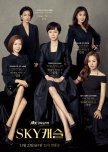
I'm not going to pretend that I didn't take three or four attempts to actually finish the first episode, simply because I wasn't really too grabbed by the premise or the characters despite the usual praise the series gets, but I'm glad I stuck through. All I can really say is I'm glad the last episode was mostly a low energy epilogue, for once. I think arguing about whether characters are "good" or "bad" in this drama is especially pointless as the show does a great deal of showing why the characters think and do what they do. Except Su-im, who was total tonal whiplash from Taeran's character in Delightfully Deceitful where she basically is Coach Kim, total case of writer's favourite syndrome. Honestly, I 90% watchlisted this because I wanted to see her be evil again. I thought they would all be evil. I mean, she's also a pretty shitty person at times, but more Jinhee tier shitty than anything. Honestly I'm a total Jinhee fangirl. She maintains the only healthy family dynamic (with some hiccups here and there, as is normal for any family), genuinely loves her husband who also loves her, and stands up for her friends. She's just a bit of a gossip and a ditz. Leave my girl be. I guess I'm straying from my point of "all these women love their families in their own way, they're just bound by misogyny and hierarchical social pressure". Notice I said women because while Prof. Cha shows improvement, I still hate him. Amazing performance, but I hate him.
Really just proof that chemistry isn't just a thing we should be referring to when it comes to romantic relationships. Yum Jungah and Kim Hyeyoon truly feel like mother and daughter to a scary extent. Hyeyoon is a clear standout in this cast, one of those roles that makes you want to see everything else she's done.
And speaking of standouts, holy shit Kim Seohyung. Goes from standard coldhearted villain to one of the most heartbreaking television characters I've really seen. You feel every little bit of her pain while the show also rightfully does nothing to excuse her actions, she's the ultimate product of the system she enforces and she's a completely hollowed out mess because of it. God I feel so utterly devastated for her character and her daughter most of all.
I will say, the writing is... iffy at times. Performances here are good enough that you quickly forget but knowing the fact the series length was extended when the show was ongoing makes some plot decisions and loose threads stand out more. I don't like how Ga-eul was quickly resolved at the end, I feel like she's far more of a villain than the narrative really has us paying attention to. Why does she get a happy ending of all people? Weird decision that leaves a sour taste in my mouth. I guess Su-im is supposed to express some sort of disappointment/confusion given what she knows but it's quickly glossed over.
Also, Hyena. Can't figure out her. Like most characters she's both deeply flawed and sympathetic, so some scenes have her acting more like a jealous stepdaughter villain hellbent on destruction, and then some she just wants to be included in her birth family's lives. This would be fine if there was any sort of consistency between the two sides of her but the show ultimately decides she's more of a plot device than a character, hence her mattering so much more after her death that her fate is spoiled by the fucking episode title. This show is good enough at blending the two sides of it's characters that when it isn't done well it sticks out even harder
Worse, and enhancing my feelings on Hyena being more of a plot device than a character, I think Joonsang's decision was unnecessary. I get that the modus operandi of this show is to do the most dramatic thing possible at every corner, it's makjang after all, and it usually works. But that just felt emotionally exploitative to the degree where it turned around and became hard to take seriously. I just felt gross after watching that scene.
But venting about little things here and there aside, I'm really glad this lives up to the reputation. I love mess, I love high stakes and high drama. I love when women take lead of stories and romance is kept in the background, so there was no way this drama was going to disappoint me. The social commentary I felt wouldn't be relatable, because I'm obviously not at this level, going to a university at all was never really in the cards for me, but the pressure to succeed at the awkward turning point of adulthood is suffocating no matter what. Part cathartic having this agree with me, part infuriating seeing characters end up okay when the rest of us drown in debt and backbreaking labour if we don't achieve our goals while the rich can take gap years in Europe and "figure themselves out".
But there's the flipside, these people have the ability to do everything, and yet their greed is so much that they decide their children need to do better than them at any cost. When does it end? When is wealth enough? I think talking about the social commentary solely when it comes to education, while understandable, does sort of hide the main point about how addictive money and status can really be. A millionaire wants to be a billionaire, a billionaire wants to be a trillionaire. There will always be a part of you feeling insecure. Maybe being rich really is hell, but also, I just got 50 dollars today from a bread price fixing class action settlement and it genuinely felt like winning the lottery when the notification showed up. So maybe a little bit of financial stability would solve some of my problems.
Was this review helpful to you?

A Perfect Match under Heaven - I think the original title suits better
Two people find themselves entangled with each other’s fate when they agreed for marriage of convenience. Xin Mei was prophecised as a child that she would become the death of 3 of her husband. Because she already had someone she fancied as her husband prospect, she decided to break the curse and wed a death row convict, Lu Huai so he would become the last husband she killed (the two previous husbands were killed during engagement, before they got married to her). Meanwhile Lu Huai, a magistrate of the district was framed to be a corrupt official and sentenced to Lingchi (death by a thousand cuts), when in reality, he is a war ghost hybrid Lu Qianqiao, the abandoned child of a war ghost mother and an immortal cultivator father who is ridden by a curse. To break the curse and become a normal human, he had to undergo life-threatening procedures and needed a blood relative that could bring him back from the brink from each procedure, thus he agreed to wed Xin Mei so she could become his lifestring. However, Lu Qianqiao never expected that Xin Mei would go berserk after his supposedly death by lingchi upon learning of his unjustified sentence. She goes after all 4 officials that were involved in his framing, and becomes a target for immortal cultivators who the officials asked protection from. Lu Qianqiao saved Xin Mei and wiped her memory, thinking this would be the last of their encounter. To his surprise, Xin Mei appeared yet again at his next destination, and that he still needs to protect her from aggressors that she encountered during her revenge frenzy that she no longer remembered. Will he really be able to lead a normal life as a mortal next to a cultivator that he pledged his life with, or will he abandon his dream of becoming a human to keep the love of his life safe from danger that seem neverending?It’s good to see Ren Jialun yet again at his peak after his phenomenal performance in The Blue Whisper and a rather downer Burning Flame. As usual, I love the fact that he could convey his emotion through facial expressions and his eyes, he need not to express his admiration and love for the FL by flowery poetic words or spicy frenchkisses and racy bedscenes. Lu Qianqiao is a conflicted character - while he is adamant at becoming a normal human being without martial ability so he could finally enjoy life properly free from the war ghost curse of no restful sleep, no sense of colours and pain, and tasting everything he eats as rotten, he also finds his stance swayed when he realized he needed power to protect this new wife he found himself loving as more and more threats arise one after another. It melts his heart even more that Xin Mei doesnt mind if he were to become a normal human without any powers, because Xin Mei also envisioned a normal life with him, away from cultivator’s world and strife. He eventually found that his dream of becoming human is indeed as strong as his desire to protect his wife, which left him utterly conflicted.
I think this is the first of Wang Herun’s show with her as the mainlead that I’ve seen, but I must say she had great chemistry with ML, and her acting was amazing. I love that she seemed weak, gentle and demure in the first episode but turned out to be very resolute and capable when it comes to her stance. She keeps getting blocked out and falls from her Golden Core cultivation level because she keeps getting entangled with the mortal issues, but her stance never waned. She could never turn a blind eye upon seeing injustice, and there was nothing anyone could change about this even if she had to lay down her life for it. I find it a bummer that she keeps needing saving in each battle, which is quite understandable when she was a low level cultivator but even as she is at nascent level, the ML still keeps coming to her rescue, so yeah, that is quite a bummer for me who love independent, strong FLs. I love everything about Xin Mei though I wish this character had been a bit tougher than what she was written as. I get tired of pulling my face each time the scene of her lying in bed in the verge of death after each battle comes on.
Some of the sideplots felt like total fillers that felt like a total waste of time. Like the almost love triangle between Bai Zongren, Lady Jiang and Xin Mei. There’s also too many characters written in that made it hard for me to follow each sideplot, which led me to use the ff button instead.
Though one thing I must admit, Xiao Xiang Dong Er do have the talent to turn a bland and straightforward novel into an expanded version with complicated sometimes rather twisty storyline. She did the same with Tian Xia Wu Shuang (novel) for its adaptation A Moment but Forever, which i guess is the sequel to this one based on the last 2 episodes. Btw, it truly beats me why the heck did she allow her own epic novel Princess Agent be butchered beyond recognition on screen when she herself is a screenwriter who has written good stories that is even better than the novel they’re after. total mindblowing, and a pity. 😔 I still hope for a more accurate adaptation of Princess Agent, but I digress.
Anyway, the production definitely spent loads and loads of ‘blood’ packets for this show, cuz almost in every single battle, there would be more than one character spewing blood all over themselves during fights, and more than once in one battle even. Good lord, it seemed like they never ran out of blood to vomit. 😵💫😂 i must say this show had probably the most blood vomiting scenes i ever watched. What a total mess.
I love the ending which can be said to be a happy ending, though i wished Ren Jianlun had a wee bit more scenes under his belt.
Was this review helpful to you?
This review may contain spoilers
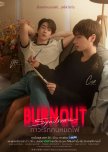
I wanted ml to end up with the second lead
imo the whole story would've finished better if the ml ended up with the second lead(tiny spoilers ahead so read at caution)
i mean when the last thing happened regarding the art and ai, i personally don't think i would be able to forgive someone like that when they acted to nonchalant about it, if the other lead loved ml so much why did he continue on and sell the product? like all he did was come to sleep under his house, and i honestly just think that's the only reason he wanted ml, we see the second lead put in wayy more efforts.
(end of spoilers)
I personally wouldn't rewatch it cause the ending just frustrates me really, but overall the plot, message the cast everything was on point (except the ending). It for sure is a heavy watch and i'd like to watch more bls surrounded by such topics.
Oh and I wish a bar like the burnout bar would exist irl, we really do need stuff like that<3.
Was this review helpful to you?
great
fantastic fantastic fantastic fantastic fantastic fantastic fantastic fantastic fantastic fantastic fantastic fantastic fantastic fantastic fantastic fantastic fantastic fantastic fantastic fantastic fantastic fantastic fantastic fantastic fantastic fantastic fantastic fantastic fantastic fantastic fantastic fantastic fantastic fantastic fantastic fantastic fantastic fantastic fantastic fantastic fantastic fantastic fantastic fantastic fantastic fantastic fantastic fantastic fantastic fantastic fantastic fantastic fantastic fantastic fantastic fantastic fantastic fantastic fantastic fantastic fantastic fantastic fantastic fantastic fantastic fantastic fantastic fantastic fantastic fantastic fantastic fantastic fantastic fantastic fantastic fantastic fantastic fantastic fantastic fantastic fantastic fantastic fantastic fantastic fantastic fantastic fantastic fantastic fantastic fantastic fantastic fantastic fantastic fantastic fantastic fantasticWas this review helpful to you?
A Drama That Keeps You HooK
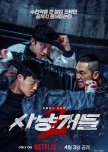
This drama is epic after watching the South Korean drama Bloodhounds, I can confidently say it is one of the best action dramas I have seen in a while. The drama was exciting from beginning to end, with powerful fight scenes, emotional moments, and a strong storyline that kept me fully interested.What I enjoyed most was the friendship between the two main characters. Their bond felt real, and the way they supported each other through difficult situations made the story even more emotional. The action scenes were realistic and intense, making every episode thrilling to watch.
I also liked how the drama showed the dark side of money lending and corruption. The villain was very convincing and made the tension stronger throughout the series. Even though some parts near the ending felt a little rushed, the drama still delivered a satisfying and emotional experience.
Overall, Bloodhounds is an action-packed drama with heart, loyalty, and great performances. I truly enjoyed watching it and would highly recommend it to anyone who loves emotional action dramas with strong characters and meaningful friendships.
Was this review helpful to you?
engaging so far
i already watched the first 8 eps. so far this drama is engaging, i dont usually watch wuxia's coz i feel like its too heavy for me to watch but this one is engaging so far. the story will keep you seated. tho there's minimal flaws, its forgivable. the banters of Zhan Zhao, Huo Linglong, and Bai Yutang are funny. the trio have a comedic timing and they're very pleasing with the eyes. also, i love the fact that im seeing those skin textures on my screen. one thing that feels really off when im watching some costume dramas is the heavy filters. i cant get myself to finish dramas with heavy filters. those ones that are so obvious that will make u think jesus is about to get them on heaven. anyways, im continuing watching this drama. this is my first time writing a review.Was this review helpful to you?

3 Epic Stories in 1!
Review Part 1 out of 3 = Beside the SkyFinally, after waiting 16 long months for Season 2, Fourever You Part 1/3 shattered me in the best way possible. This first story didn’t just meet expectations, it blew straight past them.
I already loved Bever as Tonfah and Tonliew as Typhoon from Season 1, even with their limited screen time. Season 2 finally gives them the space they deserve, and the emotional payoff is devastating. Every scene hits harder because we can now fully feel the depth of their pain, history, and connection.
What I thought would be a soft, cute story quickly turns into something deeply heartbreaking. Typhoon’s trauma is painful to watch. His fear of the dark, the loss of his sister when he was already an adult, and the cruelty of a family that blames him instead of comforting him is hard to witness. Being forced to grieve alone leaves scars that never fade, and the series does not sugarcoat that. Typhoon’s loneliness feels absolutely suffocating.
Years later, his reunion with Tonfah, the neighbor who once protected him, feels like a fragile lifeline. Tonfah is clearly the light Typhoon desperately needs. Someone who can sit with his pain, understand it, and slowly help him breathe again. Their bond feels raw, tender, and earned, never rushed or forced.
And can we talk about how they are one of the most green flag couples I’ve seen in BL? Their relationship is so cute, natural, and genuinely sweet. Every glance and every quiet moment between them carries warmth and meaning.
I also loved Typhoon’s group of friends. They are genuinely supportive, warm, and protective in a way that makes his world feel a little less lonely. I also really appreciate how seamlessly this season blends with Season 1. Seeing familiar faces like Johan and North and Hill and Earth again felt like a gift and honestly made me so happy. It reminded me why I fell in love with this universe in the first place.
The acting across the board is outstanding, filled with quiet anguish and unspoken emotion. The music amplifies every heartbreak, and the chemistry makes every touch and every look feel loaded with meaning. This series doesn’t just tell a story, it makes you feel it.
Emotionally devastating and beautifully told, Fourever You Season 2 Part 1/3 earns a powerful 10 out of 10 from me. 💔✨
Review Part 2 out of 3 = The Sun from Another Star
After watching Hill and Ter, Johan and North from season 1, and recently Tonfah and Phoon from season 2, the second couple of season 2, Arthit and Dao, already feel very different from the others.
Arthit is hot, chaotic, and has such a funny personality. He always feels like the highlight of the group and brings a lot of energy to every scene. On the other hand, Dao is quiet and gentle, but he has the unusual ability to see and speak with spirits. This immediately makes their story stand out because after more than 24 episodes in this universe, this is the first time we get a supernatural element with ghosts and spirits.
Their dynamic already feels interesting because they are such opposites. Arthit is loud, bold, and playful, while Dao is calm and mysterious. Opposites really do attract here, and I am very curious to see how Dao slowly starts to fall for Arthit.
The story still keeps the familiar university setting that fans love, but the supernatural twist makes it feel fresh and different. After just two episodes, this couple already feels fun and unique.
For me it is easily a 9.5 out of 10 so far and I am excited to see where their story goes next.
Review Part 3 out of 3 = Lately, Its Winter Season
The final part of Fourever did not disappoint. Across almost 40 episodes over both seasons, the story wrapped up in such a cute and satisfying way. Set in a high school setting with a friends to lovers storyline, the series balances light romance, family drama, and emotional moments really well. Pie as Tiger and Golf as Nao are adorable together, and their chemistry had me hooked from the very beginning.
Tiger, the lonely youngest son of a powerful and wealthy family, first meets Nao during football tryouts. While Tiger grows up surrounded by arguments and pressure, Nao comes from a poor but loving family that always feels warm and welcoming. I really liked how the drama showed that money cannot buy happiness. Tiger would rather spend his time relaxing with Nao on a small couch than stay alone in his giant mansion, and those moments made their relationship feel genuine and comforting.
How ironic that in one family, the older brother is completely oblivious, while in the other, the younger brother is the one who cannot see what is right in front of him.
Singha has had Ben by his side for years. A loyal bodyguard, a constant shadow, a man who has quietly loved him for more than a decade. Yet Singha remains utterly clueless, never realizing that Ben's devotion runs far deeper than duty.
Then there is Tiger, who has spent more than six years loving Nao. And somehow, Nao is just as hopelessly unaware. The funny part is that everyone else can see it. North, clumsy as he is, took one look across a soccer field and immediately understood Tiger's feelings. Nao's own twin brother knows. Practically the entire world seems to know except Nao himself.
So we end up with this amusing parallel: in the mafia family, the older brother is the oblivious one, while in the other family, the younger brother is equally blind to the truth. Two different stories reflecting each other in the most chaotic way.
The only part that feels a little hard to believe is how quickly someone who has always considered himself straight suddenly starts trying to navigate feelings for his best friend after a confession. For years, girls were the ones he noticed, the ones he thought were cute. Then his best friend confesses, and now he is genuinely considering dating him. It is a dramatic shift, though feelings and self-discovery can sometimes be far more complicated than people expect.
Still, that is part of what makes the story entertaining. Between Singha being oblivious to Ben's decade-long love and Nao somehow missing six years of Tiger's devotion, this felt like a double episode built entirely on beautiful, ridiculous cluelessness.
The slow burn romance was done so well, making every small interaction between them feel meaningful. Along with the school setting, athlete male lead storyline, flashbacks to the past, and touches of mafia family drama, the series still keeps a fun and soft atmosphere without becoming too heavy.
Overall, this is a cute and entertaining BL that is easy to watch and enjoy. The romance feels natural, the emotional moments hit well, and Tiger and Nao completely carried the series for me. Definitely one of the more enjoyable light BLs
Was this review helpful to you?
Great Cast, Great Acting, Good Story and Good Music.
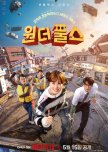
I normally don't go for this kind of drama (comedy), but I wanted to watch it because of Cha Eun-woo. I am so happy I did because it was really good! It is a perfect combination of comedy, action, and adventure.I especially liked the superhero angle. I have seen a lot of superhero movies and series based on Marvel and DC, so it was fun to see a different spin on the genre with unlikely heroes who struggle to control and understand their powers. The writers took a familiar theme and truly made it their own. I was engaged from episode one and ended up binge-watching the whole series.
The cast was fantastic:
Cha Eun-woo plays the perfect reluctant hero who doesn't really want to get involved but can't avoid getting sucked in by this new group of heroes. I really liked his backstory, and you can truly feel his pain over the trauma from his past. His acting was brilliant.
Park Eun-bin plays an out-of-control young woman who suddenly gains superpowers. I loved her chaotic vibe and her "go-getter" mindset. She performed the role fantastically.
Choi Dae-hoon and Im Sung-jae complete the team. They both did a great job of playing unlikely heroes struggling to control their powers and find their own courage.
As always, Kim Hae-sook is a wonderful actress who played the role of the grandmother perfectly. I always love seeing her in dramas.
The music was also great. Having "Creep" by Radiohead start off episode one and using it later on during a big fight scene was a brilliant move—it just fit perfectly. My advice would be: definitely watch it!
If you’re interested in more of my thoughts on this series and others, feel free to check out my profile.
Was this review helpful to you?
I really, really tried.
When I got to episode 11 and found myself fast forwarding through 90% of the show, I knew I had to drop it. This felt like watching one of those cheesy web dramas. I can handle 15 minute episodes with those kind of production values and mediocre acting, but the 45 minutes in a full length was a slog.If I *had* to pick one thing that wasn't bad, I'd pick the SML's story. At least he had flaws and character growth.
Was this review helpful to you?
Two Rivals falling in Love
The premise of the story is simple and adheres to the manga. The actors portray the characters so well and they have great chemistry. The micro expressions, unspoken glances and actions are very good.It is almost like a slice of life series except about two persons coming together. I am really enjoying it and it’s the top of the heap thus far for BLs this year and that’s saying something as there are so many.
Was this review helpful to you?
Was this review helpful to you?

A Perfect Mix of Romance, Comedy, and Superpowers
Wow, I cannot believe I missed this drama when it first came out in 2017. After recommendations from my sister and niece, I finally finished this masterpiece in 2026, nine years later, and honestly, it became one of the best Korean dramas I have ever watched.Strong Girl Bong Soon has everything I love in a K drama: romance, comedy, action, villains, and even superheroes. It was incredibly funny and made me laugh so much, but at the same time, it had emotional moments that made me cry a lot too. K dramas never disappoint when it comes to balancing emotions, and the romance in this drama was absolutely perfect.
The story follows Do Bong Soon, a small and adorable woman born with superhuman strength that has been passed down through the women in her family for generations. Even though the plot includes crime, kidnappings, and action scenes, the drama never loses its charm and fun atmosphere.
Park Bo Young as Bong Soon was amazing. She was cute, funny, lovable, and emotional at the same time. Every time she cried, I felt emotional too. She played the character perfectly and made Bong Soon unforgettable.
Park Hyung Sik as Min Hyuk completely stole the show for me. He is tall, handsome, adorable, and so charming. He was definitely the highlight of the drama. The chemistry between him and Bong Soon was incredible. Watching them go from enemies to lovers gave me so many butterflies. I cried at the balcony scene when the bomb was tied around her and MinHyeok refused to leave. He said he would stay by her side no matter what. Then she started crying and regained her powers.
Their romance was sweet, funny, emotional, and one of the best K drama couples I have ever seen. The ending was perfect too, especially seeing their wedding and their twin daughters.
Kim Ji Soo as Guk Du was also great in this drama. He played the cold but caring police officer perfectly. Even though he looked serious on the outside, he was such a cool and loyal character to have in the story.
I also loved Bong Soon’s family. Her parents were supportive and hilarious, and her medical brother added even more comedy to the drama. Even the villain did an excellent job and made the story more intense and exciting.
This drama truly has everything: action, comedy, romance, supernatural powers, amazing fighting scenes, a beautiful OST, and lovable characters. I laughed, cried, smiled, and enjoyed every single episode. Strong Girl Bong Soon is cute, emotional, exciting, and unforgettable. Easily one of the best K dramas I have ever watched.
10/10. Now it is finally time to watch the sequel, Strong Girl Nam Soon.
Was this review helpful to you?
It's full of surprise and it's worth it
Love the series ....it woth watching ...thank you gmmtv your bl dramas are the best .... Am still new to this world of bl but ever since last year in December 2025 until now l can say without a doubt some bl series are comfort...love...inspiration ...funny . And this drama was inspiration and it encourages ...loved it hope my review is worth sorry and trying not to write about the movieWas this review helpful to you?
This review may contain spoilers
autopsi
kenapa nyak drakor sebagus ini aku baru nonton?? tapi ending nya gantung bgt ihh, i want more😢💔. akting dia keren bgt jir sumpah kaya dokter beneran. and what i like most in this drama is... lesson. aku banyak bgt tau dari sini dan yang paling membekas tuh ternyata adrenalin itu bisa di produksi ya... aku kira cuma dari tumbuh manusia doang keren bgt ilmuwan tuh,😥😥 terus aku baru tau kalau tulang itu masi bisa di autopsi, dna ga hidup jadi ga akan mati, terus mayat tu juga bisa boong. terus aku baru tau juga darah kalau dicampur air tetap bisa di analisis dna nya. ak jg baru tau penyakit langka gen febry disease yg munculin angiokeratoma, dan wow nya gejala muncul pas alter egonya kambuh doang. and last people are flowers, be gentle🌟Was this review helpful to you?


