

a very worthy republican drama
It’s not simple love story about two people’s struggles.this drama tackles social issues worth fighting for in that era.I feel the emotions here are played out.it’s very complex but always keeps you on the edge of your seat with the couple. Their performances are often enough to bring a tear to your eye.I wouldn’t recommend this drama simply for light entertainment, but rather if u’re looking to enjoy a work of fiction that offers a new experience and a fresh perspective. then giving it a watch.Was this review helpful to you?
This review may contain spoilers
Everything is peak in this series—the acting, chemistry, bonds, and revenge!
I haven't read the manhwa yet, but based on what I've experienced, I claim that this show is a truly excellent, top-tier adaptation. They went through each panel to ensure a credible effort, giving the story the fame it deserves.I admit the first two episodes felt a bit messy and unorganized in a few frames—specifically how they chose to show Sun's past—but that didn't stop me from watching further. The storyline wasn’t overly complex, and it was portrayed in a strong light, highlighting each character beautifully as the episodes progressed.
I have to thank this series for introducing so many gems. Minlee is such a versatile actor; I couldn't believe this is his first main series! The same goes for the rest of the cast. Toptap startlingly managed to appear older than his actual age, giving his character the rank it deserved. And Shogun and Khunnote—oh my god, they are so, so lovely.
This series really made me pause and think: Is revenge truly necessary? Does karma exist? Both of these concepts could have easily been rendered in a clichéd or unfavourable way if not for the production's careful execution and its gentle, raw representation of life's toxicity and bad people.
I adored Sky and Kajorn for being the ones who welcomed Sun regardless of his revenge-driven mindset. They were soft, concerned, and open to being a family in the most profound way—a warmth Sun himself didn't believe he deserved. On that same note, the series hit me with the harsh reality that a person can be utterly broken, a failure in life, constantly falling, and desperately trying to find ways to get up and hold on. Yet, good things still might not happen. Life isn't like a feel-good movie filled with rainbows and sunshine. Sometimes, making our loved ones smile is hard or even impossible. Perhaps it is we who spoil and break everything while trying to make things work out—and that's just life.
Seeing Sun's life before and after his quest for revenge made me exhale, reflecting on these exact harsh concepts that most of us grow through. His own boyfriend, Sunny, lied to and betrayed him. The deaths of his mother and brother—which he might have contributed to and Sunny's meddling—ate him alive, and probably still do. He has been working nonstop just to stay busy and find a place in life, trapped in a stage of grief where he forgot how to feel a thing. Man!
I couldn't feel more seen, and I can't get enough of how beautifully Sun expresses the torture of feeling absolutely nothing:
"Just because I'm not dead yet means I have to live my life. Whether the goal in life or the meaning of life, I never had it. I've never understood the joy that other people experience. I don't understand why people can smile and be happy. It makes me question myself. Do I need to keep living just because I'm still breathing? Living without being able to feel anything is a deadly torture. That means suffering like this is the price I have to pay to keep me alive. I think there are only people who want to live who need a reason to be alive. Even if you suffer, try to look for something around you that makes you smile, and be thankful for it. If it's someone who can feel love even for just a little, then you have the right to have the reason to be alive. People whose hearts are not dead yet deserve to live on."
I also enjoyed seeing Boss play Pakin. Damn, he sure aces his roles! I don't think I am the only one who shipped Sky and Pakin; there is a one hundred percent possibility of this ship. Even though there doesn't have to be a love interest just because there is immense chemistry, I really vibed with that humour.
I have to talk more about Kajorn. He is THE manager! He's freaking adorable, funny, quirky, and at times so wonderfully awkward and dumb—just like me (crying). He is easily the most awesome character in the series. The care and effort he provides for his actors, the love he has for Sun and Sky, and the justice he seeks make him the sole good entity in that insane company. *hands up in admiration
OH, also—Jo (Jay's uncle)! He is a freaky man! He is cool in the sassiest way possible—like, girl! His aura and personality are unmatched; I really needed him in this series. Now I want him to have his own comedy spinoff. And what do you mean he's also in the Broken of Love series? I'm guessing he's that bad bodyguard who trained Arisa (Faye). What a versatility! What a versatility!
Likewise, I had so much fun watching Jay's mother's bodyguard. Why is everyone in this show so freaky?
The series poured so much potential and effort into its storyline. I was initially a little scared of how the final episode would handle the ultimate revenge plot; however, given Jay's remarkably high intelligence. There was so much tension, but thankfully, it completely lived up to it.
The brilliance of contrasting philosophies on revenge was illustrated admirably:
"If it's the price of getting revenge, then nothing is too expensive for me." — Jay
"Once I survived all that, I realized that revenge no longer matters to me anymore. Not as important as being alive, anyway." — Two-O
It wrapped things up so successfully that I have no complaints. I am content to see Sky healing from his camera fright, and Sun finally getting job offers (the manager is so happy, aww!). Finally, FINALLY, Sun is open with his emotions, and he and Jay are together. XD
P.S. Pawinee, Jay's mother, is so damn beautiful.
Was this review helpful to you?
The adventure of Jin Man & Ji An finally continues!
The first part was thrilling and funny, the second part is - so far (Episode 4) - thrilling and sad. The start shows Jin Man's story during Ji Ans fights, which makes a great transition from Part 1 to Part 2. Even though action movies aren't my genre at all, A Shop for Killers is really awesome, and the Cast is brilliant. I can't wait to see the next episodes. :)Was this review helpful to you?
high-budget production, massive marketing effort, and poor delivery
Readers, as a matter of long-standing personal discipline, I make it a rule to finish what I start; however, I must admit that *Overdo* joins the list of exceptions—out of respect for the viewers, whose intelligence was underestimated by the production's marketing strategy. My summary assessment is this: *Overdo* does not appear to be a ratings failure, but rather a case of inflated expectations and questionable technical execution. Critical consensus and entertainment media coverage suggest the main issue wasn't the cast, but rather the direction, editing, and visual choices; these factors undermined the "premium production" feel, contrasting with initial engagement—fueled by fandom, official marketing, and premiere-day curiosity—that was later dampened by a wave of criticism affecting critical perception and scores on international aggregators. In short: while actor Zhang Linghe’s fanbase clearly helped drive early attention, that alone doesn't explain the high "heat" metrics on Chinese platforms, as there was also editorial coverage, paid advertising, and organic interest from those eager to watch the premiere. The agency and campaign team likely amplified the hype, but the subsequent backlash and the final product itself demonstrate that the debate is not merely manufactured. Please note: this is not a critique of the actors' professionalism, but rather an invitation to reconsider how productions with smaller budgets are often delivering more compelling storylines and more enjoyable entertainment experiences.Was this review helpful to you?
Not worth the hype
Just can't get into this. Hit my limit at episode three on three occasions.The pantomime ambiguity for ambiguity's sake is all the show appears to offer.
Genuinely hard to like the characters when they seem so 2D, as such, any tension falls flat.
The cringey "dark atmosphere" the show relies upon doesn't make up for well-executed world building, direction or writing.
Perhaps it's a slow build, but I do like plenty of slow burns...this just doesn't have a single hook to keep me watching.
Was this review helpful to you?
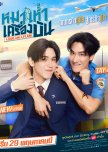
Nice relaxing watch
I think it was a good comedy to watch. They touch one some good real world challenges in relationships.I feel like the main issues of the plot were solved pretty early on and then the rest of it was just feel good comic relief watch which was nice to watch in between all the other high stakes drama but that being said don't come into this expecting to be on the edge of your seat but rather just to leave the episodes with a nice feel good smile at the end.
Was this review helpful to you?
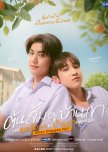
This review may contain spoilers
Over-the-top acting of one of the leads...
It was a decent drama in itself, but I was incredibly annoyed by the over-the-top acting of Progress...in the last episode he acted normal and then i could finally see he can act well. His acting is the reason i won't re-watch this drama again.The story was nice, just a sweet high school drama.
One thing that was disappointing, was that in the end we saw nothing about Tle, he just disappeared. There was a two year build up from him and August, they start dating an then there's nothing more...not even a word about him when they all get together in the final episode.
This drama had great visuals and the music was good.
The mains had good chemistry, but i didn't really feel love chemistry.
I really like Augar and Achi, their chemistry is great and they are just so sweet!!
August and Tle had good dynamics, so sad we didn't see much of them.
The kisses were just lip touches, but these actors are all very young, so i wasn't mad at it.
Was this review helpful to you?

Watch the iQIYI version not Netflix
I tried watching it in Netflix as it's available there, but seriously I fast forward the whole first episodr and about to fall asleep, as it's so boring. I don't get the hype, I'm the person who watch series most after the hype. Cos many series are run in by fan hypes that the series itself has no substance.Then I Stumble a vid that the Netflix Version and Iqiyi version is different. Noting how Netflix is too cinematic and removes the color of the series.
So I tried IQIYI and definitely enjoys it so much. i binge watch it now.
The chemistry is there, the difference of the personality of the two is top notch, the NCs are not p0rnagraphic or added for views, but by story.
Gotta say, the real mvp here are Duang Friends.
- Finished! gotta say, what makes Duang with You unique is the pure love without malice Duang gives. Many series now, although heavy in drama is just frustrating to watch cos there's much more male ego going before professing their love instead. Leads to misunderstanding and later fights. Duang with You in a sense shows a love to give, and a love to receive.
Was this review helpful to you?
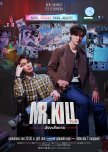
Must watch
The story is peak just watched 4eps, waiting for Tuesday, story is amazing wants to know what will happen and DewTee? are just amazing, even though for P'Tee it's first leading role but he is nailing the acting, and as usual P'Dew is amazing at acting also the drawings? are just amazing 🤧.watch the show, it's really really good you'll hooked to the story instantly and the OST? is the best, it's like you are listing to some anime OST. and the background is also soo good and all the murder sequence are soo damn good and cruel.
Was this review helpful to you?
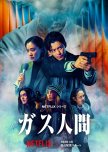
This review may contain spoilers
What a tragic life.
I was familiar with the movie so I was extremely excited for the show and what can I say, I'm not dissapointed at all. Human vapor was able to emcompass the suspense and thrillering sentiment of the movie whilst bringing up a new touch, something fresh.The acting was fabulous and I was quite impressed by the actor palying "Uncle Ren", he was really great and had the perfect physical to play the human vapor imho. The music was also great and when it comes to the pacing, it was sometimes a bit slow but it never was enough to make me lose interest.
The overall story is tragic and sad....Uncle Ren died tragically because he wanted to save and live with Kyoko but even in death, he was not able to rest in peace. The actions he did as the human vapor were so drastically opposite to whom human Ren was, which made them even more heartwrenching but the pain Kyoko felt and endured all her life pushed her to the extreme. I could understand her although i think she went the wrong way with this type of revenge. Argh, so sad and unfair :( but i guess at the end, they were, at last, together forever.
Either way, this is a great show and i recommend it!
Was this review helpful to you?
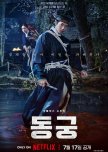
Absolutely Masterful! The East Palace is a Must-Watch 10/10
The East Palace is easily one of the best K-dramas I’ve watched recently. Ever since I saw the trailer, my expectations were high because it dives into themes I love, the afterlife, ghosts, and curses. From the very first episode, it completely hooked me, and at just 8 episodes, it's perfect for a weekend binge-watch. It is so worth it!Synopsis & Premise:
The story revolves around a dangerous, high-stakes mystery: when the Crown Prince is found dead under mysterious circumstances, a 30-year-old deadly curse threatens to wipe out the royal bloodline. To save his remaining heir and lift the curse, the King secretly summons Gu-cheon, a cynical ghost slayer forced into service under threat of execution. To eliminate the spirit haunting the palace, Gu-cheon must physically cross into the Realm of Gwi (the spirit world), a perilous feat that requires him to near-fatally submerge himself and temporarily die to enter the other realm. Meanwhile, in the living world, Saeng-gang navigates high-stakes royal politics to unravel decades of buried secrets and investigate her own past.
Production & Visuals:
The production value is top-tier. The special effects are incredible, and the cinematography is simply stunning, every frame looks like a work of art. The transitions between the two realms are seamlessly executed without ever losing their narrative impact. Paired with a brilliant soundtrack that perfectly captures the mood of every scene, the visual and auditory experience is easily among the best I’ve seen in a K-drama recently.
Plot & Pacing:
The storytelling is fantastic. While the drama gives us an idea of who the villains are early on, it keeps its cards close to its chest. Instead of resolving everything at once, layer after layer is unveiled, with each revelation leading directly into another hidden secret beneath. There were so many great surprises along the way!
Cast & Characters:
The acting across the entire cast is exceptional. Nam Joo-hyuk delivers a brilliant performance as Gu-cheon; he isn't your typical noble hero driven by honor. Traumatized by his past and hardened by the dark spirit world, he is a cynical, world-weary ghost slayer who only takes on this perilous mission because he is forced to. Roh Yoon-seo is fantastic as Saeng-gang, fortunately, she avoids the trope of being the typical female sidekick who only exists to look impressed while the hero saves the day. She is actually the anchor holding the entire investigation together. While Gu-cheon fights spirits, Saeng-gang untangles court intrigue, hidden motives, and palace politics. The rest of the supporting cast also does a magnificent job, bringing immense depth to the series.
Also, I have to give a special shoutout to Kkeomeoksari, the adorable creature following Gu-cheon everywhere. It stole every single scene it was in and quickly became one of my absolute favorite parts of the show!
Final Thoughts:
The East Palace is a captivating masterpiece from start to finish. Are there strong chances for a Season 2? Honestly, I really hope so! If you are looking for a captivating story with top-notch production quality and brilliant performances, this is an absolute must-watch.
Rating: 10/10!
Was this review helpful to you?

This review may contain spoilers
Keeps you hooked till the very end
Honestly I went into watching this series without any former knowledge of the actors and the story at all. So I didn't expect too much from it but it was a pleasant surprise.The series keeps you entertained from the very first moment till the very last. It is the perfect combination of bl and thriller. The visual effects, the cinematography and the music are excellent. The acting is great too, but you can definitely tell the differences between some of them. If I have to choose someone I would probably say Pavel's acting is the most standing out, out of all of them.
Altough I really enjoyed watching the whole series there's some things that could've been better.
The plot twist wasn't really that big of a plot twist to me to be honest. I was expecting something different, more unexpected. Also I feel like the last 2-3 episodes could've been made into just 1. I felt kinda frustrated how they wasted so much time and weren't really rushing to catch the killers in time. I liked it tho that there were so much happening even in the last episode
It's definitely not a perfectly executed story, but I think it's definitely worth a watch. I really reccomend this if you watched Khemjira and you're looking for something similar in vibes and quality. You'll definitely get hooked as much as me
Was this review helpful to you?
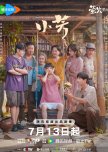
Satire with a Lot to Chew On
I thoroughly enjoyed being brought into the lives of these characters. Xiao Fang is a sharp spoof on contemporary societal expectations, strict gender roles, modern parenting that infantilizes children. It comments on the financial costs and transactional nature of modern marriage, contemporary childrearing, and the fallout from demographic policies that resulted in men with no prospects for finding partners. Are women finally having a moment? This narrative is an empowering story of a younger generation reclaiming its agency.
The series exposes cliché advice from older generations—such as the romanticized notion that "when people are poor, love is pure." The story presents a darker reality: money is a necessity in marriage, and genuine love may be a luxury. Another fallacy: the assumption that transactional arrangements cannot succeed. When partners share values and learn to understand and respect each other as they navigate life together, even a pragmatic arrangement can end in a loving relationship.
I loved the setting and the thoughtful portrayal of rural communities being renewed and valued as repositories of a treasured way of life. Furthermore, the handling of the male lead’s deceitful, noxious, and manipulative father - the way the narrative forces him to finally see himself clearly—was spot on.
The ending was grounded in reality - bittersweet yet hopeful. Altogether, Xiao Fang provides a compelling, enjoyable narrative elevated by natural, precise acting.
Was this review helpful to you?
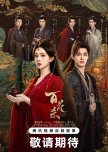
A story of love beautifully told
It’s rare to watch a Chinese drama where the writing, directing, screenplay, and performances sustain a steadily growing intensity from beginning to end. Too often, C-dramas start with tremendous promise, lose momentum halfway through, and stumble toward a rushed or unsatisfying conclusion. Blossoms of Power is one of the rare exceptions. Every episode builds naturally upon the last, making the final payoff feel completely earned.The female lead is undoubtedly the heart of the series. Rather than serving as a supporting figure to the male protagonist, she commands every scene with intelligence, confidence, and emotional depth. Her relationship with the Crown Prince is equally refreshing. He follows her lead not out of weakness, but out of admiration, trust, and genuine love, creating one of the healthiest and most balanced partnerships I’ve seen in a palace drama.
What impressed me most was how unpredictable the story remained until the very end. Just when I thought I knew where it was heading, the writers managed to surprise me with an ending that was both satisfying and emotionally rewarding. In an era where many recent C-dramas have settled for recycled plots and mediocre storytelling, Blossoms of Power reminds us how compelling the genre can be when the script is given the attention it deserves.
I rarely feel the urge to rewatch a drama, but this is one I’ll gladly revisit. In many ways, I found it even more convincing than the highly praised Pursuit of Jade. The heroine possesses no supernatural abilities or exaggerated martial arts skills. Her greatest gift is an extraordinary sense of smell, yet she skillfully navigates the dangerous complexities of palace politics, earns the respect and affection of multiple princes, and never loses sight of her purpose. That, to me, is what makes a truly compelling female lead. Her strength comes from intelligence, resilience, and composure, not from impossible feats of acrobatics.
Another welcome surprise is the production itself. The series avoids excessive CGI and over-the-top wire-fu that often distract from the story. Instead, it invests in believable performances, thoughtful character development, and carefully crafted political intrigue. The result is a drama that feels grounded, emotionally engaging, and consistently rewarding.
Most importantly, Blossoms of Power delivers something increasingly rare: a beautiful, well-earned, and thoroughly satisfying ending. It never loses sight of its characters or its story, making it one of the finest palace dramas I’ve watched in recent years.
Was this review helpful to you?
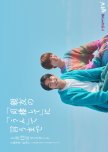
Here's another Japanese BL that totally flew under my radar but completely won me over. I have to admit, Japanese BLs have this emotional subtlety when it comes to storytelling. It's like they can see right through the characters' souls, and I absolutely love that.
It's about a friendship that starts with a shared passion for photography and slowly turns into something more. Minato is described as quiet and a bit scary, but Wataru is able to look past that exterior and see the sensitive soul Minato reveals through his photos. What I love most about this show is that the love was always there from the very beginning, even before they had the courage to admit it. It's all in the lingering glances, the little everyday acts of kindness, the sadness of the empty apartment when they graduate, and the pure emotion of their reunion. I also really love Minato's relationship with his grandparents.
Yoshizawa Kaname and Amemiya Kakeru brought exactly the kind of nuance their characters needed, and their performances are definitely the highlight of the show
Was this review helpful to you?


