
 News



This review may contain spoilers
A gentle reminder that not everyone is privileged enough to be comfortable in their identity
Yes, 10 stars is a high rating for what seems like an ordinary BL. And yes, I'm slightly obsessed with Masaya Sakuragi, so I can't even pretend to be unbiased, haha. Now that that disclaimer is out of the way, let me make my case for why I think it really is worth the 10 stars I gave it.Like with many JBLs, when you look deeply into the story, there's a lot to love. On the surface, this is the usual popular, outgoing boy falling for his shy schoolmate. But for me, this show was an honest exploration of why some people have a harder time owning their identity than others.
Harutora has an easy life. His parents love him, he's athletic and popular, and most importantly for the story: he passes as straight. In fact, we even have a moment where someone says something homophobic to him, assuming he's straight, and he quickly puts them in their place by letting him know that he's gay. In short, Harutora hasn't experienced any drawbacks to being gay, so naturally he wishes that Sui senpai could be more like him.
But Sui has none of the comforts Harutora has. He's visibly effeminate, and he comes from a home where being gay is not acceptable. He quickly becomes his schoolmates' punching bag, and so he learns to roll with it and make fun of himself first before anyone else can do it. Harutora is the first person who lets him know that there's nothing wrong with him, and the scene of him meeting Harutora's family is one of the most beautiful moments I've seen in a BL. (Shoutout to the special episode of The Servant Prince for another heartwarming moment where a gay couple is showered in total love & support.)
Harutora is patient and considerate, and he slowly opens Sui senpai's eyes to a world where it's okay to be gay. Where you're loved for just being yourself. Of course there's the stereotypical "homophobic parent who quickly comes around", but it's worth noting that none of this would even be happening without Sui finally believing that he's worthy of love. It takes a lot of courage to ask your parent to accept you, even if they don't quite understand you, and I really enjoyed watching Sui's journey to get to this place. A very well-deserved 10 stars, if you ask me (even discounting the power of Masaya's charisma, lol.)
Was this review helpful to you?
Hooked after one episode
I’m already LOVING this show after just the first episode! 😭 The main couple especially has completely caught my attention, and their chemistry and visuals are STUNNING. The production quality is also so good—it genuinely looks like so much effort has gone into every scene.
Love the concept
Tailai production never disappoint....
I haven’t really gotten into the second couple yet, but I’m definitely
tuning in every Thursday and Friday because I NEED to
see how their story develops. 👀
Was this review helpful to you?
I Don’t Even Know How to Explain It, Just Watch It
There’s something really heartwarming about Road to Splendor. The storyline, the plot, and especially the acting all impressed me more than I expected.I actually took a break from watching it because it was still ongoing at the time, and somehow ended up finishing it a month or so later. Maybe because I watched a lot of it in a marathon, there were moments when I felt a little bored or overwhelmed. There was just so much happening and so many things packed together that I sometimes needed a break from it.
But even with that, I still think the story and the acting are absolutely worth watching. There’s something about the way the characters and their journey are portrayed that makes the whole drama feel genuinely warm and memorable.
I honestly don’t know how to explain it better without getting into too much detail. Just watch it. That’s probably the best review I can give.
Was this review helpful to you?
This review may contain spoilers
Going Against the Current: A Love Story Beyond Romance
“When I became engaged to my wife, her name was Shen Jialan. When I married her, her name was Xu Lanxiang. The red thread has always bound me to the same person.” Those are Jin Qi’s last words to Lanxiang, and honestly, I think they explain their relationship better than any romantic confession could. He loved her intensely and almost completely. He went against his family, society and even his own interests for her. I would not necessarily call him the perfect lover, but I can confidently say he was the best husband for her. Yet throughout the drama, I kept asking myself: what exactly did Lanxiang feel for him?For a long time, I genuinely wondered whether she loved him at all. Jin Qi’s eyes were always full of love when he looked at her, while Lanxiang’s feelings were much harder to read. She was a good daughter, mother, wife and daughter-in-law. She cared about him and his family, protected them and stood beside them, but so much of what she did seemed to come from responsibility, principles and righteousness rather than romance. At one point, I thought perhaps they were simply life partners and companions who understood each other, rather than soulmates in the conventional romantic sense.
By the end, I changed my mind. Lanxiang did love him. But her love was never going to look like Jin Qi’s because romance was never the centre of her existence. Jin Qi could love one woman as if she were his entire world. Lanxiang could not live that way because life had already taught her that love was only one part of existence. Her family was destroyed, her engagement broken, she was forced into slavery, betrayed, humiliated and eventually forced into another marriage by imperial authority. Her mother’s last word to her was simply “live.” After surviving all that, how could romance possibly become the most important thing in her life?
She wanted freedom before she wanted romance. She wanted her parents to live peacefully. She wanted to protect the people she considered family. She wanted to write her own stories. She wanted to survive without becoming another person controlled by power. And perhaps most importantly, she refused to let revenge consume the rest of her life. She had every reason to hate the Lin family. She had a blood feud with them, yet she did not spend her life trying to destroy them. That alone makes her different from the countless revenge-driven protagonists we see in historical dramas. She suffered injustice without becoming obsessed with reproducing that injustice onto someone else.
That is also why I stopped blaming her for not loving Jin Qi in the same way he loved her. Love is not a transaction. Someone loving you ten times more intensely does not create a debt that you have to repay. They loved each other, became husband and wife, raised children and shared an entire life. For me, that is enough. Their relationship becomes more meaningful precisely because they are not the usual “two people who live only for each other” couple.
Their marriage also begins with a serious problem: Jin Qi forced it. He genuinely believed he was protecting her by giving her security through an imperial edict, but his good intention does not erase what he did. From Lanxiang’s perspective, he was still another powerful man making a life-changing decision on her behalf. That is why her emotional distance makes sense. It takes years before she can separate the man he becomes from the man who once took away her choice.
This becomes one of the most interesting contradictions between them. Jin Qi’s rebellion against the world is often about protecting Lanxiang, while Lanxiang’s rebellion is about refusing to be controlled by anyone, including Jin Qi. He thinks love gives him a reason to act. She thinks love should never become a reason to control another person. Their is different. Even when Jin Qi eventually understands this, he can never completely experience the world the way she does because he has never lived through the same loss of identity and freedom.
That is why the scene in which he finally discovers who Lanxiang really is works so well for me. He does not expose her or use her identity against her. Instead, he burns the evidence and essentially tells her that from now on she is simply Lanxiang, his wife, regardless of where she came from. There is no grand romantic speech necessary. They just look at each other. That quietness means more to me than a dramatic confession would have. It is almost as if, after everything, he finally understands that loving her means allowing her to exist as the person she chose to become.
And then there is the red thread. Jin Qi literally ties himself to Lanxiang and wishes that in another life he could still marry her. It is incredibly romantic, but what makes the scene painful is that Lanxiang’s life continues after his ends. He dies before fifty, while she lives on for many more years, losing almost everyone around her one by one. She does not die because her husband died. She continues living. She continues writing. She continues raising the next generation. Eventually she finishes the story of the Shen family and dies peacefully at old age. That ending is very Lanxiang. Jin Qi’s love may have been the great romance of his life, but Lanxiang’s life was much larger than her romance.
This is why “Against the Current” fits them so well. Jin Qi goes against the current loudly. He was expected to become a scholar but chose the sword, married the woman he loved despite the circumstances, resigned from an important position when he no longer believed in the court, and repeatedly put himself between his family and danger. He even trains his daughter in swordsmanship rather than deciding that being a girl should limit her.
Lanxiang goes against the current much more quietly. She does not want wealth or political power. She simply wants to live freely, and in her circumstances even that is a radical desire. She survives through intelligence, observation and patience. She writes under another name, finds ways around rules rather than simply smashing them, helps women escape terrible marriages and repeatedly chooses solutions that minimise bloodshed. Her rebellion is not always loud, but it is constant.
I especially loved the way her intelligence is connected to writing. Lanxiang cannot physically change the entire society around her, but she can write stories. The woman who once had to survive by hiding her identity eventually becomes someone who records the experiences of women living under that society. At first she writes about herself and the Shen family. Later her perspective expands. She begins recording the lives of women more broadly. That makes her writing almost an alternative form of resistance. History may be written by those in power, but Lanxiang preserves the experiences of people who otherwise might disappear from history.
The drama also understands that “freedom” does not mean the same thing to every woman. That is one of the strongest aspects of its female ensemble for me. Some women want financial independence, women who want love, women who want status, women who want to escape an abusive marriage, women who want children, women who want careers and women who simply want a peaceful family. Lanxiang does not represent every possible version of womanhood. She is simply one version. That is important because sometimes dramas become so obsessed with creating one “perfect independent woman” that every other woman is reduced to a lesson designed to make the heroine look better.
Du Cuique, Zhao Xingtang, Lü Jier, the Lin sisters and others all have their own desires and reasons for trying to escape their circumstances. Their choices are not always admirable, but that does not mean their desires are meaningless. Du Cuique’s ambition, for example, comes partly from wanting to escape the position assigned to her. Zhao Xingtang’s obsession with money is also understandable when you realise how little control she has over her marriage, family and reproductive life. Even when these women make terrible choices, their desperation is often recognisable.
That is why I found the drama most interesting when it allowed different women to pursue freedom in different ways. It becomes weaker whenever it seems to say, “This is the correct way for a woman to live.” Lanxiang’s philosophy is powerful precisely because she arrived at it through her own experiences. It does not need to become a universal instruction manual.
What I cannot deny how much the drama gave me outside the central romance. It genuinely feels like a whole-life story. We see a girl become a young woman, then a wife, mother and eventually grandmother. We see people enter her life, change her, leave her and eventually die. The drama does not treat time as something that exists only between major plot events. It makes time visible.
One of my favourite examples is the woman selling chrysanthemum greens. First she is a young girl selling vegetables. Years later she is selling the same greens with her newborn. Years later she is still selling them, now with a girl and a boy running beside her. Nothing dramatic has to happen in those moments. The vegetables remain the same while the people change. That is such a simple way of showing that life keeps moving even when the characters themselves are caught up in huge personal struggles.
That idea affected me more than I expected. Watching Lanxiang see women from her own generation slowly disappear into old age made me think about my own life. I am in my early twenties, my mother is in her fifties, and my grandmother is in her eighties. Watching this drama made me realise that the woman I see as “my mother” was once a young girl too. My grandmother was once young, active and carefree. One day I will also look back at this period of my life from somewhere much further away. I find that kind of reflection difficult, and this drama made me confront it.
That is why the later parts hit me much harder than I expected. The deaths are not only there to create tragedy. They create a sense of time passing. People who were once central characters become memories. Families change. Children become adults. People who were once enemies end up helping one another’s families. A woman who began as a carefree girl becomes a mother. A former servant becomes a respected wife. A divorced woman builds a different life. Someone who once betrayed another person eventually helps that person’s family. Life is messy like that.
The drama repeatedly shows that everyone is trapped by something. Lanxiang is trapped by her identity and history. Jin Qi is trapped by family responsibility and political power. Other women are trapped by marriage, money, social status or reproductive expectations. Even people who appear powerful are negotiating with someone above them. That makes the world feel more believable than a simple good-versus-evil story.
I also appreciated that Lanxiang often chooses strategic resistance rather than simply relying on Jin Qi’s authority. The divorce storyline is a good example. Instead of having the powerful male lead crush everyone for her, she looks for a legal route within the existing system. The rules may be unfair, but understanding them gives her another kind of power. That fits her character much better than simply becoming someone who solves every problem through status.That philosophy is one of the reasons I think the drama's social commentary is stronger when it is embedded in the story than when it is spoken directly.
The production is another major strength. The costumes, sets, cinematography and historical atmosphere are beautiful, and I particularly liked the visual sense of time passing. The drama often feels like someone actually thought about how to frame a historical household rather than simply putting actors into expensive costumes.
Liu Xueyi absolutely surprised me as Jin Qi. He could easily have become frustrating because of the forced marriage and the intensity of his love, but Liu Xueyi gives him enough restraint that his internal conflict is visible even when he barely moves. His eyes do an absurd amount of work. I could see his love, jealousy, guilt, worry and helplessness without needing a speech.
I had a more complicated reaction to Tan Songyun’s Lanxiang. I understood her intellectually before I always felt her emotionally. The character deliberately hides a lot of her feelings, which suits Lanxiang, but in a romance where one person loves so intensely, I sometimes wanted clearer evidence of what was happening inside her. Her eventual realisation that she loved Jin Qi therefore felt meaningful, but it was also something I often had to infer.
Ironically, that emotional imbalance may also be part of why I became so attached to Jin Qi. Because his feelings were so visible, I kept waiting for Lanxiang to meet him somewhere emotionally. She did, eventually, but on her own terms and at her own pace. I don't think that makes their love unequal. It makes their lives different.
The supporting relationships were another major reason I stayed invested. The friendships among the maids, the siblings, the parents, the children, and even former rivals often felt more alive than many dramas make their secondary romances. I particularly liked the way women helped other women survive, whether through small acts of kindness, sharing information, protecting each other or simply making life slightly less miserable. The little household interactions often gave the drama warmth when the larger political story became heavy.
What ultimately makes this drama special to me is that it is not really a love story disguised as a historical drama. It is a life story in which love is one part of a much larger existence. It is about family, friendship, responsibility, survival, social position, injustice, ambition, motherhood, ageing and the choices people make when every available choice is imperfect. It allows its characters to live with consequences instead of resetting their lives after every arc.
Lanxiang is especially memorable because she does not spend her entire life trying to win. Sometimes she simply wants to survive. Sometimes she wants to protect someone. Sometimes she wants to walk away. Sometimes she accepts poverty over power. She can be stubborn, complicated and even selfish, but I think that is part of why I believe in her. She does not owe the world a perfectly inspirational version of womanhood.
So yes, this is probably my drama of the year. Not because every part is flawless. The heroine can be too capable, the themes are sometimes overexplained, some supporting characters are underdeveloped, and the later story becomes more exaggerated than I would have liked. But the ambition of telling an entire life instead of just one romance is something I rarely get from historical dramas.
I started watching it wanting to understand why it was called Against the Current. By the end, I realised the answer was not simply that Jin Qi and Lanxiang rebelled against society. They were both trying to decide what kind of people they would become inside a world that had already decided what they were supposed to be. Jin Qi fought the current loudly. Lanxiang moved against it quietly. Neither escaped completely, but they found their own way to live.
And maybe that is enough. They loved each other, even if they did not love in the same way. They became husband and wife, raised children, lost people, endured hardship and eventually reached the end of their lives. Jin Qi wanted the red thread to continue into another lifetime. Lanxiang simply continued living in this one. For me, that difference is not a flaw in their love story. It is the reason I will remember them.
Was this review helpful to you?

Tangled Ties and Blurred Lines
Update after Episode 2 — DroppedWell, unfortunately, the chemistry arrived, but the story never did. After two episodes, Twisted Tie feels less like a drama with passionate encounters and more like a string of sexual encounters desperately searching for a plot. The chemistry is outstanding, and there was genuine potential in the characters and their complicated workplace dynamic. But instead of developing those elements, the series seems primarily interested in finding increasingly creative opportunities for physically intimate activity. I’m certainly not opposed to intimate scenes, but I want them to serve the characters, relationships, and larger narrative—not substitute for them. With only five episodes total, we’re already 40% through the series, and I still don’t know what story it’s trying to tell. That’s enough for me. Dropped after episode two.
Twisted Tie — First Impressions After Episode 1
Well, that escalated quickly! 😂
Twisted Tie wastes absolutely no time establishing the physical attraction between its two leads, and the chemistry is unquestionably one of its strongest assets. The acting is convincing, the kisses are passionate and natural, and the tension between Kang Do Jin and Lee Seon U is palpable. But after the first 20-minute episode, I’m still trying to figure out what kind of story we’re actually being invited into.
Kang Do Jin is a demanding, blunt, perfectionist team leader who apparently missed the management training session on delivering constructive feedback. His criticism of rookie employee Seon U’s architectural design isn’t necessarily wrong. His point about sacrificing functionality for aesthetics is valid, as is his argument that clients don’t lower their expectations simply because an employee is inexperienced. But there’s a difference between maintaining high professional standards and unnecessarily humiliating someone while enforcing them.
Seon U, however, is interesting in his response. Rather than resenting Kang’s criticism, he acknowledges its validity and genuinely admires him. He’s polite, deferential, and determined to improve. That dynamic becomes particularly interesting once the episode begins layering obvious attraction underneath their professional relationship.
And importantly, that attraction does not begin only when Seon U makes the first move at Kang’s apartment. Even before they leave the office, Kang is already invading Seon U’s space in a way that feels far more intimate than necessary, leaning in close instead of simply keeping things professional. Add to that the fact that Kang insists Seon U spend the night at his home because of the storm, and it becomes clear that while Seon U may initiate the first kiss, Kang has already been quietly provoking the tension between them.
Away from the office, Kang reveals a considerably more relaxed, playful, and provocative personality. He even acknowledges the contrast himself, telling Seon U that if he behaved like Team Leader Kang in his private life as well as at work, it would be suffocating. He clearly recognizes the distinction between his professional and personal identities. And when Seon U continues behaving like the polite, deferential rookie, Kang encourages him to relax and leave that workplace persona behind.
What caught my attention wasn’t simply this contrast between Kang’s two personas. It was his apparent fascination with breaking through Seon U’s carefully maintained professional composure. That becomes especially interesting the following day, when Kang’s criticism grows even harsher, eventually provoking Seon U into an angry confrontation.
And Kang seems absolutely delighted.
There are several possible motivations for this behavior. Is Kang overcompensating professionally after their intimate encounter because he doesn’t want anyone noticing a change in their relationship? Or does he genuinely enjoy provoking Seon U, pushing him until that polished, deferential exterior finally cracks? My initial impression leans toward the latter. Kang seems to get a particular satisfaction from bringing out the less restrained, more confrontational side of Seon U.
It’s an intriguing character dynamic, particularly because Kang himself clearly distinguishes between his professional and private personas. Perhaps he’s trying to discover who Seon U is when he stops being the respectful young employee and allows himself to respond more spontaneously.
But here’s where I’m still undecided about the drama itself.
We have two attractive leads, strong performances, outstanding physical chemistry, a complicated workplace power dynamic, and a supervisor who seems to enjoy provoking his subordinate. All of that establishes a potentially interesting relationship. What it hasn’t yet established, at least for me, is a compelling overarching narrative.
What is the central conflict? What is at stake beyond the obvious complications of a supervisor and subordinate becoming physically involved? What will make me emotionally invested in these characters rather than simply entertained by their attraction?
I don’t know yet. And that’s not necessarily a criticism. It’s only the first episode, after all.
There is plenty of potential here. The acting is strong, the chemistry is excellent, and the characters have enough complexity to make me curious about their motivations. Whether that develops into a genuinely engaging story or remains primarily a vehicle for provocative encounters is something we’ll have to discover.
With only five episodes, though, I hope the writers give us something substantial to invest in beyond the undeniable heat between these two men.
For now, I’m interested enough to continue watching, but I’m withholding judgment on the story. The chemistry has arrived. I’m waiting to see what the writers do with it.
Was this review helpful to you?
This review may contain spoilers
How do we measure the meaning of life?
That's really the question at the heart of this drama. Is your integrity worth your life? Or is survival the only goal, regardless of whether you had to abandon your values just to stay alive?After 47 episodes, you realize that the Lins weren't villains, and the Shens weren't saints. Both were honorable people placed in a situation where no one could win. Grandfather Lin chose to keep his descendants safe; Grandfather Shen chose to die for what he believed in. It's easy to criticize from the outside, and there are valid criticisms of both sides. But the irrefutable truth is that the only villain is power, which is never supposed to be ultimate, and never supposed to rest in one man's hands.
The drama asks us to reckon with this question, and it comes full circle with Han Liang's death: Jinqi's foil.
Han Liang is a perfect mirror of the Shen family: willing to die for what he believes in, putting integrity above all. And if I may revive a tired debate for a moment, this makes me so glad that Lanxiang didn't end up with him. She wanted to live. She didn't care about defiance (at least not openly). Being thrust into sudden widowhood would have been a traumatic re-injury, and I'm grateful our protagonist was spared that fate.
Instead, she got a husband who understood her. He came to see that life is more complex than the battlefield; that submission is not weakness but often survival. That life is worth living for its own sake. And perhaps no one else could have given her this; after all, we see even his closest friend, the Marquis, doesn't understand why Jinqi would sacrifice his career to come back home and live a quiet life. Jinqi, despite his flaws, became the only person, other than her parents, who she fully trusted that she was safe with.
At the end, I have nothing but praise for every single person in the cast & crew. This is a story that sits with you, that challenges your assumptions and reminds you that there's two sides to every story ... and often even more than just two! A lot of us came into this just expecting the typical idol drama romance, and we ended up witnessing what will undoubtedly go down as one of the most memorable dramas of this era.
Was this review helpful to you?

This review may contain spoilers
Original C-Drama vs Thai & Korean Remakes: The Good, The Fresh, and The Flavorless
[Italian Version Below / Versione Italiana in Basso]ENG
Having watched all three versions of this story, one thing is abundantly clear: not all remakes are created equal. What started as a classic C-drama tropes-fest has been adapted with wildly varying degrees of success across Asia. Here is the definitive breakdown and ranking of all three adaptations.
~ 1. CHINA (2017): The Undisputed Classic ~
The original C-drama remains the superior version by far, purely because it embraces its own hilarious absurdity and unexpected "spicy" humor. Xiao Xi’s unabashed devotion leads to comedy gold. What makes it work so well is her killer combination: an innocent angel face hiding a sly, cheeky smile that takes everyone by surprise.
Her complete lack of shame during the early stalking phase sets the tone perfectly — like when Jiang Chen, exasperated, asks if she has any self-respect left, and she candidly drops: "I gave it all to you!" Once they actually reach the adult phase, that sly attitude turns into surprisingly bold romantic tension. Between absurdly funny domestic banter on the couch and subtle "spicy" undertones, this show has real personality, brilliant timing, and genuine heat under the innocent surface.
~ 2. THAILAND (2024): A Fresh Group Dynamic ~
The Thai remake smartens up by not trying to clone the original frame-by-frame. Instead, it shifts focus onto the friend group, making the overall vibe much fresher and more balanced. The male lead is slightly less standoffish, and the secondary characters feel like real friends rather than mere plot devices to push the main couple. A fun, lighthearted watch.
~ 3. KOREA (2020): Odorless, Colorless, Flavorless ~
A complete sterilization of the story. Compressed into short 20-minute episodes, the K-drama removes all friction, character quirks, cheekiness, and emotional stakes. Cha Heon is sanitized into a generic idol-boy, losing the sharp contrast that made the original dynamic funny. It feels like an overly polished, airbrushed commercial — a completely flavorless remake that adds nothing to the franchise.
~ Final Ranking ~
China (8.5/10) > Thailand (7.5/10) > Korea (4.5/10)
Recommended for: Fans of original C-dramas who appreciate cheeky humor, viewers interested in seeing how different countries adapt the same story, and anyone looking for a truly comprehensive comparison.
---
ITA
"A Love So Beautiful" alla Prova dei Tre Remake: L'Originale, il Fresco e l'Incolore
Dopo aver visto tutte e tre le versioni di questa storia, una cosa è chiarissima: non tutti i remake riescono col buco. Quello che nasce come un classico C-drama di formazione è stato adattato con risultati diametralmente opposti. Ecco la disamina e la classifica definitiva delle tre versioni.
~ 1. CINA (2017): Il Capostipite Imbattibile ~
L'originale cinese rimane di gran lunga la versione migliore, semplicemente perché abbraccia la propria comicità assurda e quei picchi "spicy" e sfrontati del tutto inaspettati. Il vero punto di forza della protagonista è la sua combo micidiale: una faccia d'angelo innocente unita a un sorrisetto sornione e malizioso che spiazza chiunque.
La sua devozione spudorata nella prima fase di "stalkeraggio" definisce subito il tono della serie — come quando Jiang Chen, esasperato, le chiede se le sia rimasto un briciolo di amor proprio e lei risponde candidamente: "L'ho dato tutto a te!". Ma è nella vita adulta che quel suo piglio sornione trasforma la dinamica di coppia in una tensione romantica sorprendentemente audace. Tra battibecchi surreali sul divano e sfumature inaspettatamente "spicy", l'originale dimostra di avere personalità vera, tempi comici perfetti e una chimica pungente sotto la facciata innocente.
~ 2. THAILANDIA (2024): Freschezza e Gruppo ~
Il remake thailandese fa la mossa intelligente: invece di scimmiottare l'originale, sposta il focus sulle dinamiche del gruppo di amici. Il risultato è più fresco, corale e bilanciato. Il protagonista maschile è meno estremo nella sua freddezza e i personaggi secondari hanno finalmente respiro. Una visione piacevole e disimpegnata.
~ 3. COREA (2020): Inodore, Incolore e Insapore ~
Un disastro di sterilizzazione. Ridotto a pillole da 20 minuti, il remake coreano pialla via ogni attrito, sfacciataggine, personalità o morso drammatico. Il protagonista viene trasformato nel solito idol leccato e perfetto, perdendo tutta la ruvidezza che rendeva divertente il contrasto originale. Il risultato è uno spot pubblicitario patinato: "inodore, incolore e insapore" che non lascia nulla.
~ Classifica Finale ~
Cina (8.5/10) > Thailandia (7.5/10) > Corea (4.5/10)
Consigliato a: Gli amanti dei C-drama originali dall'umorismo sfrontato, chi ama confrontare i diversi adattamenti asiatici di una stessa storia e chi cerca una guida chiara su quale versione valga la pena guardare.
Was this review helpful to you?
This review may contain spoilers
More About Growing Up Than Romance
I went into Genius Girlfriend expecting a cute youth romance, but it ended up being much more of a coming-of-age slice-of-life drama about friendship, family, growing up and finding your place in the world. And honestly, I think that was both its biggest strength and its biggest weakness.The biggest highlight for me was Lin Zhi Xia. I really liked that being a genius wasn't treated as her entire personality. She's brilliant, but she's also inexperienced, socially awkward in certain situations, easily overwhelmed and not always sure how to understand or express emotions. Watching her gradually learn how to navigate people and relationships was genuinely interesting.
Jiang Yu Bai was an important part of that journey. I initially expected an academic rivals-to-lovers storyline when he started paying attention to Zhi Xia's abilities, but their relationship turned out to be much sweeter. He genuinely wanted to be her friend and compete with her fairly rather than simply trying to defeat her.
I actually liked his competitiveness, especially his decision not to team up with Zhi Xia for the math competition. To me, it wasn't really about beating her. Sometimes constantly being compared to someone who's better than you can affect your confidence, and I saw his decision as wanting to prove that he could stand beside her rather than behind her.
Their friendship was one of the strongest parts of the drama. Unfortunately, I can't say the same about the romance.
And this hurts me because I LOVE slow-burn romance. Give me lingering looks, tiny gestures, emotional intimacy and all the crumbs that make viewers scream into their pillows. I don't need endless kissing scenes to believe two people are in love.
The problem here is that I didn't really feel the slow burn.
The friendship between Zhi Xia and Yu Bai felt completely believable, but the transition from friendship to romance wasn't developed strongly enough for me. Their high school relationship was understandably innocent, but even then, I wanted more subtle romantic tension. By the time they finally became a couple, I was almost like, "Oh... so I guess we're dating now?"
Ironically, their romantic interactions after getting together were much cuter. I especially liked how straightforward Zhi Xia could be while Yu Bai was the one trying to restrain himself and be considerate. I just wish we'd gotten more of that dynamic.
Then there's Shen Fu Xuan, who made the romance even more complicated for me. He's intelligent, quiet, lonely and, in many ways, more similar to Zhi Xia than Yu Bai is. His feelings for her also come from appreciating her intelligence, so naturally I started thinking:
What if they had met first? What if Fu Xuan had been given the same amount of time to understand her? What if circumstances had been different?
Once I'm creating alternate timelines in my head for the second male lead, the main romance has already lost some ground. And Lai Wei Ming being so charming as Fu Xuan definitely didn't help.
But honestly, the relationship I cared about the most wasn't even Zhi Xia's romance.
It was her relationship with her older brother, Lin Ze Qiu.
I absolutely loved these two. Their relationship had that perfect sibling combination of affection, teasing and awkwardness. Ze Qiu is incredibly protective of Zhi Xia, but never in a way that felt unnatural. One of my favorite details was that he initially didn't want people at school to know she was his sister—not because he was embarrassed by her, but because he was worried people would compare them and she might feel embarrassed that her brother wasn't as academically gifted as she was.
That tiny detail told me so much about how deeply he cared about her.
Wu Jia Kai also deserves credit here. He brought a surprisingly mature presence to Ze Qiu through his expressions, delivery and body language, especially during the school arc.
I also enjoyed Jin Bai Hui, although her character development felt inconsistent. She starts off guarded and competitive toward Zhi Xia, and I genuinely wondered whether she might become an antagonist. Then suddenly she's friends with Zhi Xia and part of her band, and I was like... Did I skip an episode?
I needed a better transition between those two stages. Her songwriting and singing hobby also felt underused, which was a missed opportunity.
Her relationship with Ze Qiu, however, ended up being one of the romantic arcs I enjoyed more than expected.
The same goes for Tang Ting Ting and Duan Qi Yan. These two somehow had more romantic chemistry during high school than the actual leads. Their little looks, teasing and reactions to each other gave me exactly the kind of innocent romantic buildup I wanted from Zhi Xia and Yu Bai. Their confession genuinely made me giggle.
The drama itself takes a fairly episodic approach, with different conflicts involving Zhi Xia, her friends and their families. I liked the variety, but the execution wasn't always consistent, and some transitions felt rushed or underdeveloped.
My biggest issue was definitely the pacing.
The high school portion is simply too long. By the time the main romance finally starts moving properly, there are only a handful of episodes left. And then the adult portion suddenly feels rushed, with several relationships and storylines being wrapped up much faster than they should have been.
I honestly would've happily watched another 4–6 episodes just to give those relationships room to breathe.
Visually, I was also disappointed. Everything looked almost too clean and artificial, especially the heavily blurred backgrounds, pristine sets and certain lighting choices. Some scenes had such an overly polished quality that they didn't feel very lived-in. I also felt the reliance on AI-looking visuals and green-screen-style backgrounds was excessive and distracting.
The one visual element I consistently liked was Zhi Xia's drawings and sketches. They felt personal and gave the drama a little more character.
The OSTs were pleasant too, but nothing really stayed with me after the drama ended.
Overall, Genius Girlfriend was a very easy and comforting watch, but it didn't leave the impression I hoped it would.
I liked Lin Zhi Xia's character growth, Yu Bai's friendship and competitiveness, Fu Xuan's interesting "what if" factor, and several of the supporting relationships. But above everything else, the Lin siblings were my favorite part of the drama.
The biggest irony is that the drama is called Genius Girlfriend, yet I ended up caring more about friendships and family relationships than the actual romance.
So, if you're looking for a wholesome youth drama with academic themes, friendship, family dynamics and relatively innocent romance, you might enjoy this.
If you're primarily watching for a strong slow-burn romance, though, I'd definitely manage my expectations.
For me, it wasn't a bad drama. It was just a little too safe, too polished and too rushed where it mattered most.
Still, Tian Xi Wei was adorable, the friend group brought a lot of warmth, and there were enough little moments that made me smile.
Was this review helpful to you?
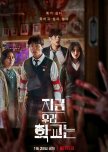
From My Favorite Childhood Webtoon to a Tear-Jerking Live Action
Seeing All of Us Are Dead transition from a Webtoon I loved as a kid into a full-scale Netflix production literally made me cry.Sure, some characters made some frustratingly stupid decisions at times, but honestly, they are just panicked teenagers in a zombie apocalypse. Flaws aside, for me, it was incredibly fulfilling to see this story brought back to life on screen. The nostalgia hit hard, the visual production was intense, and despite the frustrating moments, I absolutely loved experiencing this world again. 🎬🖤
Was this review helpful to you?
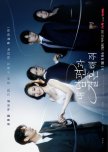
More Than a Revenge Plot: From a Phuket Art Project to a Beautiful Lesson on the Value of Time
It all started after I worked on the LED artwork project for PARK MIN YOUNG in Phuket. I was so captivated that I had to go back and watch Marry My Husband.Honestly, I went in just for the revenge plot, but this series ended up hitting me on a much deeper level. It made me pause and reflect on my own past, making me realize just how important the 'value of time' is, and how choosing the right life partner can truly change your world.
Even if in real life, crossing paths with certain people doesn't end well and becomes a massive, painful life lesson, it’s exactly that process that helps us grow and choose what's best for ourselves—just like Kang Ji Won. Great writing, engaging plot, and it really makes you love yourself more. Highly recommend! 🎬✨
Was this review helpful to you?
Decent Live Adaption of a 2 Volume BL Manga.
I've been with this series from the start from owning the manga, drama cds to even getting merch for it. It's actually not a story that's looking to hit you with anything new but to actually send a message that being gay doesn't make the person any different or inhuman especially in a society like Japan where it's still heavily shunned in this day and age. There's a few differences with things taken out and added from the manga to the live adaption that I wish I could list it all out but that would defeat the purpose that I wanted to get across. If anything it's a decent watch but nothing extravagant that took away from the story and characters.Just remember that this is a Japanese adaption so while the intimacy was pretty much bland compared to it's manga counter part, the actors actually did a decent job with the roles and environment that they were given. Some of the settings from the manga would be hard to almost replicate via camera filming angle and financial reasons. Otherwise, most of the main points are shown in the live drama; being gay, outed, treated like an object to be gawked at while pretending to be okay and continuing on as nothing happened while encountering someone for the first time in your life among your peers who is sincerely into you, treats you as a normal person and cherishes you with all of their being. I don't wanna influence a non-manga reader so I'll leave it at that. It's definitely worth checking out.
Was this review helpful to you?
This review may contain spoilers
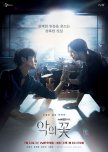
A Hidden Gem
As an avid cdrama and kdrama watcher for almost 7 years now, I cannot believe that I have not discovered and watched this drama until now, and its safe to say that it did not disappoint, becoming one of my favorite kdramas I have ever watched.Honestly, I first want to applaud the acting. The acting was incredible! Lee Joon Gi and Moon Jae Won acted their roles beautifully. The emotion, the tension, the love communicated through their eyes and body language was beautiful to watch. Especially the really emotional scenes, whenever LJG cried, oh my my heart broke. The way he cried was gut-wrenching and truly conveyed the emotions of the characters.
Second, the plot. Like many others who enjoyed this show, I am not someone who likes crime or thriller dramas, but this one had me hooked. There were plot twists, suspense, and thrill communicated in an amazing way that kept you wanting more, watching every episode until you realise there are none left. I don't want to reveal too much about the plot because, honestly, it was great and shouldn't be spoiled, but my only complaint about this drama is the ending. The whole cliche amnesia ending in the last episode was so unnecessary. We didn't even get 1 episode just for the leads to be happily in love! Give Do Hyun Su a break, this boy has genuinely been through enough, the last episode was so heart-breaking, but other than that, I have no other complaints.
I also want to mention the chemistry. OH MY the chemistry between LJG and MJW was exceptional. They were so cute as a couple with their daughter, and I was rooting for this couple from the get go. The way they loved and persevered each other was beautiful to watch.
Overall, I cannot believe that this drama was hidden from me for 6 years. It was an amazing watch, definitely give it a try!
Was this review helpful to you?
Against the Current
5 people found this review helpful
 1
This review may contain spoilers
When in Doubt, Ask Lanxiang
In a nutshell, this drama lays bare a brutal reality: when men in power mess up, they drag their entire clan down to the grave with them, but when a woman slips, she is instantly discarded. Only remarkably sharp women like Lanxiang could foresee these tragedies and navigate the treacherous loopholes to survive. Yet, hanging over everyone is the inescapable equalizer: the mighty imperial decree.There was plenty to love about the show. First, the women in this drama knew what they wanted and their characters remained consistent until their demise, including female antagonists like Xingtang and Du Cuique who had real depth and masterclass acting. The world-building was meticulous, with the writer acing foreshadowing and irony. I especially loved the foreshadowing in Episode 1 where Shen Jialan asks her father, "What is a slave?" only to later live as one for six years. The thematic irony of the imperial decree was also brilliant: the same decree that chased her from her house and wiped out her family ended up trapping her in a marriage and accidentally bringing her former home back to her, lol. I also appreciated how the writer incorporated modern satire, like Jinqi being so ahead of his time that he ended up fainting in the delivery room during the birth of their firstborn, and later vowing never to take a concubine because he would rather stand by his wife than a child he hasn't even met. Word! On top of that, the Lin siblings were a breath of fresh air: tight-knit, non-toxic, and always standing up for each other, whether Xiuru covered for Xiuwan's secret rendezvous or Jinqi and Xiuwan helped Xialan get a divorce with Lanxiang's help obviously.
Of course, I had mixed feelings about a few things. The pacing was extremely slow, especially regarding Lin Jinqi and Lanxiang's love story, and I wasn't a fan of the forced marriage trope, though after Jinqi's grandpa whooped him real good, all was well on my end. It also became a bit predictable that every single trouble that came their way could be instantly solved if Lanxiang was consulted, lol.
On the downside, the time-skips in Episode 39 were too much and really hurt the romance arc. I was looking forward to seeing their honeymoon phase after visiting her family grave, but we only got to see Jinqi fall hopelessly in love with her without ever getting Lanxiang's perspective in that phase.
In the end, though, they all led decent lives and stuck with the core theme: To live well. Life gave these women lemons, but they managed to turn them into a full-course dessert.
I would recommend this to lovers of women-centric dramas; it wasn’t perfect, but I had fun watching this.
Was this review helpful to you?
This review may contain spoilers
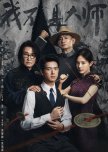
Twist After Twist, and Somehow It All Makes Sense
Okay, this drama REALLY surprised me.I started A Prophet mostly because the genre sounded interesting, but I ended up getting way more invested than I expected. This is the kind of drama where you think you understand what's happening and then five minutes later you're questioning everything again.
The plot is definitely the biggest strength for me. There are so many secrets, clues, mysteries and unexpected turns, but what I liked most is that the twists actually connect to the bigger story. They don't feel like random “gotcha” moments thrown in just to shock the audience. Looking back, you can actually notice how the drama was planting little pieces of information along the way.
I definitely had moments where I had to pause and think, wait... what just happened? There were even times I wanted to go back and check earlier scenes because I felt like I had probably missed something important. So yeah, this is NOT a drama I'd recommend watching while doing ten other things at the same time.
The pacing worked really well for me too. 24 episodes felt just right. The story moves along quickly, but it doesn't feel like we're being rushed through everything. There's always another question waiting to be answered, which made it very easy to keep pressing “next episode.”
I also really enjoyed the characters because nobody felt completely predictable. Everyone seemed to have their own motives, secrets and personal reasons for doing things. Even the side characters felt like they had lives outside of whatever was happening with the main characters, which made the whole world feel much more alive.
And Li Yitong!!! 👏
I really loved her performance here. She brought so many different emotions to the character, and I especially enjoyed seeing her in a role that feels different from the lighter characters I've seen her play before. She absolutely owned this one for me.
Li Xian was great as well, and I really liked their dynamic. There's so much history and complicated emotion between their characters that even when romance isn't the focus, their interactions still have this underlying tension that makes you want to keep watching.
Honestly, the relationship between them was more interesting to me than an actual romance-heavy storyline would have been.
Another thing I wasn't expecting was how FUNNY this drama could be. One minute I'm sitting there trying to solve a mystery and the next I'm laughing at something completely ridiculous. It gave the heavier storyline some breathing room without taking away from the suspense.
The overall atmosphere was also really good, and the visuals fit the story beautifully. And I have to mention the OST because that opening?? Immediately added to my playlist.
My only real complaint is that I sometimes wanted a little more from the emotional/romantic side of things. But at the same time, I think keeping the main focus on the mystery was probably the right decision.
And THANK YOU for giving me an ending that actually feels properly handled. I always get nervous when I'm approaching the final episodes of a C-drama, so I really appreciated how the story wrapped things up.
Overall, this was such a refreshing watch. I honestly didn't expect to get this invested, and now I'm tempted to rewatch it just to see how many clues I completely missed the first time.
9.5/10 from me.
If you like mystery + suspense + investigations + unpredictable characters + plot twists that actually make sense, definitely give this one a try.
Such a good surprise. 🥹❤️
Was this review helpful to you?
a good supernatural bl
gmmtv please learn and take some notes , yeah you took revamp and added bad comedy and ruined the show that i have been looking forward to,look at Nour this is how supernatural/vampirish bl should be done, serious , interesting ,a stable plot, and good amount of angst. i hope to see more of this director we needed this variety ,we need refreshing bls to watch
lowky the second couple stole my heart, wished to see them like maybe an another season
Was this review helpful to you?


