


This review may contain spoilers
A critical look at "Kpop Demon Hunters"
Narratively fractured and creatively barren, "Kpop Demon Hunters" reassembles genre conventions into a spectacle of commodified affect, where the promise of cosmic struggle is subsumed by performative decadence. Consider the hunters who, paralyzed by lust, pervert the moral architecture of their sacred duty and salivate over the demons they're sworn to vanquishThe movie incriminates itself through the imposition of non-platonic paradigms on male-female idol dynamics and the transfiguration of malevolent entities into archetypes of desire or victims of circumstance. Among the demons, Jinu being a salient example, many owe their damnation to a consistent disregard for the welfare of others. They have forsaken their familial bonds in pursuit of self-preservation and manipulated the truth to cultivate a favorable self-image
Rumi: "I know your story. You were a good person, and you still are"
Jinu: "I lied to you. I made a deal with Gwi-Ma to get myself out of that miserable life. I left my family alone while I slept on silk sheets in the palace with my belly full every night. I left them" (1:9:50)
Having condemned his family to destitution and starvation so that he might live in safety, Jinu endures punishment in the afterlife. Why would we mourn his suffering? No amount of retrospective remorse can rewrite history or nullify the ethical transgressions he committed
To forgive, or not to forgive? This is not a question posed to courts or the public, but a war waged behind closed doors and in the chambers of the wounded heart. Should Jinu's family, the aggrieved parties, extend forgiveness, it'd be an act of courage and a near-divine suspension of justified anger. Should they withhold forgiveness, it'd be a dignified reclamation of agency, a solemn tribute to what was lost, and a refusal to be coerced into premature reconciliation by societal or doctrinal demands. However, they could very well have departed to heaven. We're left with no clarity on where they stand in the matter
The story still performs a psychological sleight of hand: it acknowledges the demons' past atrocities only to repress their significance. The audience is conditioned to internalize a distorted moral hierarchy that valorizes temporary catharsis over justice, and conditional empathy over accountability. "They didn't deserve it," they'd insist. The truth is, the demons in question aren't misunderstood or fallen angels whose small errors brought about their condemnation
Rumi: "if this is the Honmoon I'm supposed to protect, I'm glad to see it destroyed" (1:14:42)
Rumi, who seconds ago endorsed the destruction of Honmoon, appears at the Saja Boys' concert with a newfound determination to protect it. Her abrupt shift in sentiment and subsequent behavior remain unexamined, to the detriment of character believability and emotional payoff
"Kpop Demon Hunters" suffers from a systemic breakdown across all creative domains. The characters, the dialogues, the songs. They dissipate into mediocrity
A critical divergence in reception has emerged regarding the songs, with fans asserting their qualitative superiority over the works of established Kpop groups. This position is one I don't share. Established Kpop groups, BTS, Stray Kids, ATEEZ, MAMAMOO, ITZY, FIFTY FIFTY, etc, have released songs characterized by melodic sophistication and lyrical depth. They're amenable to repeated, ritualistic listening. On the contrary, the songs from "Kpop Demon Hunters" are intolerable and unbearable to listen to beyond a single auditory exposure
Measured against the refined standards set by established Kpop groups, I believe the widespread popularity of "Kpop Demon Hunters" is disproportionate to its merits
TL;DR On a scale of 1 to 10, I'd rate the movie a 2
Was this review helpful to you?
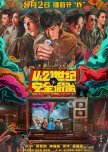
Absurdism Meets Existentialism: Loved It
I really enjoyed this movie. The style is unconventional—similar to a Wes Anderson film or Eternal Sunshine of the Spotless Mind—with a narrative that is sometimes non-linear and dream-like, blurring the boundaries between reality and imagination and occasionally leaning into absurdism. The visual effects create a surreal tone, and the intentional color palette enhances the kind of consciousness the camerawork evokes. It was a fun watch and, somehow, surprisingly impactful as an existential mouthpiece.Was this review helpful to you?

Kidnapping Issues
This is the kind of claustrophobic thriller that has only a few characters, all confined to a small space for the entire duration of the movie. You know, like Phone Booth, 10 Cloverfield Lane, Devil, ...This movie features just three characters, and 99% of it takes place inside a locked apartment. Adding more characters and different settings could have made the film feel more complete, but keeping it limited actually helps maintain the dramatic atmosphere and keeps the focus on the main plot. I really appreciate that the movie only included what was necessary for the story and didn’t waste time on unnecessary extras. It also keeps the budget under control.
Overall, for what it is, this was a great watch. The plot was quite interesting, and the tension kept building throughout the entire movie. It contains quite a bit of violence, especially toward women, so it might be disturbing for some viewers. If you like thrillers and get the chance, I definitely recommend checking this movie out.
Was this review helpful to you?

This review may contain spoilers
Brightening up a life
I just finished watching Lighting Up the Stars, and it was such a lovely father-daughter dynamic. One of the most touching details for me was when Xiaowen got lost and actually remembered the address San Mei made her memorize before she left. That scene really hit me emotionally.When San Mei secretly gave the little girl back to her mother without telling his friends, they all got furious with him. With that big argument—and then on top of that, the sudden news of his father passing away—I honestly thought everything was going to turn into a mess and go downhill again. But it was a really beautiful finale; I’m so glad she didn't have to separate from her mother either. It wasn't overly dramatic or sappy, but since I’ve been watching too many political and comedy shows lately, this sweet emotional touch was exactly what I needed.
Was this review helpful to you?
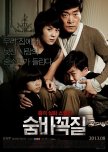
Listen to me.. don't read anything, just watch!
"Hide and Seek" is one of those Korean movies you absolutely need to watch if you are a fan of thillers. It’s incredibly engaging and full of action, featuring many notable names in Korean cinema.I enjoyed the movie so much that I wished I had seen it earlier! It’s definitely a film that keeps you on the edge of your seat. My best advice is to avoid watching any trailers or reading plot summaries before diving in. Just go straight into the movie; it’s an experience you want to feel fully raw without any informations, trust me it will elevate the experience.
Was this review helpful to you?

Love alone is not enough
When it comes to romance films, people would usually expect something sweet and fluffy, idealized love stories filled with charm and beauty. However, "The Loved One" flips that idea on its head by presenting a more grounded and honest portrayal of relationships. This film strips away the typical romantic glamor to reveal a core truth: love alone does not guarantee a successful relationship.At its heart, the story of Eric and Ellie is a familiar one, but its power lies in the way it is told. The story unfolds in a non-linear way, shifting between past memories and present realities. This approach allows viewers to see the complexity, depth and growth of their relationship over time, rather than a straightforward romantic arc. I’ve watched quite a few films by Irene Villamor, and generally, her movies really embrace the complexities and imperfections that define human relationships. This film carries on this theme, as Villamor captures the intimate moments that reveal both vulnerability and strength within the couples, portraying love as something that is both beautiful and challenging.
In my opinion, the film’s visual storytelling is particularly superb. Through subtle, quiet performances by Jericho Rosales and Anne Curtis, emotions are conveyed with remarkable depth without relying heavily on dialogue. Many scenes depend solely on visuals to portray the characters' inner struggles and emotions, creating an immersive and genuine experience.
Overall, "The Loved One" stands out not only because it is beautifully written, thoughtfully acted, and visually compelling, but also because it confronts the realities of love and relationships with honesty and sensitivity. It’s not your typical Valentine’s Day flick that makes you all warm and fuzzy inside. It's the film that offers a poignant and relatable experience that resonates long after the film ends.
Was this review helpful to you?
This review may contain spoilers
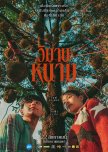
Conflict piles up endlessly, yet the film resolves itself with a halfway-point solution too late.
The actors we're great. The pace was too slow, I just want to speed it up for it end. I don't like the main protagonist's character very much, I don't know if it is a good thing because the actor really showed me the character's flaws, or the character is just badly written, because I thought a lot of things that the character could have done and things he doesn't need to do. Why would he want to marry someone he only met for a few months, isn't he still grieving? I didn't feel Jingna's character (again, badly written) so I don't know where is Thongkham coming from that he wants to leave and live with him. I also don't think the attempted sexual abuse is necessary, you're just trying to kill her, then you want to have a sexual intercourse with her? In what psychological aspect would that be accepted? The ending was over the top, like literally too much problems with little resolution.Was this review helpful to you?
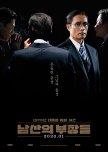
"You have my full support. Do as you please."
The Man Standing Next told the story of the KCIA director who assassinated RoK President Park in 1979. Forty days of intrigue, murder, and betrayals led to the fateful event. This particular snapshot in time is always hard for me because there were no good guys, just men willing to do what was necessary to maintain or gain power.President Park is furious that the ex-director of the Korean Central Intelligence Agency, Park Yong Gak, has been called before the American Congress to testify regarding bribes and gifts given to lawmakers to win their support for his government. To make matters worse, PYG has written a memoir titled Traitor of the Revolution. Current KCIA director Kim Kyu Pyung is tasked with convincing his old friend to turn the manuscript over. PYG tells Kim to watch himself as the president has been siphoning money off into Swiss bank accounts and unknown to the KCIA developed his own secret spy agency. The president’s bodyguard, Kwak Sang Cheon, has been currying favor with the president angling to become his successor. Between PYG airing Park’s dirty laundry and riots breaking out in Busan, Kim finds himself in a precarious position.
The film attempted to show Kim in a sympathetic manner. This angle didn’t work for me. For 18 years Kim had unwaveringly supported the dictator and done his dirty work. The KCIA was hardly a Boy Scout troop and known for torturing people. He seemed to have no qualms about ordering a hit on a friend. Suddenly he’s willing to sacrifice all for democracy? What was his rationale? Did he want to be president? If his plan had been a coup, he did a terrible job of securing support and planning. Was it to save his own life? Or did Kwak telling the president that murdering 2-3 million people was justifiable in order to maintain power the final straw? How did he come to make his decision and how did he convince his few agents to go along with him? Kim Kyu Pyung’s motivation and loyalty bounced all over the place. Park Yong Gak admitted to being a bad guy so I was not vested in his outcome. President Park was a heartless dictator and Kwak was utterly ruthless. Kim’s actions allowed another villain to take over who was waiting in the wings for his shot (the man standing next). A usurper who was much better at consolidating support. Power loves a vacuum and it’s usually the most vicious who rise to the top.
Lee Byung Hun and Lee Sung Min gave strong performances. Lee’s Kim Kyu Pyung required a great deal of nuance as the KCIA director dealt with humiliations, betrayals, and loss. Kim slowly unraveled before our eyes. The rest of the large cast gave adequate performances, some better than others. Kwak was an integral character yet very thinly drawn to the point of being a caricature. Aside from the issues I had with Kim, the film spent too much time on Park Yong Gak. His story could have been expedited. Kim Young Sam’s expulsion was the stimulus for political unrest and violent riots and the characters mentioned him often but the film never gave him so much as a cameo. It also felt like they looked at the cast and realized they didn’t have even one female in the story and added Kim So Jin as the broker for PYG. She did what she could with it, but there wasn’t much to work with. Hers was another role that could have been far more compelling with better writing.
If you enjoy historical films, especially during this tumultuous time in Korea, The Man Standing Next had some positive things going for it. The film was beautifully shot. The two mains gave engaging performances and the history lesson was interesting. However, it wasn’t always absorbing. I found myself checking my watch numerous times because the film failed to reel me in emotionally. Despite limiting the time frame to 40 days, there was no sense of urgency, no tension. I don’t need someone to root for in a political “thriller,” but it really helps if I understand why the main character makes a dramatic life altering decision instead of it coming across as, “This guy is really pissing me off.” It works in kung fu flicks, but with the fate of a nation hanging in the balance, it came across as impulsive which didn’t seem to be what the writers were going for.
18 May 2026
"Sequel" Note: If you haven't watched 12:12 The Day and might be interested in it, this would be a good film to watch beforehand as the other film begins where this film ends. I don't believe they are related otherwise.
Was this review helpful to you?

I blame myself
I watched it all the way to the end hoping for a redeeming quality...nope. The title has nothing to do with the plot, unless the barrenness of a desert is how the protagonist is supposed to feel. Maybe the movie was trying to be too deep, but there's an old adage the says, "people drown in deep water". Either way, the movie was rated highly, and my opinion will fade like my memory of this movie.Was this review helpful to you?
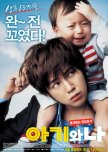
Growing Up Overnight in Baby and I
This is a very lighthearted movie. Baby and I is about a delinquent, Han Jun Su, who literally becomes a father overnight. Throughout the movie, he learns to become more responsible and slowly softens up as a person while trying to raise his child. Kim Byeol is an extremely smart student, but because she wasn't being challenged in school, she stopped attending until she met Han Jun Su, which motivated her to go back.The movie balances its comedy and emotional moments really well. A lot of the humor comes from Han Jun Su suddenly having to take care of a baby despite barely being able to take care of himself. Watching him slowly adjust to the responsibility was both funny and surprisingly heartwarming. Even though the story is pretty simple, the characters made it enjoyable to watch. It made me laugh a lot, but it also had some genuinely sweet moments about growing up, responsibility, and finding purpose through other people.
Was this review helpful to you?
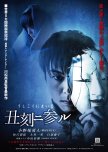
Could've Been a Bit Scarier
Was finally able to finish this movie, last night...and I was disappointed.Not gonna lie, I really only watched this movie because of Hayato, and of course, he was amazing in this (in my opinion). As for the rest of the movie...I guess I was just slightly hoping to be scared, even if just a little bit. It was definitely creepy in some parts! But otherwise, I don't know if I accidentally ruined it for myself by waiting so long to finally sit down and finish it (I was busy), or, if the movie just didn't scare me, in general.
The acting was good, the music was alright to me and matched the tone (if I'm describing that, right), the story...probably could've used a bit more work, and to me, I guess the scares could've used a bit more work, too. I'm not looking for jump-scares! I guess I was just expecting slightly better, if that makes sense. And, in the end, I still had at least a few questions that I felt like didn't really get answered.
Well, anyway...that's my review. I don't write these, often, so hopefully, I did ok. I'm sure if this movie gets more attention, other people will have a different opinion than me, which is fine.
Was this review helpful to you?
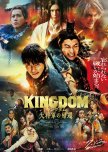
Kingdom 4: Return of the Great General
0 people found this review helpful
What it Takes to Become A Great General
The Kingdom sequels keep getting better and better with each release. This 4th installment is really hard to move on from because Osawa Takao’s Great General Ohki made such a huge impact to the whole scene. It’s hard to believe that I used to rather despise this character in Kingdom 1 because of his attitude but with each installment I grew fonder of him and his antics even more than the ML Xin himself! I cried so hard at the end of this movie and couldnt move on for quite some time. I totally love Osawa’s acting here, he successfully made the character to be majestic and lastingly memorable. The final battle was so intense that it kept me at the edge of my seat the whole time. In fact, none of the action scenes and battles in Kingdom ever disappoint anyway, but the final one made such a huge crater that is hard to forget.I am so rooting for Xin and his fellow friends to make their come back in Kingdom 5. I am sad that I won’t be seeing Ohki though 😔
Was this review helpful to you?

Exit 8 prettyyy good!!!
I personally really enjoyed the Exit 8 movie, i've seen it get a lot of negative reviews so I wanted to put mine out there.CHARACTERS:
The Lost Man (main character) didn't react as much as i thought he should have for being trapped in a lopping hallway. The backstory of him and his wife was okay, it seemed like a normal backstory.
The Walking Man. I think he represents foolish people in the way he ignores important things, very rushed, can't hear the kids' opinions, believing he's right every time but also shows the insanity to believe things so easily , desperate to leave , maybe like a normal person who had entered the looping rooms.
The Boy- The boy was kinda like a wakeup call to the lost man. He was losing hope and on the verge of giving up but then the boy appeared. The lost man thinks about his future with his wife and envisions The Boy as their kid, giving him more reason to get out. While when the walking man had the boy by his side, he saw it as more a responsibility rather than something to actually care about. The boy in some ways is like a guide, a child could notice more things than an adult because yes they both want to go home but the boy is more careful and observant.
Overall
I liked how the scary monsters were things that the lost man saw before, the looping train hall is kind of like a memory/nightmare. It takes things that you've seen or experienced and turns them into something against you. Shows you face to face your fears. It had you looking yourself for the anomalies, I was nervous trying to look around to see if he missed anything too lol.><. I loved how the first 10 minutes were in first person. I just thought it was cool. There wasn't really character development (maybe a hint when the lost man is thinking about family but not really a big thing). But I loved the film. Scary for me, lowkey dont see the hate.
Was this review helpful to you?
Felt too realistic for me ?
Just realized that some movies I’ve been watching lately somehow match my real-life experiences this whole week lol. This one especially reminded me of my transit at Changi Airport. With the help of AI, I was trying so hard to see the indoor waterfall without going through immigration, and somehow I just kept walking in circles between Terminal 2 and Terminal 3 like I was trapped in an endless loop. 😭 Honestly, halfway through the movie I started laughing because it felt way too familiar. Okay… back to the movie before I start having airport flashbacks again.For such a simple premise, this movie was surprisingly entertaining and stressful at the same time. I love how it keeps you thinking together with the characters instead of just throwing random jump scares at you. The repetitive looping situation could’ve easily become boring, but the pacing, acting, and atmosphere made it weirdly immersive. Japanese horror/thrillers really know how to make ordinary places feel unsettling without trying too hard. The movie also lowkey feels like a reminder to stop being glued to your phone and actually pay attention to your surroundings… which is honestly funny considering I got lost because I trusted AI too much at the airport. 💀
Was this review helpful to you?
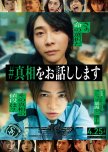
What's wrong with the ending?????
Watched this on a plane with zero context. The movie itself mixes multiple mystery stories together with twists, social media commentary, secret documentaries, murder cases, and some really tense moments. I actually enjoyed few stories a lot because they were suspenseful and kept introducing interesting reveals, especially the island kids storyline. The anthology format was fun at first, even if it made the movie feel longer than it needed to be.But near the end, things kinda went off the rails 😭 The final act tried way too hard to be deep and preachy, and instead of tying everything together smoothly, it just became messy and confusing. The open ending felt abrupt. Idk what were they trying to do, but it did not work like that....
Was this review helpful to you?


