

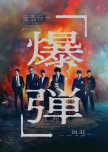
A battle of wits and stunning proses!
What an interesting movie that was!A battle of wits, a dialogue-heavy two hours feature and not one second of boredome. The exchanges kept me on the edge of my seat and sure, some of the wittiness and stunning proses gets lost in translation but the delivery is so magnificent that you can, imho, easily move past that. The writing is quite unbelievable, the dialogues are so enticing and grip your attention and some of the proses are actually explained furthermore, which is nice. It truly felt like watching a battle of wit, a battle of words and I was genuinely fully into it. It rought certain subject up and will make you think after your watch, about ideas and opnions shared throughout their verbal tiki-taka.
The acting was very VERY good, the chemistry quite palpable, I mean what an incredible duo! Yuki Yamada surprised me by how great he was and how well he faced Sato Jiro! Bakudan is not for everyone but if you enjoy proses, study of characters; feature that leave you with thoughts and heavy dialogues, you will absolutely love this and I genuinely recommend it!
Was this review helpful to you?
This review may contain spoilers
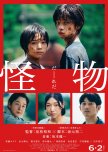
my babies
the cinematography was TOP-TIER. i love how it portrayed society's view towards lgbtq+, the different perspectives of minato's mom, their teacher, and minato himself showed a lot about how we humans see the world from different points of view. just because yori seemed "girly" and "gay" in his dad's pov, his dad keeps saying that he has a "pig's brain" like wtf that pissed me off so much and since that's what his dad calls him, he started to think that he is wrong for being different. the scene where yori said "i'm cured now, i'm normal now.... i lied," then his father just grabbed him aggressively back to their house made me cry so bad.. another scene that made me cry was the trumpet scene with the principal, the line "if only some people can have it, that's not happiness. happiness is something anyone can have."Was this review helpful to you?
This review may contain spoilers
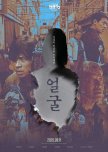
What Remains
After hearing that Park Jeong-min won Best Actor for this film, it became hard to pass up. The plot is straightforward yet engaging, following a son uncovering the “ugly” truth behind his mother’s disappearance 40 years ago through a series of interviews.The ending feels unsettling and somewhat disappointing, raising questions about the overall moral of the film. While the protagonist lacks many redeemable qualities, Park Jeong-min’s raw and emotional performance completely captures attention and stands out as the film’s strongest aspect.
Was this review helpful to you?
This review may contain spoilers
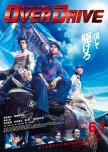
Strong Racing Scenes, Simple Story
I went into not really caring about race cars, but it actually turned out more interesting than I expected. The racing scenes were easily the highlight, with a lot of energy and intensity that made the sport way more engaging to watch than I thought it would be.What stood out most was that the story is more about brotherhood than anything else. If someone is going in expecting romance, it’s better to skip it because that’s not really the focus. Trailer made me think there was romance, boy was I wrong. The film centers on two brothers with a strained relationship, shaped heavily by the death of Hiyama Atsuhiro’s girlfriend, who was also Hiyama Naozumi’s first love. That shared history creates a lot of tension between them, especially since it affects how they view each other and themselves. Even though it uses a familiar setup, I wasn’t tired of the trope where the younger brother is in love with his older brother’s girlfriend, she passes away, and it leads to resentment and emotional distance. It’s something that’s been done a lot, but it still worked well enough here because of the racing backdrop and the way their rivalry plays out.
That said, I do wish the girlfriend had more presence in the story, and it would’ve been more impactful to actually see her relationship with Hiyama Naozumi. It would have added more weight to his behavior in the present and made the emotional conflict hit harder.
Overall, Over Drive was surprisingly engaging. The story is simple and familiar, but the racing scenes and the brother dynamic made it more enjoyable than expected.
Was this review helpful to you?

This review may contain spoilers
Typical High School Drama with One Bright Spot
The story itself is a pretty straightforward high school romance drama, and while it’s easy to follow, it doesn’t really stand out or leave a strong impression beyond the usual love triangle setup. I never really dove into the manga or anime and so I didn't know what to expect.Mackenyu’s portrayal of Toji Kazuya was easily the highlight for me. He had this calm, natural presence that made his character feel more believable. Even in simpler scenes, he kept things grounded and consistent, and honestly he was the main reason the movie stayed watchable from start to finish. His character also had that common trope where Toji avoids Adachi Momo to “protect” her, and while it is meant to feel dignified and selfless, it’s honestly a writing choice that gets old. It creates unnecessary distance and misunderstandings that just drag the story instead of adding meaningful tension.
On the other hand, I really didn’t enjoy Kei Inoo as Okayasu Kairi. His performance felt very over the top in a way that didn’t fit the tone of the story for me. Instead of coming across as charming or fun, it often felt more irritating and distracting. Because of that, a lot of the love triangle drama didn’t really land. Rather than feeling torn between the characters, I ended up disengaged during his scenes, which made parts of the story feel weaker than they should have been. It felt like the performance pulled me out of the movie instead of drawing me into it.
Was this review helpful to you?
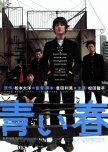
 1
1"People who know what they want scare me"
Blue Spring was a slice of life in a violent boys’ school filled with disaffected youth and indifferent teachers. Backed by a blaring rock score, the film was as much mood as it was message.Seniors Kujo and Aoki take part in the Clapping Game on the school roof in order to see who will lead their gang. The boys stand on the ledge, let go and clap before saving themselves by grabbing the railing. Whoever claps the most times in a row, wins. With either nerves of steel or complete detachment, Kujo easily triumphs. Aoki is geared up to rule the school with an iron bat by his friend’s side, but finds Kujo disinterested in but not above the violence. The students are facing a black hole that is dragging them toward a future none of them is prepared for. Their days in the graffiti covered high school are filled with violence, monotony, even death, and yet the crumbling building still seems a better place than what awaits them.
None of the boys had much of a plan. One student bet his future on his arm, playing baseball. One wrong pitch and he believed his chances had evaporated. Every day the boys treaded water hoping to not drown or be dragged under. Outside the fence, the yakuza lurked, waiting for boys with a penchant for violence to succumb to them. Old dreams of becoming Ultraman or a pilot sank into the murky depths of despair. With nothing to look forward to, there were only thin safeguards between the teens and death. Most teachers were scarcely staying afloat themselves, writing rote memory notes on the blackboard, unconcerned about the students wandering in and out of the classroom. A teacher who tended the gardens attempted to throw a lifeline to the disillusioned youth. Few were willing to grab it.
Unlike Kdramas where the bullying took place in classrooms, the bullies in Blue Spring operated in the hallways and stairwells. The brutality escalated, becoming uglier and deadlier as frustrations and crushing disappointment grew. Empty lives searching for meaning and a sense of control without any guidance were doomed to pain. Yet even under the dirt and cigarette butts, there were flowers hoping to bloom. Not an easy watch, more experiential than plot driven, but worth a try if you are interested in the darker side of education and how some teens view their lack of opportunities in a world that feels out of reach to them.
"Even if my body is broken
and all my tears and sweat dry up
My dreams remain
The Nationals
No regrets for my youth
Loser."
20 May 2026
Trigger warnings: Violence though often more implied than graphically shown. One backside naked scene. What amounted to suicide in one scene.
Was this review helpful to you?
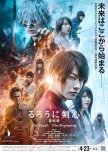
Action First, Story Second
Rurouni Kenshin: The Final was a solid watch even without seeing the anime, earlier films, or reading the manga. The story was fine and easy enough to follow, but what stood out most was definitely the action.The fight scenes were intense from beginning to end. Every sword fight felt fast, brutal, and extremely well choreographed without becoming messy or hard to follow. The movie did a great job making every movement look sharp and impactful, especially during the larger group fights and Kenshin’s one on one battles. The camera work and pacing during the action scenes made everything feel even more intense.
Mackenyu’s portrayal of Yukishiro Enishi was the standout for me. He brought a strong presence to every scene he was in, and his fights felt especially personal and aggressive in a way that made him more interesting to watch than just a standard antagonist. Every time he showed up, the tension immediately went up.
Overall, I'm not a follower of the Rurouni Kenshin world, but the fight scenes were easily the highlight and what made the movie worth watching.
Was this review helpful to you?

Great Action, Weak Story
The best part of the movie was easily the action scenes. The choreography looked smooth, the powers were visually impressive. Every time the characters started fighting, the movie instantly became more exciting. The pacing was one of the biggest problems. Important characters and storylines were introduced so quickly that nothing really had time to develop naturally. Still, the visuals and action carried the movie enough for me to enjoy parts of it. Even though the story itself wasn’t very memorable, the fights, powers, and overall style kept the movie entertaining whenever the pacing started to drag. Overall, Knights of the Zodiac isn’t something I’d watch for the story, but the action scenes and visual effects made it worth watching at least once.Was this review helpful to you?

still a redeemable and relevant queer narrative!
considering the two parts of the film as a whole, i do think it is redeemable as a queer work despite the excessive, melodramatic nature of it.as one of the only few explicit chinese queer works of its time, a round trip to love has quite a bit of literature available on it. the main sentiment both among viewers and academics seems to be that the film points to the impossibility of queer love due to a heteronormative society and class differences through narratively blocking every opportunity where this relationship could work. however, that was not at all my understanding of the film. we must pay attention to just how the relationship collapses and not only that it does collapse.
the above popular framing reduces the central tragedy of the film to “censorship” not allowing positive depictions of queer love (not a thing), heteronormative kinship structures, class division, family pressure, and so on. most of these are absolutely relevant to how the relationship between lu feng and cheng yi chen took shape. however, i think the film clearly depicts the destruction as directly caused by lu feng’s masculinity. if you follow the emotional logic of and the dialogue within the narrative, what causes the central rupture isn’t societal pressure (which existed since the beginning of their relationship) but how lu feng’s masculinity fails to be otherwise.
the first part of the film shows us intimacy between lu feng and cheng yi chen is possible because lu feng is willing to change, to be kinder, softer, more vulnerable and considerate just to be worthy of cheng yi chen’s time and affection. during college or even when they meet five years after, lu feng continues to be sexually transgressive (on the basis of mutual affection) yet is always met with rejection from xiao chen (on the basis of his aggression and use of force).
the second part of the film is a lot darker as lu feng interprets xiao chen’s decision to end things as a challenge to his power, his masculinity. i do agree that it is quite a rough watch to see their relationship take an uncomfortable turn when lu feng decides to kidnap, rape, and humiliate xiao chen as a part of “taking revenge;” however, rather than being a political statement about the “impossibility of queer love” by the creator, i think these scenes are clearly portrayed as destroying the conditions under which love could exist at all. it is not romanticized nor is it sexualized. the revenge arc is only lu feng’s masculinity taken to the extreme. we see that his willingness to change collapsed in the absence of any reassurance of xiao chen’s affection for him, as well as in the presence of a direct threat to his masculinity. we see that, even though he once loved him, lu feng can no longer relate to xiao chen except through domination and harm.
love can survive separation or misunderstandings or societal norms (see: part one) but it cannot survive a man tethered to hegemonic masculinity (see: part two). this is, to me, exactly what the film wants to say. the ending, as well as all of the melodramatic impossibilities of this love, is a testament to this. in the end, after all the harm done, love can no longer exist. you cannot go back to be in a relationship with someone who harmed you in this way, and neither can you go back to the person you have harmed in this way. the mutual sacrifices throughout the film point to their devotion for each other but in the end, xiao chen survives his sacrifice while lu feng does not. so, how can one say it was not the rape, the abuse, the kidnapping by the party with more power in the relationship in every sense of the word, but it was the external factors of class division and conservative parents that made this love impossible? we simply cannot. because even when xiao chen made the choice to follow his mother’s last wish and have a traditional family, we can see it was in fact shaped by the absence of lu feng as a dependable partner.
to me, the film does a great job at critiquing gender in masculinity’s inability to process rejection, entitlement, conflation of love with control, and so on. lu feng, without access to xiao chen, resorts to violence, showing us their relationship would not have worked even in the absence of any familial or societal pressures. so, i think there is a logical narrative reason maybe not to the level of violence depicted but to the incentive for its existence. what the creator wants to say in part two is not much different than how it was set up for us in part one. violence, domination, masculinity is what annihilates love.
Was this review helpful to you?
Surprised
I was quite surprised by this short movie. I didn't expect much, but it was a complete story with a nice twist at the end. It was very well executed for such a short movie.The visuals were good and the music was only at the end and was ok.
The actors did a good job and the main had some chemistry.
The kisses and NC scenes were ok.
Was this review helpful to you?
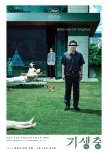
Such A Sweet Family Movie ?
Parasite is easily 10/10 for me. I thought I was going to watch a normal thriller movie but this was way more than that. The story was sooo smart and every scene had some meaning behind it. I loved how it started in a funny and light way then slowly changed into something intense and shocking. The acting was amazing and everyone felt so natural, plus the cinematography was beautiful too. I also liked how the movie talked abt social class and money difference without forcing the message. The ending literally left me sitting there thinking for minutes 😭. This movie gave me comedy, suspense, emotions and stress all together and somehow balanced everything perfectly. Deserves all the hype for real.Was this review helpful to you?
This review may contain spoilers
‘The Ugly’: A “must see” movie watch, with Baeksang Winner Park Jeong Min.
The body of a young woman thought to have run away four decades ago is discovered. This brings up unpleasantries for her blind husband and her young son now grown. A funeral is held for the woman without a picture. As old neighbors gather to talk about the young woman, it is clear that the one outstanding trait of the young runaway was that she was very Ugly. This peaks strong curiosity in the son, as to the true appearance of his mother. The father, blind from birth, had never seen his wife.The Ugly is a profound movie which says a lot about human nature. The Ugly is a simplistic complicated story. Just like a photo use to be developed from a negative, you have to see how the negative turns into a profound positive image in this movie. Only then is true light revealed. The Ugly actually is two movies running at the same time. The one you believe is the image that is captured for you. However, the truth of the story may only be revealed to you when you replay the movie and capture the other movie playing at the same time.
People say that something is deep. The Ugly is a deep movie.
The movie stars Park Jeong Min. I respect him as an actor. He seem to pick the “I don’t know about this one” type of script, as many said for the K-Drama Utopia. When you look at his choices, however, you see that his brain just operates faster than most people. Park Jeong Min sees it before we do. Park Jeong Min won the Baeksang Arts Award for Best Actor for the Movie Category for his work in The Ugly. Park Jeong Min plays a double role, that of the son in the future and the father in the past. Please put this movie on your list to view and be prepared to see it twice.
Note: Since The Ugly is a rental on Prime Video, to replay just rewind or digest it and replay later. You have 24 hours for each rental.
Was this review helpful to you?

Beauty, Lust, and Emotional Destruction
A Frozen Flower is not just provocative cinema — it’s a masterpiece of desire, obsession, love, and jealousy in their rawest form. 🔥🔥The first time I watched it, I was genuinely overwhelmed. The intimacy felt so real, so vulnerable, that I almost felt like I was witnessing something too private — especially seeing Jo In-sung, an actor I’ve loved for years, stripped so emotionally and physically bare. The lust in this film is intense, consuming, almost dangerous — not for shock value, but because it feels painfully human.
Watching it again, I understood the brilliance even more. Calling this film “porn” would be an insult. It’s art. Every glance, every touch, every moment of betrayal carries unbearable tension. And Joo Jin-mo absolutely deserved the acclaim he received — the heartbreak, jealousy, and quiet devastation in his performance are extraordinary.
This film doesn’t just show passion. It weaponizes it. Absolute recommendation — but not for anyone uncomfortable with intimacy portrayed at its most realistic and emotionally devastating.
Was this review helpful to you?
This review may contain spoilers
Better as a drama than movie
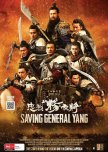
Saving General Yang is a film based on the Yang family legend, where the sons set out on a dangerous mission to rescue their father, General Yang, after he is ambushed and captured. It highlights loyalty, sacrifice, and brotherhood, and the action scenes are beautifully executed with a strong sense of scale and intensity.The father figure is presented as a symbol of honor and duty, but because he is absent for much of the story, it’s hard to fully feel the emotional urgency behind the rescue. I did wish we had more time early on to see the relationship between him and his sons, since that would’ve made their mission hit harder emotionally. Still, I understand the film likely had to move quickly due to runtime constraints. I also watched this mainly because of Raymond Lam, and while he was good, I did wish he had more screen time to really shine.
What stood out most was the brothers and their dynamic throughout the mission. Even though they aren’t deeply developed as individuals, their bond comes through strongly in how they fight and support each other. Each brother has a distinct fighting style, and the way they coordinate in battle gives the film its strongest emotional and narrative momentum. It’s less about individual character arcs and more about unity under pressure, which surprisingly works well in an action driven story like this.
The action is undeniably the highlight. The sequences are intense, fast paced, and at times surprisingly brutal, which keeps the film consistently engaging even when the emotional depth feels limited. The choreography is clean and creative, especially in the larger set pieces where teamwork becomes crucial. The final stretches of the mission carry a solid sense of tension and sacrifice, even though the outcome feels inevitable.
Overall, Saving General Yang works best as a visually striking, action focused historical drama rather than a deeply emotional family epic. While the story didn’t fully land for me, the brotherhood, choreography, and relentless action made it a compelling watch. I do think it would’ve worked better as a drama series to properly build up the characters and emotional stakes.
Was this review helpful to you?
Perception is reality even when it's a poem
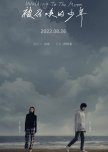
Walking to the Moon is a 2022 short film. The actual film was under 8 minutes yet resonated long after. Seen through the eyes of an autistic boy, the world alternated between nightmare and poetry in motion.Ning An lives with his mother who runs a hair salon. Her boyfriend is derogatory toward him as Ning An is autistic. During a distressing moment, Ning An flees the salon and runs to the ocean.
Much of what transpires in this short film is from Ning An’s perspective, how he sees and experiences the world. A mirror is a window to the moon and ocean. A walk in the surf becomes a dance to the music of the whales and gulls all to the rhythm of the waves. The moon calls to him at the door to the ocean, personified, in a gentle underwater ballet.
This film is ethereal, enigmatic, a song, a dance, and a reminder that everyone sees the world in a deeply personal manner. I suspect viewers will interpret this film that glides between “reality” and “illusion” differently.
“You keep calling me, so I came here.
At the entrance to the deep ocean.
While this moment, ocean and ocean,
I’m here to bring you back.”
19 May 2026
Was this review helpful to you?


