

This review may contain spoilers
Strong Concept, Weak Execution - More Comedy Than Horror
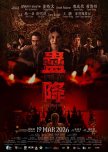
I went into Kong Tao with relatively high expectations as the trailer was genuinely well done and created a strong sense of anticipation. Unfortunately, the actual film did not fully deliver on that build-up.As a horror-thriller, the film lacks suspense. Many parts of the storyline felt predictable, and the character development is quite weak. Several supporting characters come across as redundant, with little contribution to the overall narrative, making it harder to stay emotionally invested.
In terms of horror elements, there were barely any impactful moments. The only noticeable jumpscare was when the Kong Tao apprentice used a skull to scare Wei En (Yumi Wong), but even that scene felt underwhelming - her scream was more shocking than the scare itself. Overall, the film leans towards a comedic thriller rather than a true horror experience.
With that said, one aspect I found interesting was how the film showcased Kong Tao practices. With some prior knowledge, it was engaging to see both the simpler forms (such as physical manifestations like maggots) and more complex rituals that only experienced masters could perform. This added some cultural and conceptual depth, even if the execution lacked intensity.
There were also moments of realism that stood out, particularly the travel sequence from Malaysia to Thailand. The timing and setting felt accurate, especially considering real-life routes like the Bukit Kayu Hitam-Sadao checkpoint towards southern Thailand.
The most captivating scene in the entire film was when the monks (Luang Phor) gathered before the Buddha statues, chanting protective mantras such as 'Na Mo Put Ta Ya', Itipiso Paed Tidt' and 'Katha Chinabanchorn' to counter the dark forces. This scene carried a stronger atmosphere compared to the rest of the film and felt more grounded in spiritual authenticity.
Overall, Kong Tao presents an interesting concept rooted in black magic and regional beliefs, but falls short in delivering tension and depth. It may still be enjoyable for viewers curious about Kong Tao practices, but those expecting a strong horror-thriller experience might find it lacking. This is strictly a personal opinion coming from a Thai Buddhist and someone with a background in filmmaking.
Was this review helpful to you?
WHAT REALLY WERE THEY TRYING TO DO WITH ARIRANG?
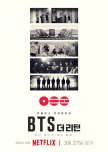
What were they really trying to do with *Arirang*?I’ve been an ARMY for seven years. I love BTS, and I was extremely excited for their new album and documentary—unfortunately, I didn’t enjoy either.
*Arirang* felt very different from what I’m used to. I understand they were aiming for a more mature sound, but it ended up feeling more like a product than BTS. They’ve done mellow songs before—“House of Cards,” “Black Swan,” and “Life Goes On”—but “Swim,” the lead single, felt like the wrong choice. It was too low-energy and lacked impact.
Since the album is called *Arirang*, I expected more Korean-inspired sounds. Instead, it felt geared toward a global—especially Western—audience. Even in the documentary, BTS seemed to want to focus on Korea, while HYBE pushed for a more global direction. As a non-Korean fan, I was drawn to BTS because of their Korean music. I didn’t know their names or personalities at first—I just loved songs like “Boyz with Fun” and “Attack on Bangtan.” The “K” in K-pop matters, and it feels like companies are starting to forget that.
The documentary constantly emphasized “going global,” but at what cost? Why frame something like “Arirang” for Western validation when it’s a deeply Korean cultural piece? It made me question what the project was really about. Some people may call me a hater or a fake fan, but I believe criticism is part of being a real fan. Chart numbers and views don’t necessarily reflect genuine appreciation—BTS are musicians, and their music should come first.
It also felt like the documentary tried to make *Arirang* appeal to everyone except Koreans themselves, which came across as distasteful. For example, when they mentioned the story of seven Korean boys who went to Washington, D.C. in the 1800s, they left out the fact that most institutions rejected them—except Howard University. That context matters. The lack of acknowledgment felt disappointing, especially given the historical significance.
Even visually, there seems to be a pattern of appealing more to Western audiences. For an album like *Arirang*, I expected stronger Korean representation, but that wasn’t always the case. It raises the question: were they celebrating their culture, or trying to reshape it for Western approval?
I’m still a fan, and I’ll always support BTS, but these are important conversations to have. *Arirang* isn’t a bad album—it’s just not their best. You can disagree, because music is subjective, but we shouldn’t place artists above criticism. Critiquing them is part of appreciating them—it shows we understand the difference between loving BTS and loving their music.
Was this review helpful to you?
Some things are quickly understood and some things take time
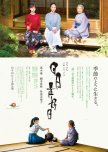
I was surprised by how much I liked this film. Usually, films like this one, films that get very philosophical and don't have much plot in favour of thinking about life, quickly tip over into "too much" for me. Either they are too preachy (like "The Zen Diary") or pretentious (like "Glasses") or too artificial (like "Bread of Happiness").But for some reason, "Every Day a Good Day" managed to keep to the side of thought-provoking while not getting to obnoxious about it. I can only guess why that is. It might very well be because a large part of the first half takes the time to just show the Tea Ceremony in detail -- the way it is filmed and the way the teacher comments on the details, feels much more like a documentary than a fictional story.
Added to that, the way of the tea ceremony is carefully balanced with Noriko's life -- and what an ordinary life it is! There's nothing special about her, she's struggling to find a job, she's clumsy and very mediocre both in real life and in learning the ceremony, she despairs when a young girl learns much quicker than her. Not only did she stay simply human throughout -- she does it not in the pretentious "Look at how humble I am", but in the much more relatable way of "I am not good at the things I do, but I have to try to find the good things in life, even if it's hard". Her teacher is the same, and I love her last sentence in the film (which is the second-to-last overall):
"By teaching, we are taught."
Noriko's life also echoes much of my own experience through adulthood, and when the film ends, she is about the same age as me now, give or take a few years. And I feel that the both of us look back at our life (so far) in a similar fashion -- only that she is, of course, doing it in a much more concise way, since the author surely refined her own thoughts into the essence of her life when she wrote her book.
One aspect I really loved was how the seasons were an integral part of the narrative. The crew took the time to film throughout the year -- they connected the meditative aspect of tea making with the surrounding sounds and sights of nature, and thus they managed to show us viewers how much we stand to gain from paying attention to what is around us:
"On a rainy day, listen to the rain. Savour the moment with all five senses, with your whole body. On a snowy day, look at the snow. In summer, feel its heat. In the winter, the freezing cold. `Every day a good day` So that's what it means!"
I wonder how much I would have liked the film twenty or even ten years ago? Not much, I guess. Commenters on the JFF website mentioned how much they cried, or that the film was devastating. I did not feel that at all! I felt mildly melancholic, yes, but definitely not devastated. So, I think this is probably one of the films that either speak to the viewer (and everyone would hear something different) or it doesn't speak to them at all.
Was it good?
It was a film with great technical expertise, and marvellous actors. It's obvious how much care went into showing the ceremony and into integrating it with the life of the protagonist.
Did I like it?
Surprisingly, yes.
Would I recommend it?
I have no idea. I think this is one of the films where every viewer gets something else out of it -- or not. Those who need plot and exciting things to happen, or even a neat ending, might want to stay away.
"Some things are quickly understood and some things take time. The things easily understood need only be gone through once. But those other things you come to understand only with time, little by little."
Was this review helpful to you?
This review may contain spoilers
I did not expect this to be animated.
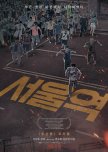
Seoul Station might be the one and only movie set in the Train to Busan universe that I didn't love. I still enjoyed it, don't get me wrong, and the fact that it was animated was a bonus, but I didn't connect with the characters or the storyline.All the characters are problematic in their own way. I think the only character I sort of liked was the old man with Hye-Sun.
As for a prequel (I think I saw this was supposed to be a prequel of sorts, but I could be wrong), it didn't explain anything about what the virus was, how it started. The movie just starts on the first day of the infection in South Korea.
Overall, Seoul Station isn't my favorite movie, but it is the first animated zombie movie I've seen. So it gets points for that and the absolutely beautiful animation.
Was this review helpful to you?
"Games between men are pathetic"
I don’t require a lot from martial arts films. Give me some good fights and a somewhat coherent story, maybe even one compelling character and I’m in. 100 Yards had maybe one out of those three criteria.Shen An’s father is the head of a martial arts academy and dying. His best student comes home and his father has him dual his son for the academy. The academies are part of The Circle which helps to keep the peace. Once upon a time each academy was responsible for policing 100 yards around their school and gradually those territories grew. Now the student and the son butt heads over the future of The Circle and the city.
The fights were well shot without wires and without ridiculous undercranked or sped up shots. They were also sans CGI and extreme close-ups ---thank goodness. No one was thrown twenty feet into the air and bodies didn’t crush brick walls. The fight choreography was more realistic and Jacky Heung had nice moves. His acting, on the other hand, was painfully bad. He only had one facial expression in his bag of tricks which began to wear thin. Andy On’s Qi wasn’t much better. The never-ending fights began to feel pointless and in the end were pointless. The writing and directing went too heavy on the try and instead of cool came across as overly dramatic and cringey.
100 Yards is worth seeing if you are interested in a variety of fights with different weapons and styles. As long as you don’t expect any sort of compelling story or characters.
27 March 2026
Trigger warnings: there were a few slicey scenes but nothing egregious.
Note: The original Circle Chairperson was an actress they styled to look like a cross dressing Brigitte Lin. Hoping it was a respectful homage.
Was this review helpful to you?
The cinematic equivalent of a coma
The cinematic equivalent of a coma, the story behind Fearless Hyena II is more well-known than the film itself. A patchwork disaster that barely holds together, but how on earth Lo Wei managed to convince Jackie to do a nude scene is truly beyond me. Originally set to be Jackie's first film under a new contract with Wei, the story of how he avoided getting killed by the triads and returned to Hong Kong to become a megastar is the stuff of legends. Ultimately, Lo Wei supervised a reshoot of the uncompleted film, mainly by taking the footage from the 1980 shoot, incorporating some used and unused scenes from Chan's previous films, and hiring a double to bridge the gaps created by his former star's departure; Lo was able to assemble some form of sequel which, to his credit does manage to cover for it's lack of main star until the climax when Chan's absence becomes blatantly obvious. The premise is almost exactly the same as the original film, aside from the awful Jackie Chan lookalikes who play his "relatives" that never existed before, with the most outrageous wigs and fake beards you’ll ever see. The direction is laughable, carrying a definite Lo Wei vibe throughout, which ultimately makes the film feel more like a film from the 60s than one from the 80s, while Austin Wai's protagonist does the film no favours, although to be fair, there is at least some competently staged fights in places. Ultimately, Fearless Hyena II is nothing more than a simple novelty, only really worth the watch to see the smattering of scenes Chan shot prior to his departure, because the film has nothing else going for it… Game of Death was a better-made film than this.Was this review helpful to you?
This review may contain spoilers
Raw, intimate, and deeply Filipino
The Last Beergin works because its cast is an absolute powerhouse, and none of them disappoint. Cherry Pie Picache brings the kind of depth and emotional weight that makes every scene feel grounded and true. Xyriel Manabat delivers with rawness and natural intensity, while Zaijian Jaranilla gives the film a quiet sincerity that balances the heavier moments. JC Santos, as always, is effective in making emotion feel effortless and real, and Pepe Herrera adds that very Filipino warmth and authenticity that makes the entire group dynamic believable. Each actor is already strong in their own field, whether in drama, realism, or emotionally driven performances, so together they become the perfect ensemble for a film like this.What makes the movie even better is that despite its dramatic core, it never feels too heavy or exhausting. It stays light, intimate, and absorbing, the kind of film that keeps you glued because it feels like you are not just watching the characters, but actually sitting there with them. The values in the story are what truly capture the heart: friendship, vulnerability, shared pain, and the comfort of being with people you can be honest with. While watching, it almost feels like you are drinking with them, listening in, laughing a little, and then suddenly being hit by truths that stay with you.
Another thing that makes The Last Beergin so effective is its setting. It does not feel staged or pretentious. The place where they drink feels real, familiar, and deeply Filipino, the kind of spot where actual drinking sessions happen, where people form bonds, open up, and talk deeply through the night over a table full of drinks. That sense of realism gives the film so much heart and makes it quietly nostalgic. It reminds you of those nights when strong connections were built through conversation, honesty, and shared silence. Overall, The Last Beergin is simply one of the best, not just because of its cast, but because of how truthfully and warmly it captures human connection.
Was this review helpful to you?
Happy to be home.
I had the strongest feeling of coming home. I remember the day that the announcement came that they were gonna go on hiatus, and it was such a, such a bad day. And I honestly did not think I would make it, but here I am four years later, and I get to experience BTS coming back in real time. And I'll tell you, there is no stronger feeling than coming home. That's it. This whole documentary was so insightful and so beautiful, and my chest is feeling so heavy. And it wasn't even like a sad, depressing documentary. No, it was showcasing everything they have been through, everything they did to get here, and it was utterly beautiful. It was like coming home. It was like watching a family movie, because they are our family. It's watching people you love be happy, be sad, be in pain, and achieve everything they have dreamed of. I really don't know how to explain it, except that it felt like coming home.Was this review helpful to you?
Love VS Kids
Just recently, a Korean girl I know told that she has decided not to have children because she doesn’t see the point of bringing a new life into this world. Isn’t that depressing? Well, this movie brightened up my mood because it presents the same issue — a woman who doesn’t want kids but wants to be with the guy she loves, not knowing that he already has a child. This setup creates plenty of comedic moments, but it also serves as positive propaganda for having children. Kids in a relationship may shake the romantic love a little at first, but they elevate the relationship to an even better level and can only deepen the love.The official title of the movie is a little misleading: Heartman: Rock and Love. Sure, there is one rock song, but the rest of the movie is just a classic romantic comedy. The film has some originality, but if you’ve seen many Korean movies of this type, you’ll notice quite a few elements that feel copy-pasted. The main actors were good, but I expected more from them — their emotions didn’t quite come through. The supporting actors, however, were excellent and really funny.
If anything, please support and watch this movie for its message.
Was this review helpful to you?
This was actually quite good? But the CGI not so much
First of all I'm sorry to all the novel readers who were very disappointed with this movie. But as a movie watcher only, this was actually quite good guys? I like the story flow and how they teamed up. How the main character "isekai'd to the novel. I felt like I was reading a fantasy webtoon hehe. It was quite engaging and fun for me. It was my kind of movie. THOUGH I must say the CGI was bad. Their acting around the CGI was also bad, some parts felt like their acting and the CG were not connected. I'd say it was badly directed. Overall it was quite a good watch and I'm quite excited about the second movie, if there's one.Was this review helpful to you?
Must watch
Since their debut, BTS have shown us time and time again that they are here—for themselves, for their country, and most importantly, for their fans, ARMY. After a few years of hiatus, their comeback feels massive, especially with the release of their new album *ARIRANG*.
The album draws from the roots of Korean music, inspired by one of the earliest Korean songs ever recorded on American soil, which adds a deep cultural weight to this era. It’s not just music—it’s history, identity, and pride woven together.
Watching the documentary made everything even more emotional. We all know that creating an album isn’t easy, but seeing the process firsthand really hit differently. We got to witness the seriousness, the pressure, the pain, and the difficult, sometimes uncertain decisions they had to make. It showed how much communication matters—how they had to constantly check in with each other to ensure no one’s voice was overlooked.
There were moments where some members loved an idea while others didn’t, but what stood out most was how they worked through those differences together. That unity, that willingness to listen and grow as a team, was honestly beautiful to watch. And it wasn’t all heavy—there were moments filled with love, laughter, and their playful energy that reminded me why I missed them so much. Seeing them smile and joke around made everything feel warm again.
I truly admire their dedication—their hard work, their passion, and their commitment to doing what they love every single day. As a fan, whether we see everything or not, there’s just so much to appreciate about them as artists and as people.
However, one thing I didn’t like was how some of their creative decisions seemed to be overlooked by HYBE Corporation. There were moments where the members clearly expressed a preference, yet it felt like those opinions were brushed aside or softened with corporate language. I understand that culture and hierarchy play a role, but at the end of the day, they are the ones performing the songs. They know what feels right and what truly represents them.
From my perspective, it came across as a form of subtle pressure or influence, especially when all seven members leaned toward a different version of a song. That was disappointing to see. I believe their voices should be valued more in those decisions, because their authenticity is what makes BTS so powerful in the first place.
Overall, this comeback isn’t just about music—it’s about growth, emotion, and staying true to who they are, even through challenges. And that’s why I will always support them
Was this review helpful to you?
This review may contain spoilers
Lonely silence here / And I'm not the one / Make your house a home
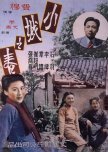
A work poised between two eras, Spring in a Small Town (1948) by Fei Mu stands as one of the most lucid portrayals of a world coming to an end — and of the lingering inability to imagine what might replace it.From its very first moments, the film unfolds with the precision of a theatrical composition: a small group of characters, almost archetypal in nature, arranged within a confined space that seems to suspend time itself. The ailing, withdrawn husband; the wife trapped in a life drained of desire; the younger sister, still open to the possibility of a future; the silent, devoted servant; and the returning doctor from the past — each figure enters the scene already charged with tension, as if part of a fragile balance destined to fracture.
Yet beneath this seemingly classical structure lies a striking modernity. The emotions that shape these characters — desire, frustration, fear of change — do not belong solely to their time, but resonate deeply with our own. Within this suspended microcosm, dominated by a decaying house that emerges as a living narrative organism, Fei Mu crafts a film in which space does not merely contain the action, but reflects and confines it, becoming the silent custodian of a world slowly fading away.
At the heart of the movie lies a love triangle that deliberately avoids conventional melodrama, embracing instead the quieter, more painful path of inaction. The return of the doctor — tied to the woman by a long-suppressed emotional bond — introduces the possibility of change, yet that possibility remains suspended, never fully pursued. Desire is present, unmistakable, but it never finds the strength to become action.
Within this fragile equilibrium stands the husband, unaware of the previous liaison between the two, whose illness — ambiguous, never entirely defined but more than self-harm — takes on a meaning far beyond the personal. His passive presence becomes the silent axis around which all unfulfilled choices revolve. He is not an antagonist, but a condition: the embodiment of a world unable to react, unable to transform itself.
The triangle remains unresolved, and it is precisely in this lack of resolution that its tragic force resides. This is not a film about desire, but about the impossibility of acting upon it.
The title itself suggests a promise the film continuously evokes without ever fulfilling. Spring — traditionally a symbol of renewal — takes on an ambiguous, almost ironic meaning here: nature signals change, yet the characters remain incapable of embodying it. Time passes, seasons shift, but nothing truly transforms, as made clear in the ‘moral’ resolution of the finale.
In this tension between natural movement and human immobility, the film’s allegorical dimension emerges. Without ever explicitly invoking historical context, Fei Mu constructs a microcosm that reflects a broader condition: a society suspended between the end of one order and the inability to define the next. The decaying house, restrained bodies, and unfulfilled desires become visible traces of a transformation that has yet to take shape, dictated by a future that remains unclear.
Like many movies born in times of political tension or cultural constraint, the narrative operates on a lateral plane, where the personal becomes a vehicle for the political, and intimacy turns into allegory. The film does not depict History — it allows it to seep through gestures, silences, and spaces.
There is no hesitation in saying it: Spring in a Small Town is an absolute masterpiece, a true swan song from a director who was forced to emigrate to Hong Kong shortly afterwards; Not only one of the highest achievements of Chinese cinema, but a work that transcends time, style, and historical context without losing any of its emotional urgency.
In an era often dominated by excess, Fei Mu demonstrates how the greatest intensity can emerge through restraint, transforming silence, space, and minimal gestures into living cinematic matter.
Decades later, what remains most striking is not only its formal perfection, compared to a structure that could not be more minimalist, but its enduring relevance — because the hesitations, suppressed desires, and quiet fears that inhabit its characters are still our own.
That we can rediscover a film like this today is part of its quiet miracle (although the DVD release for the Italian market doesn’t do it full justice): a work once at risk of fading into obscurity now returns, intact, to remind us that great cinema never truly belongs to the past.
10/10
Was this review helpful to you?
death
base on my perspectives, I think the Japanese movie with same title was more detailed.Both told same story which got me crying so bad wishing I could save him ….but death just had to come
I am glad because she had a great best friend who was ready to stand by her side.
the main leads are top notch and main lead actor he always knows how to act on his role.
The has a very sad story line and teaches a lot…
“DEATH ISN’T” something to think about
losing someone you love is very heartbreaking
losing the one you care about can make someone go crazy trying think it was all a dream, but reality hits them and at the end of all we all have to move on
the scars still there the pain still there when we remember but life goes on🫂
Was this review helpful to you?
A hidden gem blending genres with a uniquely complicated romance
This movie was discovered through a long chain of searches on MDL. It is a good film. I do not know why it received no recognition at all. Films like this often get buried and become hard to find. It is a whole blend of genres. The romance is depicted in a very different way. It is complicated in its own nature. Overall they handled it well.what else should I write idk
performances are good like the Fl's acting is superb she portrayed it well and the character suits her
background score should have been better but overall it's fine it could have been well suited to the atmosphere but it's fine
cinematography and locations are so good
color grading is also done well
Was this review helpful to you?
This review may contain spoilers
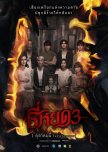
Damn, Yee is a little badass.
How many times is this poor family gonna have to deal with this damn ghost?!While I felt like the story was completed perfectly with the second movie, it seems the cash cow has struck again.
Did I enjoy this movie? Yes, I very much did. But, it wasn't actually needed as the story of Yak and his siblings was finished, I felt, in the second movie.
The storyline wasn't bad, and it sorta fit with the previous movies. We get to see more of badass Yak and his delicious 6-pack, and we get to see happy, pregnant Yud. (I still think if the baby were a girl, she would have named it Yam, and since it's a boy, she will name it in honor of Sarge. If you know, you know)
I felt like the repetitiveness of a severely haunted forest was a little redundant since we got that in the second movie. The twist of the helper/revenge ghosts duo helping Yak and the others was a nice little surprise I almost missed. (Yes, it's very subtle.)
Yee is my new icon. She is such a little badass, and I loved her scenes.
Sarge's death hurt me deeply. I cried.
I didn't like how abrupt the ending was. One second, everyone is crying over Sarge, and the next, the ending credits are rolling. That quick post-credits scene was very confusing for me, and I had to look up what it meant. Looks like we are more than likely getting either another Death Whisperer movie or a spin-off featuring Sarge's daughter and possibly Yak. Do I smell a possible romance?
Was this review helpful to you?


