

This review may contain spoilers
“I’m not John Ford. And whatever this is… it’s not a western.”
A landslide blocks the railway line, forcing an assorted group of passengers to continue their journey toward an alternative station aboard an aging bus, along a treacherous and unforgiving mountain road. A situation already precarious in itself, which takes on far more ominous overtones when word spreads that two dangerous criminals may be traveling the very same route.It takes little more than this premise to recognize how, in the hands of Seijun Suzuki, what unfolds is a reinterpretation — only seemingly faithful — of the archetypal model established by “Stagecoach” (John Ford, 1939): a moving microcosm of humanity, compelled to confront an external threat that inevitably brings to the surface latent tensions, contradictions, and hierarchies.
It is no coincidence that one of the characters — the woman working at an American base — explicitly evokes that very imagery, enthusiastically likening the situation to a “western movie.” A fleeting moment, perhaps, but one that functions almost as a statement of intent, subtly offering the viewer a key through which to interpret what follows.
Because while the starting point appears to adhere to a well-established narrative framework, it is precisely in the development — in the details, tonal shifts, and the characters’ reactions — that Suzuki’s gaze begins to gently destabilize the structure, allowing a sense of underlying instability to emerge, one that would soon become a defining trait of his cinema.
From this seemingly codified foundation, it is in the definition of its characters that the work most clearly reveals its true nature.
The passengers are not merely individuals, but rather recognizable social archetypes, arranged with almost schematic precision: figures that initially seem to comply perfectly with genre conventions, only to be gradually tested — and often subverted — over the course of the journey.
We encounter the “fallen” woman tied to the American base, yet endowed with a moral integrity far stronger than her role would suggest; the convicted murderer — a former military doctor — who will unexpectedly reveal a capacity for sacrifice; the irreproachable policeman; and the aging driver, a figure not unlike those found in westerns, suspended between irony and quiet responsibility.
Alongside them unfolds a gallery of equally emblematic presences: the opportunistic salesman, dysfunctional couples, restless bourgeois figures, young people chasing uncertain futures — culminating in perhaps the most fragile and emotionally resonant character, the abandoned mother traveling with her child, who becomes one of the narrative’s emotional centers.
At first, these figures seem to move within predictable and almost reassuring boundaries. But with the violent intrusion of the two criminals, that fragile balance begins to fracture.
At this precise moment that the masks fall.
What initially appeared as simple typification gradually transforms into a far more exposed and unforgiving terrain, where each individual’s true nature emerges: the cowardice of those concerned only with survival, the opportunism of those seeking advantage, but also the unexpected courage of those who, having nothing left to lose, choose to act.
In this regard, the trajectory of the condemned man is particularly telling — a figure initially relegated to the margins, yet ultimately embodying a form of redemption through action, in stark contrast to others who, despite their social respectability, prove incapable of withstanding the pressure.
What emerges, then, is not so much a distinction between good and evil, but between those who can endure the strain… and those who are crushed by it.
And it is from this tension — more human than moral — that a fragile sense of solidarity begins to take shape: intermittent, unstable, yet ultimately the only viable means of survival for a group that, until then, shared nothing but a common destination.
From this reluctant convergence arises a collective response — not heroic in the traditional sense, but instinctive, almost inevitable — as individuals, pushed to their limits, are forced to recognize themselves as part of a shared fate.
The resolution of the conflict, sudden and violent, brings the tension to an end, but offers no true sense of liberation.
Because while the group ultimately reaches the long-awaited station, what awaits each of them is a return to reality that feels, in many cases, far more disillusioned than the expectations that accompanied their departure. Dreams fade, illusions dissolve, and what remains is the quiet weight of an experience that cannot simply be left behind.
It is worth noting that, despite its apparent structural rigor, “Eight Hours of Terror” was subject to studio interference during the editing phase — a clear indication of the uneasy relationship between Suzuki and the production system within which he operated.
And yet, even within such constraints, his authorial presence unmistakably surfaces.
One can already sense a subtle inclination toward disruption: moments of irony, sudden tonal shifts, small acts of irreverence that both relieve and destabilize the tension. Certain characters, deliberately accentuated, verge on caricature, contributing to an unstable balance between realism and stylization.
Likewise, the management of space — largely confined to the interior of the bus — becomes a genuine exercise in form, where rhythm and suspense rely heavily on precise editing and carefully controlled shifts in perspective, avoiding any sense of stagnation despite the limited setting.
It is within these details, rather than in the broader narrative structure, that the first signs of Suzuki’s emerging voice can be clearly detected — a tension that would later expand more radically as the constraints imposed by the studio system grew increasingly restrictive.
Even taking into account the inevitable reworking and external interference, “Eight Hours of Terror” stands as a remarkably accomplished piece, where narrative solidity coexists with a subtle but persistent undercurrent of formal deviation.
It is within this silent friction — between structure and subversion — that the work finds its identity, revealing itself not only as an effective genre piece, but also as an early indication of the incompatibility that would come to define Seijun Suzuki’s relationship with the industry that sought, unsuccessfully, to contain him.
8 ½
Was this review helpful to you?
Deaf must watch!
I had the pleasure of watching this movie and talking with the director afterwards, at a film festival. It's amazing how well they taught the actors to sign, I wouldn't have guessed they didn't know HKSL before!The story is so heartbreaking and hopeful in its realism.
This movie shows so many sides of what it means to be Deaf in a world that wants to eradicate your culture and language, going so far as banning sign language in schools. It's visually pretty, but most importantly, it's so deliberate with how it uses sound. I cannot recommend it enough.
Was this review helpful to you?

How to Make Millions before Grandma Dies
0 people found this review helpful
This review may contain spoilers
The grandmother, in fact, does die, but she gives you a lot to think about before she leaves.
I'm going to be thinking about this movie for a very long time. I don't know how to describe how wonderfully it was made. It was what I would call a slow film, but I did not feel bored for even half a second. It was very gripping, very gripping. It just had control of me the whole time. And it was such a cool movie. I don't even know how to explain it. You're watching people at its core. There's no like storyline, oh, this is what happens next after that. No, it's just people's normal lives. This is what happens. This is actuality. This is reality. I don't know what I'm saying, but it really, really made me feel so much.You go into this film knowing that the main character, the grandson, will look after his grandma for the sole purpose of earning money or, you know, getting whatever she basically inherits all her stuff. And that is the premise of the movie, and we all know that, oh, he's gonna really love her, and then it's gonna be sad and depressing. That is the whole movie, but it is so much deeper than that. And we know it is deeper than that. We go in knowing that it is supposed to be deep, and it really is deep. I was just randomly sending a video to my friends, and the context was, spoiler for this movie is, the grandma actually does die at the end. That's the spoiler I gave them because I don't know how else I can explain it. This was a whole journey from, I don't know, it was that good. It was, it made me feel so much, and it made me feel just deep to my core, a feeling that I haven't felt in such a long time. I haven't been moved by a movie in such a long time, and I really applaud the fact that the director was able to do this without adding some huge fight or drama. No, the director just showed the daily reality of people. This is how life is, and this is how life will be.
Another thing I really, really loved about this movie was that it was a great story, and sometimes a great story does not need a huge plotline. There were no villains, there was no great drama, there was no horrible fight. The best part of this movie was that you really got to see the movie at its core, and what it's showing is that the world isn't black and white. You would think that the grandson is some spoiled, imbecilic child. I don't know. And he really is at the beginning, and the whole concept is that, oh, he gets better and he goes from bad to good, but that's not it, is it? He was always good, and he made some poor decisions, but at the end of the day, he was a good person. He is a good person, and he loved his grandmother. That is a core fact. We can go through these types of feelings with every single character, and I love that. I genuinely do.
Starting with Mui, M's cousin. At first, I thought she would be an example for M and tell him off for behaving that way, but she was the one who actually planted this idea in his head. But the more time you spend with this character, the more you seem to understand her. She didn't come from a place of greed or exploitation. It really rubbed me the wrong way when she said that it doesn't matter why you spend time with them, it just matters that you do. But again, she's right. You can try to make the best for yourself while also giving to others as long as you're not hurting them. And who knows, you might actually end up in a much better position than you expected. When asked if she ever dreamed of grandpa, she showed her true colours. The love she had for the man was never questioned again. Same with M.
The trio of siblings were all such interesting characters. The way that they showed love was very different from one another, and yet they still loved their mom. Sew is the only one who didn't want anything from the mom, and that's why the mom wanted to live with her the most. Sew wasn't the favourite, but Grandma felt most at home with her. There's something very beautiful and poetic about that. And Uncle Khiang. Grandma gave up beef for him. That scene of M telling him was portrayed so beautifully. It wasn't loud or had any negative feelings towards the man. He was simply reminding his uncle of what's important: his mom.
What do I even say about M? I hated him at first. But I knew he was gonna change; the whole movie depended on that fact. I teared up a lot in this movie, but the sobbing only started when I saw him cry for the first time. When grandma was at his house, he sang her the same lullaby she used to sing for him. That was the moment it really hit him that she was leaving, and nothing else mattered than the love they shared for each other. The relationship between them is very pure. Grandma didn't have favourites, of course, but he definitely had a special spot reserved way before all this Cancer stuff even happened.
One of the earlier scenes hit me very hard. It was the temple scene where he was pointing out that none of the family members had put her in their wishes. And he was doing that to get the attention back on him, yet his wish wasn't something attention-seeking. It wasn't, I hope my grandma gets better or may she live long. He simply paid attention to what she wanted and wrote that down. Maybe I'm looking too deeply into it, but that's just how I felt. Even when he got upset about not getting anything, he seemed more mad about her health than anything. Like the realisation of her dying was slowly creeping in, and this was a good reason to yell.
Lastly, probably a crowd favourite, I will buy you a new house. The amount of pain and love this particular scene made me feel is impossible to describe in words. It really shows you how pure a child's love is. His grandma told him, I am going to be saving money for you until I die. And his response was, Oh, I hope you save this much money so that I can have this much money. And his grandma was like, Oh, you want me to die? And he's like, I just want the money so that I can buy you a new house. His whole thought process was that, Oh, I'm going to be getting money. What do I do with this money? Give my grandma a new house. Can love be purer than this? This is my favourite scene in the movie. What can I say? I am like all the other sheep out there. And cut to the scene of, "We're almost at the big plot I bought you". M fulfilled his promise.
I have never written a review this long for a movie, and yet this is not nearly enough for me to express my love for it. It is a beautiful movie. A beautiful story. I feel very happy. I have been waiting to watch somethig this fullfilling for a while and I'm glad it was this one.
Was this review helpful to you?
"I don't cut my body to die"
I noticed this movie only had one review so i thought i had to write one.If you want an adjective to qualify "Kotoko", withering is the one. Whenever you're ready or not to watch a movie this moving, you definitely should. Honesty when i started it i didn't really know what to expect, but as time went by and as the movie slowly unfolded i started to realize that nothing could've prepared me for that.
"Kotoko" isn't a movie you forget, it stays deeply engraved in your soul.
I'm not even going to talk about the graphics, the only silence scenes and the director being a character.
Watching this kind of movie once in a while really hits you hard and makes you feel so little next to struggles like kotokos'.
From the beggining you immediately discover a new world, a world where only Kotoko's child matters . Every single person, you, me, the passer-by, the neighbour and Kotoko herself, is only a little piece in this world that spends their time fulfilling the empty holes of her own life. Kotoko is a woman who wants to live despite her sickness, but her battles become harder to fight as she only wishes for a thing : to take care of her son which is impossible because she slowly becomes dangerous for him.
Kotoko sees the world in double, everything in her head is a mess.. except when she starts singing, her two eyes merge together to offer an unique vision of herself, the world and everything that is around her.
I watched this movie almost a year ago and i still often think about it. Although there are numerous scenes of violence, this movie teaches you that the worst part of healing is hitting rock bottom, and sometimes you bring people down with you too.
I don't think my words are enough to describe and tell how much this movie means to me and how much it can change you as a person ; unfortunately "Kotoko" isn't talked about so not a lot of people are aware of this masterpiece but if you have been thinking about watching it, don't think twice, go ahead Kotoko's waiting for you.
Was this review helpful to you?
Fun alternative take
On rewatch I was surprised by how quickly the story moves - but that makes sense in the space of a single movie.It might be a good introduction to the Daomu series for some people, because it gets into the tomb raiding almost immediately and ends on (admittedly bad CGI) a bunch of (absurd) fun spectacle.
It also has a very different Zhang Qiling, which I appreciate, he's one of my favourite. Quite emotional and he talks!
I guess fans of the books are annoyed by how different and changed up the story is, but I think that's just something you gotta accept with movie adaptations. The shows tend to drag instead, it's a tradeoff.
I'd say it's worth watching once.
Was this review helpful to you?
A movie that refuses to comfort
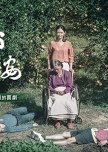
I would start with a few warnings. First, this is a film for a mature audience. Second, it contains morally ambiguous, even disturbing, sexual scenes and situations that may put some viewers off. Finally, I think it’s important to look into the tags before watching it.Mei is many things at once: a mother, a daughter, a caregiver the one who holds everything together. She moves from one burden to another ; a job slipping away from her, a son living with a disability, a mother slowly fading into dementia, and an ex-husband who is falling apart. Her life feels dense, almost airless. There is no space where the weight lifts. Nothing is spared.
I thought I would be drawn into a story that invites empathy, something that gently pulls at emotion. But Dear Orange goes in a different direction. It doesn't try to soften itself, nor does it offer the viewer a safe distance from which to judge. I couldn't step into Mei’s place, nor could I measure her choices. What it presents is something raw, closed, without exit, no space for “what would I do?”
What stands out is the complete lack of relief in the story. The story doesn't breathe. We see what she endures, what she carries, what she accepts. And instead of anger, something quieter settles in: the recognition of a life that presses down. It feels almost deliberate, this refusal of comfort as if the film denies us even the smallest consolation.
Slowly, it becomes clear that this is not only a story of suffering. It is the portrait of a woman who has made room for inevitability, who has absorbed it into herself. And perhaps it is within that acceptance, troubling, difficult to face, that the film finds its true meaning.
The ending stayed with me deeply. Looking back, I feel that Mei may have experienced a kind of happiness, fragile, almost invisible without ever truly realizing it.
A harsh, disturbing film, in the same vein as The Child of Light.
Was this review helpful to you?

Being a victim doesn’t excuse you from becoming a perpetrator
Following (2024) throws you straight into a whirlwind of suspense from the very start. Even just reading the synopsis had me questioning where it was all going, and once it began, it didn’t hold back. A lot happens quickly, and the tension keeps building in a way that makes you feel like you’re constantly trying to catch up, in a good but slightly overwhelming way.What really stood out to me is how the story makes you want to understand both the male and female leads. You find yourself justifying their actions, seeing things from their perspective, and almost excusing certain choices. But at the end of the day, wrongdoing is still wrongdoing, no matter how you frame it. That internal conflict is what makes the whole experience more thought-provoking than it initially seems.
I won’t spoil anything, but I was basically holding my breath for most of the movie, while my braincells were working overtime trying to keep up. I also love the dual meaning behind the title Following, whether it’s stalking someone or “following” in the social media sense. That layered message adds an extra punch to an already intense watch. Definitely recommended if you enjoy suspense that messes with both your nerves and your perspective.
Was this review helpful to you?
Love is illusion
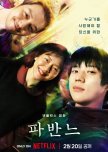
Simple storyline and it engage with our society. We just need to be kind and the good things happen. Each character has their own strength and weakness and it made sense as humanYH is such happy go lucky person but held traumatic events and he able to deal with it after his see GR and MJ love story.
GR unexpressive person but he found he attracted to MJ loneliness. GR is most fragile character but he honest and its the strong traits he has.
MJ is strong person and she actually able to survive in the hectic society as she said it easy deal with rain compared to people. That why she give up
I think it not wrong to give up as long as you live you life at your own pace. Overall this movies is good and I made me want to feel this kind of love.
Was this review helpful to you?

Raw. Complex. Full of emotions.
A film centered on scamming is not new and the plot can be pretty similar. However, "The Red Line" brings more to the table than just the premise. This film takes a deep dive into the struggle of those who have fallen victim to scams, but it doesn't stop there. It’s layered with raw emotions - desperation, anger, frustration, stress, shame, hope and friendship - that will make you resonate with the three main characters and also ponder about life.While the film focuses on the scheming to take down the scammers, it candidly explores the flaws within the system and the law - instead of putting extra effort to solve the issue, the victims are blamed for their mistakes and left to accept their fate, which compel these victims to fend for themselves and take matters into their own hands. “It’s not about the money – I want my life back.” - this critique adds a layer of complexity to the storyline, prompting viewers to reflect on the harsh realities of the world we live in. This makes this film not just about revenge or survival but also a social commentary on the systemic injustices that plague society. And everything is put together in a well-written script and delivered by a great performance by the entire cast. It's a smart move to have three characters from three social classes. Despite the contrasting personalities, the interactions between the characters are pretty solid and you can easily grasp their shared struggles and goal. In my opinion, this is Esther Supreeleela's most impressive performance to date, breaking her common 'lakorn nang'ek' persona. And Ning Chutima, being the youngest cast member, really stands out with her acting, fitting right in with the senior co-stars.
However, some subplots and characters (like Yui, the police officer and the driver uncle) are not well fleshed out, leaving the second half of the movie feeling a bit flat emotionally but ramping up with more action. But the steady pace as the plot unfolds helps conceal those flaws, keeping the focus on building tension and suspense throughout the film.
In addition to its good plot and strong acting, the film's production quality is impressive. The set and production design are meticulously crafted to capture the essence of the story. And I love how the wardrobe and makeup teams designed each character's look to mirror their personality and background, which adds to the film's realism and relatability.
In conclusion, "The Red Line" is a film not to be missed and definitely worth watching for the performance. It exceeds expectations by exploring the raw emotions and complexities of its characters while also delivering a thought-provoking critique on society's failings.
Was this review helpful to you?
"Killing is like smoking...only the first time is hard"
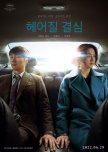
Decision to Leave was another provocative Park Chan Wook film combining murder and obsession. At times it felt like he was being provocative for provocative’s sake, but it was a hauntingly beautiful, if disturbing film to watch.Detective Jang Hae Jun and his partner are investigating what appears to be an accidental death of a mountain climber. But they become immediately suspicious of his gorgeous Chinese wife because she’s not grief stricken enough. A chronic insomniac, Hae Jun stakes out the widow Song Seo Rae’s apartment and place of work. To his surprise, he sleeps on the stakeouts. And he also begins to question whether Seo Rae is guilty. As he falls deeper into her spell, she becomes not only the cure for his insomnia but its cause as well.
This never seemed like a murder mystery to me. It was not, “Did she?” or “Didn’t she?” More like, “Does she?” or “Doesn’t she”? Hae Jun appeared to be happily married to his weekend wife in Ipo, yet Seo Rae spoke to a deeper place inside. The song “Mist” was played often and Ipo’s fog was mentioned repeatedly. Just as the fog of war can obscure thinking and action so can the fog of lust. The mist of miscommunication (mistcommunication?) clouded conversations as Seo Rae’s Korean wasn’t strong. Translation apps and mistranslations of words hampered understanding in an already twisted and stressful environment.
If you have more problems with infidelity than bug covered dead bodies, this will be a film to skip. Aside from a scene with Hae Jun and his wife, the most intimate moments involved lip balm and hand lotion which were quite sensual. Much was made of the mountains and the sea, at times touching but never truly together. The film started on a mountain and ended at the sea, both beautiful and deadly. I had a few issues with the film, but like Hae Jun, I was willing to suffer to watch Tang Wei.
28 March 2026
Trigger warning: Bugs, dead bodies, creepy bugs. Mostly emotional infidelity. Suicide
Was this review helpful to you?
Recommended viewing to understand North and South Korean relations of the late 90s
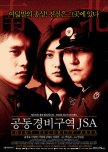
Really good look into what North and South Korean relations were like for the time. Heartbreaking story with characters the feel incredibly real--like people you could have met once. While the acting of the English-speaking actors isn't anything to be impressed by, they aren't the central focus of the story and I recommend not paying too much attention to them.Definitely one of my most recommended films if you're interested in Korean history and social attitudes between the two halves of the peninsula.
Was this review helpful to you?
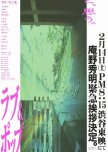
An Intemporal Take on Compensated Dating
Love & Pop is a shocking and brutal watch, tackling a taboo subject with an approach that is both deeply engaging and deliberately unsettling. At times, it can feel visually and narratively disorienting.What the film exposes was already present in the 1990s, yet it has only intensified over time, especially with teenagers gaining easier access to the internet. It sheds light on a reality that feels uncomfortably modern, one that many prefer to ignore or simply avoid confronting.
More importantly, this isn’t just a localized issue tied to one country or culture. The film points to something far more universal ~ a societal problem that transcends borders, making its message as relevant today as it was when it first emerged.
Was this review helpful to you?
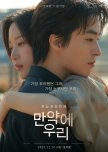
Hubungan harus saling berkembang
Ngeliat ini ada nyesek yg gabisa dijelasin. Beberapa spoiler ada yg bilang kalo film ini ngajarin kita kalo beneran ada yg namanya cinta di waktu yg salah, tapi.. pas liat film ini langsung, pandanganku malah engga ke arah itu, engga sependapat. Ini bukan cinta di waktu yg salah, tapi emang orangnya aja yg salah/blm tepat. Bayanginn ajaa, si Jeongwon mati2an hidup apa adanya, usaha iya, pekerja keras iya. Tapi pasangannya? nihil. Iya, tau, cowonya juga usaha, tapi menurutku engga berkembang, hanya berfokus pada satu hal. Sedangkan arah hidup dan perjalanan hidup itu panjang dan berliku banget, engga selalu yg di gebu2kan harus bgt tercapai, namun bisa dg hal lai atau dg jalan yg lain utk sampai di tujuan tsb. Toh, utk mencapai 10 engga harus dengan 5+5, namu bisa dg 7+3. Khalayaknya rezeki, mau diusahain kek manapunn, kalo udah rezeki pasti dateng juga, yg nentunya juga dg ada usaha ikhtiarnya, ya!Oiya, disini btw Eunho menurutku terlalu egois sih, krn terlalu fokus pada diri sendiri dan berputar problematikanya sendiri. Sedangkan hidup terus berjalan, orang akan tinggal dan pergi, musim akan silih berganti. Namun Eunho tetep berdiam sendiri, padahal saat itu udah didepan mata ada Jeongwon. huft, sayang sekali. Tapi namanya juga penyesalan sih yaa. Pas udah nyesel, baru deh ada pergerakannya.
Dan teruntuk Jeongwon, menurutku dia wanita yg gigih sih, bahkan sampe sebesar dan sesukses ini dia keren udah mau bertahan sejauh ini. Padahal dia tumbuh mandiri (tanpa orang tua dari kecil).
Kalo sama2 ngeliat flashback sih gaada akhirnya, tp kan semua orang udah punya cerita dan perjalanan masing2. Jadi cukup jadi pengalaman pernah jadi 'rumah' yg menyenangkan, yg engga selalu berporos utk waktu yg lama aja~ Diluar sana kayaknya ada yg relate gini, siapapun itu semoga mereka let it flow dan terus melanjutkan perjalanan mereka masing2, menemukan kebahagiaannya masing2.
Intinya, mau dipaksain bagaimanapun memang orangnya aja yg blm tepat, mau mengubah alurpun.. emang blm jodoh aja.. mau dipaksain kayak gimanapun juga susah dan gabisa, khalayak sifatnya manusia aja sih.. nanti bisa balik lagi ke stelan awal. jadii mending masing2 aja~
Was this review helpful to you?
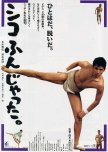
"It's a mawashi, not a jock strap"
Sumo Do, Sumo Don’t was a funny, lighthearted story of young college men finding something they were missing through a failing sumo club. “The players are pink giants,” with lots of skin showing and a determination to win and maintain age old traditions, well, at least some of them. And none of these boys were giants.Yamamoto Shuhei is called into Professor Anayama’s office. Due to his absences, Shuhei is going to fail and not graduate unless he joins the sumo club, just until the first tournament to keep the club open. Shuhei and the club leader, Aoki, search for new recruits. They manage to field a team with a guy wanting to impress a girl, another who can’t pay his rent and needs a place to live, and finally someone who just desperately desires friends. Unimpressed with the ancient art of sumo, Anayama’s losers may not be able to do enough to keep the club open.
Sumo Do, Sumo Don’t was the Bad News Bears of sumo. No one was really invested in sumo, but the more they competed the harder they worked at training. I did feel like Masayuki left out crucial moments that led to the boys’ decisions to dedicate themselves to the discipline of the sport and the respect for the ancient traditions. Most of their hardcore training was off-screen.
The film was funny, but not usually in a slapstick manner, more born out of the conditions the wrestlers found themselves in. I actually laughed out loud numerous times, a rarity for me with films. There were also deliciously heartwarming moments.
Sumo Do, Sumo Don’t was an entertaining, at times even rousing, sports film. Given that it was made for less than $1 million (USD), writer/director Suo Masayuki got a lot of bang for his buck. It was impossible for me to not root for this group of likeable underachievers. Each member of the team discovered something in himself through the rigors of sumo and the gift of friendship. Definitely worth a try if you enjoy sports or unexpected friendship films.
28 March 2026
Trigger warnings: I’ve seen other sumo fare and maybe the mawashi were ill fitting, but there was a lot of unkempt pubic hair exposed. Also, diarrhea gags.
Surprising note: I’m not sure how prevalent it was in the 1990s but this school had an American style football team complete with cheerleaders.
Was this review helpful to you?

This review may contain spoilers
Bikini Girl with Fairway Woods
When 'A Tale of Sorrow and Sadness' was released in 1977, Seijun Suzuki returned to feature filmmaking after nearly a decade of forced absence, following his infamous dismissal from Nikkatsu in the wake of 'Branded to Kill'. Officially, the reason given was the alleged “incomprehensibility” of his work; in reality, it marked the breaking point between an increasingly radical auteur and an industrial system no longer able (or willing) to contain him.At first glance, the film appears to move within a controlled and almost conventional framework — the world of golf, advertising, and media construction — where even the language itself seems borrowed from slogans and performance coaching. “Chance for a birdie,” we are told: a promise of precision, control, and success. Yet, as the film unfolds, that promise gradually reveals its darker implications.
The story of Reiko Sakuraba — a promising golfer turned into a carefully engineered media personality — unfolds as a precise study of manufactured identity. She is not simply an athlete, but a constructed image: shaped, refined, and deployed within a system that regulates not only her public presence, but increasingly her private existence as well.
At first, the narrative seems to follow a familiar trajectory — discovery, promotion, consolidation — but Suzuki gradually undermines this structure by introducing a destabilizing force that does not originate within the system itself, but from its most unsettling byproduct: the audience.
Kayo Semba, the obsessive fan, is not merely an antagonist. She is, in fact, the logical outcome of the very process that created Reiko. If an image is designed to be desired, internalized, and reproduced, then it becomes almost inevitable that someone will attempt to inhabit it — to replace, rather than simply admire, the figure it represents.
From this point onward, the film undergoes a decisive shift. Narrative progression gives way to a more ambiguous, disquieting flow, where the boundaries between public and private, performance and authenticity, begin to collapse. The intrusion into domestic space, the escalation of psychological pressure, and the gradual erosion of Reiko’s autonomy do not lead to a dramatic breakdown in the conventional sense, but to something far more insidious: a slow dissolution.
Reiko does not explode, nor does she openly resist. Instead, she empties out. She becomes a surface upon which external forces act — an image that no longer belongs to her. In this sense, the movie feels strikingly modern, anticipating dynamics that today appear almost commonplace: the commodification of the body, the fabrication of identity, and the invasive nature of public attention.
At the same time, the system that produced all this remains fundamentally intact. Even as events spiral into increasingly disturbing territory, the machinery of promotion, contracts, and media exposure continues to operate, ready to adapt, replace, and move forward. Within this framework, the figure of Miyake — manipulative, pragmatic, yet never overtly monstrous — functions less as a villain than as an integral component of the system itself.
Stylistically, while more restrained than his earlier works, Suzuki’s signature remains unmistakable. His use of space, the fragmented pacing, and the subtle but persistent dissonance between what is shown and what is implied all contribute to an atmosphere of controlled instability. The film seems constantly on the verge of rupture, yet never fully collapses.
The result is a work that resists easy categorization — neither fully commercial nor overtly experimental — but precisely for this reason deeply coherent within Suzuki’s artistic trajectory. This is not a conciliatory return, nor an attempt to realign with industry expectations; rather, it is a lucid and quietly devastating reflection on what that system produces: not only images, but desires, projections, and distortions.
'A Tale of Sorrow and Sadness' it’s not so much the story of a celebrity's downfall as the process by which a person gradually ceases to belong to themselves, becoming a canvas for others' projections.
And after that, the descent is irreversible.
8/10
Was this review helpful to you?


