

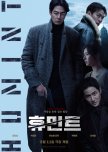
Turn Your Brain Off
HUMINT is a Korean spy film… that ends up being just another generic action movie.The story revolves around human trafficking, crime networks, and the Russian mafia.
Heavy subject… completely generic execution.
Same formula again: many vs one…
but always attacking one at a time.
Like they’re waiting in line.
The “good guys” are perfect at everything:
taekwondo, flawless aim, insane reflexes.
They can even land shots by bouncing bullets off the ground.
The “bad guys”… can’t hit anything.
Not even at close range.
Except for the main villain, of course. He actually feels dangerous.
The body count is exactly what you’d expect:
enemies piling up like props during endless shootouts.
The movie tries to say something about corruption —
that everyone, even the police, takes advantage of others.
But in the end, it falls back on the usual cliché:
the unstoppable hero
and the “girl in danger” as motivation.
And then comes the most forced part:
characters who should behave like spies…
suddenly act like elite agents,
while everyone else conveniently becomes incompetent so they can shine.
And yes… you can almost hear the director saying:
“run straight into the bullets.”
Final verdict
If you like turning your brain off…
5 out of 5.
If you want tension, logic, and a well-written story…
this isn’t it.
Was this review helpful to you?

Started with a bang, but...
There are many things going for this movie. I won't spoil anything, but you do have to pay attention to the bridal dress. The CGI is a bit lacking, but it gets the point across. There are several points in the story that don't make perfect sense, but I'm going to give the movie some grace because I'm watching it with subtitles and maybe something got lost in translation. Overall, a very visually pretty movie to watch, and it genuinely scared me twice, but not something I'd watch again.Was this review helpful to you?

This review may contain spoilers
Iconic Comedy
Blue Sky of Love didn’t attract much attention during its initial theatrical release and didn’t perform very well at the box office. However, it was later recognized as a classic Thai comedy that people should seek out and watch.The film regained popularity after the passing of the famous comedian Kom Chuanchuen due to COVID-19, and viewers who revisited it have given overwhelmingly positive reviews, praising it as one of his iconic comedic works.
Set during the Cold War era of the 1970s, the story is grounded in real historical events involving students affected by the October 6, 1976 massacre, many of whom fled into the jungles to join the Communist Party of Thailand (CPT).
female lead is one of those who joins the communist movement in the forest, while the ml and his four friends enter the forest simply to escape city life. By chance, they miss their intended ride and end up boarding another vehicle, whose passengers are not tourists but members of the Communist Party aiming to liberate the people. Forced by circumstance, the 4 troublemakers end up embedded within the Communist camp, participating in their forest activities.
However, the 4 troublemakers end up causing chaos in the camp—for example, they accidentally harvest all the rice supplies, leading to a hilarious situation. This forces the camp leader to go into a nearby village to seek food supplies, with the four men tagging along, partly because the ml is interested in the fl.
At one point, while escaping from soldiers, the male lead and his friends get separated. The film clearly divides the narrative into parts, first focusing on the male lead’s friends, which is full of humor, before shifting back to the male and female leads along with the camp leader, where the tone becomes more serious. There are also light romantic moments between the leads, along with a somewhat melodramatic backstory for the male lead.
The movie concludes with a "Happy Ending" typical of the comedy genre, while successfully portraying the ideological conflicts of that era. While some of the humor is uniquely Thai, the core comedy remains universal.
Was this review helpful to you?
This review may contain spoilers
“Humint” – The South Korean Thriller That Begins with an Alarm
There is an almost unwritten rule in action cinema: a film should declare its intentions within the first few minutes. Ryoo Seung-wan, however, chooses the opposite approach. Humint, recently released on Netflix, opens not with an explosion or a chase, but with a mundane sound: the alarm of an alarm clock.This atypical opening works remarkably well. It does not prepare the viewer; instead, it throws them—just like the protagonist—into a reality whose contours gradually unfold. This discovery is driven by a risky narrative gamble: temporal shifts.
Fragmented Structure: Puzzle or Packaging?
“Five months later,” “three months earlier”…
The director uses these temporal markers to reconstruct, like a puzzle, a complex espionage operation. The intention is clear—fragmenting information to heighten mystery and sustain suspense. In practice, however, the technique tends to become more disruptive than illuminating.
This is not a film that is difficult to follow, but rather one that seems reluctant to let its narrative flow naturally. The fragmented editing, designed to conceal and reveal strategically, sometimes confuses more than it clarifies. As a result, tension built in key moments dissipates before reaching its full impact.
Beyond the Peninsula
The action quickly moves beyond South Korea’s borders and extends eastward.
Vladivostok becomes more than just an exotic location—it functions as a character in its own right. The Siberian cold, rigid architecture, frozen port, and the inclusion of Russian language elements are not mere background details; they actively shape the film’s visual and tonal identity. The oppressive atmosphere lends authenticity and turns the international sequences into some of the film’s most compelling moments.
The actors portraying Russian characters are not Russian but European, among them Robert Maaser as Alexei, a mob figure embodying a threat that exists outside the traditional conflict between the two Koreas.
People Between Borders and Loyalties
At the center of the story, Zo In-sung delivers an atypical protagonist. Agent Jo is not merely an executor of orders, but a vulnerable character caught between professional duty and human instinct. He resists treating people as disposable “assets,” even as his superiors insist that humanity has no place in such a line of work. This duality provides one of the film’s few genuine emotional anchors.
The chemistry between Zo In-sung and Park Jeon-min works exceptionally well. Park brings life to a character who initially appears cold and antagonistic, yet gradually reveals more complexity. Each of his appearances adds rhythm and energy, particularly in the tense confrontations between the two.
Shin Sae-kyeong, despite having a leading role, is not afforded the same depth. Her character fluctuates between stereotypical moments and instances of genuine agency, showing courage and presence of mind despite lacking formal training. Her arc exists, but the script does not give it enough room to become truly memorable.
Park Hae-joon embodies a classic antagonist archetype: authoritative, convinced of his own invincibility, and certain that the system is on his side. He serves his narrative function effectively but lacks the nuance that could have elevated him beyond a functional character.
Overlapping Conflicts, A Lost Core
One of the film’s central contradictions lies in its ambition. It presents multiple overlapping conflicts: South versus North Korea, internal divisions within each side, and additional layers of tension. On top of this, there is a romantic thread that remains underdeveloped yet persistent, alongside a broader moral dilemma that quietly underpins the narrative.
Amid this complexity, the central narrative thread begins to fade.
At times, the film seems to lose sight of its original focus, and while the action remains consistently well-executed, it often compensates for a lack of narrative clarity.
A Film That Begins and Ends the Same Way
An interesting parallel emerges through the film’s structure. The ending mirrors the beginning—a hotel room, a different city, the same mundane routine. This circular construction recalls literary works where the narrative closes exactly where it began. It is a gesture of symmetry that could have carried deeper meaning, but in Humint, it remains more of a stylistic note than a fully realized concept.
Synopsis
Humint is a South Korean action thriller directed by Ryoo Seung-wan, following a secret agent entangled in a complex operation set against the backdrop of tensions between North and South Korea. The mission expands internationally as events unfold in Russia, where conflicting interests and fragile alliances further complicate the unfolding intrigue.
Cast
Zo In-sung – Agent Jo
Park Jeon-min – Park Geon
Shin Sae-kyeong – Chae Seon-hwa
Park Hae-joon – Hwang Chi-sung
Robert Maaser – Alexei
Director: Ryoo Seung-wan
Genre: Action / Spy Thriller
Platform: Netflix
Runtime: Just over two hours
Verdict
Humint is an ambitious film with a strong visual identity and several solid performances, yet it ultimately loses itself in its fragmented structure. It offers plenty of action, engaging characters, and a multi-layered story—but its central thread remains overshadowed.
It presents itself as a global thriller but functions as an uneven one: gripping in the moment, yet inconsistent as a whole. Still, it is a film worth watching, particularly for its action sequences and for viewers drawn to the world of Korean espionage and the stark atmosphere of Russia’s Far East.
Was this review helpful to you?
This review may contain spoilers
Il n'est en art qu'une chose qui vaille, celle qu'on ne peut expliquer...
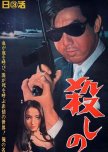
There comes a point in Seijun Suzuki’s career when one begins to suspect that something has simply broken. Not in a dramatic sense, nor in any ‘artistic’ way that we are accustomed to describing it.More simply — and perhaps for that very reason more radically — it is as if, after years spent making three or four films a year within the Nikkatsu production machine, Suzuki had looked at the mechanism for what it was: a perfectly functioning structure… and one that was completely exhausted.
At that point, instead of resisting or walking away (at least of his own accord), he seems to do something much simpler. The mechanism… He picks it up. He opens it… And stops putting it back together.
“Branded to Kill” (for the record, the only Suzuki film regularly distributed in Italy at the time) stems precisely from that: not as a dramatic break with convention, but as an internal short circuit, a moment when the genre movie — specifically the yakuza noir — carries on by inertia, even though something, in the meantime, has stopped working.
It’s not that there’s a specific scene or a passage you can pinpoint; it’s just that, as you watch it, at a certain moment you seem to sense it. The film is still there. The story… not quite in the same way.
Suzuki breaks the structure down into fragments, allowing them to coexist without forcing a return to wholeness. A gesture reminiscent of Cubism: not an alternative reality, but the same reality viewed from incompatible, simultaneous angles that cannot be pieced back together. Not a narrative that unfolds but a surface that shatters.
The protagonist, the hitman Hanada, is not a character in the traditional sense; he is a top-tier professional, ranked number 3 in a hierarchy that seems more like a mental obsession than a real system. It is unclear whether he is merely a victim of events, tries to navigate them, or simply reflects them.
It’s almost like a loop. He has these incredible obsessions – the smell of rice in particular, and relationships with the opposite sex – and moves through a world – real!? Imaginary!? Inevitable!? – which, really, resembles a noir film, at least on the surface, perhaps from a distance. Up close, however, it is as if everything had been taken apart and put back together badly, as if a deliberate decision had been made to sabotage the very concept of continuity (logical!? Narrative!?)
It is therefore pointless to try to piece the picture back together: the fragments were never meant to fit together. It is from this acceptance — rather than from any interpretation — that “Branded to Kill” reveals its most elusive nature. It functions like a trance: actions repeat themselves, distorted; situations slip into one another without ever truly meshing. Hanada moves within this flow as if following an automatism he does not control.
It is a kind of strange, almost ‘flawed’ hypnosis that always seems to leave a crack, a tiny gap that prevents one from letting go – and, evidently, from understanding (?). Yet rather than being a dream to be deciphered, it is a reality that has ceased to function.
Despite everything, beneath this unstable surface, the structure is still (more or less) recognisable.
There’s a killer. There are assignments, organisations, hierarchies. There are enigmatic women, betrayals, shoot-outs. Everything needed to build a good noir. Except that here, every element seems to arrive after its own meaning. The tension doesn’t seem to build so much as to dissipate.
Vague dialogue that distracts rather than clarifies, and violence that borders on abstraction in its slavish and, in some respects, illogical repetition. The incredible soundtrack, a blend of jazz and avant-garde (the pink vinyl edition is beautiful!) The noir genre hollowed out from within, leaving only the shell—though far from inert… But this is no parody or cinephile’s mockery playing with arthouse cinema; it is something stranger: a noir that hasn’t realised it’s finished.
And in this friction — between what we recognise and what no longer works — Suzuki finds his greatest freedom. He does not destroy the genre but lets it go. The director takes the noir/yakuza film as his starting point, distorting it until it becomes unrecognisable yet not abstract, moving away from pure avant-garde to arrive at a form of pop (art?) under extreme stress…
If we were to imagine the Nikkatsu executives sitting in the projection room watching "Branded to Kill", we would probably be faced with a scene reminiscent of Jean-Luc Godard’s "Le Mépris", where Jerry Prokosch, the producer played by Jack Palance, literally flings – like a frisbee or discus throw – the film cans of Fritz Lang’s film, for an adaptation of Homer’s “Odyssey” that isn’t exactly “commercial”, in his view…
But Suzuki is not a ‘rebel’, rather, he is an insider saboteur. The romantic narrative of ‘the director versus Nikkatsu’ is true but limiting. Suzuki is more interesting – and complex – if we read him as a craftsman who realised that the system had run out of substance, and that it was better to ‘stuff’ the form until it burst.
If, in "Branded to Kill", sex becomes almost a “fetishistic compulsion inextricably linked to death and violence” (quoted) and if Suzuki “deconstructs genres and conventions”, drawing on a non-conformist spirit and a taste for social satire (already quite evident in his first “personal” works), then, rather than associating him with the American Samuel Fuller, as is often suggested, one is inclined to link him more closely to a director seemingly worlds apart, such as the Italian Marco Ferreri, whose iconoclastic vision is almost identical.
At this point, seeking a conclusion in the traditional sense seems almost out of place.
“Branded to Kill” doesn’t really come to a closure. It doesn’t tie up loose ends or restore order. It simply… fizzles out.
As if, having pushed the mechanism to its limits, Suzuki had decided it was no longer worth fixing. That the meaning, if there was any, had already been exhausted along the way.
And that all that remained was this collection of fragments, images, gestures — still in motion, but now disconnected from any notion of wholeness.
And the viewer, at that point, is not asked to understand, but rather to simply stand before those fragments. To lose himself, if necessary. Or even just to accept that the pieces will never come back together. Because perhaps this is precisely the film’s most radical act: not breaking the rules, not rewriting them, but letting them go — and observing what remains when we stop holding them together.
“Branded To Kill” is unlike anything else, even today when we’re used to everything. It’s short, fast-paced and full of images that stick in your mind. Ultimately, if you like, it’s even entertaining — but in that slightly strange way that leaves you feeling as though you’ve understood something… without knowing exactly what.
And in that moment, between a shot that slips away and a cut that doesn’t quite land, you almost find yourself picturing him once more:
Suzuki. A step back. A quick glance. A half-smile.
As if he were saying to you: “It used to work great, you know?
But in this way it’s much more interesting.”
9 ½ / 10
Was this review helpful to you?
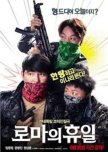
Underrated Movie
Movies on MDL tend to get very low ratings. I dont know why.Anyways, it is a great drama with comedy.
Just as the synopsis says. fun from beginning to end. A trio of friends robbed but then their escaped plan failed and how to esacpe from the police they entered a clubhouse "Roman Holiday". So the navigation inside the house is what the whole show tries to tell us.
Have a go!
Was this review helpful to you?
A masterclass in how to build tension.
HUMINT is the definition of "all killer, no filler." Absolute, non-stop tension from the very first minute, this movie hooks you and doesn't let go.The entire cast is on fire; there isn't a single weak link in the group. The performances are spectacular across the board. While the action sequences are top-tier and beautifully shot, the highlight is undoubtedly the ending: APOTHEOSIC.
Visually sober yet highly effective, the direction creates a cold, oppressive atmosphere that perfectly reflects the world of spies: a place where trust is a luxury and feeling can be a fatal mistake.
A highly recommended film for anyone who loves top-tier cinema.
Was this review helpful to you?
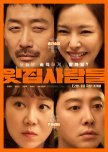
Adult Talk
Hm, is this really a Korean movie? It was definitely something different from what we usually get from Korean cinema. The entire film takes place in one apartment and has a lot of dialogue. Almost all the characters do is talk. At the center of the story is a quite ordinary couple who invite their neighbors over for dinner. Since they have a Blessed Virgin Mary statue on the shelf, I assume they are Catholic. It’s just a minor detail, but it carries some meaning given how the conversation heads in a direction that would be completely off-limits for most Catholics.Let’s just say the movie touches on very adult subjects. Even without any nudity and with almost no profanity, this is definitely an 18+ film. It will probably be appreciated most by married couples with some life experience. The genre is adult drama with a bit of dark and absurd comedy. One particular scene involving food preparation was especially spicy.
There’s also a clear message: sometimes we are more honest with strangers than with the people we live with, and we often search for what we desire outside, forgetting that we already have it at home. Even though I had some objections to the movie, I liked that it also showed the ingredients for a healthy marriage. And it’s always nice to see Gong Hyo-jin on screen.
Was this review helpful to you?
Best gunfight sequence ever in Korean cinema
It is unbelievable how ridiculously great this movie is, it has every aspect it needed to become an absolute peak of a cinematic event. Right from the initial setup, the effectiveness of its storytelling, extremely remarkable character development and that mindblowing intense chemistry between characters from different political backgrounds, solidly built action scenes in high adrenaline threat and also the best gunfight sequence ever in Korean cinema, it even has that art factor with beautifully shot European cityscapes and classical soundtrack. This movie just ticks all the right boxes and currently stays right at the top of the best release this year.Was this review helpful to you?
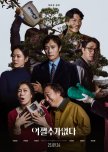
Is society the problem, or was this man just a failure?
There was a specific vision and style to this movie, and even if it did not match my taste, I do appreciate it more than a movie that is made with no specific viewer in mind - for everyone and for no one.Sadly even if I respect the distinctive style of directing, the movie with all the attempts at social commentary, felt rather empty. Capitalism - bad, pressure put by social norms - bad, greed for success with no actual values behind it - bad. No real nuance, no depth. I do like how No Other Choices focuses on the struggles of men and how, even if we slowly give up on outdated ideas, the thought of the man being the head of the family that has to provide no matter what, as if that was their only value, can still affect many people. I just wish they presented that in a less obvious and in your face manner. Making Yoo Man Su even a tiny bit likable would be great too.
I honestly think Yoo Man Su was the biggest issue I had with the movie. Because no one had it supposed to have a larger social commentary, but at the end of the day it’s a story about a man with low self esteem that acts like a permanent victim trying to justify every action he takes. I want to feel bad for him, but he was so dislikable I actually wished him failure. Making your main character both unlikable and morally corrupt is a risky business. For how long the movie is, I wish they spent more time establishing that Man Su is in fact just a normal man, and not a complete failure. And yet, I kept thinking - society sucks, true, but in this story this man is the problem, not the society.
That said, performances for sure carried the whole movie. Especially Son Ye Jin as Mi Ri.
I don’t really have many grand thoughts about this title. Went to the cinema, considered walking out maybe 2 times, finished watching and that’s it. I would not call it food for thoughts, it was decently entertaining.
Was this review helpful to you?
Visually, the movie stands out with its cold, snowy setting, creating a melancholic atmosphere that feels very reminiscent of Russian cinema. The cinematography captures this mood effectively, giving the film a distinct and immersive tone.
However, the storytelling feels a bit loose at times, lacking detail—especially when it comes to the intelligence and special agent aspects. The portrayal of the Korean intelligence agency (somewhat like Korea’s version of the FBI) feels underdeveloped and not as in-depth as it could have been.
The romance element was also a slight disappointment. It’s marketed in a way that suggests a connection between the main character and the female lead, but instead, the emotional focus shifts toward a relationship with another North Korean agent. This unexpected direction may not work for everyone.
On the positive side, the action sequences are a highlight. The fight scenes are engaging and well-executed, with a style reminiscent of John Wick—tight, hand-to-hand combat that’s both fluid and entertaining. In terms of action, the film easily scores around an 8 to 9 out of 10.
Overall, the story lands around a 7 to 7.5—it’s good, but not particularly memorable or rewatchable. It’s an enjoyable watch, especially for the action and atmosphere, but it may not leave a lasting impression.
Was this review helpful to you?
Good Action, Yearning Romance, Amazing Acting
I actually didn't expect much from this movie, no hype about it or anything like that, yet it turned out to be one of my favorite watches of 2026 so far.The story itself isn't what keeps you engaged, but rather the raw action scenes and the characters who were extremely interesting (actors are amazing omg). The Politics and other topics are not so hard to follow, but it felt like the movie was lacking more advanced plot in some areas.
Cinematography was great, I loved the whole ambience of it.
The glimpse of romance and yearning was the best part in my opinion, and it's been a while since I've watched this type of love on screen.
NOTE!!!!!! Humint is very brutal and heavy watch (I love action, thriller and crime kdramas and movies, though this one was rough, violence targeted mainly towards women)
Overall, 9/10 or even 9.5/10 for HUMINTTTT MUST WATCH
Was this review helpful to you?
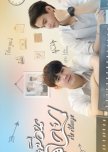
cute but not special
It's difficult to rate short drama films. This one was cute. Two classmates confess to each other that they love each other. Nothing much happens in the film, I've seen better short dramas, but it's still not bad. It seems this is also new for the actors (who are unknown) That's why there are extra points. Perhaps my Rating is a bit harsh, but that's still my opinion.Was this review helpful to you?
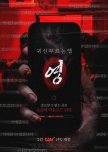
Horror App
I am not a real horror fan, but I am still interested in watching horror stories from time to time. In this movie, the horror comes through a phone app that reveals or invokes bloodthirsty ghosts. The movie has six standalone segments tied together thematically, as they all relate to the ghosts and the scary app, which mostly serves as a warning that we are about to see a ghost.To me, the stories are too short — each could easily be an intro to a fuller feature-length story. The connection between them feels too vague, and the end product is just an omnibus of six very short and not particularly original horror stories. At least they give us some mystery to think about, because they don’t explain plainly why and how the ghosts appear and do what they do.
1. Unlocking (잠금해제) – This is the prologue. Some students test the app and things don’t go according to plan. It got me excited for the movie, but it has no real substance.
2. Night Shift (새벽출근) – I was still quite interested in the story here, but the end result was too common to be memorable.
3. Bus to Goseong (고성행) – This one was strange. Nothing happens until it suddenly does, and I liked that.
4. The Collector (콜렉터) – The premise is interesting: repairing phones and secretly copying their files for your own purposes. But what if the phone “remembered” a ghost?
5. Oneself (자신) – This was weird and gory. I didn’t get it at all. The male actor was very good, though.
6. Ghost Gate (귀문방) – A bland story but quite atmospheric. The appearance of the ghosts made for a strong finale for the entire movie.
Verdict: The movie had my interest at first, but as one famous reviewer would say, I will forget it in T-minus one day. Yeah… already have.
Was this review helpful to you?
This review may contain spoilers
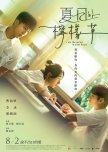
Are we serious
I’m actually livid that I wasted my time on this. The ending was incredibly rushed, cliché, and predictable. JUSTICE FOR YUZU. He was yearning exactly the way a lead should; he showed up, offered comfort, and stayed present while the ML was nowhere to be found.I loved the ML from Mysterious Love, but he was so jarring here. He lacked any real personality compared to Yuzu, who was funny and was in a band. THE CRAZY PART, he never told her she was his childhood friend, which was the entire point. They spent so much time on the grandparents and the grandmother’s dementia, yet never used it to address the forgotten memories of the FL —what a waste of screen time. Why would you even raise this point if you weren't going to develop it.
There was zero communication. He never explained why he called her "easy,"no communication clearly and his move to America felt like a self-inflicted "crash out" rather than his mother forcing him. SHE NEVER forced him to pick between his grandparents' happiness and his. The fact that their long-distance relationship just "faded" made their entire bond feel surface-level and worthless. Then, after years of ghosting each other, he just reappears, they kiss, and everything is fine? It’s nonsensical. What kind of message is that even sending? Its not ok they were in a toxic relationship.
Overall, it wasn't sad at all, just very annoying. It would have been more emotional if they had done something similar to '20th Century Girl,' where he and the dog were both ill and died in america and she found out years later why they lost contact. Also, the dog storyline fell very flat; it wasn't even that sad that it died, to be honest.
Anyways they really pieced it together to get that ending. It's almost like they had decided the ending before the plot. This would have been way better if they changed the genre to a sad one because that's where it was heading for realistically. It did not have to be cliche they should have just faded out of their lives. He could never have shown up to that wedding, which also sends across an important message of moving on.
Yuzu was robbed 😔😔😔
Was this review helpful to you?


