

Overdo - a missed opportunity..
I’d been looking forward to the drama “Overdo” for so long, and I have to admit I was wrong. I understand they wanted to “break away” from ZLH’s usual roles, but did you find the character believable? Didn’t you find him over-the-top? Did he really seem like a man who lived during the Republican era? Was he convincing in playing a character with a split personality? For me—(as a fan of his, and someone who actually likes him)—honestly, no. I found it all over-the-top, repetitive, and predictable... The first part of the drama really disappointed me, from the editing to that “I don’t know what I’m going to become” vibe… (but maybe that was because of my high expectations) I saw so much—way too much—toxicity, and it was one of the few times I didn’t root for the couple… I’m so frustrated that I don’t even want to keep talking about this drama—the only things I’ll give credit to are the costumes, the jewelry, the always-brilliant Whang Churan, and… and I guess that’s it. This was ZLH’s worst drama. I just want to forget what I saw, especially episode 33, which was HORRIBLE… IMHO.Was this review helpful to you?
This review may contain spoilers
nice actors - good stage-team/director but unforgivable break in storyline
The production is quite good - the actress is very pretty und the producer-team are real capable to get the best out of the actors - the costumes are nice the make-up team are also ambitioned experts. SORRY but in the storyline - which was nice at the beginning -there is a total moronic break which destryos the drama (episode 15 to16. So - sadly i couldnt give a better rating - but i cheer for the actors and the stage team !Was this review helpful to you?
Bad acting, but I do not blame the performers
The plot was interesting at the early part, although I still see Mary Sue, and the female character who tried to pull other women down. I do not enjoy it. However, the worse thing about this series is the acting. All major characters had the same characteristic (except Fan Shuai Qi and Li Hong Quan). I do not see any difference among them. They tried to hold still all the time to make themselves look like narcissists. Similarly, their speaking styles are the same too. I used to see some of these actors and actresses in other series, and they were not as bad as in this one. Therefore, I do not think that it is the problem based on the actors, but it might be from the screenplay or directing.Was this review helpful to you?

This review may contain spoilers
A Curse I’d Actually Wish On My Daughters (In a Good Way)
I initially started this show because I didn't know what else to watch and I figured I would just check it out. I ended up getting pulled in by the 2nd episode., and it turned out better than I thought. The show was a mix of Final Destination and Carrie for me. The FL did a great job in portraying an outcast type character, that ended up secluding herself from the world. I liked that the ML had a genuine interest in the FL, and used his skill set to find a way to be with her. Heo Eun Sil, the FL's bestie, was by far the funniest character, for me anyways. At one point, I thought she was going to have a thing for the ML, but I liked that her attraction to him was more of a big sister being happy to come across someone that cares about her little sister. I was surprised to see that the ML had two people in his life that were dealing with this phenomenon and that he devoted his life to helping them. It was an inspiring and feel good show at the end. I wish I could figure out how to create this phenomenon for my daughters, so only genuine guys will make the effort to get close to her. Don't get me wrong, I would tweak the phenomenon, if it were possible, so it wouldn't injure or kill them. Maybe make them sick... like intense sore throat so they can't try to sweet talk them with non-sense or non-stop diarrhea as long as they are in their space, so they're always stuck in the bathroom and away from my girls.Was this review helpful to you?
Drop at the first ep.
It repeats the same old trope of almost all of the Chinese dramas.
Women hurt one another, and the female lead was saved by a man, lying a lot, and discrimination against fat people. I do not know why the media try to teach these things to their people. I watch many sport matches with Chinese women athletes. They are strong with high attempt and enthusiasm. I praise them. What I learned from watching Chinese sport is very different from fictional stories in their TV shows. I want to send a big cheer and big hug to those athletes. Although they are prejudiced by their local media, they still try so hard and never give up.
Was this review helpful to you?
Skip this drama
It's a pity for the whole beautiful casts with the terrible drama. The story is so stupid and unacceptable.Extremely disappoited to build FL. She had caused many problems , and drove the ML to the sad ending.
The Mom got mental problems ,but still alive until the end.
I cannot feel any sympathizes with the FL, all good people died because of her
Was this review helpful to you?
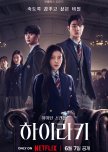
Regret
Don’t watch this drama. By the end, you’ll regret why you even started it. You’ll be sitting there questioning every life decision like, “Why did I watch this? Who told me to waste my time?” Save yourself the regret, protect your sanity, and stay far away from this drama. Seriously. 💀😭!!
Was this review helpful to you?
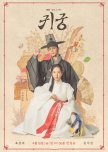
A favorite supernatural historical drama..
First of all, I watched this drama a long time ago when it first aired, so I’ve forgotten the deeper details of the plot. I wrote this review just wanting to praise the drama, the actors, and the cinematography.Well.. tbh I really enjoy historical dramas and ghost or supernatural genres, but when they mix both genres, I’m even happier to watch. The way they handle unexpected ghosts with different background stories really amazes me.
I also love how all the actors portray their roles so well. I’ve been following Sungjae for a long time, and his acting skills have always been spectacular. The cinematography is also really nice to look at.
Was this review helpful to you?
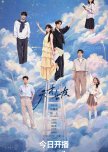
A Heartwarming Comfort Drama That Deserves More Love
Genius Girlfriend was such a pleasant surprise. It’s funny, heartwarming and the kind of drama that leaves you smiling after every episode. Tian Xiwei shines once again with her natural charm and expressive acting, while the chemistry between the leads feels effortless and enjoyable.I also loved the family dynamics and the lighthearted humor. It doesn’t rely on heavy drama or unnecessary angst..it simply tells a feel-good story that is easy to binge.
It may not be everyone’s cup of tea, especially if you’re looking for intense conflict, but if you enjoy wholesome romances with lovable characters, this drama is definitely worth watching. For me, it’s one of my favorite C-dramas of 2026.
Was this review helpful to you?
This review may contain spoilers
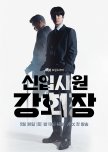
The chairman of Choiseong intends to retire and hand over his position to one of his twins—a brother and sister. While taking their father's car out for a joyride, the twins strike a young man who had just signed a contract to play for a team sponsored by the father's company.After completing his rehabilitation—and having lost his contract in the process—the footballer confronts the CEO to demand an apology and compensation. Faced with evidence of the accident, the CEO writes a blank check and prepares to announce the resignation of the twins responsible. In a desperate attempt to stop him, the twins push him down the stairs. As he falls, he lands on the footballer; they tumble to the bottom together and wake up in the hospital having swapped bodies. Meanwhile, the chairman's third child—who had been sent abroad for her studies—returns home. The young man gets hired by the company, and together they work to expose the twins' wrongdoing.
So, without realizing it, the daughter ends up working with her father.
It’s entertaining to watch this newcomer’s knack for navigating various skills and strategies; Kudos to Lee Jun Young for his portrayal of the elderly character.
The music is sometimes ill-suited (it feels out of place).
Episode 9 is both sad and infuriating. The old man is killed by his daughter, causing the poor young man's soul to depart. This leaves the illegitimate daughter in charge of the empire, while the wife and younger daughter are devastated by the man's death (accused, cast out...); meanwhile, the young man plays a double game—trying to act mysterious and resolve the situation on his own—but is misunderstood by everyone, especially the younger daughter.
It’s touching to see how much he cares for his second wife.
I felt sorry for the young footballer: first he was run over, then someone tried to suffocate him, and finally, he died at the hands of the elderly CEO's daughter.
The ending: I can't believe it... A 70-year-old wakes up from a coma, rushes to get a car, and where does he go? He didn't even know where the chalet was, yet he’s the one who finds the young man. But the icing on the cake is the ending, where he bumps into a girl and swaps bodies with her again. That is just too much.
Was this review helpful to you?
This review may contain spoilers
What a disappointment… saved only by the excellent performances of the cast
I have never in my entire life watched a drama as toxically written, ridiculous, and narrative-breakingly absurd as Overdo. The only reason I managed to survive the absolute torture of sitting through all 33 episodes is out of pure respect and love for Zhang Linghe and Wang Churan. They are a truly magnificent cast who deserved a masterpiece, but instead, they were handed a pathetic, trainwreck of a script featuring characters who completely fail to evolve.The toxicity of the writing is entirely rooted in how the main couple is fundamentally broken. The writers present Susu as an entirely manipulative, heartless, and cold person driven solely by bitter revenge. She is pathologically full of lies, pathologically deceiving people even about the most obvious things—including the paternity of her own child. On the flip side, Qingyi is portrayed as an emotionally weak, completely obsessed man who remains pathetically in love with the exact person who actively sent him to jail. There is no genuine character growth; they simply cycle through the same toxic behavioral loops for 33 episodes.
By Episode 26, the pacing completely implodes. We are subjected to a bizarre, rushed, and incredibly poorly directed fake-wedding-turned-real-marriage that gives the audience total whiplash. If that wasn't absurd enough, the script suddenly decides to turn Susu into a high-security wartime espionage spy overnight. The writers threw every single pathetic trope into a blender—toxic family whippings, a sudden rare child blood disorder, secret drug cartels, and wartime explosions—just to force unearned high stakes because they didn't know how to write organic character development.
To make matters worse, the technical production values are an absolute eyesore that completely ruin the viewing experience. The show is plagued by relentless, constant flashbacks that treat the audience like we have no short-term memory, grinding the pacing to a halt. Visually, the entire series is buried under a bizarre, sickly greenish tint that drains all the life out of the scenes. Combined with the cheap camera angles and rapid-fire editing, the entire production gives off the low-budget vibe of a vertical micro-drama rather than a high-end, premium television series.
The finale package dropped by iQIYI is the ultimate proof of how chaotic this production was. In a matter of minutes, the script literally blows Murong Qingyi up in a horrific warehouse fire, only to immediately resurrect him and place him on a train with Susu and Le'an for a rushed "Happy Ending" quota. It is pure narrative whiplash.
The saving grace of this entire disaster is the leads. Zhang Linghe delivers an acting masterclass; his emotional restraint, his signature "one-tear" crying scenes, and his transition into "dad mode" were incredibly moving despite how weak his character was written. Wang Churan matches his gravity flawlessly, delivering heartbreaking vulnerability even when the script forces her to play a deeply unlikable, manipulative woman. Their chemistry and professional dedication are the only reasons this show is remotely watchable.
To the cast: I respect your hard work immensely.
To the writers: this script was an insult to the viewers and a complete waste of a gold-standard cast.
Watch only for the actors, but prepare for mental exhaustion.
Was this review helpful to you?
This review may contain spoilers
All in all, a bit disappointing compared to other seasons.It’s already hard enough for viewers to remember the participants' names, but they made things even more complicated with those nicknames (Salty Bread, Busy Hamster, Yellow Dog, Tired Camel...).
I found the soundtrack quite inappropriate. Often, the music didn't match the mood—piano pieces drowning out the dialogue—which really bothered me.
As for scenes like the dog peeing or the bedraggled cat, other scenes could have been added.
There are awkward, dead-air moments, followed by endless eating—just eating, eating, eating. I know Korean culture revolves largely around food, but I would have gladly watched something else.
Then, at one point (Episode 9), the single contestant Guy-Ri seems to have vanished. One might have even thought she had withdrawn from the show, yet things just carry on as if nothing happened, and not a word is said.
It is even stranger that, during the final selection, she ended up pairing off and leaving the show as part of a couple.
Especially since I was rooting for the couple Kim Seo Won and Choi So Yun. They were sweet, sincere, honest, and straightforward. I really wanted them to leave together.
I admired Seo Won's kind heart throughout his journey; he was respectful and friendly toward everyone.
I felt so sorry for Kim Min Ju, who invested everything in the dermatologist only to end up hurt.
The other final couple —Kang Yu-Kyung and Park Woo-Yeol— makes sense. However, I didn't like the way he acted, giving false hope to two other single women.
Was this review helpful to you?
A Strong Beginning That Couldn't Stay on Track
OVERDO started off on a really strong note. At first, it was engaging, the pacing was solid, and it felt like the story knew exactly where it was heading. Unfortunately, everything started to fall apart after the fall of Huo. It was as if the driving force behind the story disappeared, and the plot just kept moving because it had to rather than because it had something meaningful left to tell.The middle portion was honestly the weakest part of the drama. It became unnecessarily messy, frustrating, and overcomplicated. The main couple also felt quite toxic at times, but since they were the central pairing, the story kept pushing them back together. Their relationship never fully convinced me emotionally. The ending was decent enough, though Qingyi's death added a bittersweet touch.
One aspect I genuinely loved was Qingyu's relationship with his brothers. They brought warmth and emotional depth whenever the main plot started losing its direction.
The biggest disappointment, however, was what the writers did to Li Boze. After the seven-year time skip, his character felt completely different, almost as if all of his earlier development had been forgotten. And then they killed him off. His death genuinely made me cry. I absolutely loved his chemistry with Boss Hai, and their storyline had so much potential.
From a production standpoint, the editing was a hit or miss. Some scenes felt overly dramatic with excessive zoom-ins and exaggerated transitions that made it resemble a soap opera. I've even seen people refer to OVERDO as one, and I can understand why. On the brighter side, Ren Susu's wardrobe was absolutely stunning throughout the series.
Overall, OVERDO is a drama that begins with a lot of promise but gradually loses its footing. If you're looking for a drama with an excellent opening, an emotionally frustrating and chaotic middle, and a fairly acceptable ending, this might still be worth watching. However, if you prefer a consistently well-paced story with strong plot twists and satisfying character development from beginning to end, OVERDO probably won't be your cup of tea.
Was this review helpful to you?
The goodbye they deserved
I really liked the idea of giving Me and Thee one final chapter, and I think these four episodes did a good job of bringing the story to a close. It never felt like a separate drama, but rather the ending these characters deserved. Seeing them again felt comforting, and it was nice to spend a little more time with people I'd already grown attached to. Their chemistry was still as natural as ever, and the emotional moments landed because I already cared about their journey. Of course, with only four episodes, everything had to move a little faster, and there were moments I wished had been explored a bit more. Still, as a spin-off and conclusion, I think it achieved exactly what it set out to do. It gave me the closure I was hoping for while reminding me why I enjoyed these characters so much in the first place.Was this review helpful to you?
This review may contain spoilers
An Exquisite Culinary Feast Paired with a Profound, Thought-Provoking Take on Political Ethos.
"Lower your head when ridiculed, tolerate grievances, and no one can defeat you." - Yao ZijinHaving just finished the show, I genuinely have to ask: how could anyone give this a score lower than 8.0?
Like, seriously? Sure, there are aspects that I found puzzling myself, but I don't think those shortcomings are enough to justify any score lower than 8.0, let alone a 5.0 or below—considering neither the narrative nor the production ever went off the rails. I understand that everyone is entitled to their own opinion, but sometimes it won't hurt if we try to be a bit more thoughtful and responsible on how we express them, since negative feedback can heavily discourage prospective viewers from giving a good show a chance if they are greeted with such unfavorable reviews.
Right off the bat, I want to shower this show with high praise for its brilliant execution in showcasing the rich, vast, and exquisite history of Chinese cuisine in a way that feels authentic and natural through the ever-rigorous culinary preparation and processing, capturing genuine craftsmanship while highlighting true artistry without relying on excessive artificial enhancement and explosive CGIs. This decision not only emphasizes the intricate and unstudied perfection of food making, but also showcases how impressively beautiful, mouthwatering, and satisfying the whole process is in general—which doesn't just boast the massive collection of Chinese culinary culture, but also tells a story of its rich history, heritage, and legacy.
Sadly, all good things must come to an end. One major element I greatly appreciated about this drama was its commitment to staying true to its title, Royal Feast, by maintaining a clear, sharp focus on the Imperial Food Services—highlighting their daily work, conflicts, and trivialities. Frankly, they were my primary source of entertainment and delight. I thoroughly enjoyed their dynamics and was particularly looking forward to their cooking showdowns, which regrettably turned out to be an absolute disaster, because despite the impeccable buildup maintained from the start leading up to the climax, the writers progressively undermined them at highly critical junctures, reducing them to mere instruments used for plot convenience.
Imagine the frustration of watching the very elements that made you excited and fully engrossed in a story getting repeatedly sabotaged into mere plot devices. It is deeply disappointing how high-stakes climaxes meant to showcase the chefs' culinary prowess were repeatedly ruined—and ultimately hijacked—by the writers' obsession with throne succession schemes. Watching the major culinary showdowns between the two rival teams of the Imperial Food Services get sidelined and reduced to such a wasteful conclusion was such an anticlimactic narrative choice that truly annoyed me. They could have easily allowed the culinary battles to finish before switching to the political subplot, granting the competitions their proper spotlight, but instead, they consistently ruined those moments right at their peak, rendering all the accumulated anticipation useless and leaving me in utter bewilderment.
For the record, the political schemes and conspiracies were nicely laid out, intricately woven together, and brilliantly executed. So, I could never discredit or undermine the writing for that. My only frustration is how they were constantly used to interrupt the culinary competitions—aside from that, I have no other complaints.
Another aspect that caused widespread dissatisfaction among critics is the show's light enforcement of punishment. While I completely understand the frustration regarding the lenient consequences imposed on the antagonists for their misdeeds—and felt that same annoyance when major perpetrators repeatedly walked away unscathed and were granted multiple second chances—my perspective differs on one fundamental point: I choose to analyze "why" the writers made this creative choice in the first place. Because only after deeper reflection can anyone finally understand and see clearly that these decisions were not writing deficiencies, but rather the writer's true intention and deliberate thematic choices to drive the drama's foundation toward a heartwarming, lighthearted, and wholesome direction that naturally fosters leniency, forbearance, understanding, and forgiveness—one that relentlessly promotes harmony across familial bonds and relationships, ultimately proving that this forgiving approach isn't just a writing oversight, but the very foundational philosophy driving the entire narrative from the very beginning.
This philosophy is equally evident in the portrayal of the three emperors' reigns throughout the show. It illustrates how the narrative places paramount importance on familial ties, to the extent that even severe transgressions are forgiven in hopes that leniency and a second chance will inspire redemption. However paradoxical this approach may seem, careful evaluation reveals it to be the true bedrock of the drama's premise. Viewing the narrative through this lens was an eye-opener that finally allowed me to understand the writer's underlying vision for this story.
"I considered you as my good friend. Yet, you only cared about Yin Ziping who's good for nothing. What's so great about her?" - Su Yue Hua
The same logic explains why I didn't harbor much animosity toward the main antagonists, Su Yue Hua and You Yi Fan, until the latter half of the show and instead held out hope for a redemption arc—far from excusing their despicable acts, I recognized that they were fundamentally good individuals driven down a crooked path by relentless mistreatment and exploitation. It was precisely this moral ambiguity—standing right on the border between good and evil—that made me eagerly anticipate how their character arcs would unfold.
Su Yue Hua, in particular, was a character I held deep faith in at first—partly out of my fondness and adoration for Wang Churan, but primarily because her early actions and intentions were rooted in doing good and causing no harm. She left an indelible mark on me through her consistent projection of a complex blend of desire, longing, gentle melancholy, affection, regret, and a faint hint of jealousy all at once whenever she looked at Yao Zijin and Yin Ziping together. It broke my heart thinking about how she might never have gone down the evil path if only she had a figure like Yao Zijin right beside her. It may sound like I am justifying her actions, but whenever I look back at her confrontation scene with Yao Zijin, a wave of logic takes over, prompting multiple "what if" scenarios in my head. She is the perfect example of a character who was led astray because she tended to retreat rather than advance to show her determination and resolve to befriend Yao Zijin. This is also why I felt so much pity for her when she finally fully embraced her villainous turn, for she simply wasn't built to be evil. In the end, she really had no one to blame but herself. Personal bias for Wang Churan aside, Su Yue Hua is truly a character I was glad to see get a chance to turn over a new leaf, even if it took Matron Meng immense sacrifices to guide her back.
"When someone set a trap for a rat, why did you have to be the rat and get yourself caught in the trap?" - Yin Ziping
Meanwhile, my only regret regarding You Yi Fan's character is that his feelings for Yao Zijin weren't thoroughly explored. It makes sense, given that he is a man who values his convictions over love and affection. Still, he was a character with immense potential to be led down the right path if only Yao Zijin had shown him enough attention and guidance—after all, the story's ending proved he was redeemable.
The last baffling point I want to talk about is the "seduce, conquer, and run away" tactics Yao Zijin used to catch Zhu Zhanji's attention—especially since she claimed she never wanted to be tied to him in the first place.
She frustrates me so much! God knows how hard I tried, but I still couldn't understand her, to the point that I wanted to smack her in the head. I understand she refused his proposal because she wanted to continue pursuing her passion as a chef and didn't want to be caged in the Forbidden City, but my question is: why did she exert so much effort to catch Zhu Zhanji's attention, if she didn't want to be committed to him at all—knowing full well what the consequences would be if she succeeded. What's even crazier is that despite being forced into the Forbidden City, she was never tasked or required to interact with him at all—in fact, all of their initial interactions were out of her own free will. I have also considered every logical reason—like how she could have grown attached to him or even fallen in love with him, given that she was his designated princess consort back when they were younger. Yet, her true intentions remain a complete mystery to me. I refuse to believe that it wasn't intentional because despite looking meek and detached, she is in fact a highly intelligent, meticulous, and strategic person.
Ultimately, I deeply admire her wisdom and hold her moral principles in such high regard—with the sole exception of this specific tendency of hers. She is confusing and complicated as hell.
"Power should be exercised with caution. With that power, you should respect life. One doesn't gain respect from their birthrights. What makes your place in the world is your every word an action." Zhu Zhanji
Story - 9.0, Although my review focuses heavily on the drama's flaws, it was, on the contrary, an incredibly entertaining watch. The story’s ability to consistently pull its main plot together from start to finish greatly compensated for its shortcomings, delivering a seamless and well-grounded conclusion. What truly set this show apart was the flawless execution of its finale. It provides a lenient yet logical resolution that ties up every loose knot, inspiring deep reflection on the story's core message. Ultimately, this allowed me to fully appreciate its strengths and moral direction, leaving me with a genuine sense of warmth, comfort, and peace.
Acting/Cast - 9.5, This drama boasts a fantastic cast. Seeing so many familiar faces in the lead roles gave me immediate relief and assurance that I was in for a thrilling, enjoyable ride. The single detail that bothered me, however, was Wu Jinyan’s creepy, theatrical laugh, as it didn't entirely suit the tone of this drama the way it did in Story of Yanxi Palace. At times, it felt so jarring that it actually sent shivers down my spine, leaving me genuinely creeped out and wondering if her character had gone completely insane. Hahaha! Sorry, Wu Jinyan—I still love you a lot, though!
Music - 9.5, The soundtrack complemented the show remarkably well, but what I liked most was how it instantly invigorated and elevated the mood every time they played, taking the emotional impact of each scene to an even higher level.
Rewatch Value - 8.0, A rewatch-worthy drama for its fascinating culinary and political subplots, though not so much for the love story. I still feel baffled whenever I think back on Yao Zijin's "seduce, conquer, and run away" tactic.
Overall - 9.0, A drama that genuinely stood out to me for its culinary focus and political intrigue, though it was those very elements that kept it from earning a perfect score. The political subplots often felt ill-timed, repeatedly killing the momentum of the exciting culinary showdowns. Stress!! Hahaha!
IF you find my review helpful please let me know.
Was this review helpful to you?


