
 News


Porn without plot
I got this show recommended to me a few times and it was short enough that I decided to give it a chance, even though it looked like a case of making an extremely sexual BL and selling it on that. And let me tell you - I was exactly right. There are only the bare bones of a plot in here, only to give the viewer some context for why the characters are always having sex.I love a plot that involves a hidden relationship in the workplace where the characters are sneaking around the office, making sure superiors don't find out, etc. I kept thinking we were going to get that from this show, but instead we got none of the backlash from a superior dating his subordinate, nothing with them getting caught in the office or anything! It was more sex/make out/sexual tension scenes than anything related to the office plot. If you're looking for slightly censored porn, then I guess this would be a great show for you. If you're looking for an office romance that actually has compelling romance, absolutely skip this one.
Was this review helpful to you?
This review may contain spoilers
Too Many Missing the Point: Amazing Visual Storytelling
I've noticed a trend in a lot of reviews of shows that feature extended/more graphic NC scenes: bash the show as soft core p*rn. This is incredibly unfair for many of the shows who choose to include graphic NC scenes and screams laziness or puritanical judgement on the part of far too many viewers.Sex is a powerful weapon/equalizer in storytelling. "Twisted Tie" uses sex as a narrative tool to mark shifting interpersonal dynamics, power imbalances brought into equal balance, and character growth. Sex is the vehicle through which conflict is resolved, redemption is earned, and power shifts. To say that this is a drama without a story that only offers NC scenes truly means the viewer has missed the entire thematic statement of the piece: because all they saw was simulated sex and not damn good visual storytelling.
The series does a truly sublime job of giving us a glimpse into a relationship that started with a power imbalance and takes us on the journey of how that power imbalance is rectified: and how the character most secure in his lofty position of power (Kang Do Jin) is brought to his emotional and psychological knees.
The choreography of the most talked about NC scene is an example of the visual storytelling to which I am referring. With Kang Do Jin on his back, Lee Seon U on top of him, and the creepy client behind Lee Seon U, Kang Do Jin is forced to watch the consequences of his choices in an immediate and urgent way. He's not sulking in a room imagining what is going on with the client and his precious lover, but he has a front seat to it, with the creepy client partaking of Lee Seon U in a way that Kang Do Jin has never done. I can imagine that moment became emotional torture for Kang Do Jin for years, even after Lee Seon U and he had their "fresh start." And the beauty of Lee Seon U's choice to enthusiastically partake for his own selfish reasons, to comfort Kang Do Jin during this difficult reckoning, made this a shared experience that ultimately bonded them very deeply. Lee Seon U was forcing Kang Do Jin to not only see the value in their relationship, but Lee Seon U was attesting that he would stay by Kang Do U's side, even when he might not deserve it. You don't come back from a lesson like that without beautiful scars. Lee Seon U knew it and in my opinion, is part of the reason why Lee Seon U ultimately found that evening so psychologically, emotionally, and physically pleasurable. It is how Lee Seon U shifted the power imbalance. I truly don't think any other visual storytelling beat could have captured this with such ferocity and immediacy. The resolution of conflict is brought to immediate realization for the viewer in the very next scene. While in a meeting, Lee Seon U steps in and takes over presenting to a client, and Kang Do Jin not only lets him (that would simply signify guilt) but enjoys watching is lover "close the deal"- he is proud of the power his lover has wrested for himself. The character growth this shows, again, is visual storytelling at its best.
Where the series falters is not showing the immediate emotional aftermath of the lesson Kang Do Jin is offered. Without spoiling much, I thought the way the writer's dealt with Lee Seon U's final say on the matter was ingenious. His reaction begs the question, "When exactly did the power imbalance shift? In the ill-fated hotel room or slightly before that night? The answer to those questions really adds far more dimension to the Lee Seon U's character. These questions really warranted another episode. I would have relished the opportunity to see that night from Lee Seon U's perspective in an additional episode. Seeing that very important scene from both perspectives and then an immediate confrontation/reckoning between the two men would have made for an emotionally satisfying episode. It also would have made the themes of the piece far more evident. The writer's opened themes (power, vulnerability, pleasure, the lengths we will go for someone we really love, work pressure/societal pressure for constant upward success) but barely explored them before tacking on a slapdash closing to those themes.
I would have rated this higher had any of the above been shown. I've said this before and I'll say it again. For every ten BLs that spoon feed you every beat, there is one gem of a BL that requires more active participation on the part of the viewer in order to understand the depth of the story being told. "Twisted Tie" is that one gem, even if the execution, ironically, is imbalanced.
Was this review helpful to you?

This review may contain spoilers
Love, Intimacy and the Courage to Live on Your Own Terms
I went into this show expecting to roll my eyes. K-rom-coms and I have never gotten along; I find them immature and naive, and I only pressed play because I was bored. For a while, nothing grabbed me except two things: the FL's family, who look like they time-slipped out of Joseon, and the ML running a sex toy company. Those kept me watching. But the real plot only clicked for me in the last episode, and once it did, everything before it rearranged itself in my head.What I finally understood is that this is a drama about people losing inside their own families and homes, who have to go out into the world to find themselves because nobody at home let them. Both leads carry that wound, dressed differently. Yeon-su lives surrounded by grandparents, parents, a brother, an aunt, and is still alone in that house. Dal has only his father, and doesn't even recognize him as a father. His father married repeatedly for his son's sake, and none of the new wives treated the boy well, so the marriages ended. The current wife is genuinely kind, which makes the history sadder, because it shows what Dal could have had. Different environments, same result: two people who suffered alone and learned to live like orphans with addresses.
They carried that damage into romance in opposite ways. Dal kept everything surface-level, one-night stands, deciding love was just another ingredient of desire and opting out. Yeon-su did the reverse: a long relationship with no physical or mental intimacy, a year of dating a man she never wanted to sleep with. Both were lost inside their relationships. Whose fault it was doesn't matter; they simply didn't succeed. There's a saying that if something belongs to you, the universe rearranges things for you, and this drama is that saying in script form. They entangle by accident, walk together by accident, and inside that entanglement find themselves and heal. The show makes the healing mutual rather than one person rescuing the other, which is why it works for me.
The supporting characters are where my feelings get messier. Nam-su is not, at first, a boy of his age at all. He has no gut, just endless obedience, grinding through civil service exams he doesn't want. Then Shi-eun gets pregnant and he changes, and I have complicated feelings about it. I don't recommend that immaturity beforehand, and I'm not praising the circumstances that forced him to grow up. But this boy became a real man after that pregnancy. I've heard a person can mature in a single second, that it doesn't take a long period, just one incident, and Nam-su is that idea walking around on a bad leg. His pivot, hiding a construction job, lying about the pregnancy book, is messy and impulsive, and I respect the mess because it's the first choice he ever makes for himself.
Yeon-su's mother is the best person in this drama, a whole green forest of a woman, and I still think she was wrong. She spent thirty years as a daughter-in-law and missed her own children while being dutiful, missed a lot of her life while chasing tradition. She's pitiful and admirable at once, and the show refuses to flatten her. Her finale arc, stepping back as a daughter-in-law and forward as a mother, is the emotional spine of the ending. The scene at the tomb wrecked me, and Yeon-su reframing the hairpin her mother gave her on her twentieth birthday, the burden that felt heavy but kept her grounded, is the most elegant writing in the drama. It lets the mother be both the fence and the person who kept them safe inside it, without pretending the fence wasn't a fence.
The aunt, Mi-young, is the one I see myself in. She's funny, loud, the safe space Yeon-su breathes in, and I read her as someone carrying a great wound under all that noise. I know that type because I am somewhat that type: the easiest way to reduce suffering is to laugh loudly and be funny. Her claiming the confiscated massager at the memorial service, her half-serious campaign to remarry, all read as armor. The show knows it too, which is why it gives her that quiet beat at the tomb, and you see the joke pause.
What surprised me is how seriously the show takes its own premise. The arguments under the banter are real. Dal's defense, that relationships are financially and emotionally expensive, that casual sex carries risks but people still have needs, is coherent. Yeon-su's counter, that the industry is opportunistic and focused on pleasure instead of people's love lives, is equally coherent. Neither is a strawman. What elevates it is that Yeon-su's conservatism is conditioning, not stupidity. She was told women and dishes should never leave the house, told to marry since her college entrance ceremony. Her narrowness isn't a punchline, it's a scar. Her confession that she got into marketing to protect herself, hoping seeing the world differently might give her courage, reframes her whole personality as survival strategy. Her arc becomes a woman unlearning fear.
The sex is treated with unusual honesty. Their first time, Yeon-su wakes satisfied then deflates because Dal's side of the bed is empty; Dal comes back with breakfast to find a note that makes him feel used. Both are wrong and both are understandable. That miscommunication leads to the funniest detour: Yeon-su deciding she'll take whatever crumbs she can get, proposing a friends-with-benefits contract, while Dal, who was about to ask her to be his girlfriend, sits there amused. Her fear that the uncertain future will swallow what they have is the most honest thing she says, and also a deflection, and the show knows it. Maeng-na, the mother who teaches safe sex then blows her top on discovering her daughter is having it, who lies about working at a car company, isn't a hypocrite to be mocked. She's a realistic portrait of performing one set of values in public and another in private, and the drama lets her apologize, which is more grace than most shows give that archetype.
What doesn't fully work is the structure. The real emotional architecture, the parallel loneliness, the family as shelter and cage, only becomes visible near the end, and I spent early episodes without a reason to care beyond the quirky premise. That's a genuine weakness, because a story that hides its thesis until the finale gambles that the audience stays for the banter. It worked on me, barely, but the love-versus-sex bickering gets repetitive, and the misunderstandings, Dal's sexuality, the pregnancy book, the hospital call, are coincidences a tighter drama wouldn't need. The show earns its ending through character work rather than plot, which is why I forgive it, but I notice the seams.
The ending crystallizes everything. Yeon-su moving out, standing on her own, telling Dal not to carry guilt because she chose this, insisting she left because she finally found strength to stand by her choices, not because of him. Dal going to the grandfather to stir his feelings on purpose, admitting he doesn't need approval but Yeon-su does, then being rejected on three grounds including azoospermia right after telling the family the truth, is exactly the absurd, tender, stubborn gesture this show does well. The grandfather painting orchids again, the rain on the anniversary visit possibly being the dead father sulking because his son didn't come, the couple rings, the skating rink, all of it lands because the show made these people specific. The final voiceover, about today's butterflies making tomorrow stronger and bodies knowing we'd fall in love before we did, is sentimental in a way I'd normally reject, and it got me anyway. The thesis is the least romantic and most practical idea possible: two people can build their present while waiting for the future, and that's a love story too.
I came in expecting immaturity and found a drama naive only in its belief that a conservative woman and a progressive man can genuinely change each other without either being destroyed. It's not perfect. It knows what it wants to say about families that love you and suffocate you at once, about people who find themselves only after leaving home, and about the difference between choosing a person and choosing a life. That's more than I expected from something I put on out of boredom, and honestly, that's enough.
Was this review helpful to you?
This review may contain spoilers
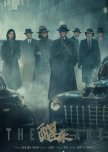
Very dark and serious
Many plot twists every character is mysterious for the first half of the show. The show is very dark visually, Nobody trusts anyone people lie to each other all the time it's what I expect from a spy show.The main lead Chen is an interesting character he's a communist since the beginning but hides it from everyone else. The story can feel slow at times but they build up for the final 3 episodes.
The acting is good, the story is good. It's not my kind of show too dark and depressing so it was hard to stay focused and remember everything.
Using pollen to make people go into shock, spring loaded camera gun, bombs in presents, morse code. I like this side of the show it is well thought out it relies on intelligence not just on pure action which is lacking in many modern shows at least in the western shows.
This is a good show no doubt about it.
Was this review helpful to you?
This review may contain spoilers
The Disturbing Moral Problems Hidden Behind Its Wholesome Charm
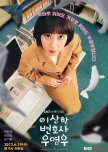
After rewatching *Extraordinary Attorney Woo*, I started noticing flaws and moral problems that genuinely disturbed me. The first time around, the drama's charm, humor, and lovable characters made these issues easier to overlook. But on a rewatch, some of its storytelling choices feel much more uncomfortable.## Jung Myeong Seok: The Drama's Tragic Corporate Slave
The first character I want to talk about is Jung Myeong Seok.
To me, he is presented as a sympathetic character, but when I look at his life more critically, he feels like the ultimate corporate slave. He has spent his entire career defending whoever his powerful law firm assigns him to defend—rich people, criminals, murderers, thieves, and other morally questionable clients. His personal conscience appears almost irrelevant. The company decides who deserves his professional skills, and his job is simply to protect them.
The drama presents this as professionalism, but I find it deeply depressing.
He seems to have sacrificed his entire personal life for his career. He neglected his marriage, emotionally distanced himself from his wife, and ultimately drove her away. He ends up divorced and seemingly has almost no meaningful personal life outside his work.
Then, near the end, the drama gives him a serious illness, seemingly expecting the audience to feel enormous sympathy for him.
Of course, illness is tragic, and I am not saying anyone deserves to become sick. But narratively, I find it frustrating that the drama suddenly turns him into someone we are supposed to pity without seriously confronting how he voluntarily chose to live his life. He chose his career over his marriage and personal happiness for years.
Then there is the storyline involving his ex-wife.
She left him because he never gave her enough attention, respect, or priority. They have no children together. So why would she remain emotionally available to him for years afterward? The drama makes it feel as though she never truly moved on and is still waiting for him to ask her back. She immediately comes running whenever he calls.
To me, this makes her character feel less like an independent person and more like someone waiting around to emotionally rescue a man who repeatedly chose his corporate career over her.
The entire storyline feels designed to reward Jung Myeong Seok with sympathy and a second chance without sufficiently examining his responsibility for destroying his own marriage.
## Episode 10: The Most Disturbing Episode for Me
The episode that bothered me the most was Episode 10.
This episode involves an autistic woman and a man accused of sexually abusing her. What makes the episode especially disturbing is that the drama itself establishes that the accused has been involved with multiple vulnerable autistic women.
Yet our protagonists are placed in the position of defending him and trying to discredit or blame the mother who is attempting to protect her daughter.
That was absolutely baffling to me.
Earlier in the drama, Episode 3 emphasizes that autistic people are not all the same. But in Episode 10, the victim is portrayed very differently from Woo Young Woo. She has significantly different intellectual abilities and vulnerabilities.
The courtroom testimony is especially uncomfortable. The victim explains that she felt uncomfortable during sexual intercourse and did not genuinely want to continue. The man allegedly pressured her emotionally by telling her that, if she loved him, she should allow him to have sex with her.
She was uncomfortable, unwilling, and traumatized by the experience.
Yet the episode seems determined to complicate or soften the man's responsibility rather than focusing on the enormous power imbalance and the victim's vulnerability.
That is what I find so disturbing about the storytelling.
A vulnerable person expressing discomfort and unwillingness should not suddenly become a romantic misunderstanding simply because the accused claims there was love involved. Emotional manipulation—especially involving someone with significant cognitive vulnerabilities—should not be romanticized.
The drama repeatedly tells us that autistic people are individuals and should not be treated as children. I completely agree with that. But recognizing someone's adulthood does not mean ignoring intellectual limitations, vulnerability, or their ability to give meaningful consent in a particular situation.
Episode 10 felt as though the drama wanted to create moral ambiguity and a complicated legal case, but instead it came dangerously close to romanticizing a situation that should have been treated with much greater seriousness.
## Episode 12: When Discrimination Is Treated as a Legal Debate
Another episode that deeply bothered me was Episode 12.
The case involving workplace discrimination against women was frustrating because the drama presents an obviously discriminatory policy as something that can simply be justified through legal technicalities.
For me, the bigger problem is the contradiction between Woo Young Woo's supposedly strong moral character and the kind of legal career she chooses to pursue.
The drama presents her as honest, principled, and upright. But she works for Hanbada, a powerful corporate law firm whose job frequently involves defending wealthy and powerful clients.
Earlier, she even considers leaving Hanbada when she discovers that her father has a personal connection to the firm's CEO and believes that her employment may not have been completely independent.
But when she receives an opportunity to work somewhere smaller and potentially dedicate her legal skills to helping ordinary people and pursuing cases aligned with her supposed moral values, she never seriously seems to consider that path.
Why?
Because, from my perspective, the drama's morality becomes selective whenever career prestige and money are involved.
Woo Young Woo can question whether she was hired because of connections, but she does not seriously question the larger system she is participating in: a corporate law firm using brilliant lawyers to protect whoever can afford its services.
That creates a major contradiction for me.
The drama wants us to see Woo Young Woo as an unusually honest and morally upright person. But she is perfectly comfortable remaining inside a system where wealthy clients can hire the best legal talent to protect their interests—even when those interests conflict with ordinary people, victims, or workers.
## My Biggest Problem With the Drama's Overall Concept
Ultimately, this is my biggest issue with *Extraordinary Attorney Woo* after rewatching it.
The drama often presents itself as morally progressive and compassionate. It talks about autism, discrimination, justice, vulnerable people, and social prejudice.
But at the same time, its protagonists work for a powerful corporate law firm whose fundamental purpose is to represent whoever pays them.
The drama repeatedly asks us to admire lawyers for being brilliant and professional while avoiding a deeper question:
**What does professionalism mean when your professional skills are being used to protect powerful people from the consequences of harmful actions?**
A lawyer has the right to defend a client and everyone deserves legal representation. My problem is not simply that lawyers defend unpopular people.
My problem is that the drama often wants the audience to admire corporate lawyers as morally righteous while refusing to seriously examine the moral compromises involved in choosing that career.
Woo Young Woo is presented as someone with extraordinary intelligence and supposedly strong principles. But in the end, she still chooses the prestige, money, and power of corporate law.
That is why, after rewatching the drama, I find it much harder to see *Extraordinary Attorney Woo* as the purely wholesome and progressive series I initially thought it was.
Its characters talk about justice—but many of them are ultimately still serving whoever has enough money and power to hire Hanbada.
Was this review helpful to you?
I want more!
If I have say to say anything negative, it’s that it’s already over and I want more episodes. It was probably the best ending I have seen in a long time. It had the potential for being predictable, but the comedic timing and range of emotions made this series so enjoyable. I can see myself watching it several times over and over, which is rare for me.I loved every character, but the aunt especially. She was fantastic in every way possible. Truly enjoyed every single character. The cast was perfect.
Was this review helpful to you?
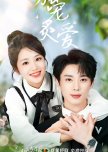
✨ The Slaps Made Me Laugh, the Romance Made Me Stay
OVERALL IMPRESSION🌟A rebirth story with an ML who used a wheelchair caught my attention, but I fell for the FL the moment she landed that boxing-ring slap! I couldn’t stop laughing at her scumbag fiancé’s speechless face. Every time he came back looking for revenge, he practically signed himself up for another round.
WHAT I LIKED💖
• I understood why the FL was cautious about falling in love again. The ML won me over by showing up for her whenever she needed him, and I loved that she stood up for him too.
• I enjoyed the ML’s quiet patience while his relatives underestimated him. Watching him finally put the evidence he’d gathered to use was so satisfying.
• I loved the assistant for keeping both leads informed about what they’d done for each other. For once, someone passed on the information I was actually yelling at the screen for them to share!
WHAT I DISLIKED⚠️
• The FL’s father was infuriating. The way he treated his own daughter as disposable whenever she stood between him and the company made my blood boil.
• The SFL was more calculating than I expected. Her real interest was the ML’s company, and I hated how far she was willing to go to get her hands on it.
PRODUCTION AND PERFORMANCES🎭
Yang Zhi Wen made that first slap twice as funny because the FL looked so sweet and unassuming. Wu Tian Hao brought a gentleness to the ML that worked beautifully with her guarded side. Their chemistry carried the quieter scenes just as well as their playful ones.
FINAL THOUGHTS💭
I had such a good time with this one. The romance felt sweet, the payback was satisfying, and the scumbag somehow had enough energy to keep coming back for more! I’d happily recommend it, and I could watch it again and again.
Was this review helpful to you?
Love wasn't just under the pants
"Finally, finally!" That was my first reaction coming out of this refreshing and modern romantic comedy that is both funny and serious right when it needed to be. I was despairing of Korean rom-coms from 2026, each one more idiotic and futile than the last. It is only on Korean OTT platforms—with TVING as the leader—that one can still hope for this kind of little gem that brings together all generations and breaks down every prejudice without any value judgment, much like others drop their pants (and here, that's quite fitting). I came for the subject matter (yes, I like DIY) and for Nam Ji-Hyun. As with Lee Dong-Wook, I changed my mind about Kim Jae-Young. After the turkey Idol's Mirror, he returns here in a fine role that suits him like a glove. Make Me Tingle is, above all, a benevolent drama that also gives food for thought on how to conceive of the couple in all its aspects, one's own couple, and the resulting family relationships. While the woman is at the center of the debate, the supportive men become essential pillars who push them to give the best of themselves. The series treats itself to the luxury of never being vulgar, and that is an appreciable tour de force. A must-watch without hesitation!An original story awaits us: Gong Yeon-Su (Nam Ji-Hyun) is the granddaughter of a traditionalist and bourgeois family straight out of the Joseon aristocracy. Well, at least that's the image the patriarch, Gong Hyun-Dong (Jeon Kuk-Hwan), wants to project. It's a family essentially made up of women whom I will let you discover. But above all, it's a wonderful family (I asked to be adopted, I'm still waiting for the reply). Yeon-Su is approaching thirty and was raised the old-fashioned way: she is therefore a virgin (no sex before marriage). But her life is turned upside down when she meets Dokgo Dal (Kim Jae-Young), a fickle business owner who doesn't believe in love, only one-night stands. Moreover, his image remains tied to the label of his company, which specializes in... sex toys! As the marketing manager for an advertising agency, Yeon-Su must therefore work with Dal and get acquainted with a world that is totally unknown to her. Between modernism and tradition, conceptions of love and sex clash. Not to mention the friends and families who also have their own well-kept little secrets.
The first thing I keep in mind is that Make Me Tingle is a true breath of fresh air with zero pretense. You are swept away immediately, with a guilty urge to binge-episode after episode. The drama sets the tone right from the start: it talks about love, sex, the body, and emancipation with super-refreshing lightness and modernity. It is unfiltered and tabooless. The stroke of genius is successfully making people laugh right from the beginning with farce-like misunderstandings while touching on super-important social issues. And above all, zero moralizing tone or moral lessons: it tackles the gravity of things with the right dose of humor and well-adjusted safety distance. Another point I appreciated: rather than stupidly pitting the old against the young, the series pulls off the feat of making everything coexist—traditions and rituals on one side, modernity and frivolity on the other. The grandfather character is a marvel: he acts grumpy and old-fashioned for show, but deep down, he is a sweetheart and a true rock for the family, completely managed and channeled by these women of character who call the shots. Yes, you'll laugh, but you'll also shed a little tear at times. You get caught in the squall and you can't let go.
It is so nice to have a drama that skips all the tedious clichés of the genre. No hysterical or toxic rival, no toxic second male lead coming to break up the couple, and no caricature-like, useless "villain." The only real obstacles are past traumas, the fear of opening one's heart, and life's misfires. Result: no gratuitous malice, everything is sorted out through discussion, listening, and a benevolence that feels damn good. And at the very end, we get a completely unpredictable twist out of left field regarding Dal's father: a super good find. I tip my hat to the screenwriter who delighted me with this story that is both simple and sincere. It is remarkably written, an absolute treat. The cast throws themselves into it wholeheartedly and it shows: the heroine panicking a bit in the face of true love, the young dancer choosing her career without guilt, and obviously our inveterate lady's man who ends up transformed into a completely smitten, goofy puppy—it's a delight. The subplots involving Yeon-Su's younger brother (also very touching) and the colleagues are there to show us that there isn't just one way to conceive of love. A wind of freedom and harmony nurtures this drama. So some will find it over-the-top, too good to be true... so what? Anyway, if you start asking too many questions, it's a sign that it's not good (and here, I never asked myself a single one).
This drama also speaks about societal and social facts concerning the place of women in modern Korea: the working girl, the liberated or traditional woman, the one who struggles to reconcile motherhood and professional activity. Patriarchy is dismantled in a funny and intelligent way: no, all men aren't dark bastards, and here they are highlighted in a true complementarity. Even when you think some are male chauvinists (Yeon-Su's grandfather and Dal's father), you always get a twist that proves the opposite. Two-thirds of the series is a delight, with a slight dip towards the end since it started off at breakneck speed. But it's quickly forgotten and I hold no grudge. With exemplary staging and a very good OST (Paul Blanco oblige), the journey between Seoul and Busan is pleasant and propative to love. Finally, people who make love clothed in reality... wait, make love naked! The role reversal between Yeon-Su and Dal is worth its weight in peanuts at one point: the bird has emancipated itself from the family nest, and a woman free in body and spirit is finally born. While Nam Ji-Hyun brings all her early candor to her character, Kim Jae-Yang is the cool guy you can trust blindly. Special mention to Aunt Mi-Young, magnificently played by Jeong In-Ji, whom we saw in Pachinko.
The conclusion has the wisdom and intelligence to spare us a lame and conventional wedding: it stays true to the spirit of the drama until the very end. Instead, we get a much more mature and modern ending centered on family peace and sincere commitment. We wrap up these 10 episodes with a feeling of total serenity, a smile on our lips, with the impression of having followed real human beings living their emotions, their love, and their vision of the couple in their own way. It is tenderness at the end of the road. Make Me Tingle never lectures, never jumps to hasty conclusions, and makes no value judgments. It applies itself to respecting a single maxim: breaking down prejudices, accepting ourselves as we are, and accepting others as they are. Yes, I vibrated, I loved this series because it speaks to the widest audience. Making the modern conception of the couple coexist with family tradition is possible: why destroy one world to impose another when with kindness, tolerance, and a lot of love, you can move mountains? It might be a chimera, but at least I had a blast throughout the story, and that was enough for my own selfish happiness. Food for thought: "After all, love is like a vibrator: it triggers ecstasy when you least expect it!"
Was this review helpful to you?
This review may contain spoilers
Chemistry + Hot Kisses
So I'm not going to get into the story and into the messages this drama was sending because I honestly did not care. The one and only reason I stuck with this drama was for the chemistry between Nam Ji Hyun and Kim Jae Yeong. I hate the title, but I mean, it's justified. I have not felt this "tingly" from a kdrama couple in a long time. Nam Ji Hyun can do no wrong in my eyes as she is one of my fav actresses and I always believe her in her role. And Jae Yeong...I mean, HELLO - where have you been? Why have you not been on my radar? So undeniably hot! hahaha.The opposites attract works well here and those kisses were fire because it actually felt like there was some desire rather than a staged predictable kiss. . However, I didn't love the story or the supporting stories and honestly skipped a bunch of it. I was only obsessed with the leads and wished they stuck with their story and growth/journey into their relationship rather than spreading the focus on multiple side characters. With only 10 episodes, the story felt a bit shallow, weak, and rushed, but the chemistry is what kept me going.
Was this review helpful to you?

This review may contain spoilers
drama carino per un pubblico di giovanissimi.
premetto col dire che il target di questo drama è chiaramente un pubblico di giovanissimi. credo che l'età adatta si aggiri intorno ai 12-13 anni.personalmente l'ho visto perché cerco show in giapponese da poter usare come materiale d'ascolto. cercherò comunque di dare un giudizio equo in base al target di riferimento.
la trama è molto semplice. un liceale , Natsuki, ha pessimi voti perché trascorre il suo tempo a pensare alle nuvole... letteralmente.
le materie scolastiche non lo interessano più di tanto, ma la meteorologia è la sua passione.
tramite la sorella, conosce un ragazzo dolcissimo, anche lui amante della meteorologia, che diventa presto il suo professore personale, aiutandolo negli studi.
presto l'amicizia diventa qualcosa in più e Natsuki cerca di capire questi nuovi sentimenti.
è un drama molto pulito, alla Disney Channel direi.
teen Ager che non sembrano tali, totale assenza di volgarità o parolacce e situazioni equivoche. uno di quegli show ambientati in un mondo che non esiste insomma.
il messaggio di fondo è quello di accettarsi con i propri limiti, punti di forza e soprattutto di andare incontro anche a coloro che non capiamo fino in fondo.
i messaggi sono molto belli e idealistici anche se molto vaghi ad essere onesti.
a metà della serie si capisce che Nat-chan e il suo tutor sono più che amici, ma lo show non si spinge mai oltre. diciamo che tutto è implicito. non so se per una scelta culturale, per riguardo i giovani spettatori o altro. sta di fatto che se volete mostrare questo show ai vostri bambini e temete scene "spinte" , qui non ne troverete traccia.
ci sono anche piccole scenette familiari, ma la serie , essendo così breve, non ha molto tempo da dedicare ad altro.
per riguardo il mio giudizio da "adulta", sconsiglio la serie ai miei coetanei. non è molto appassionante o divertente. non succede granché, e nonostante le vibes siano carine e coccolose manca un po' di ciccia. il tono è sicuramente stucchevole. inoltre non è mi è piaciuta molto la scelta finale di tirarsi indietro nei confronti Di una storia a chiaro stampo omosessuale. il tema viene introdotto, esplorato, ma gli sceneggiatori si tirano indietro nell'ultimo episodio ovattando un bellissimo messaggio con un aura di opacità. peccato per la mancanza di coraggio.
Was this review helpful to you?
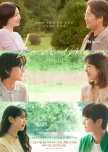
Beautiful portrayal of tangled family ties, grief and love
I watched this drama while it was airing, so this review is a little bit late. My favourite genre is slice-of-life, and this drama nails this aspect like my other favourite ones, My Liberation Notes, Move to Heaven and Daily Dose of Sunshine. I personally love the movies or dramas that portray grief realistically, and I can assure you this drama is one of them. For others, grief may be too gloomy or even a taboo topic; still, I suggest giving it a try if you are not used to it very much. Time passes and nothing lasts forever. I know that such a nostalgic feeling is painful, but it is not the only way to see it. The pacing may be slow for watchers who are used to interesting hooks and attention-grabbing plots on the first episode. But the pacing is the gem of this kind of genre and is necessary to lay the ground for watchers to have a connection with the characters. Not every episode has to follow the hero journey format. No one in the drama is lacking in terms of expertise on acting, and I remember I rewind a few times just to catch the actors' gazes or relive the dialogues again. For the music, it did not necessarily leave a very great impression on me as other dramas did; however, this does not mean the music is bad. Give it a try if you have time or watch it later. It will be worth it.Was this review helpful to you?
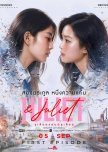
This show has set a new precedent for GL shows and what viewers will accept!
They have legit cracked the code on chemistry in GL's. I think since Thai GL's and lesbian-centered storylines are still very new in the romance genre, we often don't know how to approach portraying a good WLW couple. They were soooo amazing together. It legit felt like I was watching a real couple, which is actually strangely very rare within the GL bubble. I would liken their cuteness and pureness Bad Buddy, another Romeo and Juliet-esque show (where they have very natural chemistry). Ugh. I want to watch this show over and over again. I love how they chose each other every time. May they always be happy together!!Was this review helpful to you?

way too dragging
Chen Lei was superb, the FL not so much -tbh I have not liked her acting from before either. I feel like it only got decent in the last 4 episodes. Pinjuin was beyond annoying pretending to be self-righteous unless it was convenient for her. I know Chenxuan was a complete red flag but at least he never pretended not to be. I was so much about dropping the drama and didn't do it only because I really like republican era dramas. however, I fwd so so much. at times I would fall asleep and didn't bother to rewatch what I had missed.... didn't make a difference.Was this review helpful to you?
It was too short!!
This drama had the potential to be better, but it was decent. Although the drama was too focused on the Grandpa storyline, we didn't get much information regarding the ml's trauma of the dark. I enjoyed the FMC plot, she seemed very relatable, but DAMN that Grandpa was annoying.Such an interesting plotline, which was the reason that I binged the whole show, but I felt like they lost me near the end. Focusing too much on the other characters that we barely got proper development, it was too rushed, in my opinion.
Definitely still recommend the drama, it was fun and refreshing. Also it still had the cliches we all love in kdramas!!
Was this review helpful to you?
Better that expected
I liked this series more that I expected. Surprisingly, no heir fight over succession, no dumb criminal story, no self writing story or other actual K-drama leitmotivs are present. On the contrary, it offers a delicate lovely written story about break up from a traditional family into independent life supported by love and without hate. I particularly loved the delicacy and well weighted way all spices and adventures are combined. Writing, direction, acting and music are excellently put together.Particularly I appreciate the acting of Nam Ji Hyun. This series is 100% worth its watching time!
Was this review helpful to you?


