
 News


This review may contain spoilers
A Dark Tim Burton-esque Fairytale: Raw Traumas, Gothic Charm, and Social Empathy
[Italian Version Below / Versione Italiana in Basso]ENG
It's Okay to Not Be Okay stands as a bold, breathtaking gateway into a style of Korean storytelling capable of addressing delicate mental health themes with profound empathy, emotional dignity, and artistic courage.
~ The Unapologetic Opening: A Dark Fairytale ~
Right from its opening moments, the series sets a fierce, non-mainstream tone. Take the iconic restaurant scene: Ko Moon-young slicing an orange with a sharp steak knife, using the blade to intimidate a blackmailer, and casually traumatizing a little girl in a princess dress by reminding her that “fairytale books are not dreams, but reality checks.”
This isn’t a sugary romance; it is a Tim Burton-esque dark fairytale wrapped in gothic aesthetics, disturbing animation sequences, and a deeply antisocial lead heroine. Combining a heavy psychological profile with animated storytelling makes it a show that isn't for everyone — it demands a viewer willing to look beyond surface-level comfort.
~ The Power of Mutual Healing vs. Melodramatic Tropes ~
At its core, the series thrives through the extraordinary, non-stereotypical dynamic between the three leads. The journey toward healing shared by Gang-tae, Moon-young, and the autistic brother Sang-tae (played with monumental sensitivity by Oh Jung-se) is raw, beautiful, and emotionally grounding.
If there is a flaw, it lies in the late-stage turn toward high melodrama: the twist involving the villainous mother feels somewhat forced and formulaic, a typical K-drama trope injected into a narrative that was otherwise doing a masterclass job exploring real, grounded psychological trauma.
~ A Masterclass in Social Empathy ~
Looking across the broader landscape of television, It's Okay to Not Be Okay set a high benchmark for how brilliantly storytelling can handle delicate social issues — a standard later reflected in gems like Extraordinary Attorney Woo, Mad for Each Other, Tomorrow, and Wonderland. Rather than mocking or romanticizing mental illness and neurodivergence, it accords them absolute respect.
~ The Final Verdict ~
An unforgettable, beautifully shot, and emotionally resonant gothic drama. Despite a slightly forced melodramatic twist in the final act, it remains an extraordinary entry point into K-drama and a hauntingly beautiful tribute to broken people healing together.
Recommended for: Fans of gothic aesthetics, dark fairytales, deep psychological healing, and stories that treat mental health with genuine heart and empathy.
---
ITA
Una Favola Dark alla Tim Burton: Traumi Crudi, Fascino Gotico ed Empatia Sociale
It's Okay to Not Be Okay si erge a porta d'ingresso folgorante e coraggiosa verso una narrazione capace di affrontare le tematiche delicate della salute mentale con profonda empatia, dignità emotiva e un raro coraggio artistico.
~ Un Inizio Senza Filtri: La Favola Dark ~
Fin dai primissimi minuti, la serie mette in chiaro di non voler compiacere nessuno. Prendete l'iconica scena al ristorante: Ko Moon-young che taglia un'arancia con un affilato coltello da bistecca, lo usa per ferire un ricattatore e poi spaventa a morte una bambina vestita da principessa ricordandole che “le fiabe non sono sogni, ma promemoria della realtà”.
Questa non è la solita commedia romantica zuccherosa; è una favola dark in pieno stile Tim Burton, avvolta in un'estetica gotica, sequenze d'animazione inquietanti e una protagonista affetta da un evidente disturbo antisociale. L'uso dell'animazione abbinato a profili psicologici così duri non è di immediata lettura per chiunque: richiede uno spettatore disposto a guardare oltre la solita superficie rassicurante.
~ La Potenza della Guarigione vs. la Piega Melodrammatica ~
Il vero cuore pulsante dello show risiede nella straordinaria dinamica di guarigione reciproca tra i tre protagonisti. Il percorso condiviso da Gang-tae, Moon-young e dal fratello autistico Sang-tae (interpretato con una sensibilità monumentale da Oh Jung-se) è viscerale, potente e privo di pietismo.
Se c'è una sbavatura, sta nella virata melodrammatica del finale: il colpo di scena legato alla madre-mostro appare un po' forzato e artificiale, una concessione ai classici cliché del genere dentro una storia che stava già facendo un lavoro magistrale nell'esplorare traumi psicologici reali e radicati.
~ Una Lezione di Empatia Sociale ~
Nel panorama seriale complessivo, It's Okay to Not Be Okay ha mostrato come si possano trattare le tematiche sociali con un rispetto e un'empatia rari — uno standard che avrebbe poi trovato riscontro in opere magnifiche come Avvocata Woo, Mad for Each Other, Tomorrow o Wonderland. Invece di scimmiottare la malattia mentale o la neurodivergenza, lo show regala loro una dignità immensa.
~ Il Giudizio Finale ~
Un drama gotico indimenticabile, visivamente magnifico e di grande impatto emotivo. Nonostante una virata melodrammatica un po' forzata nell'ultimo atto, resta un'esperienza di visione bellissima e un tributo toccante a come le persone "rotte" possano guarirsi a vicenda.
Consigliato a: Chi ama l'estetica gotica, le favole dark, i percorsi di guarigione psicologica e le storie che trattano la salute mentale con vero cuore e rispetto.
Was this review helpful to you?
After Moving Seats, the Boy Behind Me Has a Crush on Me
0 people found this review helpful
a typical jbl
Started watching this after i had just caught up on Popular Serizawa, n i noticed how similar the 2 are. its literally the same show just in different font. that doesnt mean it wasnt enjoyable tho. i very much enjoyed it. but it very much follows the same tropes as ur typical jbl: matching items, miscommunication, popular guy likes unpopular guy, a group outing turns into a date but its not rly a date, festival stuff n so on.i think the only thing that set this apart from other jbls like it is they gave us actual kisses instead of dead fish kisses. im still shocked.
oh and i rly like the ost song.
Was this review helpful to you?
 1
This review may contain spoilers
A Fleeting Life Tale Of A Woman.
First, we see this girl living a life of splendor; overnight, her family was falsely accused of treason. The men were executed, while the women were to be exiled; unwilling to be disgraced, they drank poison and hanged themselves; in all, they killed themselves. It remained for Shen Jia Lan and her mother to commit suicide. Bitter and unwilling to see her daughter die, Shen Jia Lan was swapped with a girl who had recently died of illness, the daughter of Xu Wan Quan and Xue Gui Hua. Xu Wan Quan and Xue Gui Hua, who were slaves, raised Shen Jia Lan as their daughter, Xu Lan Xiang. We then follow Lan Xiang on her journey as she uses her wits to rescue her masters from calamity/problems once and again, lift her family out of slavery, become an independent woman, marry, fall in love with Jin Qi, bear children, control her household, see her children grow, witness her great-grandchildren's birth, and die (peacefully).Commentary
I saw someone drop this drama because the FL was too girlbossy and didn't seek help from the ML. I think this made the drama feel like a breath of fresh air to me, while avoiding the usual damsel-in-distress plot. Finally, an FL who can stand on her own, solve her problems and those of others with her wits, and also assist the ML in seeking solutions to his troubles. Mind you, she needed the assistance of Jin Qi to solve some problems.
Against the Current (ATG) offered a slow-burn romance that grew through 42 episodes, built on trust, support, and care; their romance evolved into something pure and beautiful. ATG didn't just bring romance; we witnessed character development, court politics, the constraints placed on women, and domestic/family affairs (both the good and the bad). You get to witness endearing familial bonds(in relationships between parents and children, siblings, friends, and family), as well as the consequences of greed, jealousy, and hatred, and how it negatively affects one's life. As the story progresses, characters die because of health problems and natural occurrences; it was really sad watching them go/die, especially if you get attached to them. It added realism to the plot.
I got hooked right from episode 1; it was really tragic, and I'm sure many viewers cried/were heartbroken at the death of these courageous women. I believe that in episode 1, when Shen Jia Lan and her mom met with Xu Wan Quan, Xue Gui Hua, and their sick daughter, offering them money to cure their sick daughter, it was that act of kindness that saved Shen Jia Lan from death, and it also reflected the life Shen Jian Lan had to face while being a slave.
I felt drawn to Xing Tang character arc; her character felt like a rebellion against fate, family constraints and society opinion,her death was really saddening, and it hit me deeply. Li Meng outstanding performance really brought out the essence of Xing Tang character, making her growth, realization, and closure interesting and, at the same time, heartbreaking. Xing Tang was basically a tool her family used to cling to power; they never loved her, and she felt like a pawn that could be discarded at any moment. Unwilling to accept this situation, she saved a lot of money through embezzlement and was willing to flee with her secret lover and start a new life, but she was betrayed by her lover. Used and mocked by her family, abandoned by her kin/family after they stole all her money, and dropped her and ran off on the roadside, exposing her to bandits. All she wanted was to be called by her own name, not constrained by the name of others, whether through marriage or by birth. Her closure was painfully sweet; it revealed the kind soul beneath a distant and harsh appearance. Dying close to someone who truly acknowledged her without any other family name attached was truly peaceful.
Controversial take: I feel Scholar Han shouldn't be criticized. Believe it or not, Scholar Han and Lan Xiang were better suited as a couple than Jin Qi and Lan Xiang. First of all, they were each other's true equals, spent more personal time together practicing plays/songs, cared for each other, and had good chemistry. After all, Scholar Han timing was a little late, missing out on a woman like Lan Xiang. He must have been so sober and in pain when the imperial edict came right after he came to propose. I'm happy he and Lan Xiang ended amicably and still consider each other friends. His end was unexpected and painful
Likes
The sets and the cinematography were pretty. I heard they built their own set, and it took four to five months; it was really evident.
The actors put a lot of work into their acting and nailed their characters. They acted their asses off and brought out the best.
Jin Qi and Lan Xiang were never each other's equals, nor were they ever fated to be together; they never had similar paths. It was the love Jin Qi developed for Lan Xiang and the choices he made that brought them together. The choices he made and the steps he took may not be morally good; to be honest, I was offended at times, but it is important to know that without those steps and choices, they would never have been together in a 1000 lifetimes, worlds, and meetings, and they wouldn't have fallen in love to become the couple they were at the end. It is also important to know Jin Qi is a flawed character; he is not perfect (in love), and he doesn't even understand the heart of the woman he wants to marry/loves. That was the reason he thought Lan Xiang loved Scholar Han, and why she ignored him all this time. He clearly doesn't know the heart of the woman he loves. But as the story progresses and Lan Xiang begins to develop subtle care and affection for Jin Qi, I believe he gets a better understanding of her.
Yi'er's character arc was one of the best to come from this show. She was a kind but opportunistic girl who was falsely accused and exiled, forsaken by her parents; I'm really glad she still had that kind spirit in her, and also a newfound ambition of becoming a businesswoman, even though she will face mocking and contempt from those around her, as unmarried women aren't eligible for this. I'm pleased she followed her wish, instead of leaving her dreams out of fear of the criticism of the public. Her friend, maid, and I'm sure many other women got inspired by Yi'er's dreams and followed in her footsteps. In a way, she serves as a role model for women who are double-minded and afraid of the consequences and criticism that come with following in her footsteps.
I love how the supporting characters had depth and sought romance, love, and marriage. I loved their pairing, and I thought they were well suited for each other, but I would have loved seeing them as a couple, you know, in a scene or two, just the two of them being romantic, because the main leads didn't give us much, but I get it; they are not the focus. But I appreciate the depth of seeking marriage they were given.
Xiu Wan growth was endearing. It was pleasing to see that youthful energy still alive in her, after being used and betrayed by Du Cuique and Du Sheng. I believe she gained some knowledge, became more mature, and, most importantly, grew from that experience. She became more sensitive and concerned about her sisters and their marital lives. She is 35 in age and 18 in mind; she has a youthful spark in her that makes her character endearing. I was smiling and grinning when she met her perfect match, Xie Zhao, not bound by her family/connections gained through the marriage, just two individuals who are now mature enough to conform to their own wishes; they share the same path, and I'm happy they met each other. I enjoyed the Lin Family bond and their interactions and banter; it shows they truly love each other. The siblings were willing to support and uphold justice for one another, even if it brought trouble, negative rumors, and criticism to their personal lives.
Dislikes
The time skip added realism to the plot, but it wasn't cohesive at times; it feels like some details are left out and you end up being confused, as I was at times.
I disliked how Lan Xian didn't tell Jin Qi about her identity when she knew he had laid the Shen family to rest; instead, he found out himself. I tried to understand her pain, but that could have resulted in a misunderstanding.
To be honest, I don't have many things I dislike about this show.
Final Thought
Before I began watching this, I thought it would be like all the other historicals I watched this year, but no, this was different: the well-developed characters, their struggles, their pain, their joy, their vulnerabilities, their friendships, their insecurities, got me invested "deeply". Some characters' deaths made me sad, heartbroken, devastated, incomplete, damaged, and filled with anguish; I never expected/want them to go that early. But some things don't always go the way you wish.
This show is realistic in a way that, as the story progresses, you see the deaths of different characters. When Lanxiang mother died on that couch, before Lan Xiang's tears broke from my eyes, it was so painful and devastating. Her death was naturally expected because she had come to that age, but the show makes it more painful by throwing in those heartwarming moments of her life in flashbacks right after she died.
AAaaahhhhhhh when I thought the show was done. They make you sadder by leaving another character's death. I anticipated his death, but I never knew it was going to come that early.
This show is about the tale of a woman, and the pain, happiness, joy, sadness, romance, love, and troubles she has to face and overcome in her fleeting life; told from her teenage years to when she became a grandma and died peacefully lying in bed. I appreciated the show as it didn't lay any focus on her making a revenge/clearing her family's name. She wanted to live in peace with her parents, taking them from slavery into a better life, and by the end, she used her wisdom/wits to clear her family's name long after her death.
Against the current tells you to go after what you want/wish, instead of going against your wish because of parents, laws, rules, and all.
If you want something, go for it without looking at the person next to you.
Would recommend this drama to anyone looking for a complex plot, well-developed characters, and a realistic, unconventional ending
Rating: A SOLID 9.0.
Hand down, my historical best drama of 2026 (So Far)
Thanks for reading the long review
Was this review helpful to you?
 1
This review may contain spoilers
A Life Beyond the Ruins
Against the current arrives as a breath of fresh historical drama air, grounding its narrative in the grit of survival, family and social hierarchy, and the quiet resilience of women navigating a ruthless patriarchal landscape. The story kicks off with a devastating tragedy when highborn protagonist Shen Jia Lan sees her family falsely accused of treason, forcing her to strip away her noble status and enter her former fiancé Lin Jin Qi’s estate disguised as a low-ranking maid, Xu Lan Xiang.That setup alone sounds like the blueprint for a deliciously dramatic costume romance, but this drama proves to be so much more than that. What makes the drama work is how deliberately it handles that familiar setup. Beneath the costume, romance, family politics, and palace-adjacent intrigue is a story much more interested in survival than revenge, and much more interested in identity than restoration. Plot choices heavily favor a slow-burn psychological and strategic game over cheap melodrama, refusing to lean on lazy tropes or excessive flashbacks, which makes the narrative feel remarkably tight and smart. Those qualities give the drama far more weight than its familiar premise might suggest.
The premise is wonderfully cruel. Lan Xiang has to live close to the man who was supposed to marry her while pretending to be someone else, carrying the secret of who she really is. It creates an immediate tension between identity, class, and survival, and the drama wisely allows that tension to breathe rather than resolving everything through one convenient revelation.
What is particularly likeable about the early and middle portions is that Lan Xiang’s rise does not happen overnight. She does not suddenly become powerful because the script decides she is the heroine and therefore everyone should admire her. She has to learn how the Lin household works, understand its personalities, navigate its hierarchy, and figure out which battles are worth fighting.
The identity switch is much more meaningful than a simple disguise. Becoming Lan Xiang forces her to experience the world from the bottom of the social ladder, learning what it means to be dismissed, underestimated, and treated as expendable. That experience transforms her understanding of power, turning her into a deeply observant strategist who recognizes how information moves and how influence can be built without an official title. In that sense, the servant identity becomes one of the smartest ideas in the drama because the woman who eventually takes control of her fate is not the same woman who lost everything in the opening episodes.
The strength of this series lies heavily in its story and character writing, where details fall into place naturally without dramatic or convenient setups. Instead of saying how something is important, details accumulate until they become meaningful. The character writing follows the same philosophy. Even the secondary characters are allowed to be complicated, flawed, and shaped by their circumstances rather than being conveniently divided into heroes and villains.
The drama also handles its women empowerment theme with a refreshing amount of restraint. It does not need to make every man insufferable just to make the women look strong. The men are allowed to have understandable motivations, even when their choices are questionable, while the women are allowed to be intelligent, flawed, selfish, compassionate, ambitious, and everything in between. That balance makes the message feel much more grounded. It is not "women good, men bad." It is about women trying to find agency in a system that was never designed with their freedom in mind.
Tan Song Yun delivers a phenomenal performance, capturing Jia Lan’s transition from sheltered innocence to calculated, stoic survival with immense grace. Some of her best moments come when almost nothing is being said and you can see her calculating what she should reveal and what she should keep to herself. That restraint is vital because a heroine who is constantly announcing how clever she is would become exhausting very quickly. Instead, the drama lets the audience notice the intelligence.
Jin Qi is a charismatic, reliable, and imposing eldest grandson and heir with a strong sense of loyalty to the sovereign. Liu Xue Yi portrays him very well, especially his unintentional comedic expressions and crying scenes. I actually enjoyed how slowly and naturally the drama develops his encounters with Lan Xiang. As the narrative progresses, he begins to notice and admire Lan Xiang’s sharp resourcefulness and quiet fortitude, realizing she possesses a fierce intellect that sets her completely apart.
However, the romance hits turbulent waters as he forces things with Lan Xiang. Although it eventually worked in both their favors, the marriage decree and sleeping drug arcs were hard to swallow. Still, I appreciate how the drama eventually allows Jin Qi to learn, understand, and acknowledge through clear heart-to-heart dialogues that Lan Xiang is her own person with her own mind. In fact ironically, the romance worked best for me when the drama stopped trying to make it romantic. Their relationship has a lovely push and pull because Lan Xiang never becomes completely dependent on him. She may care about him, but she still has her own agenda and convictions. Her entire existence does not gradually shrink until it revolves around the male lead, which is something I greatly appreciated. Their eventual partnership feels earned because Jin Qi has to learn to stand beside her rather than ahead of her.
The supporting cast is another quiet strength, giving the story a populated, breathing world rather than a stage built solely around the leads. Lan Xiang is not constantly surrounded by characters who exist solely to create problems for her. Sometimes she is helping solve theirs, using the skills and perspective she has accumulated along the way. That was a refreshing change.
Characters like Lv Ji'er and Zhao Xing Tang serve as fascinating reflections on female survival in a suffocating system. Ji'er starts out with a raw, desperate drive for self-preservation, sometimes to the point of selfishness, but her behavior comes from survival instinct rather than simple malice. Watching her gradually develop a sense of self-worth that is not dependent on status is genuinely rewarding. On the other side of the social spectrum is Zhao Xing Tang, one of the drama's most fascinating characters. As Jin Qi's brilliant and disillusioned first wife, she exposes the ugly contradictions of aristocratic marriage. Her storyline questions why women are expected to depend on the mercy of men, while her own history of betrayal gives those questions a deeply personal weight. She has some of the drama's sharpest observations about gender, marriage, inheritance, and autonomy.
Lin Xiu Wan and Lin Xiu Ru also surprised me, as they add incredible depth to the story. Xiu Wan brings tension by navigating secret romances and societal expectations. On the other hand, Xiu Ru is a silent observer and master schemer. She quietly collects information and schemes while everyone underestimates her. I especially enjoyed that neither character needs a grand declaration of "female empowerment" to prove their growth. Their development simply happens through the choices they make. Together, this rich ensemble turns the narrative into a diverse tapestry of women finding unique ways to push against the system.
Visually, Against the Current is beautiful in a restrained way. The production is a feast for the eyes, utilizing meticulous courtyard framing, authentic architectural details, and natural lighting to turn every window view into a composed piece of art. The seasonal imagery gives the drama a composed, almost literary quality.
The costumes also do more than make everyone look pretty. Lan Xiang's appearance changes as her position changes. The drama's imagery of one garden moving through four seasons and one life moving through joy and sorrow fits this beautifully. There is a quietness to the cinematography that suits Lan Xiang's character, almost as though we are watching her life through the pages of a memoir.
The OST complements that atmosphere well, wrapping the heavier emotional scenes in a lingering, melancholic fragrance. I do find songs sung by the actors themselves slightly awkward at times, but thankfully they never pulled me completely out of the experience.
On the flip side, the show's primary weakness lies in some uneven pacing during the middle and final stretch, where dramatic time jumps occasionally skip vital developmental moments that I would have liked to actually see, and render certain realizations unexpectedly abrupt. The story remains coherent, but occasionally I felt like I had been handed the answer key without being shown one or two steps of the calculation. The ending and overall conclusion lean into bittersweet realism rather than wrapped-with-a-bow perfection, staying true to the central thesis that true strength is found in lighting your own path when the world tries to plunge you into darkness.
It is advisable not to go in expecting a conventional historical-romance happy ending. Jin Qi dies peacefully, leaving Lan Xiang to live on without him, and their final scenes are deliberately painful because there is no grand last-minute miracle waiting around the corner. They finally get the life they wanted, but they do not get to keep it forever. While I understand why some viewers might dislike the ending, I actually think it is more defensible than it initially sounds.
Jin Qi dying first and Lan Xiang dying much later make sense to me. The entire story has been building toward Lan Xiang becoming someone whose existence is not dependent on marriage, social status, or male protection. Giving her a conventional happily-ever-after with Jin Qi would have been emotionally satisfying, but it would also have softened one of the drama's most interesting ideas. Her life cannot simply become "everything is fine because the right man is beside me." By making her survive him, the story forces Lan Xiang to continue being Lan Xiang after the her role as wife ends. It is cruel, but it is thematically consistent.
The more controversial decision, however, is what happens to the Shen family's justice, as Lan Xiang never lives to see the official clearing of her family's name. That vindication comes 113 years later, long after she and Jin Qi are gone, preserved only by the writings and stories she left behind. That is why I would hesitate to call the ending either happy or sad. It is bittersweet in the most literal sense. Lan Xiang never receives full justice for her family and has to live with the knowledge that some wounds cannot be repaired within one lifetime. Yet she survives into old age, builds a meaningful life beyond the tragedy, continues her work, and leaves behind her wisdom and the truth of what happened. Her victory is not getting everything back. It is refusing to let everything she lost become the entirety of who she is.
That also makes the title Against the Current feel much more meaningful in retrospect. Lan Xiang spends most of the drama pushing against forces far larger than herself: social class, family expectations, political power, gender restrictions, betrayal, and the weight of an official narrative. She cannot overpower all of them. What she can do is refuse to let them completely determine who she becomes. Even when she loses people she loves, she continues. Even when justice does not arrive in her lifetime, she preserves the truth. Even when the world takes away almost everything she once considered hers, she finds a way to build a life from what remains.
That bold refusal to tie everything into a neat bow makes the title feel deeply meaningful in retrospect, proving that you can win one battle, lose another, and still make a profound difference to the people who come after you. It is admittedly less comforting. But it is also why the ending stays with you.
Against the Current is a drama whose strengths far outweigh what it lacks, offering a smart, deeply human exploration of endurance that respects its audience from the first episode to the last. This is a drama about survival more than revenge, resilience more than restoration, and finding yourself after the world has taken away the identity you thought you were supposed to have. For anyone looking for a balanced, old-school historical costume drama with thoughtful and layered character writing, restrained romance, and a story that is willing to let life remain messy, Against the Current is well worth the journey.
Was this review helpful to you?
Honestly so so underrated
I know this series might be a hard watch due to the trope of student x teacher and the power dynamics, I'd say it's already the tip of the ice berg of problematic relationships considering all the other ones in korean BL manhwas, it's definetely not allowed irl but I'm going to focus on the series and critique just like any other show. (and the student's 21 too btw)ANYWAYS! The overall pacing and storytelling of this series was perfect. Sure, there's some confusion with the messaging app on episode 1-2, but episode 3 clears all the confusion and the overall pacing felt perfect and readers could easily immerse themselves into the story. The screentime with the side characters were perfectly assigned and balenced too. I also really loved the overall song used in this series, it felt natural and the songs were used effectivly to convey the emotions of the specific scene. The overall filming felt natural and it was easy to catch up. Some concerns I have though is the translation issues impacting the understanding of some scenes. I guess that the translation wasn't straightforward enough/what the original dialogue was trying to show, hence in some scenes throughout the show was hard to understnad, like for example (spoilers) the conversation the teacher had with his wife at the corridor in episode 3. I didn't understand how the student knew that the teacher treated the same way to other students with that diagoluethat he saw through the ringbell.
However this rating isn't perminent until I'm fulyl finished with the series, very high hopes with this series though, it's so underrated.
Was this review helpful to you?
This review may contain spoilers
This was actually my first time seeing this actress, and I have to say, she is REALLY cute and she acts really well. FIGHTING GIRL! I genuinely enjoyed watching her character, and she made the drama even more fun to watch.The male lead slayed as usual. At this point, I don't even know what else to say about him. He just does his thing and somehow manages to make his character work every time.
Now, the second male lead...
Sir???
Because he lowkey became a PSYCHO in the middle. Like, where did THAT come from?! I was watching him and slowly realizing, “Oh... we're going in this direction now.”
And then there's Fu Yang.
FU YANG, PICK A SIDE!!!
This man kept jumping from one side to another, and I was just sitting there trying to figure out what his actual plan was. Pick a struggle, sir! The only thing I can confidently say he knows for sure is that he loves the princess. At least THAT part is clear.
So why the 2 points off?
First of all, the episodes are REALLY short. I know this is a short drama, but because the episodes are so short, everything felt extremely fast-paced. There were so many things happening that I sometimes felt like I needed the drama to slow down for FIVE MINUTES so I could actually process what was happening.
I honestly think if they had added more episodes, the story could've developed so much better. Some relationships, conflicts, and character decisions could've had more time to breathe instead of everything happening back-to-back.
And then we get to the LAST EPISODE.
WHY WAS EVERYTHING SO RUSHED???
Like, suddenly everyone is getting HAE???
Marriage here. Marriage there. Everyone is getting married.
I was genuinely sitting there like:
WAIT. WHEN DID WE GET HERE???
The ending felt like the writers looked at the clock and went, “Okay guys, we have five minutes left. WRAP EVERYTHING UP.”
I still enjoyed the drama overall, though. The cast did a great job, the female lead was adorable, the male lead did what he always does, and there was enough chaos to keep me entertained.
I just wish we had more episodes because the story had the potential to be so much more developed instead of feeling like everything was happening at 2x speed.
Was this review helpful to you?
Get ready for a tear jerker
There’s a lot to love about Fangs of Fortune—the cast was top-tier, the soundtrack was equal parts moving and catchy, and the high-end production and cinematography really elevated the visual experience.Where it fell short for me was the pacing and storyline. The first 20 episodes leaned heavily into a fun murder-mystery format with great humour, stunning fight scenes, and nice character beats. As enjoyable as that was, I really wanted more focus on the central plot, which thankfully arrived in the final 14 episodes.
My main critique (and I know opinions will differ) comes down to two things: the excessive crying and the romantic payoff. The constant weeping in almost every scene started to drag the episodes out unnecessarily. And to top it off? Not a single kiss between that couple. I get that it might be aimed at a younger audience, but just one subtle romantic moment would have made their relationship feel so much more believable.
Overall, still enjoyed the series and now have some new actors I want to follow!
Was this review helpful to you?
The acting was top-notch, especially my Ji Chang Wook. 😂 He excelled as usual. The others were good too, but Nana really lacked. I didn’t find her convincing at all.
The story was the biggest disappointment. It was poorly written, with so many plot holes and inconsistencies. The nude/sex scenes also felt completely unnecessary and seemed to be there mainly for marketing, especially the scenes with the maid. 😭
Unfortunately, the drama had a lot of potential, but it was completely wasted.
Was this review helpful to you?
This review may contain spoilers
Weak Hero Class 2: These Boys Need Parents, Therapy... and Apparently Another Fight — 8.5/10
I loved Weak Hero Class 2, but I do think this season assumes that you either just watched Class 1 or have a much better memory than I do. 😂 There are several callbacks to the first season that are emotionally important, but very little is done to remind you of exactly what happened. I watched Class 1 a while ago, so there were moments when I genuinely thought, Wait...should I have rewatched it before starting this?A few carefully placed flashbacks would have helped enormously, especially because Si-eun's entire emotional state in Class 2 is shaped by what happened to Su-ho and Beom-seok.
That brings me to the dream sequence with Beom-seok. I genuinely thought they were telling me that Beom-seok had died! Si-eun is unconscious, Beom-seok appears, they talk, and then Si-eun says he has to leave, he can't say here with him. It had that very specific K-drama “I'm actually a ghost and it's time for me to go now” energy. 😂
I understand what they were probably trying to do. Beom-seok represents a huge part of Si-eun's trauma, anger and guilt, so perhaps that moment was supposed to represent Si-eun finally beginning to let that part of his past go. Emotionally, I get it. But the execution confused me more than it moved me.
One thing I absolutely loved, though, was Si-eun continuing to message Su-ho while Su-ho was in a coma. It was such a small thing, but it showed how much Si-eun still needed his friend. He would tell him what was happening, what he was struggling with, and eventually try to follow Su-ho's advice: don't fight, make friends, live your life.
That's why I REALLY wish the finale had given us Su-ho reading those messages after waking up.
Imagine him scrolling through everything Si-eun had sent while he was unconscious, realising just how much his friend had gone through without him, maybe tearing up at some messages and smiling at others. It would also have been the perfect opportunity to flash back to some of their conversations from Class 1 and show how Si-eun had finally started doing what Su-ho wanted for him.
I wanted more of that reunion in general. After everything Class 1 put those two through, Su-ho waking up was one of the most satisfying moments of the season, but I wanted more time with them together.
Class 2 also felt less brutal to me than Class 1. That's not a complaint, the violence is still very much there, but this season felt more emotionally focused on Si-eun allowing himself to form friendships again. Class 1 left him completely traumatised by what happened when he let people into his life. Class 2 is really about him slowly taking that risk again.
And I loved his new group.
Baku especially was fantastic. Ryeoun gave him so much warmth underneath all that physical strength, and I completely believed that people would follow him. The friendship between these boys became the heart of the season for me.
I do wish, however, that Si-eun had retained more of that Equalizer-style fighting intelligence from Class 1. He was never physically strong—that was the entire appeal. He observed people, calculated movement, used his surroundings and figured out how to beat people who were much stronger than him. We get glimpses of that Si-eun here, but I wanted more. Sometimes Class 2 had him fighting too conventionally when his brain was always his most interesting weapon.
I also have an issue with the final Baku/Baek-jin fight.
Baku challenged Baek-jin with clear stakes: if Baku's side won, Baek-jin would dissolve the Union and leave them alone; if Baek-jin's side won, Eunjang would join the Union. Baku and Baek-jin fought one-on-one—and Baek-jin beat him fair and square.
Then Si-eun stepped in. And I'm sorry...that felt like moving the goalposts. 😂
Si-eun kept Baek-jin fighting long enough for Baku to recover, and then Baku was able to get back into the fight. At that point, Baek-jin had essentially had to defeat TWO people. I was rooting for our boys, obviously, but fair is fair! I would much rather have seen Baku dig deep and eventually defeat Baek-jin himself. That would have made his victory feel completely earned.
And then Baek-jin dies.
For all the ridiculous gang politics, that ending reminded me of something the show occasionally makes very easy to forget:
These are children.
They're not even seniors! They're organising alliances, territories and power structures, beating each other half to death and behaving like grown men involved in organised crime. These boys haven't even had time to get girlfriends yet. 😭
Which leads me to my recurring question throughout BOTH seasons:
WHERE ARE THEIR PARENTS?!
Si-eun gets hit by a TRUCK, wakes up, goes looking for his friends and essentially heads straight back into battle.
Excuse me?!
If my child was routinely coming home looking like he'd just completed a UFC title fight, we would not simply be seeing how tomorrow goes. Transfer schools. Homeschool. Move districts. Move COUNTRY. 😂 SOMETHING.
And the physical recovery time in this universe is hilarious. These boys take blows that would leave the average grown man in hospital for three days and show up at school the following morning with a Band-Aid and a slight limp.
Still, I loved this season.
Class 1 was devastating because it showed Si-eun discovering friendship and then having it ripped away from him. Class 2 gives him the courage to try again. He doesn't replace Su-ho, he expands his world. And by the time Su-ho finally wakes up, Si-eun isn't that completely isolated boy anymore.
The ending clearly leaves room for another chapter, with the Union potentially being rebuilt under new leadership and Su-ho finally awake.
If we get Class 3, there is one thing I NEED: Give me Si-eun and Su-ho together again.
And please, somebody call these children's parents.
Was this review helpful to you?
This review may contain spoilers
Che casino.
Storia estremamente complessa, di cui sono convinta nemmeno gli autori sappiano bene come sia iniziata e sopratutto come sia finita. Però se si guarda in maniera molta attenta, cosa che di conseguenza mi è toccato fare per i primi 8 episodi, allora si capisca la storia e le differenti linee temporale. Che poi sono tipo la stessa. Però è seriamente un casino, infatti secondo me giova di un rewatch. Nel senso che si capiscono meglio i passaggi temporali della storia. Anche perché la prima parte (i primi sei episodi) si collega in modo molto fine e particolare alla seconda, considerando che il primo che va indietro nel tempo è Soon che avvisa Sa, il quale decide comunque di viviere la sua stroria con Soon, poi a qualche giorno dalla sua morte (di cui sa l'esistenza perché Soon glielo aveva detto) incontra il suo se del futuro che che gli dice di far avvenire l'incidente oppure, verosimilmente Soon morirà, e che in questo modo riuscirà ad andare indietro nel tempo permettendo ai loro ragazzi di non incontrarsi e di far si che il Soon che era andato indietro nel tempo sappia che loro non si sono messi assime da piccoli, ma che in qualche qualcosa succederà. Poi si mettono assieme da adulti e tutti vissero felici e contenti.è sinceramente uno dei modi più complessi che io abbia visto per utilizzare i viaggi nel tempo, e indipendentemente se l'esecuzione sia stata poi ottima o meno, a me devo dire che è piaciuto molto (anche perché apprezzo molto il genere), e secondo me giova di un rewatch dopo aver lasciato sendimentare un po' la serie, in modo che si possano capire meglio i passaggi che sono stati fatti. Detto questo è proprio un bel prodotto della Wabi Sabi (che spiace abbia più o meno chiuso i battenti). Poi con il buon vecchio Boy Sombop che canta le sigle (perché so che è lui, ho un sesto senso per le sue canzoni) è sempre una garanzia, devo dire che la serie si sa proprio difendere, però ripeto, va vista con MOLTA ATTENZIONE, nel senso che fino all'episodio 8-9 bisogna proprio guardarla con cognizione di causa o si perdono pezzi.
Ultimo commento sugli attori, mi sono piaciuti sia i ragazzi che gli adulti, e ho visto dove è nata la ship fra Beaver e Toliew, che devo dire è sempre apprezzato, peccato che gli altri, sia adulti che ragazzi, non abbiano più fatto altre serie assieme.
Was this review helpful to you?
A must watch if you are trying to find something authentic in the superficial year of 2026.
I watched this.. in the year of 2026... wow.This was so natural, real. In compared to whatever stories we get today; anddddd I got to know that main lead Kimura Takuya is smth of a big shot back from those time, king of ratings apparently, well deserved cause his acting was so good, every emotion, his face, the way he portrayed it, with his eyes, even small actions, everything, and to say that this was his 1st main lead role, so crazy, (yeah ik he was in boy group n all, also had acted before but still, so good.)
The actress was also so real, relatable, fresh.
I might add, the whole series did seem a little too slow for me, and felt like side character were kinda ingrained into main characters one way or another due them having a close knit relationship with e/o.
Now like a bloody fool imma go and find old Japanese or any good Asian drama to binge watch, cause 20 years ago things used to be simple. and sometimes being simple is best.
Was this review helpful to you?
Chan Ta Shang Yin Lu Zong De Jiao Qi Bao
0 people found this review helpful
? He Loved His Wife Before He Knew She Was the Girl From His Past ?
OVERALL IMPRESSION🌟This was such an enjoyable combination of secret marriage, hidden identity, unexpected pregnancy and childhood connection, but what made it work for me was that none of those twists became more important than the relationship itself. Jiang Wan had endured years of exploitation from her adoptive family, so watching her go from their unwanted adopted daughter to a cherished wife—and eventually discover the truth about her own identity—was immensely satisfying.
⠀
WHAT I LIKED💖
• I loved that Lu Jing Shen fell in love with Jiang Wan for who she was in the present. When the supposed childhood lifesaver appeared, he was willing to repay his debt of gratitude, but he never considered replacing his wife with her.
• His trust in the FL was one of his best qualities. Even when others slandered her, he consistently supported and protected her rather than immediately believing their accusations.
• Discovering that Jiang Wan was actually his real childhood lifesaver made their history even sweeter because it complemented an already established love instead of creating one.
• The secret-marriage storyline was great fun. Jiang Wan continued working as an ordinary intern while everyone remained completely unaware that she was actually Mrs. Lu.
• I loved that his mother accepted Jiang Wan so warmly. After growing up without genuine maternal affection, the FL finally experienced what being treasured by a family felt like.
⠀
WHAT I DISLIKED⚠️
• Jiang Wan endured an incredible amount during her pregnancy. At times, I wondered how those babies survived everything their poor mother was put through! 😂
• I was surprised by how readily she accepted certain family members after learning the truth, considering how badly she had previously been treated.
• After giving us all those romantic developments, I really wanted an actual wedding!
⠀
PRODUCTION AND PERFORMANCES🎭
• Huang Wen Bo and Zhai Yi Ying were wonderfully suited to each other. Their interactions felt natural, affectionate and comfortable, giving them convincing married-couple chemistry.
• Zhai Yi Ying balanced the FL’s sweetness and vulnerability with enough strength to keep Jiang Wan from feeling helpless.
• Huang Wen Bo made the ML both commanding and gentle, and I particularly enjoyed that his character remained supportive rather than becoming another CEO easily manipulated by a scheming woman.
• The supporting cast, styling and overall presentation complemented the leads well, while the pacing kept the familiar storyline enjoyable.
⠀
FINAL THOUGHTS💭
What I appreciated most was that the drama never needed the childhood connection to justify the ML’s love. He chose Jiang Wan when he believed she was simply his wife, trusted her when others attacked her reputation and continued choosing her even when someone else appeared claiming the important place in his past. Only afterward did he discover that his wife was also the little girl he had remembered all those years. Combined with the true-heiress reveal, loving in-laws, adorable chemistry and eventual arrival of their twins, it gave Jiang Wan the family and happiness she had always deserved. Familiar tropes, perhaps, but put together in a very satisfying way. A lovely, easy watch—and I would happily watch these two paired together again!
Was this review helpful to you?
I loved the vibe, as usual, but I feel like it lost some of the charm of the original Reply series. If you watch it as a standalone drama, like most people do, you’ll probably love it. But as someone who knows the series well, I felt like it was missing some of the things that made the previous Reply dramas so special, especially the iconic reply scenes.
The ending wasn’t great either. It followed the group of friends, but it didn’t really show us what happened to all of them, which felt disappointing.
The FL character was also lacking a lot, and her sister was honestly the most annoying character. 😭
I felt bored at times, especially during the last few episodes.
The music was good, and the nostalgic vibe was definitely on point, but honestly, for me, there wasn’t much more to it. It was enjoyable, but compared to the other Reply dramas, it just didn’t have the same magic.
Was this review helpful to you?
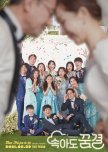
Be My Dream Family
Be My Dream Family is one of those long-form Korean family dramas that may take some time to fully appreciate, but once you become attached to its characters, it becomes surprisingly difficult to let go.What I particularly enjoyed is that the drama doesn't focus on just one protagonist or one romance. Instead, it creates a whole world of interconnected characters, relationships, marriages, conflicts and generational differences. The central idea is simple but very effective: two families, with completely different personalities and ways of living, are brought together when their widowed parents fall in love and decide to marry.
The strongest part of the drama is its portrayal of family. People argue, make mistakes, misunderstand each other, hurt one another and sometimes behave terribly — but they also learn to forgive, compromise and change. The relationship between Geum Jong-hwa and Kang Mo-ran is especially lovely because their marriage gradually becomes the emotional bridge between two families that initially have very little in common.
I also appreciated that the younger characters are given their own stories rather than existing merely as supporting figures. There are romances, career struggles, difficult choices and plenty of everyday problems, but the drama usually treats them as real people rather than simply plot devices.
And yes, at 120 episodes, it is definitely a commitment. There are moments when the pacing becomes repetitive and some conflicts are stretched longer than necessary. Not every storyline is equally strong, and a few characters can be frustrating. But the overall warmth of the drama makes up for many of its weaknesses.
Was this review helpful to you?
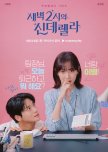
Not worth the effort
This show honestly did not have alot going on. The premise sounds really interesting but a few episodes in it kind of loses momentum. I understand why Ha Yun Seo was unsure about being with Ju Won, she was worried that them being together would cause a rift in his family due to his mom not accepting her. I also definitely think that Ju Won should have told her much sooner and that maybe they could have discussed everything before his mom tried to get rid of her. I was really interested in the leads chemistry though and I thought the complaints about the age gap was ridiculous since they looked cute together and I didn’t feel like she came off as being that much older then him. I did think that all the side character were either too annoying or too boring, except for Ju Won’s older brother and his wife, they were quirky in the best way. Now the second romance male lead was a total creep and entered at a time in the show where I was so over the back and forth between the main leads. I actually was so over the show by this time that I actually gave up on it. Its been about 3 months and I finally decided to finish the show and I’m a little sad I didnt finish it when I was watching it the first time because the last 3 episodes made up for the rough middle section of the show. Eventhough I am glad that I went back and finished this show I would not recomend it. It can be really boring at times and there truely are no suprises as far as the plot, plus the second romance guy is such a creppy red flag that he was unpleasant to watch.Was this review helpful to you?


