

This review may contain spoilers
What is this?
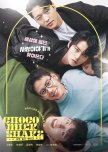
Jeongu comes back from working and sees two handsome strangers bothering him. They claim to be Choco and Milk, his dog and cat. Let me say that again his DOG and CAT and this is a bl….The worst part is that they act like pets and they use flashbacks to remind you every 2 seconds. Even if you look past that the emotional moments feel forced with no build up or reasoning. It doesn’t feel earned and it’s so disappointing. My first sad ending… and who cares they could’ve all lived happier but the writers just wanted it to have a sad ending.
People said they cried to this… I feel like I’m loosing my mind! They’re animals. And there’s a sex scene….. Is there really anything else to say?
Was this review helpful to you?
This review may contain spoilers
Trapped Between Reality and Hallucination
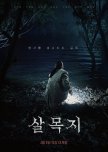
Salmokji: Whispering Water is an intriguing horror film. After doing some research I found out that it’s inspired by the urban legend surrounding the Salmokji Reservoir in South Korea, located in Yesan County. According to local stories, fishermen and residents have historically avoided the area after dark due to the reservoir being built over an old cemetery, which may have contributed to the ghost stories and supernatural rumors. The film uses this eerie real-world background effectively, creating an unsettling atmosphere from the very beginning.The story follows a production crew that returns to Salmokji for a reshoot, only for strange and disturbing events to begin unfolding shortly after their arrival. From there, the film gradually pulls both the characters and the audience into a psychological spiral where reality becomes increasingly difficult to distinguish from illusion.
One of the film’s strongest elements is how it manipulates perception. Each twist and unsettling moment creates a lingering sense of inevitability, making viewers feel as though something terrible is always about to happen, the question is simply when. The narrative unfolds in a way that demands attention, as even small details can become important later on. Missing certain moments may leave viewers confused, but that confusion feels intentional, mirroring the paranoia and uncertainty experienced by the characters themselves.
While the film succeeds in building tension and psychological unease, it does have its flaws. The rules and limitations surrounding the ghost are never fully explained, which leaves some supernatural aspects feeling underdeveloped. Although many of the jump scares rely on familiar horror clichés, a few still manage to be effective due to their delayed timing and execution. However, the film struggles with character development. Because of the limited runtime and focus on atmosphere, the audience never truly forms a strong emotional connection with most of the characters outside of recognizing or liking the actors portraying them.
Another frustrating aspect is the characters’ constant willingness to split up despite witnessing obvious supernatural events firsthand. At times, their decisions feel more like plot devices than believable human reactions. Additionally, while the premise is compelling, the story does not expand deeply enough on its mythology or themes, leaving several ideas feeling only partially explored.
Overall, Salmokji: Whispering Water is an enjoyable psychological horror film that thrives more on mystery and uncertainty than outright terror. It is not particularly frightening or deeply unsettling, but it does create an eerie atmosphere that keeps viewers engaged. Those looking for a layered psychological experience may appreciate it more than viewers searching for a fully developed horror story with clear answers.
Theory:
Personally, I do not believe anyone truly escaped Salmokji. My interpretation is that whoever survived became trapped within the reservoir’s supernatural cycle, endlessly believing they escaped only to “wake up” and realize they are still there. The hallucinations continue until the ghost ultimately claims them. The ending gives the impression of an endless loop, a cycle of false hope and psychological torment.
At the same time, since the film has an open ending it allows viewers to form and have their own interpretations. That ambiguity is likely intentional, making the ending one of the movie’s more interesting aspects despite its lack of concrete answers.
Was this review helpful to you?
Cherry Magic! Thirty Years of Virginity Can Make You a Wizard?!
0 people found this review helpful
This review may contain spoilers
My first and probably fav bl
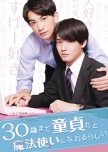
Adachi is a 30 year old virgin can read minds and finds out one of his coworkers is into him, and he’s a man. It’s so interesting with the mind reading and a good romance and story. Some might find the style of comedy cringy or over exaggerated but I simply love it but it was jarring at first.The characters are amazing with Fujisaki (my goat), Kurosawa is a freak and jealous king and Adachi my little scaredy cat, Rokkaku my hyperactive annoying in a good way son. We also have aroace representation/a coded character and I’m really glad that they exist (not telling you who for plot purposes).
There’s issues with it, the main couple doesn’t kiss and the second couple is so awful and doesn’t even need to be in the show I can’t stand them mostly because they never actually seem in love and have an age gap that makes them incompatible in my opinion.
Was this review helpful to you?

This review may contain spoilers
I have a lot to say
I recommend it because it’s not just a 1 to 1 remake and is its own thing. So compared to the Japanese version these episodes are longer. The extended runtime allows them to flesh out the story and relationships (like a proper introduction to Rock and Rock and Min’s relationship), adds new characters (Dujao as their boss and comedic relief) and keeps more moments from the Manga (which is also quite different from both versions). It also drastically improves the second couple so much that I actually liked them in this version and the main couple is able to kiss in this version.My issue is that it also strays too far and removes the elements I really liked like the aroace representation for an underbaked straight romance and less strong or more generic personalities from the characters (Pai, Karan, Achi and Rock especially). Even though I still love these characters, especially Pai. I also feel like the actor for Achi calling himself plumb as tofu while being visibly muscular is so funny.
Yes I’ve rewatched it multiple times now, I love this adaptation.
Was this review helpful to you?
This review may contain spoilers
Young romance with trauma
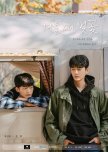
Haebom is going through it in this show and I relate to him so hard. You are not a burden for existing, you deserve happiness and love. How you gonna love someone if you don’t love yourself? This show’s only weaknesses is that it’s kind of weird that they’ve been basically raised together, like brothers (ick) and they cut away from scenes instead of showing reactions and do a time jump 🤦🏻♂️Was this review helpful to you?
Very nice for a Chinese drama so it surprised me short and sweet
It was very cute I just wish we got to see the couples together longer. I know it was a pretty short drama but some parts felt slightly rushed and slightly incomplete. I know it’s a drama and a slow burn but the really good thing about slow burns is being able to see the burn complete and finished but after the slow burn ended the show just ended so it felt like we didn’t really get to reap the reward of the slow burn. Also there was a lot of drama which again I know it’s a drama there is gonna be drama but sometimes the drama felt like it was just there to create problems and fill time instead of moving the story along and developing their relationship. Other than that I thought it was pretty cool. I loved seeing both couples cuteness and rawness of emotions. The characters, at least the main 4, were very dynamic which was cool. They were imperfect and not one dimensional. Very beautiful story 10/10 would recommend!Was this review helpful to you?
This review may contain spoilers
Good despite the romance
The journalism part of this show is what really kept me coming for more. It makes up for an otherwise alright romance. They try to do enemies to lovers, office romance and the dreaded miscommunication trope but it falls a little flat and feels rushed. Why? Because it’s super short and doesn’t have room for it.Was this review helpful to you?

Not a lot to say
I have always loved vertical shows, especially chinese ones, it’s my guilty pleasure. So when I decided to watch all of GeminiFourth’s series I was really excited for this one since I love them both. This really is just an 18 minute ad spread across 6 youtube shorts. The plot, if you can even call it that, is so forgettable and whatever. They look great though…Was this review helpful to you?
shades of twilight that gets one thing right...soft tension
I have been watching some slice of life low tension as comfort food and this felt right where the episodes gave a romantic win almost each episode...the old style romantic has chases and extra drama but it's nice to have a couple where the stuff happens is just stuff that happens and we are doing the love thing.Yes, I see the Twilight clone but the chemistry of the two leads make it their own. The story is a little bit messy and the acting is a little over the top leaning into camp...but somehow the director keeps all the mess in watchable binge worthy blood fest....worth a look see. If you google soft tension you will see that if you strip the noise its about the small moments of attempts at love that matter...and that's the star of the show.
Was this review helpful to you?
This review may contain spoilers
One of my favourites
It’s (sadly) relatable with him having a crush on what he thinks is a straight man. The cliffhangers, the plot that thickens and thickens and is never boring. AND THERE’S LESBIANS!!! I love rnemies to lovers with lore, and the romeo and juliet-like secret relationship is perfect. Everyone’s chemistry is CRAZY, they kiss and touch each other like an actual couple… I have been blessed by this show wow. Its all I ever wanted and more. The only issues is the annoying amount of sound effects and the constant music.Was this review helpful to you?
I finally finished it
To be honest, it took me a year to finish this show because I had thought it would be a promising GL, which was my fault for not looking into it beforehand. However, now that I have finished watching it, I can assert that the plot is a bit far-fetched. Besides that, I enjoyed the show overall: incredible cast, astounding production and music. I will definitely be watching the second season once it comes out.Even though this show was never promoted as a GL, it is impossible to me -and to most people I believe- not to see Seulgi and Jeyi as more than friends. Hopefully, now that GL's have gained more popularity in the Asian market, the production team will turn the girls' "friendship" into something more.
Was this review helpful to you?
My point of view on 'Virgin Snow' movie — A Quiet, Nostalgic Love Story
I had been searching for this movie for years, mainly because Lee Joon Ki is one of my favorite actors. Finally watching Virgin Snow felt really special.Even though it follows a simple love story between two people from different countries, the movie carries a strong sense of nostalgia.
What I loved most was its innocence and peaceful atmosphere and it feels gentle, pure, and quietly emotional in a way that stays with you. <3
Was this review helpful to you?

This review may contain spoilers
Messy, Inconsistent, and Frustrating
I went into this drama expecting something like a reverse harem setup, but it really doesn't play out that way. It kind of sets that expectation early on, especially with Kang Hyeon Min showing interest in Eun Ha Won in the first few episodes, but then he just drops it and acts like it never mattered. I thought he was genuine too, but nope.Kang Hyeon Min’s whole dynamic with Park Hye Ji was honestly one of the most frustrating parts. He is clearly written as someone who has feelings for her, but he's extremely mean and dismissive toward her. It gets repetitive too. After a while I was just thinking how many times will you let this man mistreat you before it becomes obvious this is not going anywhere? Their scenes together never really built believable tension or romance either, so instead of being angsty it just came off as awkward and cringe.
Then there's Kang Ji Un, who is supposed to be the quiet, emotionally guarded type who ends up liking Eun Ha Won. But even that storyline feels like it keeps getting tangled with the other pairings in a way that doesn't really make sense. At times, the way Kang Ji Un acts and positions himself makes it seem like he has feelings for Park Hye Ji, but it turns out he was just being a good friend. Let me tell you, the things he did, no friend would do that for a platonic friend. For example, when Kang Ji Un saw how hurt Park Hye Ji was due to Kang Hyeon Min's cold and harsh words, he approached Eun Ha Won saying, "Does it make you happy that Kang Hyeon Min bought you expensive clothes and brought you to eat at a place like this? I can do that much for you, too." Uh… what? Or when he tells Park Hye Ji, "Do you remember when I told you I'd protect you? I wasn't just saying that. Even though I can't do anything about all the hurt Kang Hyeon Min has given you, I'll protect you from being hurt by him from this point on." Then he inserts himself between Eun Ha Won and Kang Hyeon Min and says, "I'm going to try to steal your fiancée." It just ends up reinforcing the idea that Kang Ji Un had feelings for Park Hye Ji.
Overall, the romantic dynamics feel scattered and underdeveloped. Instead of a solid love triangle or reverse harem setup, it comes off like mismatched ideas that never quite settle into something satisfying. I honestly felt like the writers had no idea what they were writing, but just threw in every cliché they could think of for the drama.
Was this review helpful to you?
Do yourself a favor, skip!
I was really looking forward to this drama since it looked like an interesting mix of medical drama and fantasy, and I was also curious because I think Ahn Jae-hyun is a good actor. I actually really like him in comedic roles, but this role just did not suit him at all. His performance felt stiff in a lot of emotional scenes and at times, awkward, and it made it hard to take his character seriously.I also don’t think Ku Hye-sun is all that of a good actress. I feel like she tends to go over the top with her acting choices, and instead of feeling emotional, it just comes off as cringe and distracting. That really pulled me out of the story quite a few times. I’ve seen her other works too and I get the same feeling.
Another big issue for me was the chemistry between the two leads. I didn’t really feel any connection between them, so it made it hard to root for their relationship or care about the romance at all.
The beginning of the story actually had potential and was kind of interesting with the hospital setting and the vampire surgeon concept, but after episode 6 it really started to drag. The pacing got boring, the plot stopped feeling engaging, and I honestly couldn’t even keep watching after that.
Was this review helpful to you?

This review may contain spoilers
The Penthouse: War in Life (All 3 Seasons) — A Review for Normal People
Let me be very clear about something before we begin: The Penthouse is not a good drama. It is, however, possibly the most compelling television experience you will ever have, and those are two completely different things that should not be confused.I watched all three seasons. Back to back. Do I regret it? No. Can I explain why? Also no. Welcome to Hera Palace.
What is this show, exactly?
Imagine someone took a telenovela, fed it steroids, dressed it in a Chanel suit, moved it to a 100-floor luxury penthouse in Seoul, and gave it an unlimited budget for glassware. That's The Penthouse. It's The Bold and the Beautiful but make it Korean, make it louder, and triple the number of dramatic staircase confrontations.
This is not a show you watch to feel things. You will not cry. You will not fall in love with anyone. You will not lie awake at night thinking about the deeper meaning of a scene. What you will do is watch one episode at 10 PM and suddenly it's 3 AM and you're on episode 8 and you have work tomorrow and you simply do not care.
That is the magic of The Penthouse. It doesn't earn your emotions. It kidnaps your attention. There's a difference.
The Plot (loosely)
Rich people live in a fancy building. They want more money, more power, and their mediocre children admitted to a prestigious arts school. People scheme. People betray each other. People fall off things. People die — but don't worry about that last part, because death in this universe is more of a suggestion than a permanent condition.
Season 1 establishes the chaos. Season 2 escalates it. Season 3 looks you dead in the eye and says "you thought Season 2 was a lot?" and then doubles it. The crime changes each season. The concept does not. This is a feature, not a bug.
The Acting
Let's talk about the acting — and I say this with full affection — it is UNHINGED. Everyone is performing at a level that suggests they were told the cameras were fifty meters away and they needed to be seen from there with the naked eye. Kim So-yeon as Cheon Seo-jin deserves a special award that doesn't exist yet, something like "Outstanding Achievement in Controlled Hysteria." Um Ki-joon as Joo Dan-tae plays evil so committedly that you start to wonder if he needs a wellness check in real life.
The characters do not talk to each other. They announce at each other. Every conversation is a declaration. Every revelation is delivered at a volume appropriate for a stadium. And somehow — SOMEHOW — it works.
The Glass Budget
I need to dedicate a paragraph to the glassware situation because it deserves academic recognition. Conservative estimates put the number of items swept off desks, smashed against walls, or dramatically shattered per episode at three to five. Minimum. I began to wonder if there was a glass sponsor. I began to wonder if somewhere in Seoul there is a warehouse purely dedicated to supplying The Penthouse with things to break. Wine glasses. Picture frames. Vases. Full dinner sets. Nothing is safe. No surface is sacred. The interior designers of Hera Palace must be in therapy.
The Name-Calling
Another thing you need to prepare for: everyone's name will be screamed at full volume approximately forty times per episode. "SHIM SU-RYEON!" "JOO DAN-TAE!" "OH YOON-HEE!" It becomes a rhythm. A percussion track running underneath every scene. You will start hearing character names in your sleep. You will mutter them while making coffee. This is normal. This is the Penthouse experience. Embrace it.
Who is this for?
Everyone, genuinely. There is no nudity. The blood exists but it's theatrical — you won't have nightmares, you won't need to look away. It's the kind of dramatic blood that exists to make a scene look important, not to traumatize you. And as previously established, nobody really stays dead anyway, so even the mortality stakes are manageable.
This show is for the person who's exhausted and just wants to watch chaos unfold from a safe distance. It's for the person who grew up waiting for the 9 PM drama slot on TV — that specific anticipation of sitting down and letting something ridiculous wash over you without demanding anything from your brain. It's not prestige television and it has never pretended to be. It's a getaway. A full three-season vacation from reality, logic, and the laws of physics.
What you should NOT do while watching
Do not try to logic it. I am begging you. The plot holes are not holes — they are design choices. Do not try to relate to the characters, because unless you are personally fighting over a trillion-dollar empire and a spot in an elite music academy, you will find no common ground and that's entirely the point. Do not empathize, do not get jealous, do not catch butterflies for anyone. Just watch Joo Dan-tae be evil, watch the women scheme magnificently, and let another vase get thrown at a wall.
Final Verdict
The Penthouse will not make you a better person. It will not expand your emotional vocabulary or leave you with profound thoughts about the human condition. What it will do is completely hijack three weeks of your evenings and leave you weirdly satisfied about it.
It is junk food television of the highest order — and I mean that as a compliment. Sometimes you don't want a Michelin-star meal. Sometimes you want the whole bag of chips at midnight, no regrets.
Watch it. Don't think. Just enjoy the ride.
And maybe pour yourself a drink — in a plastic cup. You know, just to be safe.
Was this review helpful to you?


